Introduction
Welcome to the next lesson in our Materials Science module. In our previous session, we established the underwire as the rigid "skeleton" of a bra, an engineered component that defines the garment's fundamental shape and support. Now, we turn our attention to the "muscles and ligaments": the elastics. These components provide the crucial tension, flexibility, and comfort that allow the bra to function as a dynamic system in harmony with the body.
This lesson is dedicated to choosing the correct elastics for different parts of a performance garment. We will move beyond a simple inventory of types to a functional analysis, evaluating each elastic based on its specific engineering properties. You will learn to differentiate between plush-backed, picot-edged, and gripper elastics, and to deploy them strategically at the band, neckline, and straps to meet the extreme demands of Bollywood choreography. Your background in experimental design will be an asset here, as we treat the selection of each component as a controlled choice aimed at optimizing the garment's performance.
A Taxonomy of Lingerie Elastics
Before we can select the right tool for the job, we must understand the tools available. Lingerie elastics are highly specialized, with properties tailored to specific functions. Key characteristics include:
- Plushness: Many lingerie elastics have a soft, fuzzy "plush" side. This is always placed against the skin to enhance comfort and reduce chafing, a critical factor during long shoots and athletic performances.
- Edge Finish: The edge can be plain, decorative (like a picot scallop), or functional (with a silicone gripper).
- Firmness & Stretch: Elastics vary significantly in their modulus of elasticity. A strap elastic has a very firm, limited stretch, while a decorative elastic might be much softer.
The images below showcase some of this variety. Notice the different textures, widths, and edge finishes.
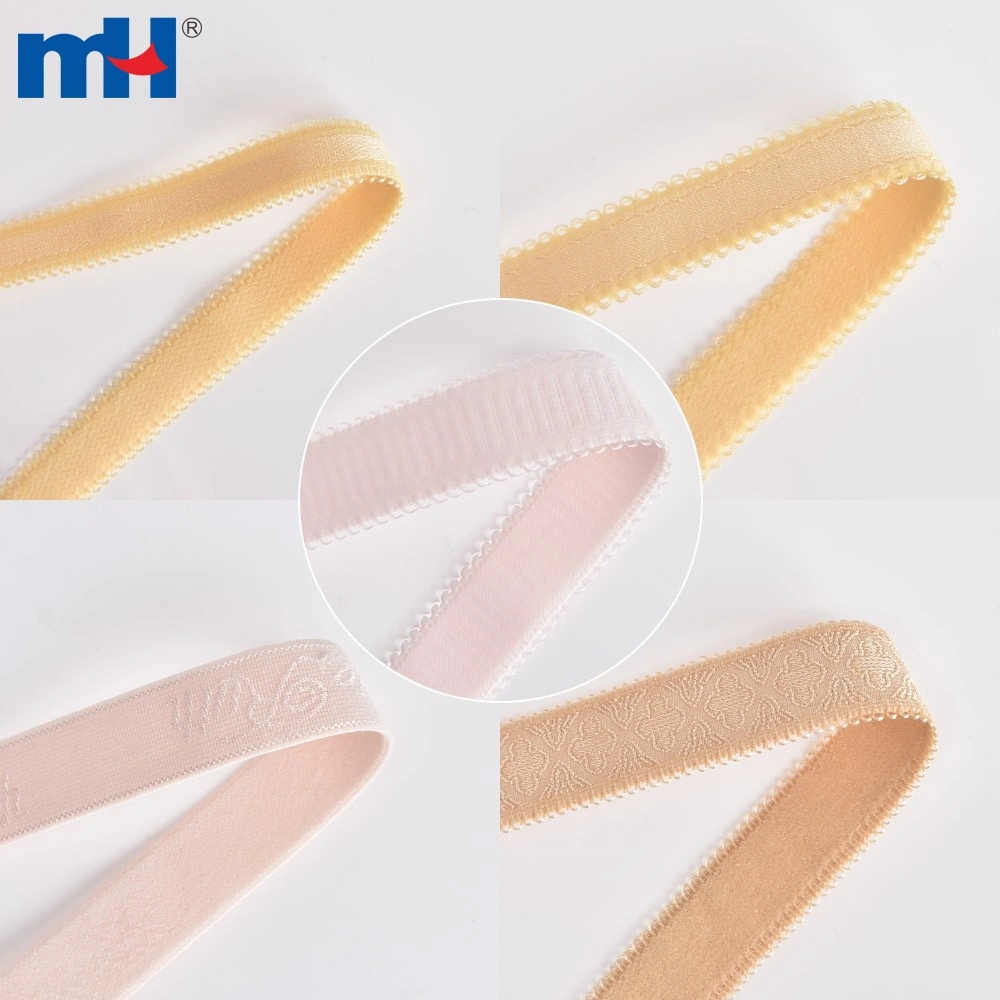
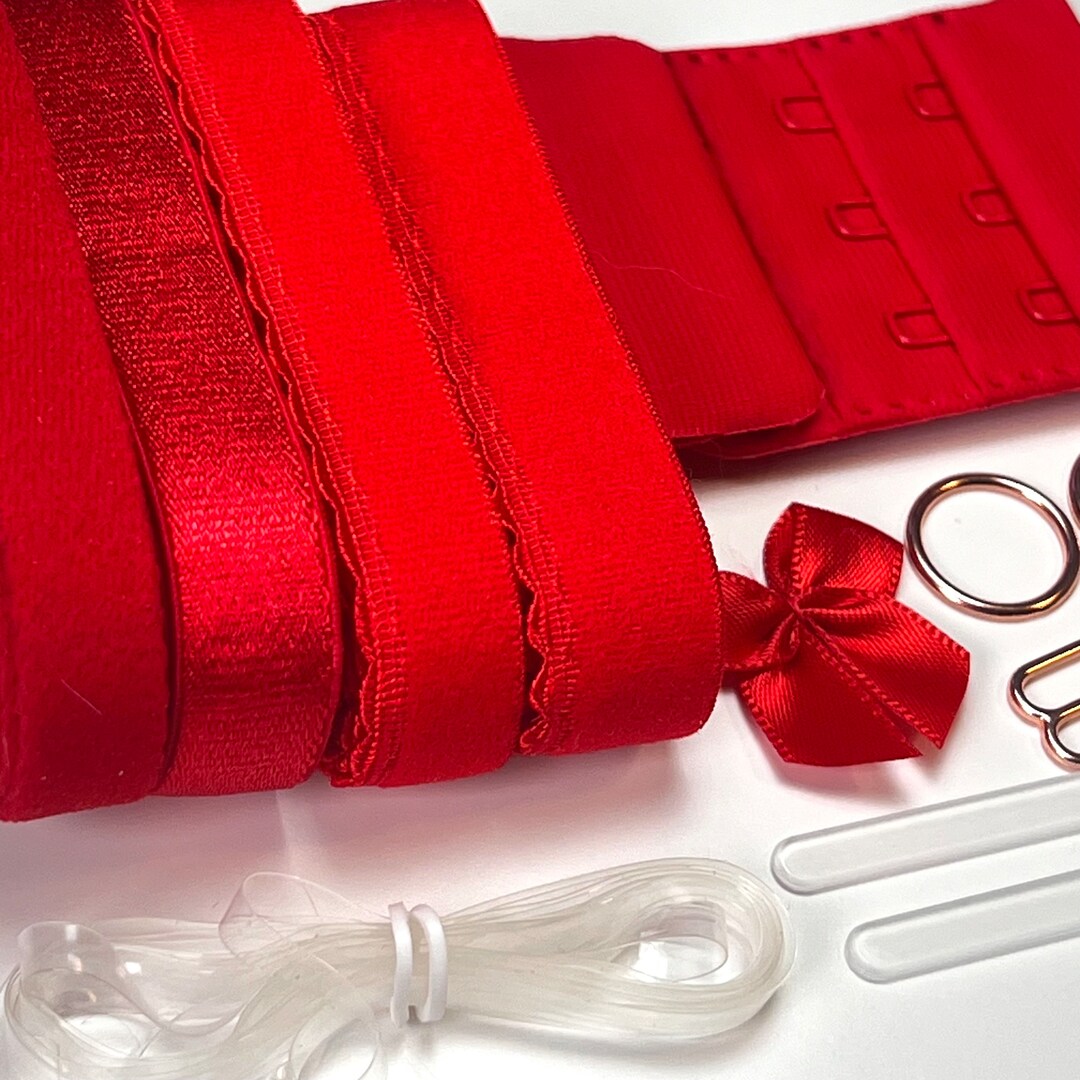
To get a quick and clear overview of the three most common types you'll work with, let's start with a video guide from lingerie designer Erin of Emerald Erin Sews.
Best Guide to Bra Elastics & Findings | Emerald Erin
This video provides a concise visual introduction to the core elastics used in bra-making.
Please watch the following segments: Band Elastic: Pay attention to the description of the plush side and the picot edge. This is the workhorse elastic for bra bands. Strap Elastic: Note the emphasis on its firmer stretch and smooth edges, designed for durability and compatibility with rings and sliders. Fold-Over Elastic (FOE): Observe how this elastic is designed to encase a raw edge, providing a clean and low-bulk finish.
Now that you have a visual and functional introduction, let's deepen that knowledge with a more comprehensive textual guide.
Lingerie Elastics Guide | How to Choose the Right Elastic for Bra Making
This article from Kodlace provides a detailed breakdown of various elastics. We'll focus on the types most relevant to bra construction.
Please read the following sections to solidify your understanding: Picot Elastic: This section reinforces what you saw in the video, describing the most common decorative and functional elastic. Underband Elastic: This describes the strong, stable elastic that anchors the bra. Note the direct correlation stated between width and support. Bra Strap Elastic: Read this to review the properties of strap elastic, which is engineered specifically to handle vertical load with minimal give.
Strategic Application: Function Dictates Form
With this taxonomy in mind, we can now approach elastic selection from an engineering perspective. Each part of the bra has a different job, requiring an elastic with specific properties.
1. The Band: The Anchor
The bra band provides 80-90% of the garment's support. It acts as a cantilever anchor, and its effectiveness depends entirely on the elastic used along its top and bottom edges.
- Bottom Band Elastic: This is the primary anchor. For performance wear, especially for a choli-style top that might be heavily embellished, you need a wide (12mm-19mm), firm, plush-backed elastic. The width distributes pressure evenly and resists the tendency of the band to roll up under stress. The firmness ensures a secure grip on the torso.
- Top Band Elastic (Underarm/Neckline): This elastic serves to contain the breast tissue and provide a smooth, gap-free edge. It is typically a narrower (8mm-12mm) picot or plush elastic. It needs to be firm enough to prevent gaping during movement, but soft enough not to dig into the delicate tissue at the underarm or top of the bust.
2. The Straps: The Suspension System
While the band provides the primary support, the straps are responsible for lifting and stabilizing the top of the cup, and their performance is critical.
- Strap Elastic: This must be a specialized strap elastic with very firm, low-stretch properties. As noted in the resources, it often has a satin finish on one side and a plush finish on the other. Using a softer elastic here would be a critical design flaw; the straps would stretch under the weight of the bust and the force of movement, leading to bounce and a loss of support. The width is again a key variable: narrower straps (10-12mm) for lighter-duty designs, and wider straps (15-19mm) for heavier busts or high-impact choreography.
3. The High-Performance Specialist: Gripper Elastic
For the most demanding scenarios, such as strapless designs or garments needing to stay perfectly in place during acrobatic dance, a standard plush elastic is insufficient. This is where gripper elastic comes in. It is essentially a band elastic that has one or more lines of silicone applied to its surface.
- Function: The silicone creates a high-friction surface that "grips" the skin, drastically reducing the possibility of the garment slipping or shifting.
- Application: It is essential for strapless blouses. A wide band (5-7cm) finished with gripper elastic along the top and bottom edges can provide incredible security. It's also invaluable for longline bras or the bands of sportier styles intended for high-impact dance, ensuring the bra's foundation remains locked in place.
Case Studies: Elastic Selection for Bollywood
Let's apply these principles to the specific challenges you'll face.
Case Study 1: The High-Tempo "Item Number" Bra
- Scenario: An actress is performing a vigorous, high-energy dance number. The costume is a heavily beaded choli top. The choreography involves powerful arm movements, torso twists, and jumps.
- Design Analysis:
- Bottom Band: A 19mm wide, plush-backed gripper elastic is the optimal choice. The width provides a stable base to support the beaded fabric, the plush side ensures comfort, and the silicone grip is non-negotiable to prevent the band from riding up during the explosive movements.
- Top Edge: A 12mm firm picot elastic would provide strong containment along the neckline and underarm, preventing any gaping as the dancer moves.
- Straps: 19mm wide, low-stretch strap elastic is essential. The width will help distribute the significant load from the bust and the heavy beads, and its minimal stretch will prevent bounce, ensuring a secure and flattering silhouette through every take.
Case Study 2: The Heavily Embellished, Rigid Costume
- Scenario: You are designing a bra for a historical epic. The garment is encrusted with 2kg of metalwork and crystals and must appear completely rigid, almost like armor.
- Design Analysis: Here, we encounter a paradigm shift. The primary requirement is not stretch and flexibility, but extreme load-bearing capacity. An elastic band would buckle or fail under this weight. This is where we consider abandoning elastic altogether.
Let's examine an approach for this exact problem from costume designer Dawn Devine.
Musings on the Embellished Bra Bands & Straps - Studio Davina
This article presents a powerful, counter-intuitive strategy for costuming with heavy embellishments.
Please read the first four points in the article, starting from Adds Strength to Support the Weight. Focus on the author's reasoning for replacing the standard elastic lingerie band with a non-stretchy, reinforced one.
As the article argues, for extreme weight, the best engineering solution is to replace the elastic band with a solid, non-stretch band made from a durable fabric like coutil or canvas. This band can then be fitted precisely with a hook-and-eye closure. You are essentially changing the system from a tension-based fit (relying on negative ease) to a structural fit. This is a critical technique for high-fashion and heavily embellished Bollywood costumes where the garment's integrity under static load is more important than its ability to stretch with the body.
Conclusion
You are now equipped to choose elastics not just by name, but by function. This lesson has moved you from a general understanding to a specific, engineering-based approach to material selection.
Key Takeaways:
- Elastics are specialized components; their plushness, edge, width, and firmness are all critical design variables.
- Band elastics anchor the bra, with width and firmness being key to support and stability.
- Strap elastics are a low-stretch suspension system designed to manage vertical load.
- Gripper elastic is a high-performance solution, using silicone to create friction and prevent slippage in the most demanding applications like strapless tops.
- For extreme load-bearing situations with heavy embellishments, the optimal design may involve replacing the elastic band with a rigid, non-stretch band to ensure structural integrity.
In this module, we have assembled our physical toolkit: fabrics, hardware, underwires, and now elastics. In the next lesson, we will begin creating the architectural plan for these materials. We will define the essential components of a bra pattern: the frame, bridge, cup, and band, laying the foundation for you to begin drafting your own designs.