Hello! In our previous session, your child became confident in identifying the place value of each digit in a 4-digit number and in reading and writing these numbers. This was a crucial step in moving from a 3-digit to a 4-digit world.
Today, we will build directly on that understanding of place value. Our goal is to learn how to break a 4-digit number apart into the sum of its values—a concept called expanded form—and how to put it back together again into its standard form. Think of it as looking at the individual Lego bricks that make up a big model. This skill is fundamental because it reinforces the true value of each digit in a number.
What is Expanded Form?
Expanded form is simply a way of writing a number that shows the value of each digit. A number like 3,513 isn't just the digits 3, 5, 1, and 3 next to each other. It's actually a combination of 3 thousands, 5 hundreds, 1 ten, and 3 ones.
The image below gives a wonderful visual for this idea, showing how a number is built from blocks of different sizes.
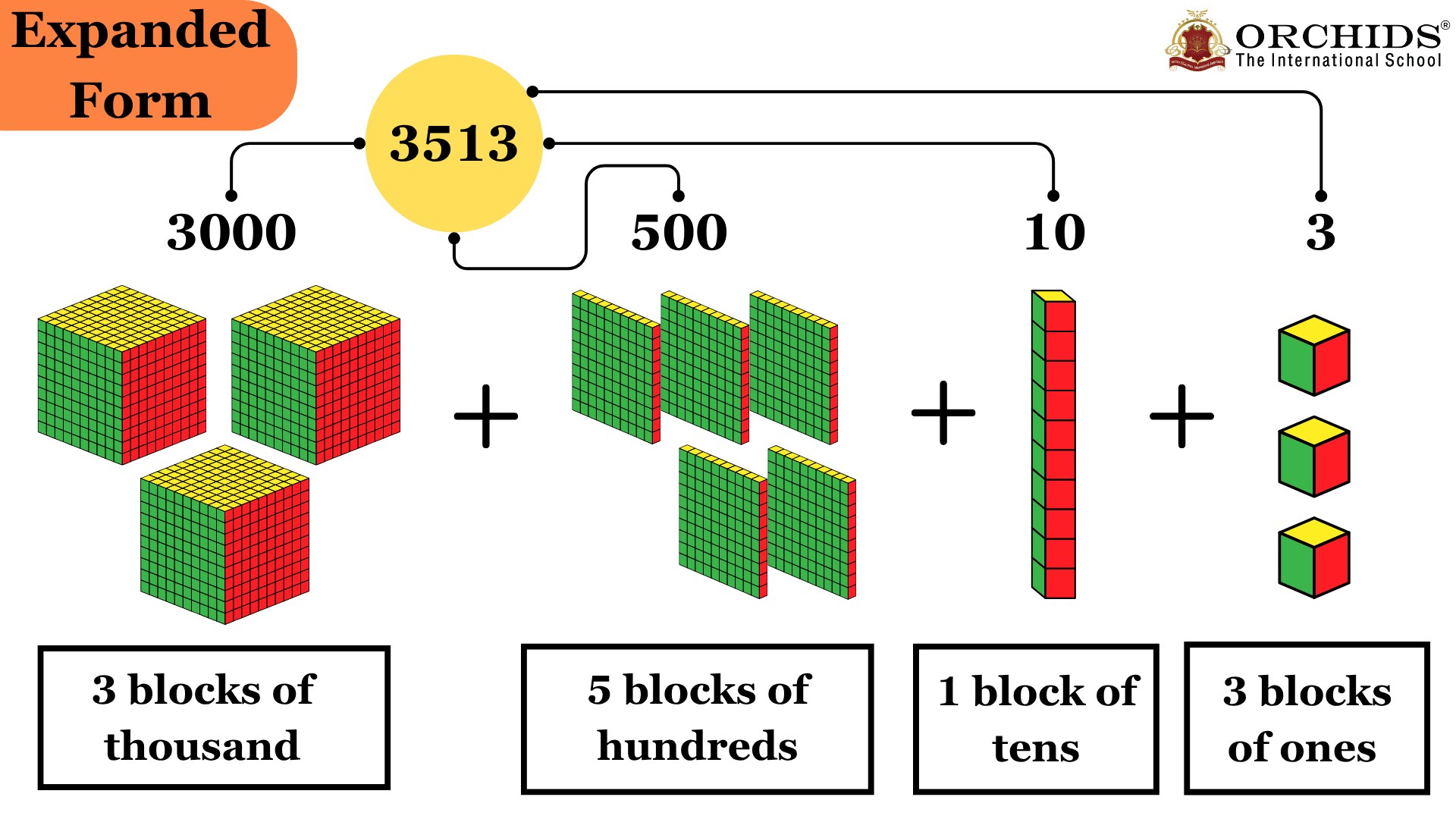
So, how do we write this mathematically? Let's take another number, 6,875, and break it down step-by-step. The following image illustrates the process perfectly.
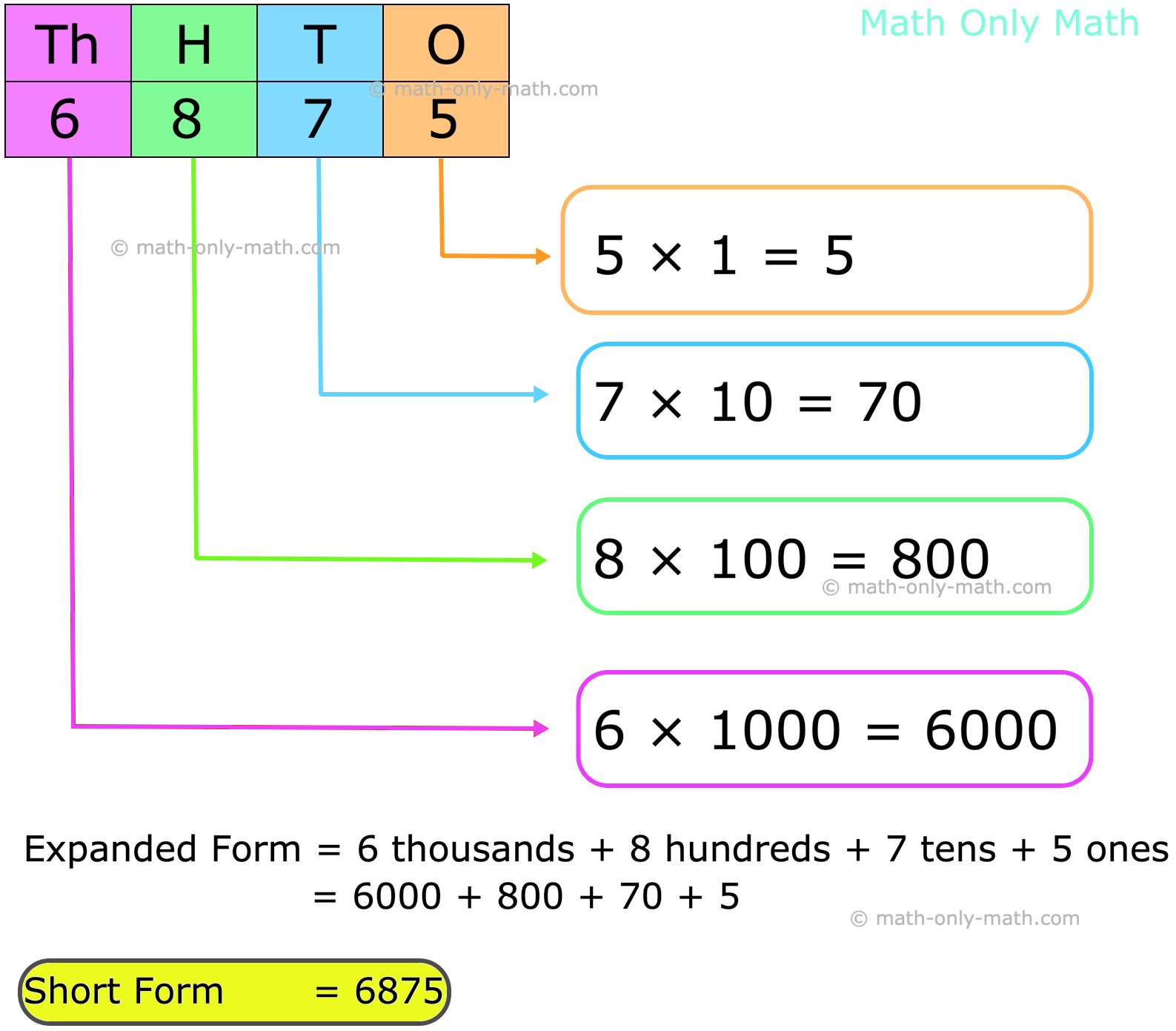
As you can see, the process is:
- Identify the place of each digit.
- Determine the value of each digit.
- Write these values as an addition sentence.
So, for 6,875, the expanded form is 6000 + 800 + 70 + 5.
Seeing it in Action
Watching and listening to someone explain this can be very helpful for a child. The video below provides a clear, step-by-step demonstration of writing a 4-digit number in expanded form. Please watch the section where the host works through the number 8,625.
Expanded Form and Expanded Notation (Practice Problems Included) | Math with Mr. J
In this video from Math with Mr. J, you'll see a clear explanation of expanded form.
Watch the segment from this timestamp where the number 8,625 is broken down. The host explains how to find the value of each digit based on its place and write it as a sum.
From Expanded Form to Standard Form
Now, let's look at the reverse process. What if you are given the "building blocks" and need to build the number? This means converting from expanded form back to the regular standard form.
For example, if you have:
2000 + 700 + 40 + 9
You simply take the first digit from each value and place it in the correct spot:
- 2000 gives you a 2 in the thousands place.
- 700 gives you a 7 in the hundreds place.
- 40 gives you a 4 in the tens place.
- 9 gives you a 9 in the ones place.
Putting them together, you get the standard form: 2,749.
The following resource clearly defines both standard form and expanded form and explains how to convert between them.
Class 3 Maths 4-Digit Number From Parts Worksheet (PDF)
This resource from Vedantu has a helpful FAQ section that clarifies the definitions and process.
In the "FAQs" section, please read the answers to two questions. First, read question 1, which shows how to build a number from its expanded parts. Then, read question 8, which clearly defines the difference between standard and expanded form.
The Special Role of Zero
What happens when a number has a zero in it, like 4,062? This is a great opportunity to reinforce that zero acts as a placeholder.
- The 4 is in the thousands place, so its value is 4000.
- The 0 is in the hundreds place, so its value is 0.
- The 6 is in the tens place, so its value is 60.
- The 2 is in the ones place, so its value is 2.
So, the expanded form is 4000 + 0 + 60 + 2, which is often simplified to 4000 + 60 + 2. It's important for your child to understand that the hundreds place isn't "skipped"—it just has a value of zero.
This next resource explains this concept well.
Expanded Form Worksheet: 4 Digit Numbers for Class 3
This worksheet from Vedantu provides more details on writing numbers in expanded form, including how to handle zeros.
In the "FAQs" section, please read the answer to question 3. This directly addresses how to write the expanded form for a number with a zero and reinforces the idea of zero as a placeholder.
Time for Practice
Both of the PDF resources from Vedantu that we've used are actually worksheets. They contain excellent problems for your child to practice both writing numbers in expanded form and converting them back to standard form. I recommend printing them out and working through a few examples together.
- The first resource, "4-Digit Number From Parts Worksheet" (LINK), is great for practicing the conversion from expanded to standard form.
- The second, "Expanded Form Worksheet: 4 Digit Numbers" (LINK), focuses on writing standard numbers in expanded form.
Conclusion
In this lesson, we have deconstructed 4-digit numbers to better understand their composition. This is a powerful skill that goes beyond simple memorization and builds a true number sense.
Key Takeaways:
- Standard Form is the typical way we write numbers (e.g., 7,134).
- Expanded Form shows a number as the sum of its place values (e.g., 7000 + 100 + 30 + 4).
- To convert from standard to expanded form, you identify the value of each digit and write them as an addition problem.
- To convert from expanded to standard form, you combine the digits from each place value to write the final number.
Now that your child has a solid grasp of how 4-digit numbers are built, we are ready for our next lesson. We will explore the concepts of predecessor (the number just before) and successor (the number just after). Your child's new, deeper understanding of number structure will make this next topic feel very intuitive.