Welcome to the first session of our course on 4-digit numbers. Since your child is already comfortable with numbers up to 999 and understands the ones, tens, and hundreds places, we have a strong foundation to build upon.
Today, we will take the next logical step into the world of larger numbers. Our goal is to understand what happens after 999, introduce the new 'thousands' place, and learn how to represent 4-digit numbers on a place value chart. By the end of this 30-minute session, you'll be able to guide your child in identifying the specific value of any digit within a 4-digit number.
From 999 to 1000
Let's begin by thinking about the largest 3-digit number your child knows: 999. It has 9 hundreds, 9 tens, and 9 ones. What happens if we add just one more?
999 + 1 = 1000
The number 1000 is the very first, and smallest, 4-digit number. To write it, we need a new position in our number system, which introduces a new place value.
The Thousands Place
For numbers up to 999, we used a place value chart with three columns: Hundreds (H), Tens (T), and Ones (O). For 4-digit numbers, we simply add a new column to the left for Thousands (Th).
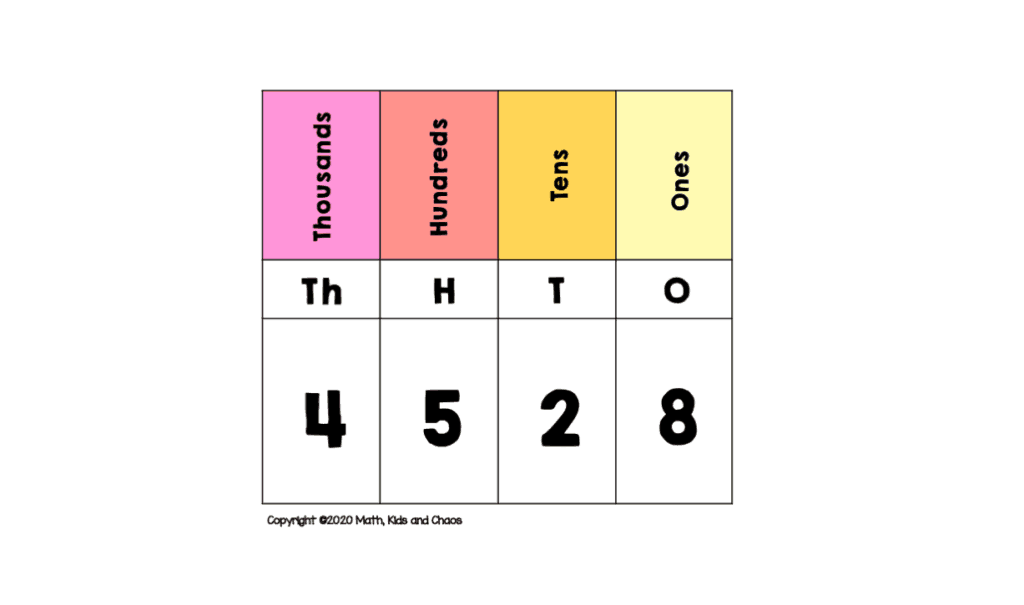
Each place in the chart is 10 times greater than the place to its right:
- 10 ones make 1 ten.
- 10 tens make 1 hundred.
- And now, 10 hundreds make 1 thousand.
Place Value and Face Value
It's important to help your child understand the difference between two key terms: face value and place value.
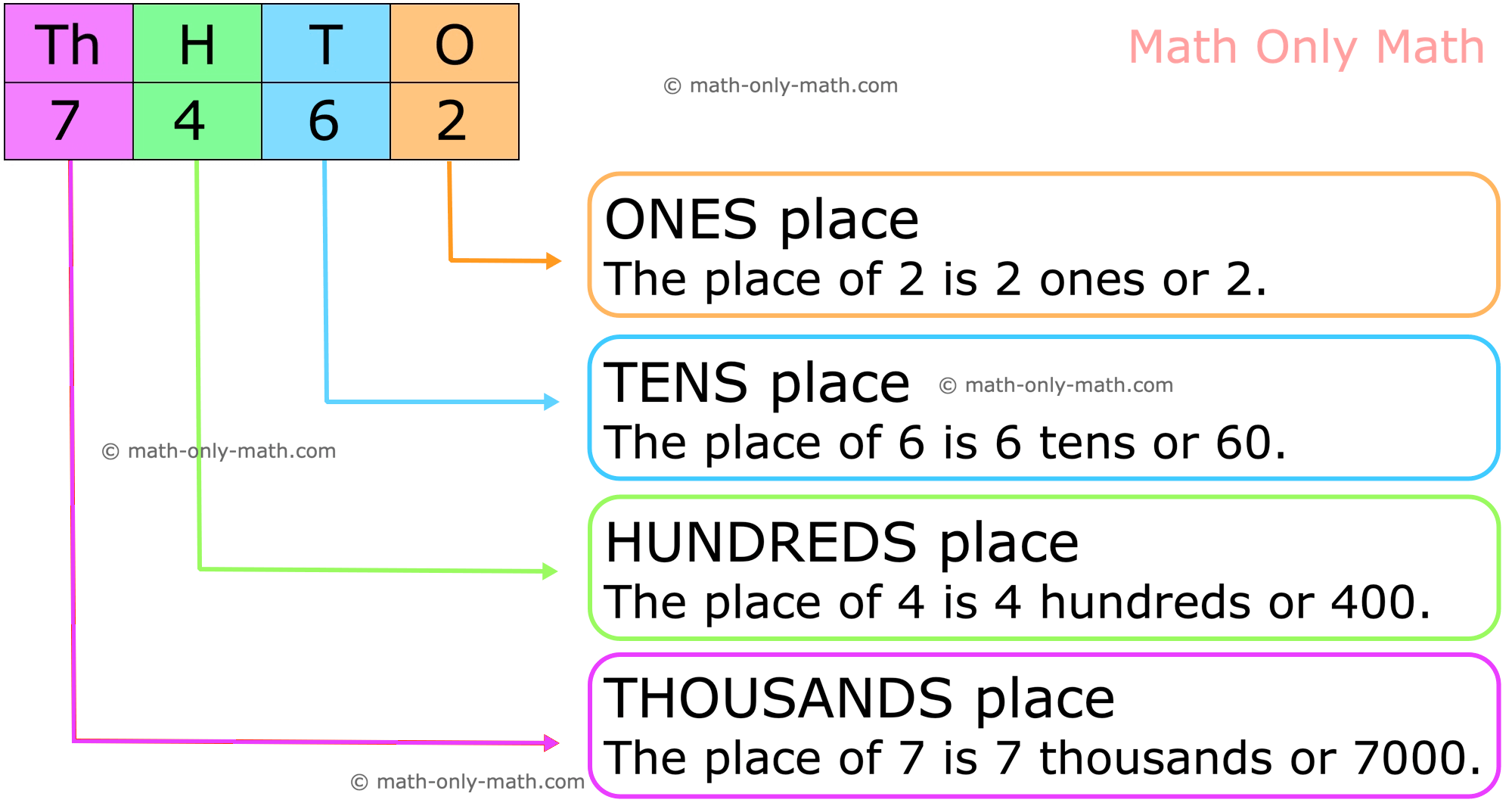
- Face Value: This is simply the value of the digit itself, no matter where it is. In the number 7462, the face value of the digit '7' is just 7.
- Place Value: This is the value a digit has because of its position in the number. In 7462, the digit '7' is in the thousands place, so its place value is 7000.
This next image breaks down the place value for each digit in the number 7462.
To see this concept explained with clear animations, please watch the first part of this short video with your child.
Place Value in 4 Digit Numbers | KS2 Maths Year 3 & 4
This video, "Place Value in 4 Digit Numbers," provides a great visual breakdown of how a 4-digit number is composed of thousands, hundreds, tens, and ones.
Please watch from the beginning until the end of the section that explains the value of each digit in the number 1245. The video uses pictures and clear labels that are very helpful for reinforcing the concept of place value.
Making it Tangible: The Abacus
An abacus is an excellent tool to make place value a physical, visible concept. Each rod on the abacus represents a place value (Ones, Tens, Hundreds, Thousands), and the beads on the rod represent the digit in that place. You can even create a simple one at home with paper and beads or pasta shapes.
The following reading explains how to use a spike abacus to show 4-digit numbers.
4-Digit Numbers on Spike Abacus (Examples & Explanation) | Game | Work
This resource from Math-Only-Math shows how a spike abacus works and provides clear, illustrated examples.
Please review the page from the top, starting with the introduction. Then, focus on the examples provided, particularly the first example showing the number 3,245. Pay close attention to how the number of beads on each spike corresponds to the digit in that place value. Also, notice the example for 4,057, which shows what to do when a digit is zero: you simply leave that spike empty.
Practice Time
Now, let's try a few quick practice questions together. For each number, identify the place value of the underlined digit. You can refer to the document below for these questions.
[PDF] 4-DIGIT NUMBERS - Orient BlackSwan
This document contains a set of practice exercises. We will focus only on the section related to place value.
Find Question (3), which is under the heading Face value and place value. Work through the first two problems with your child: 4397: What is the place value of the 3? (Answer: 300) 9110: What is the place value of the 9? (Answer: 9000) Encourage your child to also state the face value for each to reinforce the difference.
Conclusion
In this session, we've successfully made the leap from 3-digit to 4-digit numbers.
Key Takeaways:
- Adding 1 to 999 gives us 1000, the first 4-digit number.
- 4-digit numbers have a new place value: the thousands place.
- The value of a digit depends on its position in the place value chart (Thousands, Hundreds, Tens, Ones).
Now that your child can recognize the structure of 4-digit numbers and the value of their digits, we are ready for our next step. In the next lesson, we will focus on reading 4-digit numbers aloud and writing them in both numeral and word form.