Introduction
In our previous lesson, we delved into the complex constitutional arguments against the Waqf (Amendment) Bill, focusing on how its provisions are being challenged under Articles 26, 25, and 14. We established the legal foundation of the opposition, centered on the delicate balance between the state's regulatory power and a religious community's right to autonomy.
Now, we shift our focus from the courtroom to the political arena. This lesson is dedicated to evaluating the two powerful and competing political narratives that frame the entire controversy surrounding the bill. On one side, the government and its supporters present the legislation as a long-overdue reform aimed at 'ending minority appeasement' by ensuring transparency and accountability. On the other, opposition parties and many Muslim organizations decry it as 'an attack on Muslim institutional autonomy', part of a broader majoritarian agenda. Your goal is to dissect and evaluate these narratives, understanding how the same set of facts and legal clauses can be woven into such starkly different political stories.
The Political Battlefield: Reform vs. Attack
The debate over the Waqf Amendment Bill is not a quiet, academic discussion; it's a charged political battle fought in Parliament, on television, and on the streets. As the analyst in the following video from ThePrint notes, the issue is deeply polarizing, with each side convinced of its position and unmoved by the other's arguments.
The waqf question: How Modi-led NDA is changing the law & why 2013 amendments are back in focus
This video from ThePrint provides an excellent overview of the polarized nature of the debate, introducing the core conflict between the two narratives.
Watch the first two minutes, from the beginning to 02:12. Pay attention to how Shekhar Gupta immediately frames the issue as a "divisive" one, with one side seeing the old law as "appeasement" and the other seeing the new law as an "unfair" attack on a minority's religious institutions.
This polarization is visually captured in the stark contrast between the formal legislative process and public protest.
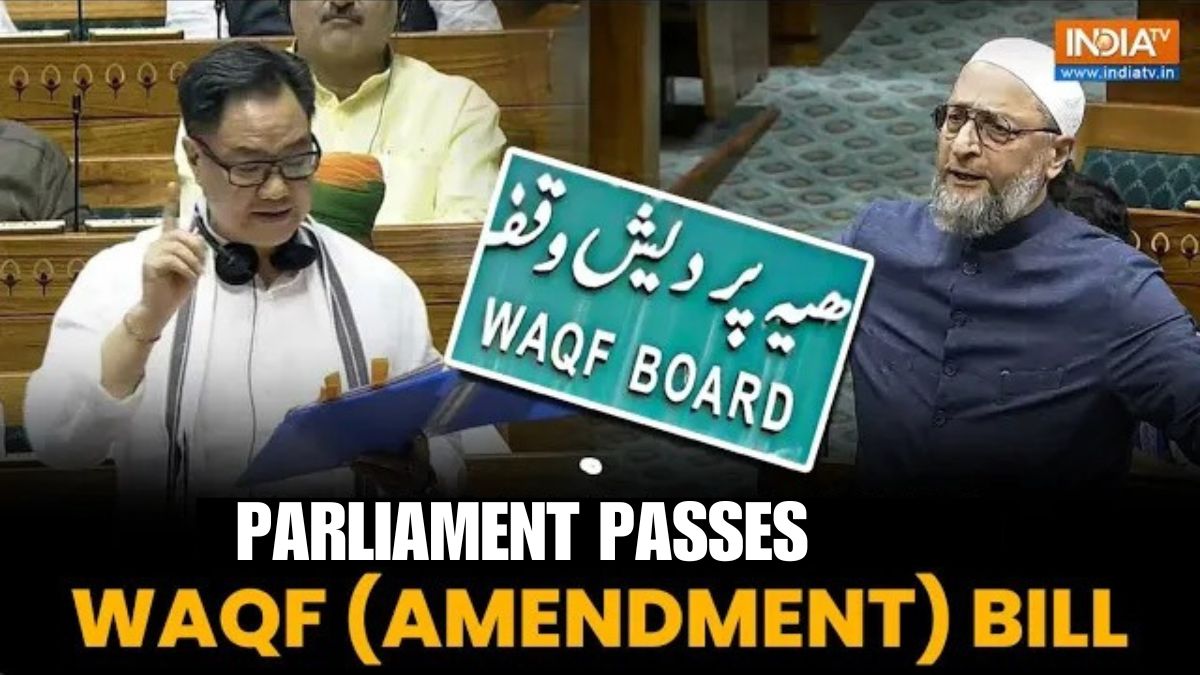
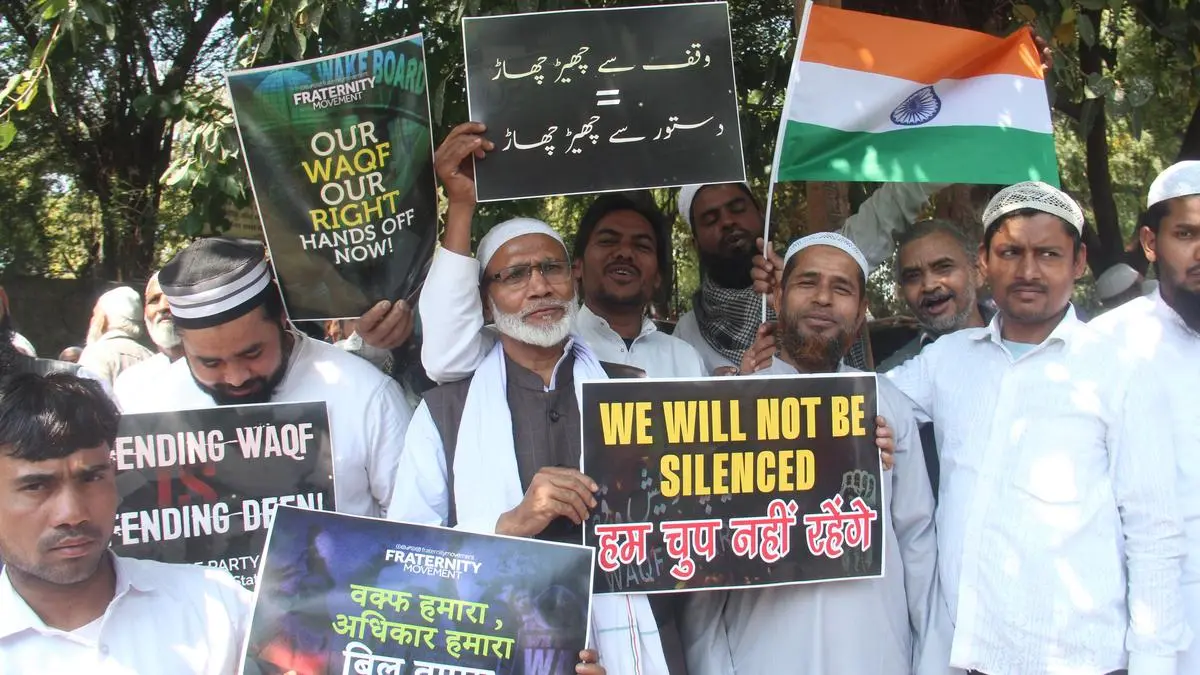
To evaluate this complex issue, we must now unpack each narrative in detail.
Narrative 1: Ending 'Minority Appeasement' and Ensuring Reform
This narrative, advanced by the government and its supporters, posits that the Waqf system, particularly after the 2013 UPA-era amendments, became a tool for corruption and unaccountable power. The 2024 Bill, therefore, is not an attack but a necessary course correction to establish transparency, protect national assets, and apply principles of secular governance equally to all communities.
The Core Problem: Unchecked Power and Mismanagement
The foundation of this narrative is the argument that the Waqf Act of 1995, and its 2013 amendments, created a system with sweeping and near-absolute powers.
The waqf question: How Modi-led NDA is changing the law & why 2013 amendments are back in focus
ThePrint video explains the specific powers granted by the 2013 amendments that the current government sought to reform.
Watch the segment from 11:44 to 15:02. Focus on three key issues that form the basis of the "appeasement" charge: The power of Waqf Boards to declare almost any property as Waqf property. The finality of the Waqf Tribunal's decision, limiting recourse to higher courts. The exemption from the standard 12-year statute of limitations for property disputes, allowing claims to be made indefinitely.
These provisions are politically framed as an exceptional and unfair advantage granted to one community, leading to mismanagement and encroachment. The Rajya Sabha debate provides direct insight into how government figures articulate this.
[PDF] SUPPLEMENT TO SYNOPSIS OF DEBATE ______ ... - Rajya Sabha
This official record captures the government's justification for the bill.
In the lengthy document, find the speech by THE MINISTER OF HEALTH AND FAMILY WELFARE... (SHRI JAGAT PRAKASH NADDA). Read his arguments, particularly the parts where he asks: "Shouldn't it be managed properly?" and when he cites the massive increase in Waqf properties without a corresponding increase in income, referencing the CAG's findings. This frames the issue as one of good governance. Also, note former Prime Minister H.D. Devegowda's supporting statement that the bill aims to prevent donor property from being "swallowed by rich people".
The Solution: Transparency, Inclusivity, and Secular Oversight
In this narrative, the bill's most controversial provisions are presented as common-sense solutions.
- Inclusion of Non-Muslims: The government argues that the administration of property—handling finances, legal disputes, and records—is a secular function. Including non-Muslims on the boards is framed as a move toward inclusivity and professional management, not religious interference. The most compelling analogy used is that of the Charities Commissioner.
The waqf question: How Modi-led NDA is changing the law & why 2013 amendments are back in focus
This segment explains the government's official reasoning for including non-Muslims on Waqf boards.
Watch from 16:20 to 19:10. Listen carefully to the explanation of Amit Shah's argument: just as a state's Charities Commissioner, who oversees trusts of all religions, can be of any faith, the members of a Waqf board exercising administrative oversight need not be exclusively Muslim.
- Empowering the Executive (Collector): Giving the District Collector power to adjudicate disputes is framed as a way to bring efficiency and resolve issues where the government itself is a party, which the old system allegedly complicated.
- Welfare of the Community: Proponents argue that these reforms will ultimately benefit ordinary Muslims by ensuring that the vast wealth of Waqf properties is used for its intended charitable purposes—education, healthcare, and social welfare—rather than being mismanaged or encroached upon. This is often linked to the government's "Sabka Saath, Sabka Vikas" (Together with all, Development for all) slogan.
Narrative 2: An Attack on Muslim Institutional Autonomy
The opposition and critics of the bill present a starkly different story. They argue that the language of 'reform' and 'transparency' is a smokescreen for a systematic effort to undermine the Muslim community's constitutional rights, seize control of its assets, and centralize power within the state.
The Core Problem: A Majoritarian Agenda
This narrative views the bill not in isolation, but as part of a broader political pattern of targeting minority institutions. As noted in the StudyIQ video, critics frame it as an "assault on the Constitution" and an attempt to maintain "permanent polarization."
WAQF Amendment Bill 2024: Why Is It So Controversial? | StudyIQ
The introduction to this StudyIQ video captures the immediate and fierce opposition to the bill.
Watch the first minute from 00:00 to 01:01. Note how organizations like the All India Muslim Personal Law Board and the Congress party immediately frame the bill in political terms of constitutional assault and polarization for electoral gain.
The "Reforms" as Tools of Control
From this perspective, the key provisions of the bill are not solutions but instruments of control.
- Diluting Community Control: The inclusion of non-Muslims and the possibility of a non-Muslim CEO are seen as a direct violation of Article 26. The argument is that only members of the faith can properly administer institutions rooted in Islamic principles. This view is forcefully expressed in the Rajya Sabha.
[PDF] SUPPLEMENT TO SYNOPSIS OF DEBATE ______ ... - Rajya Sabha
The opposition's arguments in the Rajya Sabha debate directly counter the government's narrative.
First, locate the speech by SHRI YERRAM VENKATA SUBBA REDDY. He argues that the inclusion of non-Muslim members is unconstitutional and violates the right to manage religious property. Then, find the detailed legal and constitutional critique by DR. ABHISHEK MANU SINGHVI. He asks, "Can you name any other community, religion, in which jurisdiction has been given to nominate people other than that community, religion?" This frames the provision as discriminatory. Finally, read the argument from SHRI KAPIL SIBAL, who distinguishes Waqf from a regular trust by stating that for Waqf, "the land once donated belongs to God", implying its management requires religious, not just secular, understanding.
- Centralization of Power: Shifting adjudicatory power to the District Collector is seen as a violation of the separation of powers and a clear conflict of interest. Critics argue that a government official cannot be a neutral arbiter in a dispute where the government is one of the parties.
WAQF Amendment Bill 2024: Why Is It So Controversial? | StudyIQ
This video explains the concern over the District Collector's expanded role.
Watch the segment from 03:51 to 05:08. The presenter clearly explains the "problem of conflict of interest" that arises when a government employee is tasked with deciding a property dispute between the government and the Waqf board.
- Creating Legal Insecurity: The removal of the "Waqf by user" provision is viewed as a particularly dangerous move. Critics contend it could retroactively delegitimize countless mosques, graveyards, and charitable institutions that have existed for centuries based on usage rather than formal deeds, throwing them into legal jeopardy.
Evaluating the Narratives
As someone interested in a nuanced political understanding, your task is not to simply pick a side but to evaluate the logic and evidence of each narrative. Consider these points:
- The Question of Intent vs. Impact: Does the government's stated intent of "reform" align with the bill's likely impact? It's possible for a well-intentioned reform to have unintended negative consequences, just as it's possible for a political agenda to be masked in the language of reform. The gap between these two narratives is filled by a profound trust deficit.
- The Validity of Analogies: Is the government's analogy of a Waqf board to a secular administrative body overseen by a Charities Commissioner valid? Or, as critics argue, is the management of a religious endowment fundamentally tied to the faith itself, making the analogy flawed?
- Consistency and Equality: Critics point to a lack of consistency, asking if similar "inclusivity" measures would be applied to the administrative bodies of other religions. Proponents counter that no other religious endowment law provided the same kind of sweeping powers and exemptions as the 2013 Waqf Act. Evaluating these claims requires looking at the specific laws governing other religious endowments (e.g., Hindu Religious and Charitable Endowments Act).
The core of the matter lies in whether you view the Waqf system as a primarily administrative and financial entity that should conform to universal secular governance standards, or as an essentially religious institution whose autonomy is constitutionally protected from such state intervention.
Conclusion
In this lesson, we have dissected the two clashing political narratives that define the Waqf Amendment Bill debate. Far from a simple legal adjustment, the bill has become a political symbol, interpreted through deeply divergent lenses.
Key Takeaways:
- The 'Reform' Narrative: The government frames the bill as a necessary measure to curb corruption, end the "appeasement" embodied in the 2013 law's special provisions, and introduce universal principles of transparency and secular oversight.
- The 'Attack' Narrative: The opposition frames the bill as a discriminatory and unconstitutional power grab, designed to undermine Muslim institutional autonomy, centralize control within the state, and further a majoritarian political agenda.
- Narrative is Interpretation: The same clauses—like including non-Muslims or empowering the Collector—are seen as either pragmatic reforms or hostile takeovers, depending on the political framework and level of trust in the government's intentions.
- The Central Conflict: The debate hinges on whether the administration of Waqf is a secular activity that the state can and should regulate like any other charity, or a religious affair that the community has a fundamental right to manage on its own terms.
Preview of the Next Lesson:
This intense political and constitutional conflict did not proceed to a simple vote immediately. The bill was referred to a Joint Parliamentary Committee (JPC). In our next lesson, we will explore this procedural detour. We will ask: What is a JPC, what function does it serve, and what was the political significance of referring this highly contentious bill to one? This will give us insight into the mechanics of legislative conflict management in the Indian Parliament.