Introduction
In our previous lesson, we analyzed the Uttarakhand Uniform Civil Code (2024), examining it as the first post-independence legislative template for a state-level UCC. We dissected its provisions on marriage, inheritance, and the novel regulation of live-in relationships, noting the strategic exemption of tribal communities. This provided us with a concrete example of what a UCC might look like in practice.
Now, we shift from the "what" to the "why." This lesson addresses the central justification for a UCC: the argument that it is an essential tool for achieving gender justice. We will evaluate this claim by examining the landmark judicial precedents that have defined this debate. Specifically, we will delve into the celebrated and controversial Shah Bano case concerning maintenance for divorced Muslim women, and the more recent Shayara Bano case, which led to the ban on instant triple talaq. By analyzing these cases and their political aftermath, you will be equipped to critically assess the powerful, yet complex, link between the UCC and the fight for women's rights in India.
The Foundation: Feminist Critique of Personal Laws
The argument for a UCC as a tool for gender justice begins with a foundational critique: that the personal laws of all major religious communities in India, in their traditional and codified forms, contain provisions that are discriminatory against women. Proponents of a UCC argue that these disparate laws, protected in the name of religious freedom, perpetuate patriarchal norms and create systemic inequality in the most fundamental aspects of life—marriage, divorce, and inheritance.
This is not a critique aimed at a single religion, but a structural argument against legal pluralism where it results in gender disparity. The document below offers a concise academic overview of this feminist critique.
[PDF] 148 - Dead Letters? The Uniform Civil Code through the Eyes of the ...
This paper by Tanja Herklotz analyzes the UCC debate from a feminist perspective. This section provides a clear, multi-religious overview of the specific ways personal laws are seen as discriminatory.
Please read the section titled "Feminist Critique of the Personal Laws". As you read, focus on the core argument that all personal laws are discriminatory. Note the specific examples provided for: Hindu law (e.g., adoption, guardianship, inheritance before 2005). Muslim law (e.g., polygamy, unilateral divorce). Christian law (e.g., inheritance, historical grounds for divorce). This reading establishes the basis for the argument that a uniform, secular code is necessary to remedy these cross-community inequalities.
As the reading shows, feminists and gender justice advocates argue that piecemeal reforms within each religious framework are too slow and often compromised. They contend that a common code, founded on the constitutional principle of equality (Article 14), is the only way to ensure that a woman's rights are not determined by the community she was born into. This sets the stage for the pivotal moments when these inequalities were challenged in the Supreme Court.
The Spark: Mohd. Ahmed Khan v. Shah Bano Begum (1985)
No discussion of the UCC and gender justice is complete without a deep understanding of the Shah Bano case. It was a legal battle initiated by a 62-year-old woman for a meager maintenance sum, but it ignited a nationwide political firestorm that continues to shape Indian politics. The case pitted a secular law designed to prevent destitution against the tenets of Muslim personal law, forcing the state to confront the tension between individual rights and community identity.
The following video provides an excellent and detailed narrative of the case, its judgment, and the intense political fallout.
Shah Bano Case: How One Woman’s Battle Rewrote Indian Law! | StudyIQ IAS English
This video from StudyIQ IAS English breaks down the Shah Bano case and its aftermath, explaining its legal and political significance.
Please watch the following segments carefully: The Case Background: This part explains who Shah Bano was and the legal provision she used—Section 125 of the Code of Criminal Procedure (CrPC)—to claim maintenance. The Legal Conflict: Understand the argument made by her ex-husband, which was based on Muslim personal law, citing the concepts of iddat (a waiting period) and meher (dower). The Supreme Court's Verdict: This is the most crucial part. Note how the court ruled that the secular CrPC applies to all citizens and overrides personal law in this matter. Pay close attention to the court's commentary on Article 44 and the need for a UCC. The Political Aftermath: This segment details the intense opposition from conservative Muslim groups and the subsequent decision by the Rajiv Gandhi government to pass the Muslim Women (Protection of Rights on Divorce) Act, 1986, to nullify the Supreme Court's judgment.
The Shah Bano saga is a textbook example of the argument for a UCC. Proponents point to it as proof that even when the judiciary acts to secure a woman's rights, political pressure from conservative community leaders can reverse those gains. They argue that a constitutionally mandated UCC would prevent such political capitulations and permanently secure the rights of all women.
However, the story didn't end there. In a remarkable display of judicial creativity, the Supreme Court in a later case (Danial Latifi & Anr v. Union Of India, 2001) interpreted the 1986 Act in a way that effectively restored the spirit of the Shah Bano verdict. The court ruled that the "reasonable and fair provision" to be made during the iddat period was not limited to that period alone but must be a sum sufficient to sustain the woman for the rest of her life. This judicial pushback further reinforces the narrative of the courts acting as the primary guardians of gender justice in the face of legislative inaction or regression.
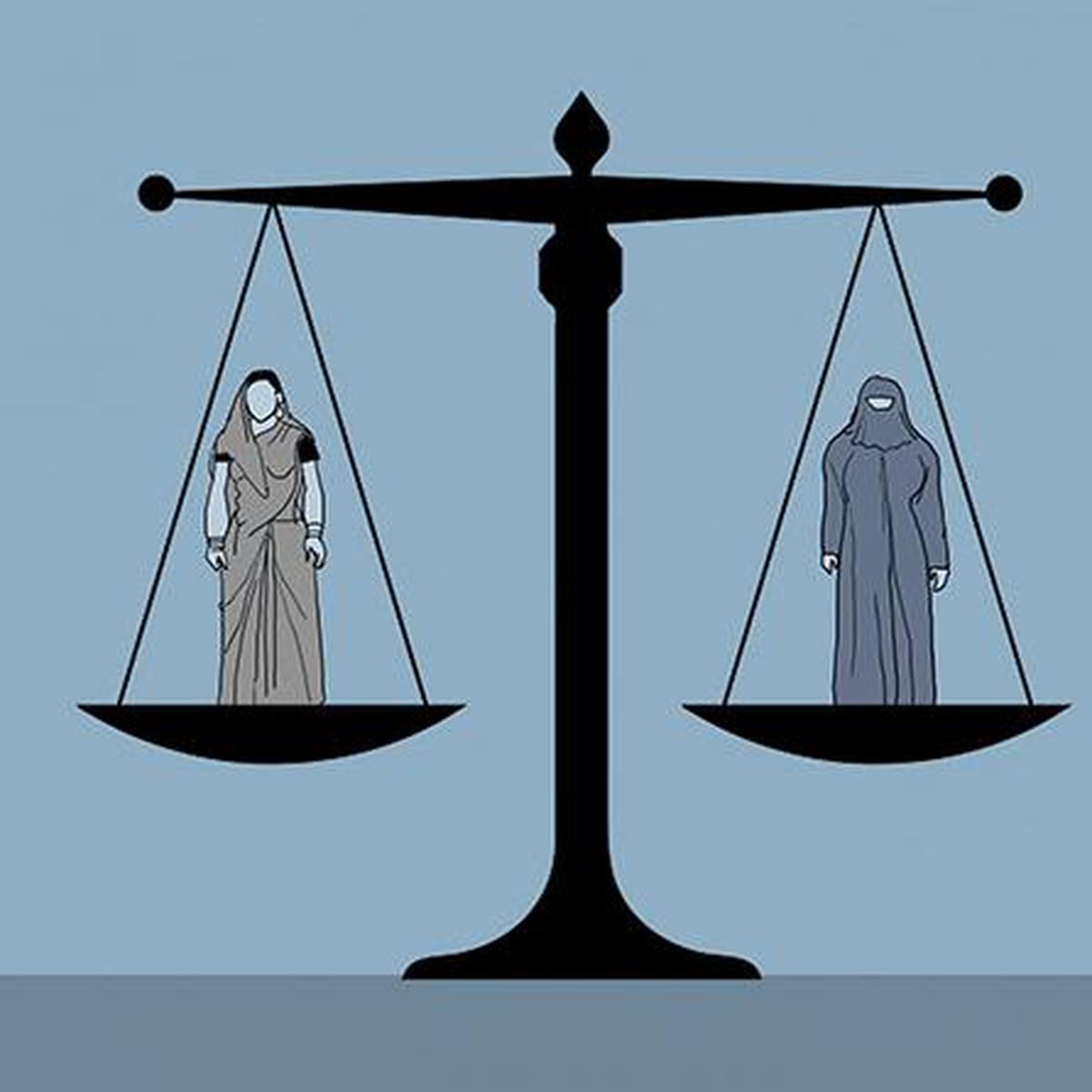
The Modern Precedent: The Ban on Triple Talaq
More than three decades after Shah Bano, the Supreme Court once again intervened decisively in Muslim personal law in the case of Shayara Bano v. Union of India (2017). This case challenged the practice of talaq-e-biddat—instantaneous and irrevocable triple talaq—where a Muslim man could divorce his wife by simply uttering the word "talaq" three times.
[PDF] Gender Equality and the Uniform Civil Code
This paper provides a concise summary of key legal precedents. We will use it to understand the Shayara Bano case and its impact.
First, quickly refresh your memory of the Shah Bano case by reading the paragraph on it under the subheading Landmark Cases. Then, in the same section, read the paragraph on the Shayara Bano case. Focus on the key outcome: the Supreme Court declared the practice of triple talaq unconstitutional. Finally, under the "Landmark Judgments" section a bit earlier in the text, find the paragraph on the Shayara Bano Case (2017). It explains that the judgment emphasized the need to protect women from arbitrary practices and reform personal laws.
The Shayara Bano judgment was a watershed moment for several reasons:
- Direct Intervention: Unlike Shah Bano, which involved a conflict between secular and personal law, here the Supreme Court directly tested a practice of personal law against the touchstone of fundamental rights and found it "manifestly arbitrary" and unconstitutional.
- Legislative Reinforcement: In a stark contrast to the aftermath of Shah Bano, the government followed the court's verdict by passing The Muslim Women (Protection of Rights on Marriage) Act in 2019. This law not only banned the practice but also criminalized it, making it a punishable offense.
For UCC proponents, the Shayara Bano case represents another victory for gender justice achieved through judicial intervention. They argue it highlights a pattern where discriminatory aspects of personal laws must be individually challenged and struck down, a process that is slow and arduous. A UCC, they contend, would address these issues systemically.
However, the criminalization of triple talaq was not universally celebrated. Some women's groups and legal scholars argued that making a civil matter of divorce a criminal offense could be counterproductive, potentially leading to the abandonment of women without the formal closure of divorce.
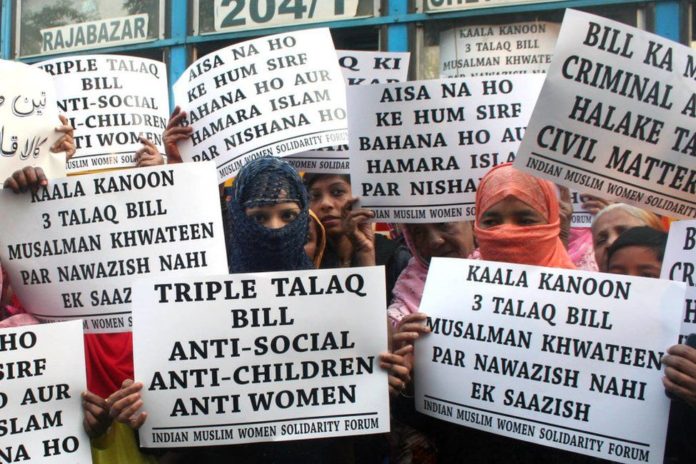
This divided reaction reveals the complexity behind the gender justice argument. It shows that even when a measure is framed as pro-woman, its intent and impact can be fiercely debated, especially when it intersects with minority politics.
Conclusion
In this lesson, we have critically evaluated the argument that a Uniform Civil Code is necessary for ensuring gender justice. We've seen how this argument is rooted in a broad feminist critique of the discriminatory provisions found across various personal laws.
Key Takeaways:
- The core gender justice argument for a UCC is that separate personal laws perpetuate patriarchal norms and systemic inequality, and a uniform code based on equality is the most effective remedy.
- The Shah Bano case (1985) is a pivotal precedent where the Supreme Court prioritized a woman's right to maintenance under secular law over personal law, but this judicial victory for gender justice was swiftly nullified by Parliament due to political pressure.
- The Shayara Bano case (2017) represents a more direct judicial intervention, striking down the practice of instant triple talaq as unconstitutional. This time, legislative action followed to reinforce, rather than overturn, the court's decision.
- Together, these cases create a powerful narrative for UCC proponents: they demonstrate a pattern of the judiciary acting as a bulwark for women's rights against discriminatory personal laws, suggesting that a comprehensive UCC is a more efficient and reliable solution than a slow, case-by-case reform process.
Preview of the Next Lesson:
While the argument for gender justice is compelling, it is not the only perspective in this debate. In our next two lessons, we will explore the counterarguments. First, we will analyze the case against a national UCC, focusing on the constitutional right to religious freedom and the concerns of minority groups that a UCC could impose majoritarian cultural norms. Then, we will delve deeper into the nuanced feminist critiques of the UCC, which question whether uniformity truly equals justice.