Introduction
In our last lesson, we explored the primary argument for a Uniform Civil Code (UCC)—its potential to deliver gender justice. We examined how landmark cases like Shah Bano and Shayara Bano have been used to build a powerful narrative that a common code is essential to rectify the discriminatory aspects of various personal laws. This lesson shifts our focus to the other side of this intricate debate. We will analyze the principal arguments against a national UCC, as articulated by minority groups and proponents of legal pluralism.
The central learning outcome for this session is to analyze these counterarguments, which are primarily grounded in the constitutional right to religious freedom and the preservation of distinct cultural identities. By dissecting these objections, you will gain a comprehensive understanding of why the UCC remains one of the most contentious and unresolved issues in Indian constitutional law and politics, reflecting a deep-seated tension between the state's drive for uniformity and society's demand for pluralism.
The Constitutional Conflict: Religious Freedom vs. Uniformity
The opposition to a national UCC is rooted in a fundamental tension within the Constitution itself. On one hand, Article 44, a Directive Principle of State Policy, directs the state to "endeavour to secure for the citizens a uniform civil code." On the other, Articles 25 and 26 guarantee the fundamental right to freedom of religion, including the right of religious denominations to manage their own affairs. Opponents argue that personal laws governing marriage, inheritance, and succession are not merely civil contracts but are deeply intertwined with religious doctrine and practice. Therefore, they contend that imposing a single code would directly violate their fundamental right to religious freedom.
This video from The Quint provides a succinct overview of the primary legal and constitutional arguments made against the UCC.
Uniform Civil Code: What is it and What are the Arguments Against it? | The Quint
This clip clearly articulates the core constitutional objections to a UCC, focusing on the conflict with fundamental rights.
Please watch the segment from the beginning. Focus on how it frames the debate around Article 25 (right to manage own affairs) and Article 29 (right to conserve distinct culture). Note the crucial point that the Constituent Assembly deliberately chose not to make the UCC a fundamental right.
This constitutional friction is the bedrock of the case against the UCC. The argument is that while Directive Principles are "fundamental in the governance of the country," they are not enforceable in court and cannot override the judicially enforceable Fundamental Rights. This perspective was debated intensely even during the framing of the Constitution.
To understand these historical roots, we will now look at the Constituent Assembly debates.
This video from HW News English provides an excellent summary of the differing viewpoints within the Constituent Assembly regarding the UCC.
Watch the segment from Constituent Assembly debates. Pay attention to the arguments made by members like Naziruddin Ahmad, who feared that a UCC would conflict with the right to freedom of religion. Critically, note the compromise that was reached: the UCC was included as a non-enforceable directive, with the understanding that its implementation should be gradual and based on the consent of the communities involved.
The arguments from the Constituent Assembly debates continue to be the cornerstone of the opposition today. They establish a historical basis for the claim that forcing a UCC upon unwilling communities goes against the very spirit of the constitutional compromise.
The Threat to Cultural Identity and Legal Pluralism
Beyond the legal arguments, the opposition to the UCC is deeply connected to the preservation of cultural identity. India's legal system is characterized by "legal pluralism," where different communities are governed by their own personal laws in civil matters. Opponents of the UCC see this pluralism not as a flaw to be corrected, but as a defining feature and strength of India's diverse society.
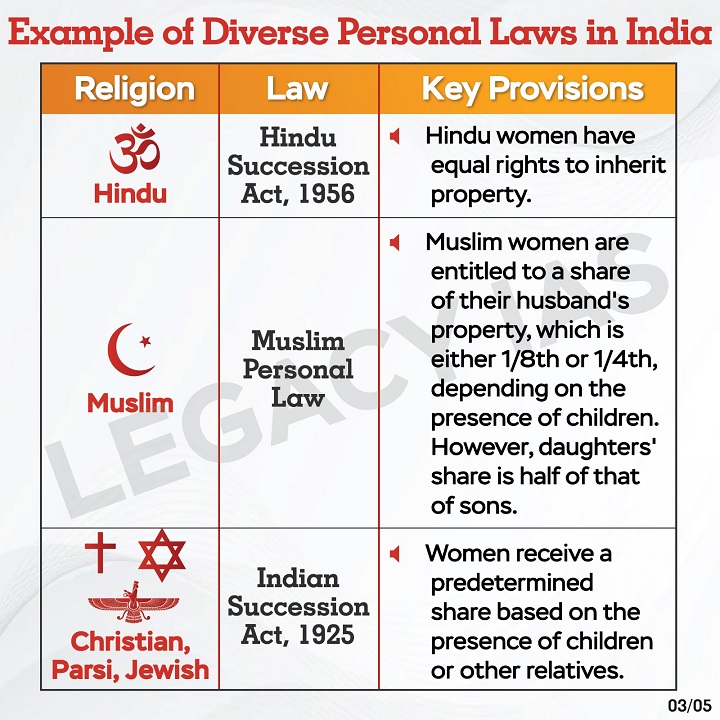
The core fear is that a "uniform" code would not be a composite, secular code but would, in practice, impose the norms of the majority community on minorities. This critique reframes the UCC debate from one of gender justice versus religion, to one of majoritarianism versus minority rights.
The following reading explains this perspective in detail, outlining the main challenges to implementing a uniform code and the arguments for preserving cultural and religious autonomy.
[PDF] Is UCC the Unity we aspire for in our Diversity?
This document provides a comprehensive analysis of the arguments against the UCC, focusing on minority rights and the fear of majoritarian imposition.
Please read the following sections to understand the key arguments: In Chapter 3, under "Challenges in implementing uniform laws across diverse communities," read the points on Religious and Cultural Sensitivities and Legal Pluralism. This sets out the foundational challenges. Next, read the section titled Arguments for Religious Autonomy. This directly addresses the core theme of preserving identity and religious freedom. Finally, read the section "Opponent’s Perspective," focusing on the points under Preservation of cultural diversity and Concerns over imposition. This explains the political fear that UCC would lead to the erosion of minority cultures.
This fear of cultural homogenization is not abstract. It manifests as organized political resistance, as seen in protests by various community organizations.

Specific Concerns of Different Communities
The opposition is not monolithic; different communities have distinct concerns.
-
Muslim Community: For many orthodox Muslims, the Sharia is considered divine law and therefore immutable. Organizations like the All India Muslim Personal Law Board (AIMPLB) argue that the state has no right to interfere in matters governed by religious texts. They view the UCC as a direct assault on their religious identity. The argument made by Jamiat Ulema-e-Hind, as noted in the Uttarakhand UCC debate, that they "cannot accept any law that is against Sharia," is representative of this position.
-
Tribal Communities: This is a crucial, often-understated dimension. Many Adivasi communities are governed by their own customary laws, which are distinct from both mainstream religious laws and secular laws. These customs have constitutional protection under the Fifth and Sixth Schedules. Tribal groups fear that a UCC would abolish their unique traditions related to marriage, inheritance, and community resource management. The fact that the recent Uttarakhand UCC strategically exempted tribal communities from its purview is a tacit admission of the legal and political complexity of this issue.
Uniform Civil Code: What is it and What are the Arguments Against it? | The Quint
This short clip highlights the often-overlooked but significant opposition from tribal communities.
Please watch the segment from tribal groups. It specifically mentions the concerns of Adivasi organizations and the special status of customary laws in states like Nagaland.
- Other Minorities: Some sections within the Christian and Parsi communities have also expressed reservations. Having fought their own long battles for reform within their personal laws (for example, to make divorce laws more equitable for Christian women), they are wary of a top-down, one-size-fits-all code that might disregard their unique legal history and community consensus.
The Law Commission's Stance: Reform, Not Replacement
Perhaps the most significant official validation of these concerns came from the 21st Law Commission of India. After extensive consultations, its 2018 report on Family Law reform concluded that a Uniform Civil Code was "neither necessary nor desirable at this stage."
This conclusion is pivotal. The Commission argued that a unified nation does not require "uniformity" and that secularism in India means respecting, not erasing, plurality. Instead of a single code, it recommended reforming discriminatory practices within each set of personal laws to achieve gender justice.
This final video explains the 2018 Law Commission's surprising and influential report, which advised against enacting a UCC.
Watch the segment from what is the law commission saying?. Focus on the core reasoning: A unified nation does not need uniformity. Secularism must accommodate plurality and difference. The commission's recommendation was to address specific discriminatory practices within personal laws (e.g., standardizing marriage age, simplifying divorce) rather than imposing a single code.
The Law Commission's report provided strong intellectual ammunition for opponents of the UCC, suggesting a path forward that balances gender justice with the preservation of religious and cultural diversity. It reframed the solution as internal reform rather than external imposition.
Conclusion
In this lesson, we have analyzed the multifaceted arguments against a national Uniform Civil Code. We moved beyond a simple binary of progress versus tradition to understand the deep constitutional, cultural, and political objections raised by minority communities and legal experts.
Key Takeaways:
- Constitutional Conflict: The core legal argument against the UCC is that it conflicts with the fundamental rights to freedom of religion and culture (Articles 25-29), which are considered judicially enforceable, unlike Article 44 (a Directive Principle).
- Threat to Pluralism: Opponents argue that a UCC would threaten India's legal pluralism and cultural diversity, which they see as a national strength. There is a potent fear that "uniformity" will become a vehicle for "majoritarianism," imposing the norms of the majority on minority groups.
- Community-Specific Concerns: Different communities, including Muslims, Christians, and especially tribal groups, have distinct reasons for opposing a UCC, rooted in the perceived sanctity of their religious laws or the need to protect unique customary practices.
- The Law Commission's View: The 21st Law Commission's 2018 report is a key document in this debate. It argued against a UCC at this stage, favoring instead the reform of discriminatory practices within existing personal laws to reconcile gender justice with religious freedom.
Preview of the Next Lesson:
We have now examined the case for the UCC (gender justice) and the case against it (religious freedom). But the debate is even more complex. The next lesson will add a final layer of nuance by exploring the feminist critique of the UCC. We will analyze the arguments from women's groups who, while committed to gender equality, are skeptical of a state-led UCC, questioning whether uniformity truly guarantees justice or simply imposes a different form of patriarchal control under a secular guise.