Welcome back. Over the last seven lessons, we have systematically explored each of the seven techniques within the SCAMPER framework: Substitute, Combine, Adapt, Modify, Put to Another Use, Eliminate, and Reverse. You've applied each one to generate ideas in both lingerie design and relationship dynamics.
This lesson serves as the capstone for Module 1. Our goal is to bring everything together. Instead of using the techniques one by one, we will now synthesise SCAMPER techniques to generate design variations for a cleavage-enhancing bra based on a client brief. This exercise mimics a real-world creative challenge, requiring you to fluidly combine different ideation strategies to meet a set of specific goals.
1. The Design Challenge: A Client Brief
Imagine you've been approached by a lingerie brand with the following project:
Client: Elysian Lingerie (A brand focused on empowerment, comfort, and modern elegance).
Project: Design a new bra for our upcoming 'Aura' collection.
Core Goal: The bra must offer significant and reliable cleavage enhancement, specifically targeting customers with small-to-medium bust sizes (A to C cups).
Key Requirements:
- All-Day Comfort: It must be comfortable enough for daily wear, not just for special occasions.
- Natural Shape: The enhancement should look natural, avoiding an overly artificial or "pushed-up" aesthetic.
- Innovative Materials: The design should incorporate sustainable fabrics or innovative materials.
- Modern Aesthetic: The final look should feel contemporary and elegant, aligning with our brand identity.
To effectively brainstorm solutions, we first need a shared understanding of the product's components.

2. A Framework for Synthesis
SCAMPER is most powerful when its techniques are not used as a rigid checklist, but as a fluid set of creative prompts. You can combine them, jump between them, and use them in any order to build on an idea.
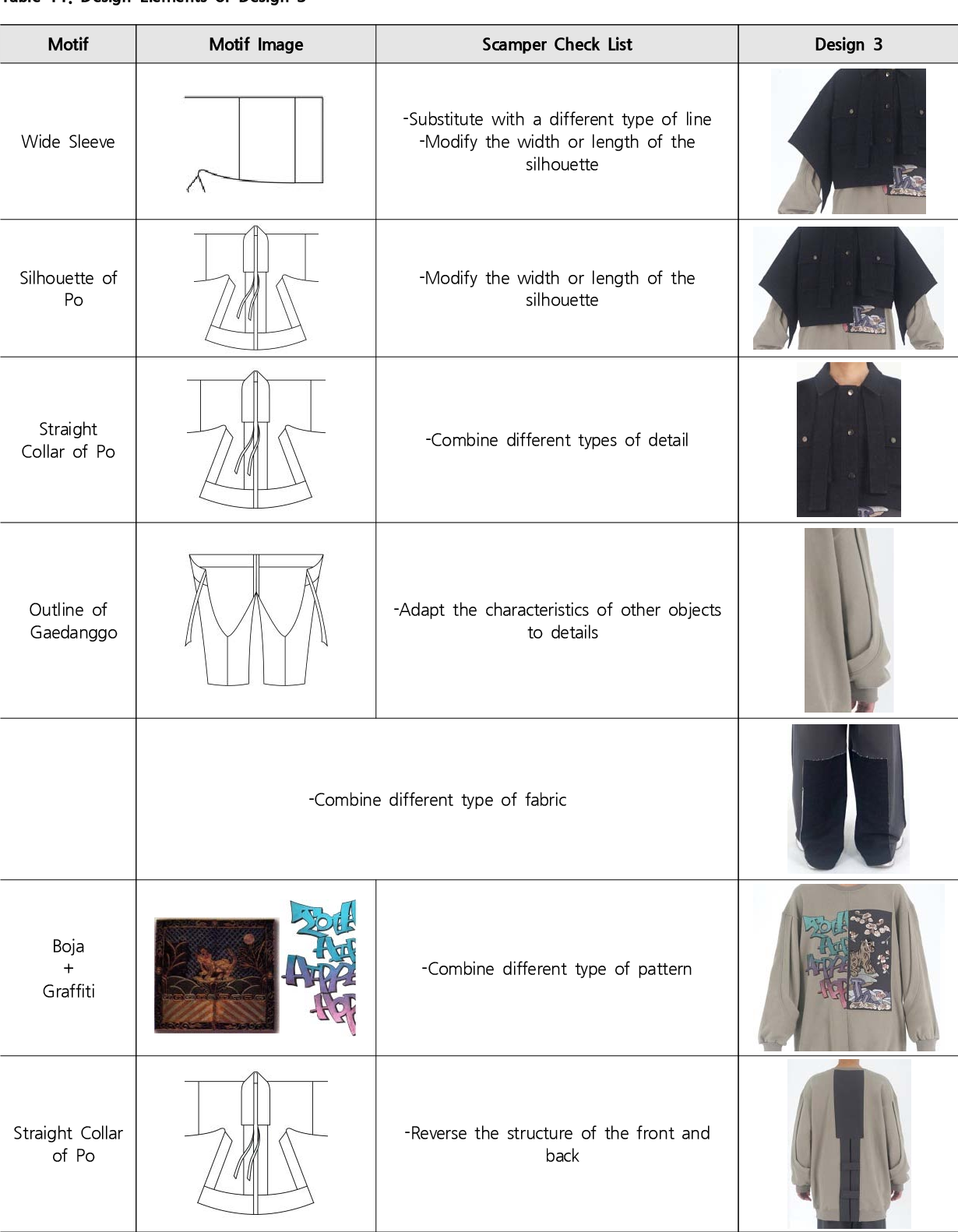
Fashion design students often use these techniques intuitively, blending them to create new designs. Let's look at how students in a fashion design program described their use of SCAMPER.
[PDF] The effectiveness of SCAMPER techniques on creative thinking ...
This excerpt from a study titled 'The effectiveness of SCAMPER techniques on creative thinking skills among fashion design vocational college' shows how students naturally apply these principles. Pay attention to how they describe combining multiple elements or modifying existing ones.
Please read the 'FINDINGS' section, focusing on the student quotes under each SCAMPER sub-heading (Substitute, Combine, Adapt, etc.). This will give you a feel for how these abstract techniques translate into concrete design thinking.
As the study shows, students often find Combine and Modify to be particularly powerful. Let's use the client's requirements as a scaffold to apply a combination of SCAMPER techniques ourselves.
3. Applying SCAMPER to the Brief
We will now brainstorm ideas for each of the client's requirements, pulling from our full SCAMPER toolkit.
Requirement 1: Significant Cleavage Enhancement
- Modify: The most direct approach. How can we modify the cup? We could add graduated padding that is thicker on the bottom and outer sides to push the breast tissue up and in. The video below gives a practical, DIY demonstration of this principle.
BIG BUST BRA HACK - Making CUSTOMIZED BRA CUP to get a PUSH UP EFFECT
When we talk about 'Modifying' a bra cup, it can be as direct as adding a custom-shaped insert. This video from LarryB Threads, 'BIG BUST BRA HACK', shows exactly how this is done to create a push-up effect.
Watch from 01:30 to 06:57. Observe the process of shaping the foam insert, covering it, and sewing it into the cup. This is a tangible example of the 'Modify' technique in action.
- Combine: We can combine a low, plunging center gore (to allow breasts to come together) with the side-support panels found in some full-coverage bras. This creates a push-in and push-up effect simultaneously.
- Reverse: In our last lesson, we asked how to prevent cleavage. One answer was to use a wide, tall center gore. The reversal of this gives us a key insight: our design must have a very low and narrow center gore, or perhaps none at all.
Requirement 2: All-Day Comfort
- Substitute: What if we substitute the traditional rigid metal underwire? We could replace it with a flexible polymer composite, a gel-filled channel, or even a design that uses the fabric's tension to provide support. This directly addresses the main source of discomfort for many wearers.
- Eliminate: Can we eliminate the underwire entirely? This would require us to find lift and support from other components. This might lead to ideas like using reinforced, laminated fabric panels under the bust or a 'sling' design integrated into the cup. We could also eliminate seams by using molded cups for a smoother feel.
Requirement 3: Innovative & Sustainable Materials
- Substitute: Instead of standard nylon and spandex, we could substitute fabrics made from bamboo, TENCEL™ Modal (derived from beechwood), or recycled lace. For the padding, we could substitute petroleum-based foam with a bio-foam made from algae or sugarcane.
- Put to Another Use: Could we use a material from a completely different field? For example, using medical-grade silicone for a uniquely soft and form-fitting pad, or adapting shape-memory alloys (used in aerospace and medicine) for an underwire that adapts to the wearer's body heat and shape.
Requirement 4: Modern & Elegant Aesthetic
- Reverse: Instead of hiding the bra's construction, what if we celebrate it? We could make the underwire casing a contrasting color, turning a functional element into a design feature. This "inside-out" approach can create a very technical, modern look.
- Eliminate: We could eliminate all lace, bows, and ornamentation to create a minimalist design that relies purely on its silhouette and seam lines for beauty.
- Adapt: We can adapt aesthetics from architecture or industrial design, using clean lines, geometric shapes, and a focus on structure to create a sophisticated and contemporary feel.
This table shows how a designer might map these ideas.
4. Synthesising Two Design Concepts
Now, let's synthesize these scattered ideas into two distinct concepts that meet the client's brief.
Concept 1: The "Bio-Plunge"
- Description: This design prioritizes comfort and a natural feel by using innovative materials. It provides cleavage through shaping rather than extreme padding.
- SCAMPER Elements:
- Substitute: The traditional underwire is replaced with a firm, C-shaped gel insert that cushions and supports.
- Modify: The cups are molded from a bamboo-blend fabric and feature light, crescent-shaped padding (Modify) at the base, providing a gentle lift.
- Combine: It combines a deep plunge front with wide, supportive wings made from power mesh, balancing aesthetics with function.
Concept 2: The "Structural"
- Description: This design takes a minimalist, deconstructed approach, finding its aesthetic in the bra's own engineering.
- SCAMPER Elements:
- Reverse: The construction is exposed. The underwire channel and seam lines are highlighted in a contrasting color, becoming the primary design feature.
- Eliminate: There is no foam padding. Instead, "cut-and-sew" cups with multiple panels of rigid, non-stretch tulle are used to create shape and lift.
- Put to Another Use: The straps use a magnetic clasp system adapted from high-performance athletic gear for a clean, seamless closure.
Your Turn: Create a Third Concept
Now it's your turn to synthesize. Using the client brief and the components from the bra anatomy diagram, create a third unique design concept.
Your Task:
- Give your concept a name (e.g., "The Feather-Lift," "The Sculptor").
- Select at least three SCAMPER techniques.
- For each technique, describe which bra component you are changing and what the change is.
- Write a short paragraph summarizing your design and explaining how it meets the client's needs for cleavage, comfort, sustainability, and style.
Please take about 15 minutes for this exercise. There is no single right answer; the goal is to demonstrate a creative synthesis of the techniques we've learned.
Conclusion
In this lesson, you synthesized the seven SCAMPER techniques to generate innovative solutions for a specific design problem. This process of moving from a list of prompts to a set of coherent, integrated concepts is the true power of a structured ideation framework.
Key Takeaways:
- Synthesis is the Goal: SCAMPER is a toolkit, not a rigid recipe. The techniques are meant to be combined to build complex, multi-faceted ideas.
- Constraints Fuel Creativity: A clear client brief with specific requirements provides the necessary focus to guide your brainstorming.
- Component-Level Thinking: Breaking a product or problem down into its core components (like the parts of a bra) allows for systematic application of SCAMPER.
This lesson concludes Module 1 on divergent ideation. You have successfully learned and applied a powerful framework for generating a wide variety of new ideas.
In our next lesson, we will begin Module 2: Exploring Possibilities with Thought Experiments. We will shift our focus from generating ideas to evaluating them more deeply. Our first topic will be Retroduction, a form of logical inference used to find the most plausible cause for a surprising observation, which will transition us into analyzing social dynamics in your chosen context of non-monogamy.