Introduction
In our last lesson, we focused on semifactual thinking, a method for analyzing how small, incremental changes to a past action could have led to a better outcome. You applied this to refine a reconnection ritual in a Vee relationship, turning an awkward interaction into a potentially more successful one. This technique is about process improvement—making small tweaks to get better results next time.
Today, we address the "C" in your RCS PPB framework: Counterfactual thought experiments. We are moving from minor tweaks to major "what if" scenarios. Instead of asking, "What if I had done that slightly differently?", we will ask, "What if I had made a completely different choice at a major turning point?"
Your learning outcome for this lesson is to construct a counterfactual thought experiment to evaluate the consequences of a major past decision.
Given your background as a statistician, you'll find the logic here familiar. Counterfactual thinking is the mind's way of approximating a controlled experiment to understand causality.
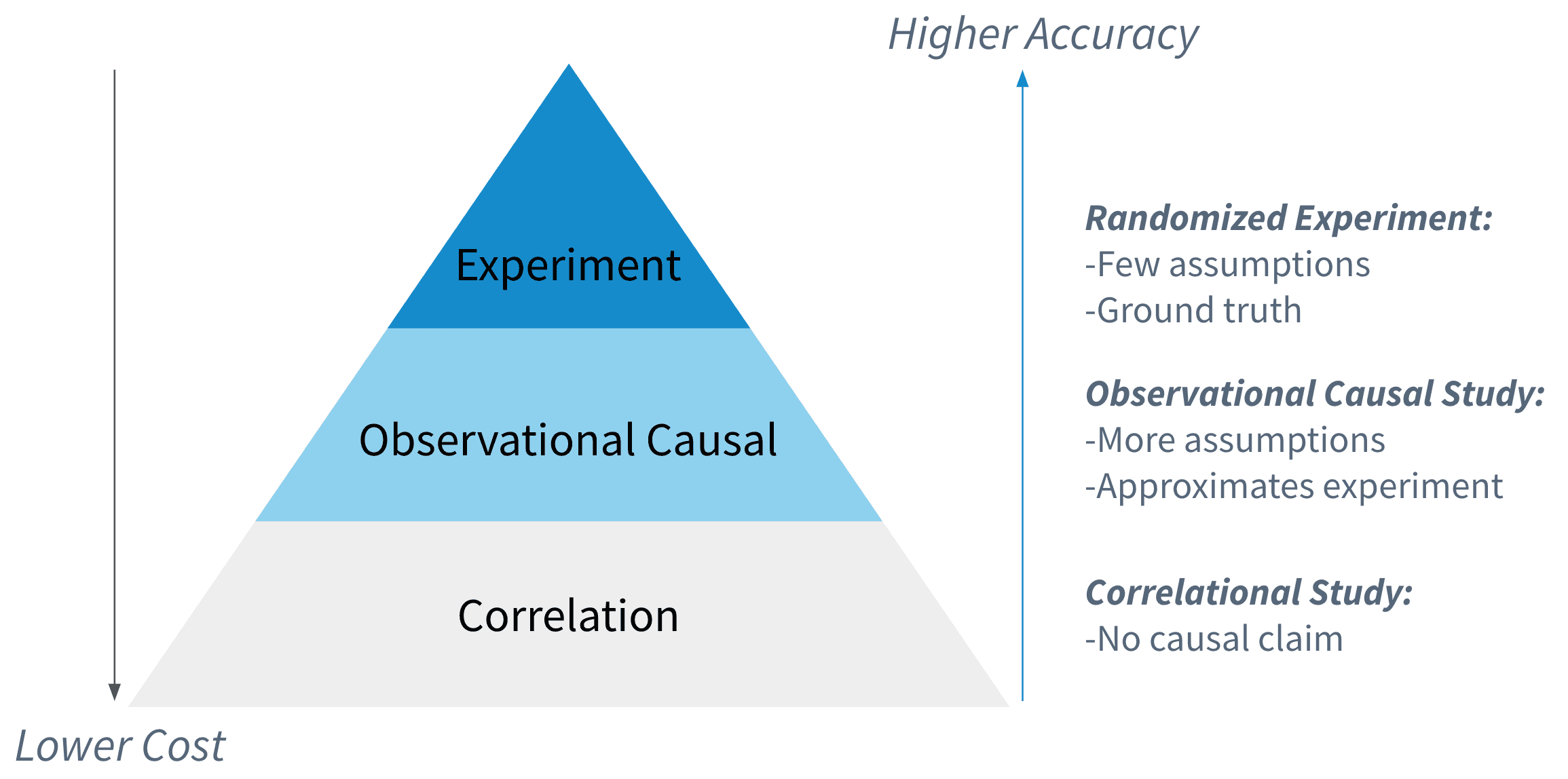
We will construct these thought experiments not through simple daydreaming, but through a structured, analytical process.
1. From "If Only" to "What If": Defining Counterfactuals
Counterfactual thinking means "contrary to the facts." It involves mentally undoing a significant past decision to explore an alternative reality that could have resulted.
Let's clarify the distinction we've built over the last few lessons:
- Retroduction (Lesson 1): You see a surprising outcome (e.g., a design flaw) and work backward to infer the most plausible cause. It answers "Why did this happen?"
- Semifactual (Lesson 2): You keep the basic situation the same but alter a minor detail of an action to see if the outcome improves. It answers "How could I have done that better?"
- Counterfactual (This Lesson): You change a major decision entirely to explore a different timeline. It answers "What would have happened if I had chosen a different path?"
While semifactuals are for tactical refinement, counterfactuals are for strategic evaluation. They help you understand the deep-seated consequences of your most pivotal choices, which is essential for making better major decisions in the future.
2. A Framework for Rigorous Construction: Counterfactual Potency
To prevent "what if" scenarios from becoming unproductive brooding, we need a method to assess their validity and importance. The most powerful counterfactuals are those that were genuinely possible and would have likely led to a different outcome.
A fascinating paper from the field of social psychology provides a quantifiable way to analyze this. It introduces the concept of Counterfactual Potency (CP).
A counterfactual potency analysis of previous dating alternatives
To build our framework, let's turn to the academic paper 'A Counterfactual Potency Analysis of Previous Dating Alternatives' by Petrocelli et al. While its focus is on romantic relationships, the analytical method it proposes is a universal tool for evaluating any counterfactual. It will give you a robust, data-driven way to approach this type of thought experiment.
Please read the following sections: Introduction (from the start until the end of the paragraph '...chose Lauren over Naomi?'): Focus on how the authors define counterfactual thinking as 'mentally undoing' a past decision. Counterfactual potency (the full section): This is the most critical part. Understand the formula: Counterfactual Potency (CP) is the product of 'if likelihood' (IL) and 'then likelihood' (TL). Method (Study 1) (the paragraph titled 'Counterfactual potency-forgone alternative'): Pay close attention to the specific questions used to measure IL and TL on a 0-10 scale. This gives us a practical measurement tool.
The Counterfactual Potency (CP) Framework
Based on the paper, we can construct a thought experiment in six steps:
- Isolate a Major Past Decision: Identify a significant fork in the road from your past. This must be a moment where you made a conscious, impactful choice.
- Define the Counterfactual Statement: Clearly phrase the alternative reality as an "If... then..." statement. For example: "If I had [made a different choice], then [a different outcome] would have occurred."
- Assess the 'If Likelihood' (IL): On a scale of 0 (not at all likely) to 10 (extremely likely), how probable was it that you would have made the alternative choice at that time, given the circumstances and information you had? This assesses the plausibility of the antecedent.
- Assess the 'Then Likelihood' (TL): On a scale of 0 to 10, assuming you had made that different choice, how probable is it that the specified outcome would have actually happened? This requires what the paper "Thought experiments: Review and recommendations" calls "disciplined imagination"—using logic and what you know about the world to simulate the consequences.
- Calculate Counterfactual Potency (CP): Multiply your two scores. The result is a score from 0 to 100. A high score (e.g., above 50) suggests a potent counterfactual—a genuinely plausible alternative past that is worth reflecting on. A low score helps you dismiss unproductive "what ifs."
- Evaluate the Consequences & Extract the Lesson: What does the potency of this counterfactual tell you?
- A high-potency counterfactual reveals a real trade-off you made. The goal isn't regret, but to understand the strategic principles that governed your choice. What values did you prioritize? What risks did you accept?
- A low-potency counterfactual can be liberating. It might reveal that the alternative was either not a real option (low IL) or unlikely to produce the desired outcome anyway (low TL), helping you make peace with the past.
3. Your Turn: Analyzing a Pivotal Business Decision
Let's apply this framework. Since our last practical exercise was on relationships, we will now focus on your lingerie design work.
Scenario:
Five years ago, your independent lingerie design brand was just starting out and financially fragile. You were approached by a major, fast-fashion retailer with a significant offer.
- The Offer: They would fund the mass production and distribution of your single most "commercial" and safe bra design. In return, they would take a 70% share of the profits from that line and have final say on all design modifications to ensure mass appeal.
- The Decision: You turned the offer down. You were worried about losing creative control, diluting your brand's innovative edge, and being locked into a single, uninspired design.
- The Present: Today, your brand is creatively respected and has a loyal niche following. However, it constantly struggles with cash flow, and you lack the capital for large-scale production and marketing.
Your Task (20 minutes):
Use the six-step Counterfactual Potency framework to construct and evaluate a thought experiment about this past decision.
- Isolate the Decision: (This is already done for you: Turning down the retailer's offer).
- Define the Counterfactual Statement: Formulate the "If... then..." statement for this scenario. What is the core "what if" you'd want to explore?
- Assess the 'If Likelihood' (IL): Thinking back to that time, what was the likelihood you would have accepted the deal? Consider the financial pressures you were under versus your commitment to your creative vision. Assign a score from 0 to 10.
- Assess the 'Then Likelihood' (TL): Now, assume you did accept the deal. What is the likelihood that your brand would be financially secure and operating at a large scale today? Consider the retailer's market power but also the risks (e.g., the design flopping, the retailer dropping you after one season, creative burnout). Assign a score from 0 to 10.
- Calculate Counterfactual Potency (CP): Calculate the CP score based on your IL and TL ratings.
- Evaluate the Consequences & Extract the Lesson:
- Based on your CP score, how potent is this counterfactual? Is it a ghost that deserves attention or a fantasy to be dismissed?
- What strategic lesson does this exercise teach you about your core values as a designer and business owner? What does it reveal about the fundamental tension between creative independence and commercial scale that you must manage in future decisions?
Take your time to reflect on each step and write down your thoughts.
Conclusion
Today, we've added a powerful tool for strategic evaluation to your mental toolkit. By moving from simple "what ifs" to a structured analysis, you can turn reflections on the past into clear insights for the future.
Key Takeaways:
- Counterfactuals are for Strategic Evaluation: They help us understand the consequences of major life and business decisions, distinct from the tactical refinement offered by semifactuals.
- Causality is Key: Counterfactuals are your mind's best attempt to run a controlled experiment on the past to understand the causal impact of a choice.
- Potency Matters: Not all "what ifs" are equal. The Counterfactual Potency framework () provides a rigorous way to quantify and assess whether an alternative past was a realistic possibility.
- The Goal is Insight, Not Regret: The purpose of this exercise is to uncover the deep-seated principles and trade-offs in your decision-making, providing strategic wisdom for the future.
We have now explored three ways of looking at the past: inferring causes (Retroduction), refining actions (Semifactuals), and evaluating major choices (Counterfactuals).
In our next lesson, we will pivot to look forward. We'll explore Predictive thought experiments, a method for forecasting the most likely outcomes of a proposed action you are considering now, helping you to choose your path more wisely.