Introduction
Welcome to your second lesson. In our previous session, we established the fundamental difference between cloud-based and on-premise HR systems, concluding that cloud-based solutions are almost always the right strategic choice for modern Indian SMEs due to their cost-effectiveness, scalability, and accessibility.
Now that you know what kind of system to look for, the next question is: how do you choose the right one? The market is crowded with options, each promising to be the perfect solution.
This lesson will equip you with a structured, practical framework to cut through the marketing noise. Our goal is to develop a method for evaluating HR tools based on three critical pillars: cost, scalability, and integration capabilities, all tailored to the specific needs of Indian small and medium-sized enterprises (SMEs). This will empower you to make data-driven decisions that support your company's growth instead of hindering it.
The Problem: Avoiding the "Overkill" HR System
Many companies, especially SMEs, make the mistake of choosing an HR system that is too expensive, too complex, and ultimately a poor fit for their actual day-to-day needs. They end up with a system that solves problems they don't have while failing to fix the ones they do. This is the "overkill" system.
To avoid this common trap, you need to shift your mindset from being dazzled by a long list of features to focusing on solving your company's real, immediate problems.
The following video provides an excellent overview of this challenge and introduces a smarter way to think about choosing HR technology.
Choosing the Right HRIS for Your SME, A Complete Step by Step Guide
This video from HR TechPartner, 'Choosing the Right HRIS for Your SME,' clearly explains the problem of 'overkill' systems and sets the stage for a more strategic evaluation approach.
Please watch from 00:53 to 05:27. Pay close attention to: The red flags of an 'overkill' system (long feature lists, vague fees, long implementation). The shift from vendor features to your company's actual pain points. The 'Lego block' analogy for a modular, scalable approach. The three core principles: the system must be smart, simple, and scalable.
As the video highlights, the key is to start with your core needs and choose a system that grows with you, not way out ahead of you. Let's build a framework to do just that.
A Four-Pillar Framework for Evaluating HR Tools
To systematically evaluate HR software, we will use a framework built on four pillars. The learning outcome specifies three (Cost, Scalability, Integration), and we'll add a fourth that is non-negotiable in the Indian context: Compliance & Support.
Let's explore what questions to ask and what to look for within each pillar. The following article will be our primary guide.
10 Best HR Software India for Startups & SMEs 2026
The article '10 Best HR Software India for Startups & SMEs' from CrazeHQ provides a superb, practical guide on how to choose the right software. We will refer to its '7 Key Criteria' section throughout this lesson.
For now, just open this article and quickly skim the section 'How to Choose the Right HR Software: 7 Key Criteria'. We will be diving into specific parts of this section next.
Pillar 1: Total Cost of Ownership (TCO)
The advertised per-employee-per-month price is just the tip of the iceberg. A true cost evaluation requires you to understand the Total Cost of Ownership (TCO) over the long term.
As you saw in the last lesson, hidden costs can quickly accumulate. Your IT background gives you an advantage here, as you're likely familiar with the difference between direct and indirect technology costs.
Let's use the CrazeHQ article to identify these costs.
10 Best HR Software India for Startups & SMEs 2026
Let's revisit the CrazeHQ article to break down the components of TCO.
Please read section '4. Total Cost of Ownership' and the first FAQ, 'What is the average cost of HR software in India?'. Note down the list of potential extra costs beyond the base subscription fee.
When evaluating cost, you must ask vendors for the "all-in" price. Key questions include:
- What is the per-employee-per-month fee? Are there pricing tiers?
- Are there one-time setup or implementation charges?
- Are essential modules like Payroll, Performance Management, or an Applicant Tracking System (ATS) included or sold as separate add-ons?
- Are there fees for data migration, training, or premium support?
- Are there annual maintenance fees or mandatory price increases?
A common mistake is choosing the cheapest base plan, only to find that critical features cost 2-3x more as add-ons.
Pillar 2: Scalability and Future-Proofing
Scalability isn't just about handling more employees. It's about the system's ability to adapt to your company's growing complexity and evolving needs. This is the "Lego block" approach mentioned in the video.
The system you choose today for 50 employees must also work effectively when you have 250.
10 Best HR Software India for Startups & SMEs 2026
The CrazeHQ article provides clear guidance on what to look for in a scalable system.
Read section '7. Scalability and Future-Proofing' and the second FAQ, 'What features are essential for startups using HR software?'. Focus on the distinction between 'Must-Have' features for today and 'Nice-to-Have' features for later.
Key questions for evaluating scalability:
- Growth Path: Does the system offer a clear path to add more advanced modules (e.g., Performance Management, Learning & Development, Onboarding) later?
- Functional Scaling: Can it support multi-location operations, different legal entities, or more complex approval workflows as your organization grows?
- Performance: Will the system's performance degrade as you add more employee data and run more complex reports?
- Customization: Can you create custom fields, reports, and workflows to match your unique processes, or are you locked into the vendor's default setup?
A good system allows you to solve today's problems without forcing you to pay for tomorrow's solutions.
Pillar 3: Integration Capabilities
An HR tool doesn't exist in a vacuum. It must communicate with other systems to create a single source of truth and automate data flow. Your experience in IT makes you well-placed to appreciate the importance of seamless data exchange between different software. The goal is to eliminate manual data entry, which is time-consuming and prone to error.
Key questions for evaluating integration:
- Core Integrations: Does it have a built-in payroll module, or does it integrate smoothly with a separate payroll system (like Zoho People integrates with Zoho Payroll)?
- Ecosystem: Does it offer pre-built integrations with accounting software (e.g., Tally, Zoho Books), communication tools (e.g., Slack, Microsoft Teams), or biometric attendance devices?
- API Access: For future needs, does the vendor provide an Application Programming Interface (API)? An API allows your developers (or a consultant) to build custom connections to other software, offering maximum flexibility.

Pillar 4: Indian Compliance & Support
For any business operating in India, this pillar is critical. A fantastic tool with poor compliance support is a liability, not an asset. International platforms, while powerful, often treat Indian statutory requirements as an afterthought, requiring manual workarounds.
10 Best HR Software India for Startups & SMEs 2026
The CrazeHQ article highlights the specific compliance and support factors to scrutinize.
Please re-read sections '5. Indian Compliance and Statutory Support' and '6. Customer Support Quality' from the '7 Key Criteria' list.
Key questions for evaluating compliance and support:
- Statutory Compliance: Does the system automatically calculate and manage PF, ESIC, Professional Tax (PT), and TDS according to the latest regulations? Does it generate statutory forms like Form 16?
- Law Updates: Does the vendor guarantee timely updates to the software whenever labour laws or tax slabs change?
- Support Quality: What are the support channels (phone, email, chat)? What is the guaranteed response time? Is support included in the price or an extra cost? Test their support during the free trial period.
Putting It All Together: The Decision Matrix
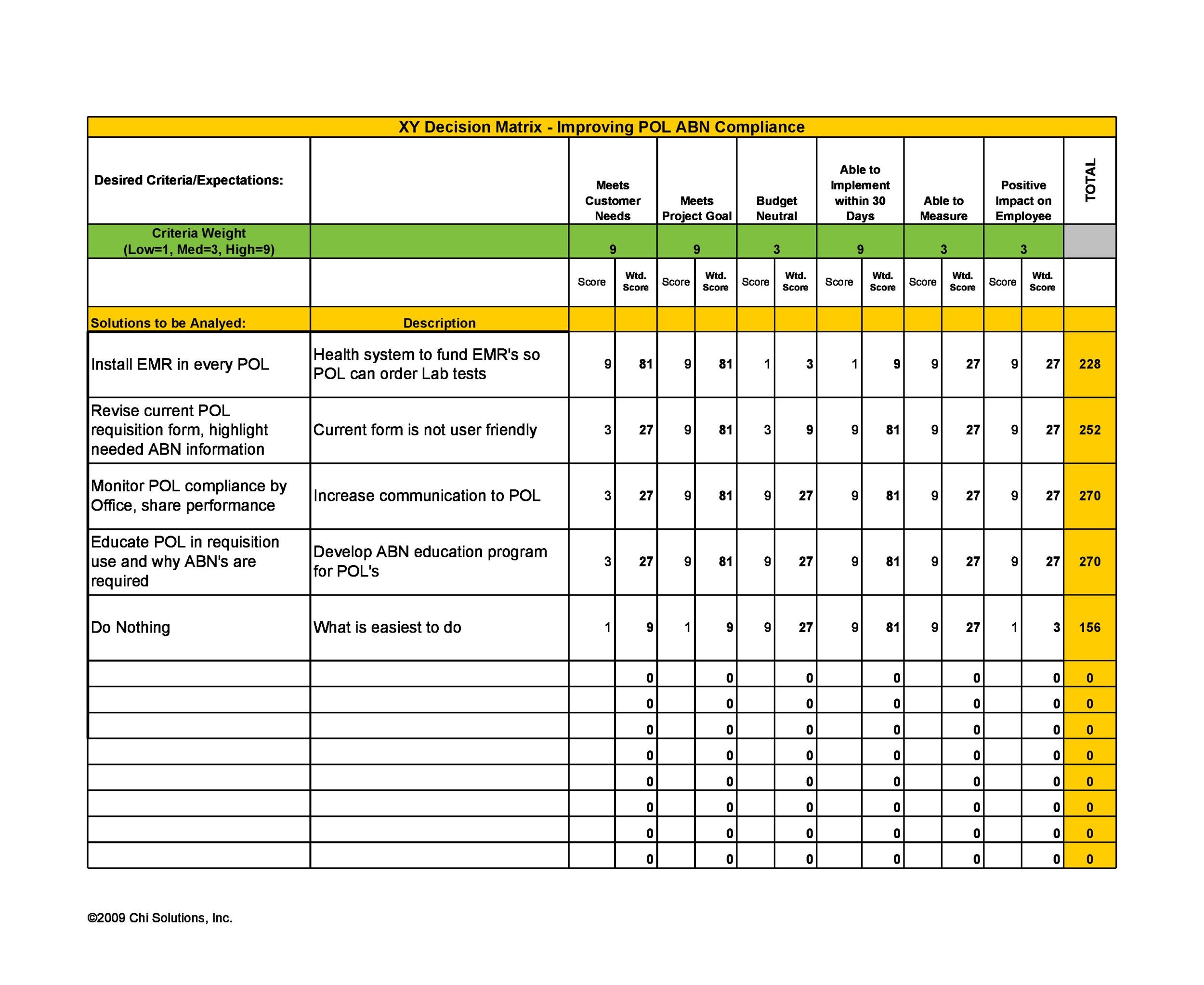
Now that we have our four pillars, how do you use them to compare different vendors objectively? A decision matrix is a simple but powerful tool for this.
It allows you to list your evaluation criteria, assign a weight to each based on its importance to your organization, and score each potential vendor against those criteria. This transforms a subjective choice into a more data-driven decision.
Test your understanding!
Imagine you are advising a 50-person Indian tech startup. Their highest priorities are keeping costs low and having a system that can grow with them as they plan to triple their headcount in two years. They also need a system that is easy to implement as their HR team is small.
Using the four pillars we've discussed, list five evaluation criteria for a decision matrix. Assign a weight to each criterion (High=9, Medium=3, Low=1) and briefly justify your weighting based on the startup's priorities.
Show answer
Here is an example of a weighted decision matrix for the startup:
| Criterion | Weight (1, 3, 9) | Justification |
|---|---|---|
| Total Cost of Ownership (TCO) | 9 (High) | The startup's highest priority is keeping costs low. A low, predictable TCO is essential for their tight budget. |
| Scalability (Modular Growth) | 9 (High) | They plan to triple in size. The system must be able to scale efficiently without requiring a complete replacement. The ability to add modules later is key. |
| Ease of Implementation/Support | 3 (Medium) | With a small HR team, a fast and easy setup is important to get value quickly. A vendor with strong onboarding support is preferred. |
| Core HR & Payroll Integration | 3 (Medium) | Automating core HR and payroll is a primary efficiency gain. Seamless integration is a key functional requirement. |
| Indian Statutory Compliance | 9 (High) | Correction: This should also be a high priority. Non-compliance is a major financial and legal risk that a startup cannot afford. While not explicitly stated as their top priority, it is a foundational requirement for any Indian business. A better matrix would have TCO, Scalability, and Compliance all weighted as 'High'. |
Self-correction note: Initially, one might place a lower weight on compliance based on the prompt, but in a real-world scenario for any Indian company, statutory compliance is a non-negotiable, high-priority item. The risk of getting it wrong is too great.
Conclusion
You now have a robust framework and a practical tool for evaluating HR software. Instead of being swayed by flashy demos, you can lead a structured process to find the best-fit solution for your organization's specific needs and context.
Key Takeaways:
- Avoid the "Overkill" System: Start by identifying your core problems, not by reviewing endless feature lists.
- Use the Four-Pillar Framework:
- Total Cost of Ownership: Look beyond the sticker price to uncover all hidden costs.
- Scalability: Choose a system that can grow with your company in both size and complexity.
- Integration: Ensure the tool can connect with your other key business systems to automate data flow.
- Indian Compliance & Support: Verify that the system is built to handle India-specific statutory requirements and is backed by reliable support.
- Apply the Decision Matrix: Use a weighted decision matrix to compare vendors objectively and make a data-driven choice.
Preview of the next lesson:
Now that you have the framework to evaluate tools, we will move on to the next practical step. In the upcoming lesson, you will identify and compare leading free and freemium HR tools (for HRIS, ATS, and Payroll) available in the Indian market. We will apply the principles from this framework to analyze real-world options you can start exploring immediately.