Introduction
Hello! Welcome to your fourth lesson. In our previous sessions, we focused on the foundational "systems of record" in HR—the HRIS, ATS, and Payroll platforms that are essential for managing employee data and core processes. We looked at how to evaluate these tools and identified key freemium options like greytHR and Zoho People available in the Indian market. These systems are primarily built for HR and management to maintain accurate records.
Today, we shift our focus from the system to the user—the employee. We are moving up a level to discuss a more strategic concept: the Employee Experience Platform (EXP). This lesson will define what an EXP is, what its core components are, and why it holds significant strategic value for modern organizations. This topic is central to your goal of mastering "future-ready" HR, as it represents the convergence of technology, communication, and employee-centric design.
From Employee Experience (EX) to a Platform (EXP)
Before we define the platform, it's important to understand the concept it serves: Employee Experience (EX). EX is the sum of all interactions an employee has with their employer over the duration of their employment lifecycle. It's everything they observe, feel, and encounter.
A helpful way to frame this is to see EX as having three core dimensions:
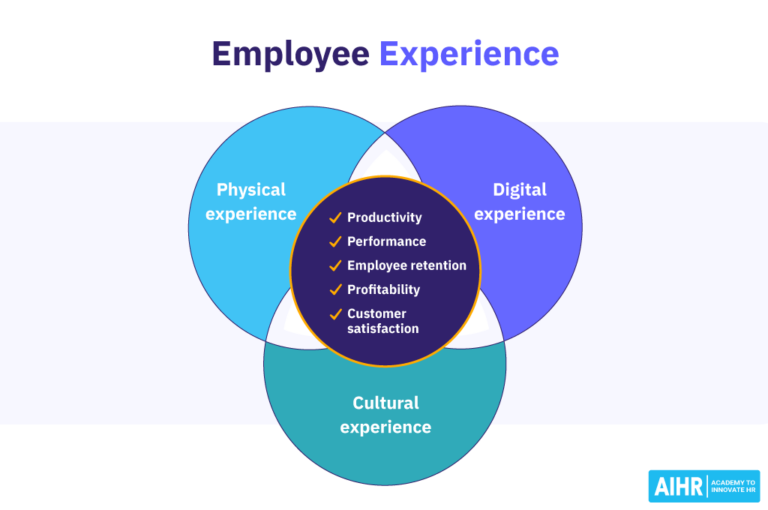
While HR influences all three areas, the Employee Experience Platform (EXP) is the primary engine for shaping the digital dimension. In today's hybrid and remote work landscape, the digital experience has become more critical than ever.
What is an Employee Experience Platform (EXP)?
An EXP is not just another piece of software; it's a fundamental shift in how employees interact with a company's digital ecosystem.
What is Employee Experience Platform (EXP)?
To get a clear and concise definition, let's start with this article from ChangeEngine. It explains what an EXP is and why it's different from the systems we've looked at so far.
Read the sections 'What is an Employee Experience Platform (EXP)?' and 'Why organisations use an EXP'. Focus on how it's described as a 'unified digital workspace' that sits 'above your existing systems' and its goal of reducing friction.
As the article notes, an EXP's purpose is to "make work simpler and more engaging." Given your background in IT, you can think of an EXP as a user-centric abstraction layer or a "front-end" for the employee. It unifies various disconnected "back-end" systems (like the HRIS from Zoho, the payroll system from greytHR, an IT ticketing system, etc.) into a single, coherent interface. The employee doesn't need to know which system does what; they just have one place to go to get things done.
EXP vs. a Traditional Intranet
It's easy to confuse an EXP with a company intranet, but they serve very different purposes.
What is Employee Experience Platform (EXP)?
The same article provides a very clear breakdown of the differences, which is crucial for understanding the unique value of an EXP.
Read the section 'How an EXP differs from an intranet'. Note the key differences in focus: pages vs. outcomes, pull vs. push, and standalone vs. embedded.
In short:
- An intranet is a destination you go to pull information (like a digital library of documents).
- An EXP is a dynamic workspace that pushes personalized information to you and helps you complete tasks (like a personal digital assistant for work).
The Core Components of an EXP
Now, let's break down what an EXP is made of. Architecturally, an EXP sits on top of your existing systems and uses technology to create a seamless experience.
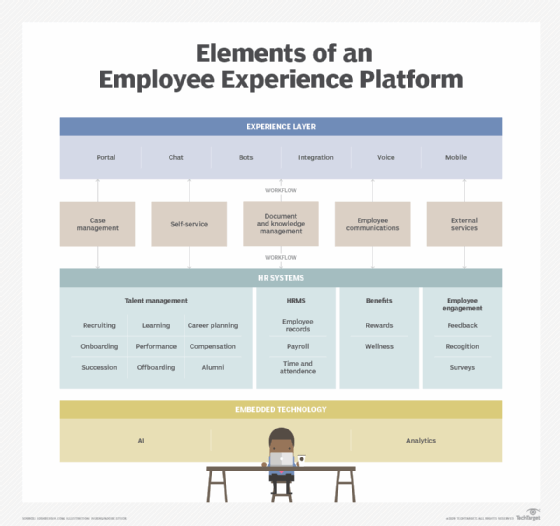
Functionally, a modern EXP delivers on this architecture through five core capabilities.
What is Employee Experience Platform (EXP)?
The ChangeEngine article breaks down a modern EXP into five core capabilities. This gives us a practical checklist for what to look for when evaluating these platforms.
Read the section 'Core capabilities of a modern EXP'. This details the five functional layers: Communications, Knowledge, Tasks, Feedback, and Analytics. Think about how each of these solves a specific employee problem.
Let's summarize those five components:
- Communications & Community: This goes beyond "all-staff" emails. It delivers targeted news, leadership updates, and social features like peer-to-peer recognition directly into an employee's flow of work, fostering a sense of connection.
- Knowledge & Search: A unified, "Google-like" search engine for the entire organization. An employee can search for a policy, a form, or a colleague's contact information and get an instant answer without needing to know where that information is stored.
- Tasks & Employee Self-Service: This component aggregates tasks from multiple systems into one "to-do" list. An employee can approve a request, check their payslip, or request new equipment from a single interface, often using simple forms or "cards" that hide the underlying system's complexity.
- Feedback & Listening: This enables the organization to move beyond annual surveys. It facilitates continuous listening through pulse surveys, quick polls, and "always-on" feedback widgets, capturing employee sentiment in real-time.
- Analytics & Insights: This is the engine for the HR team and leadership. It provides dashboards on communication reach, task completion times, and search queries, offering data-driven insights into where the employee experience is succeeding or failing.
Test your understanding!
An employee wants to find the company's parental leave policy, check their remaining leave balance, and then apply for 3 days of leave.
In a traditional setup with separate systems, what steps might they have to take?
How would an EXP, with its core components, simplify this process? Describe the ideal journey, referencing the components.
Show answer
Traditional Setup:
- Search a shared drive or old intranet for the "Parental Leave Policy v3_Final.pdf".
- Log into the HRIS portal (e.g., greytHR) to find their leave balance.
- Navigate to a different section of the HRIS to submit the leave application form.
- Maybe send a separate email or chat message to their manager to notify them of the request.
EXP Journey:
- The employee opens their EXP portal and types "parental leave" into the single search bar.
- The Knowledge component instantly provides an AI-summarized answer from the official policy document and a link to the full text.
- The Tasks/Self-Service component presents a simple, interactive "card" to "Apply for Leave," which already shows their current leave balance (pulled from the HRIS in the background).
- They select the dates and click "Submit." The EXP handles the workflow, sending a notification to their manager within the same platform and adding it to the manager's aggregated Tasks list for approval.
The entire process happens in one interface, is context-aware, and takes a fraction of the time.
The Strategic Value of an EXP
So, why should a business invest in an EXP? The value goes far beyond just convenience. It translates to tangible business outcomes.
Tech Trend 06: Unleashing next-gen employee experience ...
Now that we know what an EXP is, let's explore why it's strategically important. The EY India article 'Unleashing next-gen employee experience' highlights the impressive business benefits.
Read the 'In brief' summary and the paragraph that follows it. Note the compelling statistics on profits, revenue, productivity, and retention for companies that invest in EX.
The core strategic value propositions are:
- Increased Productivity: By reducing "digital friction" and time spent on administrative tasks, employees can dedicate more focus to high-value work.
- Higher Engagement and Retention: A seamless, consumer-grade digital experience reduces frustration, signals that the company values its employees' time, and contributes to making it a great place to work.
- Improved Agility and Communication: Leadership can deliver critical communications to targeted groups and use analytics to ensure messages are received and understood, which is vital during times of change.
- Data-Driven HR Strategy: The analytics component provides objective data on employee behavior and pain points, allowing HR to move from reactive problem-solving to proactive experience design.
The Role of AI in Supercharging the EXP
Modern EXPs are heavily infused with Artificial Intelligence, which elevates each component from useful to truly intelligent. This is a key aspect of building a "future-ready" HR function.
Tech Trend 06: Unleashing next-gen employee experience ...
A key driver of modern EXPs is Artificial Intelligence. The EY article details how various AI technologies are revolutionizing HR processes, many of which are delivered through an EXP.
Skim through the sections 'Deep personalization is key' and the bulleted lists detailing technologies like RPA, Conversational AI, and Machine Learning. You don't need to memorize every technology. Instead, focus on understanding the types of things AI enables, such as: Personalization (for different employee 'personas') Automation of repetitive tasks (RPA) Instant support (Conversational AI/Chatbots) Intelligent recommendations (for learning or career paths)
Here is how AI enhances the five components:
- Knowledge: AI-powered search (Generative AI) provides direct, summarized answers to questions instead of just a list of links.
- Tasks: Conversational AI (chatbots and virtual assistants) can handle common requests like password resets or benefits enrollment 24/7, without human intervention.
- Communications: AI helps personalize content based on an employee's role, location, or past behavior, ensuring they see what's most relevant to them.
- Feedback: Sentiment Analysis can instantly process thousands of open-ended comments from surveys, identifying key themes and emotions.
- Analytics: Predictive Analytics can analyze patterns in system usage, communication, and other data to identify employees who may be at risk of disengaging or leaving.
Conclusion
Today we've explored the concept of the Employee Experience Platform, a strategic layer that transforms the digital workplace. You've learned how it moves beyond being a simple system of record to become a powerful system of engagement.
Key Takeaways:
- An EXP is a unified, employee-facing digital workspace that integrates various backend systems to simplify work and reduce friction.
- It is distinct from a static intranet; it's dynamic, personalized, and action-oriented.
- Its five core components are Communications, Knowledge, Tasks, Feedback, and Analytics.
- Its strategic value lies in boosting productivity, engagement, and retention, providing a consumer-grade experience that is increasingly powered by AI.
Preview of the next lesson:
Understanding the strategic value of technology like an EXP is the first step. The next is securing the resources to implement it. In our next lesson, we will focus on how to formulate a compelling business case for adopting a new HR technology. You'll learn how to calculate a projected Return on Investment (ROI) and build an argument that will resonate with business leaders, tying together everything we've learned in this module into a practical, actionable skill.