Hello! Welcome to your fourth lesson in the Graph Algorithms module.
In our last lesson, we mastered Depth-First Search (DFS) and its crucial application: cycle detection. We saw how the three-color (white-grey-black) method can definitively tell us if a directed graph contains a back edge to an ancestor, signaling a cycle. This is the perfect foundation for today's topic.
Today, we'll answer the question: "If a directed graph has no cycles, what can we do with it?" This brings us to one of the most practical graph algorithms: Topological Sort. Our goal is to perform a topological sort on a Directed Acyclic Graph (DAG). You'll learn how to take a complex web of dependencies and produce a valid, linear sequence of steps—a skill essential for scheduling tasks, resolving software dependencies, and designing data pipelines.
The Five Concepts for Today
We will build our understanding of topological sort through these five concepts:
- The Core Idea of Topological Sort: What it is and why it's useful.
- The Prerequisite: Directed Acyclic Graphs (DAGs): Why cycles make ordering impossible.
- Kahn's Algorithm: An intuitive, BFS-based approach using in-degrees.
- DFS-based Algorithm: An elegant approach that leverages the "finishing time" of nodes in a DFS traversal.
- Advanced Topics & Interview Context: Cycle detection, non-uniqueness, and applying these algorithms to classic interview problems.
Concept 1: The Core Idea of Topological Sort
Technical Explanation
A topological sort of a Directed Acyclic Graph (DAG) is a linear ordering of its vertices such that for every directed edge from vertex u to vertex v (u -> v), vertex u comes before vertex v in the ordering.
Think of it as "flattening" a graph of dependencies into a single valid sequence. If a node represents a task and an edge A -> B means "task A must be completed before task B," a topological sort gives you a valid order to execute all tasks.
This has wide-ranging applications in real-world systems:
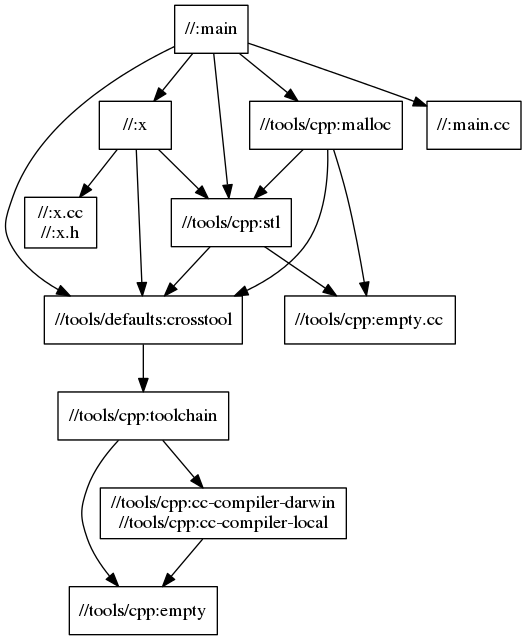
- Build Systems (e.g., Make, Bazel): Compiling source files in the correct order based on dependencies.
- Package Managers (e.g., pip, npm): Installing library dependencies before installing the library that needs them.
- Task Scheduling: Executing jobs in a data processing pipeline (e.g., Apache Airflow, Dagster).
- University Course Prerequisites: Determining a valid sequence of courses to take.
Topological Sort Algorithm | Graph Theory
To start, let's get a clear, high-level overview. This video from WilliamFiset explains the motivation behind topological sort with excellent real-world examples.
Watch from the beginning to 02:35. Focus on how real-world problems like course prerequisites and build dependencies are modeled as graphs that require a specific ordering.
Metaphor: Getting Dressed
Imagine you're getting dressed. You have a set of dependencies:
- You must put on socks before shoes.
- You must put on your shirt before your jacket.
- You can put on your pants at any time relative to your shirt.
A topological sort gives you a valid sequence, like [socks, pants, shirt, shoes, jacket]. Another valid sequence is [pants, socks, shirt, jacket, shoes]. The key is that socks always appears before shoes, and shirt always before jacket.
Concept 2: The Prerequisite: Directed Acyclic Graphs (DAGs)
Technical Explanation
Topological sorting is only defined for Directed Acyclic Graphs (DAGs). This is a critical constraint. If a graph contains a cycle, a linear ordering is impossible.
Consider a simple cycle: A -> B -> C -> A.
- The edge
A -> BmeansAmust come beforeB. - The edge
B -> CmeansBmust come beforeC. - The edge
C -> AmeansCmust come beforeA.
If we try to create an ordering, we get a logical contradiction: A must come before B, which must come before C, which must come before A. There's no starting point and no valid sequence.
This is why your knowledge from the previous lesson is so important. Before attempting a topological sort, you must be sure the graph is a DAG. The 3-color DFS cycle detection algorithm is the perfect tool for this verification.
Topological Sort Algorithm | Graph Theory
The same WilliamFiset video continues to explain precisely why cycles make topological sorting impossible.
Watch from 02:35 to 04:43. This short segment will solidify your understanding of this fundamental prerequisite.
Metaphor: The Chicken and Egg Problem
A cycle is the classic "chicken and egg" paradox. If a chicken must come from an egg, and an egg must come from a chicken, which came first? There is no linear starting point. A topological sort requires at least one "first" item—a node with no prerequisites. A cycle ensures no such node exists among the cycle's members.
Python Code: The Prerequisite Check
We won't write new code here. The has_cycle_directed function from our last lesson is the tool you would use. If it returns True, you cannot perform a topological sort.
# From previous lesson:
# if has_cycle_directed(my_graph):
#     print("Cannot perform topological sort: graph contains a cycle.")
# else:
#     # Proceed with one of the algorithms below...
Concept 3: Kahn's Algorithm (BFS-based)
Technical Explanation
Kahn's algorithm is an intuitive, BFS-based approach to topological sorting. It works by iteratively identifying nodes that have no more pending dependencies and adding them to the sorted list.
The core concept is the in-degree of a node: the number of incoming edges. A node with an in-degree of 0 has no prerequisites and can be executed.
The algorithm proceeds as follows:
- Compute In-degrees: Calculate the in-degree for every vertex in the graph. This takes time.
- Initialize Queue: Create a queue and add all vertices with an in-degree of 0.
- Process Queue:
a. While the queue is not empty, dequeue a vertexu.
b. Adduto your topologically sorted list.
c. For each neighborvofu:
i. Decrement the in-degree ofv.
ii. If the in-degree ofvbecomes 0, enqueuev.
This process mimics a real-world workflow: complete a task, and then check which subsequent tasks are now "unlocked."

Topological Sorting Visually Explained
To see Kahn's algorithm in action, this video from Hello Byte provides an excellent visual walkthrough.
Watch from 01:54 to 04:37. Pay close attention to how the in-degree array and the queue change as each node is processed.
Python Code: Kahn's Algorithm
from collections import deque, defaultdict

def topological_sort_kahns(num_nodes: int, edges: list[list[int]]):
    """
    Performs topological sort using Kahn's algorithm (BFS-based).

    Args:
        num_nodes: The total number of nodes in the graph, labeled 0 to n-1.
        edges: A list of edges, where each edge is [u, v] for u -> v.

    Returns:
        A list of nodes in topological order, or an empty list if a cycle exists.
    """
    adj = defaultdict(list)
    in_degree = {i: 0 for i in range(num_nodes)}

    for u, v in edges:
        adj[u].append(v)
        in_degree[v] += 1

    queue = deque([node for node in range(num_nodes) if in_degree[node] == 0])
    topo_order = []

    while queue:
        u = queue.popleft()
        topo_order.append(u)

        for v in adj[u]:
            in_degree[v] -= 1
            if in_degree[v] == 0:
                queue.append(v)

    # This is a crucial check we will formalize in Concept 5
    if len(topo_order) == num_nodes:
        return topo_order
    else:
        # Graph has a cycle
        return []

# Example: Course prerequisites
# 0: CS101, 1: CS102, 2: CS201, 3: CS210, 4: CS301
# CS101 -> CS102, CS102 -> CS201, CS102 -> CS210, CS201 -> CS301
edges_example = [[0, 1], [1, 2], [1, 3], [2, 4]]
num_nodes_example = 5

print(f"Kahn's Algorithm Order: {topological_sort_kahns(num_nodes_example, edges_example)}")
# Possible output: [0, 1, 2, 3, 4] or [0, 1, 3, 2, 4]
Concept 4: DFS-based Algorithm
Technical Explanation
The second major approach uses DFS. The logic is slightly less direct than Kahn's but is incredibly elegant once understood. It builds on the idea of a node's "finishing time" in a DFS traversal.
Recall from our last lesson that in a recursive DFS, a function call for a node u only "finishes" (returns) after all of its descendants have been fully explored.
- This means if there's a path
u -> v, the DFS call forvwill finish before the DFS call foru. - Therefore, the reverse of the finishing order of the nodes gives a valid topological sort.
The algorithm:
- Initialize a
visitedset and astack(or a list to be used as a stack). - Iterate through all nodes in the graph. If a node hasn't been visited, start a DFS from it.
- In the
dfsfunction for a nodeu:
a. Markuas visited.
b. For each neighborvofu, ifvis not visited, recursively calldfs(v).
c. After the loop over neighbors finishes, pushuonto the stack. This is the crucial step. It's a post-order traversal. - Once the main loop is done, the stack contains the topologically sorted nodes. Popping them one by one (or simply reversing the list) gives the final order.
Topological Sort Algorithm | Graph Theory
Let's return to the WilliamFiset video, which provides a fantastic animated example of the DFS-based algorithm.
Watch from 05:14 to 09:18. Observe how a node is only added to the ordering after the recursive calls for all its children have returned (i.e., when backtracking).
Python Code: DFS-based Algorithm
This implementation assumes the graph is a DAG. For a production setting, you'd combine this with the 3-color cycle detection logic.
def topological_sort_dfs(num_nodes: int, edges: list[list[int]]):
    """
    Performs topological sort using a DFS-based algorithm.
    """
    adj = defaultdict(list)
    for u, v in edges:
        adj[u].append(v)

    visited = set()
    # In Python, a list is an easy way to implement a stack.
    # We will append to it and then reverse at the end.
    topo_order_stack = []

    def dfs(u):
        visited.add(u)
        for v in adj[u]:
            if v not in visited:
                dfs(v)
        # This is the post-order step. u is added only after all its
        # descendants are processed and added to the stack.
        topo_order_stack.append(u)

    for i in range(num_nodes):
        if i not in visited:
            dfs(i)

    # The stack contains the reverse topological order.
    return topo_order_stack[::-1]

print(f"DFS-based Algorithm Order: {topological_sort_dfs(num_nodes_example, edges_example)}")
# Possible output: [0, 1, 3, 2, 4] or [0, 1, 2, 3, 4]
Test your understanding!
In the DFS-based algorithm, why do we add the node to the stack after visiting its neighbors (post-order), not before (pre-order)? What would happen if we added it before?
Show answer
If we added the node to the result before visiting its neighbors (a pre-order traversal), we would get an ordering that is the opposite of what's required. For an edge u -> v, we would process u, add it to the list, and then recurse on v. This would place u before v in the call order, but the topological sort requires that u comes before v in the final linear ordering. By using a post-order traversal and reversing the result, we ensure that a node u is placed in the final list only after all nodes that depend on it (v and its descendants) have already been placed. This guarantees the u appears before them in the final reversed sequence.
Concept 5: Advanced Topics & Interview Context
Technical Explanation
Mastering topological sort for interviews means going beyond just the implementation. You need to understand the nuances and common pitfalls.
1. Cycle Detection with Kahn's Algorithm:
Kahn's algorithm has a built-in, elegant way to detect cycles. After the while loop finishes, if the number of nodes in your topo_order list is less than the total number of nodes in the graph, it means the graph has a cycle. Why? The nodes within a cycle (and any nodes that depend on them) will never have their in-degrees reduced to 0, so they will never be added to the queue and processed.
2. Non-Uniqueness of Solutions:
As seen in our examples, a topological sort is often not unique. Any time the queue in Kahn's algorithm contains more than one node, you have a choice. For example, if both taskA and taskB have an in-degree of 0, you can start with either. This is a great clarifying question to ask an interviewer: "Does the problem require any specific topological order, or is any valid order acceptable?"
3. DFS vs. Kahn's - The Trade-offs:
| Feature | Kahn's Algorithm (BFS-based) | DFS-based Algorithm |
|---|---|---|
| Intuition | Often more intuitive (processing nodes with no dependencies). | Relies on the clever "reverse of post-order" insight. |
| Cycle Detection | Natural: len(result) != num_nodes. |
Requires a separate mechanism (e.g., 3-color method). |
| Implementation | Requires explicitly calculating in-degrees and managing a queue. | Can be very concise, especially the recursive version. |
| Parallelism | Can be parallelized. Nodes at the same "level" (in the queue simultaneously) can be processed in parallel. | Inherently sequential due to the depth-first nature. |
For your goals of working on large-scale systems, the parallelism aspect of Kahn's is a noteworthy advantage.
Topological Sort Interview Questions & Tips
The article 'Topological Sort Interview Questions & Tips' is tailored for your goals. It focuses on the practical aspects you'll face in an interview.
Read the sections 'Common Mistakes in Interviews Featuring Topological Sort' and 'What to Say in Interviews...'. Pay close attention to the points about failing to detect cycles and the clarifying questions to ask your interviewer. This is pure interview gold.
4. Classic Interview Problems:
Topological sort is rarely asked directly. It's usually the core of a word problem.
- Course Schedule (LeetCode 207 & 210): The quintessential topological sort problem. Given prerequisites, can you finish all courses? (Cycle detection). If so, what is one valid order? (Topological sort).
- Alien Dictionary (LeetCode 269): A harder problem where you must first derive the dependency graph from a list of lexicographically sorted words in an alien language, and then perform a topological sort. For
["wrt", "wrf"], you can infer thattmust come beforef.
Conclusion
You have now added a powerful and practical algorithm to your graph toolkit. Topological sort is the definitive way to handle problems involving order and dependencies.
Key Takeaways:
- Topological Sort creates a linear ordering of nodes in a Directed Acyclic Graph (DAG).
- The presence of a cycle makes a topological sort impossible.
- Kahn's Algorithm (BFS-based) is an intuitive method that uses in-degrees and a queue to process nodes with no pending dependencies. It can also detect cycles if the final sorted list is incomplete.
- The DFS-based Algorithm is an elegant method that relies on the post-order traversal of nodes; the reverse of the node "finishing times" yields a valid sort.
- Both algorithms have a time complexity of and a space complexity of (for the adjacency list) or for auxiliary structures.
Preview of the Next Lesson:
We've explored unweighted graphs with BFS and DAGs with topological sort. Now, we'll introduce weights to our edges. In the next lesson, we will tackle Dijkstra's Algorithm, the classic method for finding the single-source shortest path in a weighted graph with non-negative edge weights. This is a fundamental algorithm for everything from network routing to mapping applications.