Hello! Welcome to the next lesson in our journey through Dincharya.
In our last session, we established the critical clinical principle of identifying who is a suitable candidate for awakening in Brahma Muhurta. We learned that the recommendation is primarily for a healthy person (swastha) with good digestion, and we detailed the contraindications for those who are ill, very young, elderly, pregnant, or in a state of Vata-aggravated exhaustion.
Today, we transition from this "yes/no" framework to the nuanced art of personalization. Knowing the rule is foundational; knowing how to adapt it is clinical expertise. Our goal is to learn how to modify awakening time recommendations based on individual prakriti, age,occupation, and seasonal variations. We will construct a flexible framework that allows you to create realistic, effective, and safe schedules for any individual.
1. The Guiding Principle: Gradual and Mindful Adaptation
Before we dive into specific modifications, we must establish a universal principle: any change to a person's sleep-wake cycle must be gradual. The body's internal clock, or circadian rhythm, thrives on consistency. A sudden, drastic shift from waking at 8 AM to 4:30 AM is more likely to cause Vata aggravation and fatigue than to instill a healthy habit.
A safe and sustainable approach is always the best one. For guidance on this, let's turn to a practical resource.
Brahma Muhurta Time: Benefits, Science, and Significance
The article 'Brahma Muhurta Time: Benefits, Science, and Significance' offers excellent, practical advice for beginners. This approach forms the basis of how we implement any modification.
Please read the section titled 'How Beginners Can Safely Start Practicing Brahma Muhurta.' Pay close attention to the recommendations for gradual adjustment and listening to one's body.
The key takeaway is that the first step in modifying wake-up time is to adjust the bedtime. By going to sleep 15-20 minutes earlier each night, waking earlier becomes a natural consequence rather than a forced effort. This ensures the individual still receives their required 6-8 hours of sleep, which is non-negotiable. This principle of gradualism should underpin all the recommendations we will now discuss.
2. Modification Based on Prakriti
While the previous lesson touched on prakriti, let's refine the specific modifications for each constitutional type.
-
Kapha Prakriti:
- Goal: To counteract inherent qualities of heaviness (guru) and slowness (manda).
- Modification: These individuals are the prime candidates for a strict Brahma Muhurta routine. The recommendation should be to wake as early as is sustainable within the Brahma Muhurta window (e.g., 90 to 48 minutes before sunrise). This is a primary therapeutic strategy to prevent Kapha accumulation and morning lethargy. The emphasis is on consistency and discipline.
-
Pitta Prakriti:
- Goal: To channel their natural drive and intensity (tikshna) in a balanced, sattvic manner.
- Modification: Pitta types often have the discipline to wake early. The modification is less about the time and more about the activities upon waking. They should be advised to wake during Brahma Muhurta and immediately engage in calming, cooling practices—like meditation, gentle strolling, or chanting—rather than jumping into work or intense planning, which can aggravate their fiery nature.
-
Vata Prakriti:
- Goal: To promote stability (sthira) and grounding, and to ensure adequate rest to prevent Vata aggravation.
- Modification: This requires the most personalization. The non-negotiable priority is a full quota of restful sleep.
- If the Vata person feels rested waking in Brahma Muhurta, they can continue.
- If they suffer from anxiety, insomnia, or feel unrefreshed, the recommendation must be modified. Advise them to wake closer to sunrise (e.g., 30 minutes before), ensuring a consistent time. This still avoids the morning Kapha period but doesn't risk the Vata aggravation that can come from insufficient sleep. The mantra for Vata is consistency over extreme earliness.

This Dosha clock illustrates the rationale for waking before 6 AM. The 2 AM - 6 AM window is dominated by Vata dosha, characterized by movement and lightness. Waking during this time helps us align with these qualities. Sleeping into the 6 AM - 10 AM period immerses us in the heavy, slow qualities of Kapha dosha, which can be particularly aggravating for Kapha-prakriti individuals.
3. Modification Based on Age, Life Stage, and Health
We can now refine the contraindications from our last lesson into practical, modified advice.
- Children and Teenagers: The "modification" here is to forgo the Brahma Muhurta rule entirely. The priority is growth and development, which requires more sleep. The recommendation should be a consistent sleep schedule that provides 9-11 hours for young children and 8-10 hours for teenagers.
- Elderly (Vriddha): Vata dosha naturally predominates in old age, making sleep lighter and more fragile. Forcing an early schedule can be depleting. The modification is to prioritize sleep quality. Advise them to go to bed and wake up at the same time every day, whatever that time may be. If they naturally wake early and feel good, they should get up. If not, they should not force it.
- Pregnant Women: Similar to children, the priority is nourishment and rest for both mother and fetus. The strict Brahma Muhurta rule is suspended.
- Ill or Recovering Individuals: Rest is medicine. The Dincharya is modified to support healing, which means prioritizing sleep.
These exceptions are explicitly supported by classical wisdom.
Brahma Muhurta: The Best to Time to Wake Up and Do Yoga
The article 'Brahma Muhurta: The Best to Time to Wake Up and Do Yoga' reinforces these classical exceptions clearly.
Please read the subsection 'The Ayurvedic View' and note the list of individuals for whom waking in Brahma Muhurta is not suggested. This confirms our understanding of modifying the rule based on life stage and health.
4. Modification Based on Occupation and Lifestyle
This is where classical wisdom meets modern life.
-
Night-Shift Workers: This is a clear exception mentioned in the resources. For these individuals, the concept of "sunrise" is relative to their sleep cycle.
- Modification: Advise them to create a "reverse Dincharya." Their "Brahma Muhurta" is the 90-minute period before they need to wake up (e.g., in the afternoon). The goal is to establish a strict, consistent sleep-wake cycle, even if it's inverted, and to perform a calming routine upon waking. This helps mitigate the significant health challenges associated with shift work.
-
High-Stress Occupations: For individuals under intense mental strain (aggravating Vata and Pitta), a rigid 4 AM rule can become another source of stress.
- Modification: Recommend a more moderate wake-up time (e.g., 5:30 AM) but stress the importance of using the first 30-60 minutes for Vata-pacifying activities like pranayama (especially Nadi Shodhana), meditation, or a silent walk, before engaging with work.
-
Physically Demanding Labor: These individuals require adequate time for muscle and tissue repair.
- Modification: Ensure their sleep duration is sufficient. Waking closer to sunrise, rather than deep in Brahma Muhurta, may be more appropriate to allow for complete physical recovery, provided they are not strongly Kapha-dominant.
5. Modification Based on Seasonal Variations (Ritucharya)
The definition of Brahma Muhurta is "1 hour and 36 minutes before sunrise." Since sunrise time changes daily, the absolute clock time of Brahma Muhurta also changes. This is the first, most basic seasonal modification. You can use any local weather app or website to find the sunrise time for your patient's location.
Beyond this, we must consider the doshic influence of the seasons.
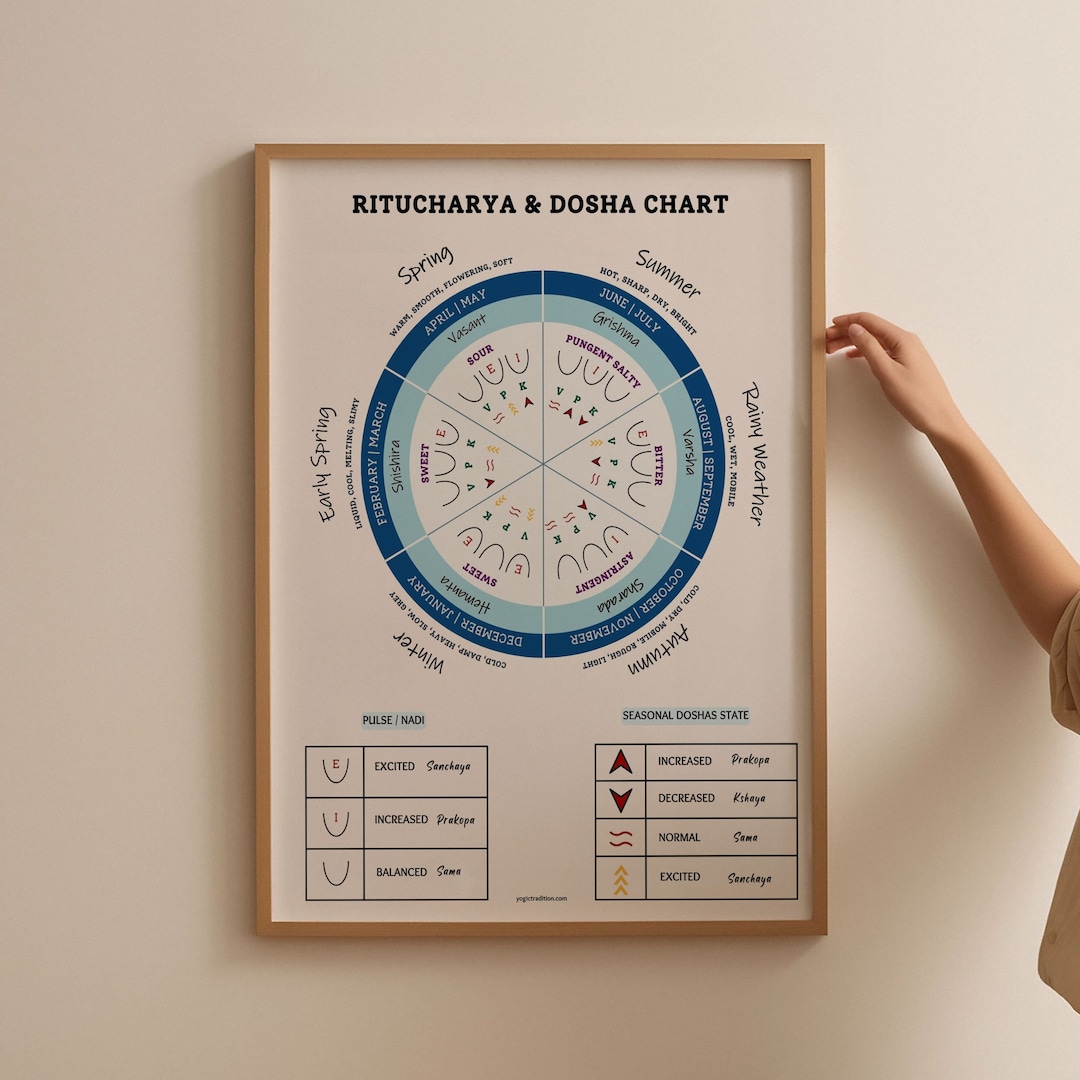
This Ritucharya chart shows the accumulation (Sanchaya) and aggravation (Prakopa) of doshas throughout the six Ayurvedic seasons. This is key to understanding why Dincharya, including wake-up time, must be modified seasonally.
-
Hemanta/Shishira (Winter): The nights are long, and the weather is cold, which can aggravate Vata. The body naturally seeks more rest. Kapha begins to accumulate (sanchaya).
- Modification: While waking before sunrise is still important to prevent Kapha from becoming excessive, you can recommend waking closer to sunrise than in other seasons to honor the body's need for more rest and warmth.
-
Vasant (Spring): This is the season of Kapha aggravation (prakopa). The accumulated Kapha from winter begins to "melt," leading to allergies, colds, and lethargy.
- Modification: This is the most critical season to enforce a strict and early Brahma Muhurta awakening. It is a primary preventative measure against Kapha disorders.
-
Grishma (Summer): The days are long and hot, aggravating Pitta. The nights are short.
- Modification: Waking early in Brahma Muhurta is generally easy and highly beneficial. It allows one to perform exercise and other activities during the coolest part of the day, before the Pitta-aggravating heat intensifies.
Test your understanding!
A 35-year-old software developer with a Vata-Kapha prakriti lives in London. He works from home with flexible hours but often works late into the night. He complains of morning stiffness, brain fog, and anxiety. It is currently March (late winter/early spring).
How would you design a modified wake-up plan for him, and what is your step-by-step reasoning?
Show answer
Here is a possible approach:
- Acknowledge the conflicting factors: He has a dual prakriti (Vata-Kapha). His Kapha nature needs an early start to combat fog and stiffness. His Vata nature is being aggravated by his late-night work schedule, causing anxiety. The season (Vasant) is a prime time for Kapha aggravation.
- Prioritize and Address the Root Cause: The biggest problem is his work schedule, which is disrupting his sleep and aggravating Vata. The first and most important advice is to establish a "hard stop" for work at night (e.g., by 10 PM). This addresses the Vata imbalance at its source.
- Implement Gradual Adaptation: Instruct him not to jump to a 5 AM wake-up time. He should start by going to bed 30 minutes earlier and waking up 30 minutes earlier than his current habit. For example, if he sleeps from 1 AM to 9 AM, the first step is 12:30 AM to 8:30 AM.
- Set a Realistic Target Time: Given his Vata sensitivity and the goal of managing Kapha in spring, a good target wake-up time would be around 6:00 AM. In London in March, sunrise is roughly between 6:00-6:45 AM, so this ensures he is up before or around sunrise, effectively countering Kapha without being so early that it depletes his Vata.
- Define the Morning Routine: The plan must include what he does upon waking. To pacify Vata and manage Kapha, a routine of 5 minutes of gentle stretching (for stiffness), 10 minutes of Nadi Shodhana Pranayama (for anxiety), and a warm drink would be ideal.
This modified plan respects all the variables: his prakriti, his lifestyle, his symptoms, and the season. It is practical, gradual, and addresses the root cause of his imbalance.
Conclusion
You are now equipped to move beyond the simple rule of Brahma Muhurta and apply it with the precision of a skilled clinician. By personalizing your recommendations, you create plans that are not only effective but also sustainable for your patients in their unique life contexts.
Key Takeaways:
- Modification is the core of clinical practice. The ideal routine must always be adapted to the individual.
- The guiding principles for modification are gradualism and ensuring adequate sleep.
- Recommendations must be adjusted based on:
- Prakriti: Strictness for Kapha, calming activities for Pitta, and prioritizing rest for Vata.
- Age/Health: The rule is often suspended for the very young, old, pregnant, or ill, in favor of rest.
- Occupation: Routines can be shifted (night work) or buffered with calming practices (high-stress work).
- Season: The absolute time shifts with sunrise, and the urgency of waking early is highest in spring (Vasant) to counter Kapha aggravation.
In our next lesson, we will continue our journey through the morning routine. Having awakened and assessed our state of digestion, the next physiological priority is elimination. We will explore the concept of adharaniya vegas (non-suppressible urges) and the critical role of regulating apana vayu for long-term health.