Hello! Welcome to the final lesson of our module on Ratricharya.
Over the past few lessons, we have systematically explored the key components of a healthy night routine. We've discussed the principles of evening diet, the importance of Nidra (sleep) as a pillar of health, the consequences of suppressing sleep, and the critical contraindications for various night-time activities.
Today, we bring all that knowledge together. Our goal for this lesson is to directly address the learning outcome: Design a comprehensive Ratricharya plan for a patient to improve sleep quality and overall health. This is where theory meets practice. You will learn to synthesize your understanding into a structured, personalized, and actionable protocol that you can confidently prescribe to patients.
1. The Foundation: Patient Assessment
Before designing any plan, a thorough assessment is paramount. A Ratricharya plan is not one-size-fits-all; it must be tailored to the individual's unique state of being. Your assessment should focus on:
- Prakriti and Vikriti: Understanding the patient's constitution and, more importantly, their current doshic imbalance. Poor sleep is very often linked to a Vata imbalance.
- Agni Status: Is their digestive fire strong (teekshna), weak (manda), or variable (vishama)? This will dictate the specifics of their evening meal.
- Manasika Bhava (Mental State): Is the mind dominated by Sattva (clarity), Rajas (agitation), or Tamas (inertia)? This is crucial for recommending appropriate wind-down activities. Anxiety, stress, and overthinking are rajasic qualities that directly disrupt sleep.
- Current Routine: What are their current habits? Ask about dinner timing and content, screen time, work schedule, bedtime, and sleep quality.
This initial assessment provides the necessary data to build a targeted and effective plan.
2. Building the Plan: A Step-by-Step Approach
A comprehensive Ratricharya plan can be broken down into four sequential phases, starting from dusk.
Phase 1: The Evening Transition (Post-Work & Dinner)
This phase is about consciously shifting from the active, Pitta-dominant energy of the day to the calm, restorative energy of the night.
Dinner (Ratri Bhojana Vidhi)
The evening meal is a cornerstone of Ratricharya. An improper meal can single-handedly disrupt digestion and sleep.
RATRICHARYA- A PATH TOWARDS HEALTHY LIFE
Let's revisit the 'RATRICHARYA- A PATH TOWARDS HEALTHY LIFE' article. It provides the classical guidelines for the evening meal, which are fundamental to our plan.
Please read the section 'Ratri Bhojana Vidhi'. Focus on the three key parameters mentioned in the shloka from BhavaPrakasha: timing (prathama praharaanthare), quantity (kinchitoonam), and quality (durjaram...varjayeth).
Based on the text and established principles, here are the dinner rules for your patient plan:
- Timing: The meal should be consumed within the first prahara of the night (within about 3 hours of sunset, ideally before 8 PM). This allows the bulk of digestion to be completed before sleep, preventing ama formation and discomfort.
- Quantity: The meal should be kinchitoonam—noticeably lighter and smaller in quantity than lunch. The stomach should feel comfortable, not heavily full.
- Quality: The food must be laghu (light), warm, and easy to digest.
- Recommend: Soups, well-cooked vegetables, whole grains like aged rice or quinoa, and light proteins like mung dal.
- Avoid: Heavy, fried, cold, or raw foods. Crucially, as we learned, curd (dadhi) is strictly contraindicated. Also avoid excessive red meat, aged cheeses, and fermented foods.
Phase 2: Post-Prandial Activities (Bhojanottara Karma)
What happens immediately after dinner is just as important as the meal itself. The goal is to support digestion without agitating the system.
RATRICHARYA- A PATH TOWARDS HEALTHY LIFE
The same 'RATRICHARYA' article details the classical post-dinner routine. These simple steps are highly effective in preventing post-meal sluggishness.
Please read the section 'Bhojanottara Karma- Post prandial activities'. Note the recommendations for a short walk (Gamana) and sleeping posture (Samveshana).
Your plan should include:
- Resting "like a king": Advise the patient to sit comfortably for 10-15 minutes after eating to allow digestion to begin peacefully.
- Shatapavali (100-step walk): A slow, mindful walk is recommended. This gentle movement aids peristalsis and prevents the accumulation of Kapha.
- Left-Lateral Position: Advise the patient that when they eventually lie down, sleeping on the left side is beneficial as it supports the natural anatomy of the stomach and digestive process.
Phase 3: Preparing the Mind & Body for Sleep
This is the most critical phase for improving sleep quality. It's about creating a ritual that signals to the body and mind that it's time to wind down. Here, we'll integrate the wisdom from our classical texts with modern scientific understanding.
To start, let's watch a video that masterfully connects Ayurvedic principles with the science of sleep.
Ayurvedic Approach to Sleep by Dr. Vignesh Devraj MD (Ay)
Dr. Vignesh Devraj, in his video 'Ayurvedic Approach to Sleep', explains the doshic rationale for sleep timing and provides a wealth of practical, actionable advice for creating a sleep-conducive routine.
Please watch the following segments: Ayurvedic Time Zones (09:30 - 11:32): Focus on the explanation of Kapha, Pitta, and Vata times and why sleeping by 10 PM is recommended. Actionable Advice (22:36 - 31:44): Pay close attention to the discussion on minimizing light, reducing mental engagement, and creating a calming environment. Specific Practices (31:44 - 34:52): Note the specific techniques like applying oil to marma points and using a hot water bag.
Synthesizing the video and classical knowledge, we can construct a powerful pre-sleep ritual for our patient plan.
A. Align with the Dosha Clock:
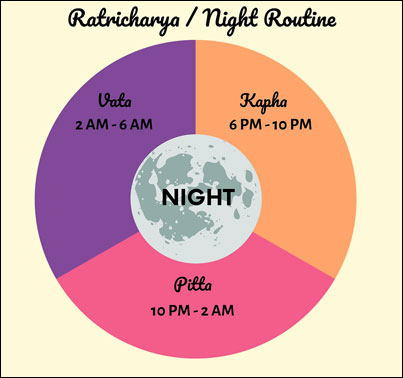
- Bedtime Goal: Aim to be in bed by 10 PM. As the diagram and video explain, this is the end of the Kapha period of the evening. The Kapha qualities of heaviness and slowness make it easier to fall asleep. If one stays awake past 10 PM, they enter the Pitta time, where the mind can become more active and analytical, making sleep difficult.
- Consistency: As Dr. Devraj emphasizes, the body loves punctuality. A consistent sleep-wake cycle is one of the most powerful tools for regulating hormones and improving sleep.
B. Create a Sensory Sanctuary:
- Dim the Lights: An hour before bed, dim the lights in your home. This signals the pineal gland to begin producing melatonin.
- Eliminate Blue Light: This is non-negotiable. All screens (phones, tablets, TVs, laptops) should be turned off at least one hour before bed. Blue light is a potent inhibitor of melatonin. Advise patients to keep their phones charging across the room, not on the bedside table.
- Keep it Cool: A slightly cool room temperature is generally more conducive to sleep.
C. Perform a Vata-Pacifying Ritual:
For patients with anxiety, restlessness, and difficulty falling asleep (classic Vata symptoms), these practices are invaluable:
- Padabhyanga (Foot Massage): Massage the soles of the feet with warm, Vata-pacifying oil like sesame oil (tila taila) or a medicated oil like Shirabala taila. This grounds excess Vata and is profoundly calming to the nervous system.
- Murdha Taila (Head Oiling): A small amount of oil (coconut or sesame) can be applied to the crown of the head (adhipati marma).
- Warmth for Feet: For those with cold feet (a sign of poor circulation and high Vata), using a hot water bag at the foot of the bed can be very effective.
D. Calm the Mind:
- Reduce Mental Engagement: Avoid any activity that is stimulating or stressful. This includes work emails, watching thrillers or the news, or having intense conversations.
- Introduce "Boring" Activities: As Dr. Devraj humorously suggests, boredom induces sleep. Reading a simple or spiritual text, listening to calming music, or practicing gentle chanting can help quiet the mind's chatter.
- Breathing Practice: Simple diaphragmatic breathing or pranayama like Nadi Shodhana (without retention) for 5-10 minutes can significantly calm the nervous system.
Phase 4: Night-time Supplements & Practices
Your plan can also include specific substances to be taken at night.
- Triphala for Eye Health & Digestion: As mentioned in the RATRICHARYA text, taking Triphala churna with honey and ghee (or simply with warm water) at night is excellent for eye health (chakshushya) and supports healthy elimination the next morning.
- Herbal Support for Sleep: For significant sleep issues, herbs like Ashwagandha or Tagara (as mentioned in the video) can be considered, but should be prescribed based on a full clinical assessment. Milk boiled with a pinch of nutmeg or poppy seeds is also a traditional remedy.
3. Putting it all Together: A Sample Ratricharya Plan
Let's apply these principles to a clinical case.
Patient Profile:
- A 40-year-old male marketing executive.
- Complaint: "I can't switch off my brain at night." Feels tired but wired, takes over an hour to fall asleep. Wakes up feeling unrefreshed. Experiences frequent acidity and bloating.
- Assessment: Clear Pitta-Vata Vikriti. Rajasic mental state. Vishama Agni (variable digestion).
Comprehensive Ratricharya Plan:
| Time | Activity | Rationale |
|---|---|---|
| 7:00 PM | Dinner | To align with Agni and allow 3 hours for digestion before sleep. |
| Light, warm meal. E.g., Mung dal khichdi with ghee, steamed vegetables. Avoid spicy/oily food. | Laghu, Pitta-Vata pacifying. Prevents acidity and digestive strain. | |
| 8:00 PM | Post-Dinner Walk | Gentle, 100-step walk. |
| Aids digestion, prevents heaviness. | ||
| 8:15 PM - 9:15 PM | Wind-Down Time | Transition period for the mind. |
| No work emails or screens. Listen to calming instrumental music or read a light, non-fiction book. | Reduces rajas and mental stimulation. | |
| 9:15 PM | Sleep Ritual | |
| Padabhyanga (foot massage) with warm sesame oil for 10 mins. | Grounds Vata dosha, calms the nervous system, promotes relaxation. | |
| Drink a small cup of warm milk with a pinch of nutmeg. | Snigdha and guru qualities promote sleep. Nutmeg is a natural sedative. | |
| 9:45 PM | In Bed | Lights dimmed, phone is off and away from the bed. |
| Practice 5 minutes of slow, deep belly breathing. | Calms the autonomic nervous system and prepares the body for rest. | |
| 10:00 PM | Lights Out | To fall asleep during the Kapha time, avoiding the mentally-activating Pitta period. |
Test your understanding!
A 28-year-old female student with a Kapha-Prakriti complains of excessive daytime sleepiness and difficulty waking up. She reports going to bed around 1 AM after studying and eats a late dinner around 10 PM, often including cheese sandwiches and yogurt.
Based on the principles we've discussed, what are the top three most impactful changes you would prioritize in her Ratricharya plan?
Show answer
- Change Bedtime to 10 PM: Her biggest issue is sleeping late, which pushes her into the Pitta and Vata cycles and disrupts her natural Kapha rhythm, leading to grogginess. Going to sleep during the Kapha time (before 10 PM) is the most critical change.
- Shift Dinner to 7-8 PM: Eating a late, heavy meal at 10 PM severely aggravates Kapha and burdens her Agni overnight. Moving her dinner earlier is essential for reducing morning heaviness and ama.
- Eliminate Curd/Cheese at Night: For a Kapha individual, consuming heavy, channel-clogging (abhishyandi) foods like cheese and yogurt at night is a direct cause of the symptoms she's experiencing. This dietary change is a non-negotiable part of her plan.
Conclusion
You now have a comprehensive framework for designing a Ratricharya plan. The art of clinical practice lies in personalizing this framework to address the specific imbalances and lifestyle of your patient.
Key Takeaways:
- A successful Ratricharya plan is built on a thorough assessment of prakriti, vikriti, agni, and manas.
- The plan should be structured sequentially: a transitional evening period, a well-timed and appropriate dinner, a gentle post-dinner routine, and a dedicated pre-sleep ritual.
- Aligning with the body's natural doshic clock, especially sleeping before 10 PM, is fundamental.
- Creating a sleep-conducive environment (dark, cool, no screens) and performing Vata-pacifying rituals like Padabhyanga are powerful tools for improving sleep quality.
Preview of the Next Lesson:
Having now mastered the intricacies of both morning (Dincharya) and night (Ratricharya) routines, we are ready to zoom out and look at the bigger picture. In the next module, Clinical Integration and Case Management, our first lesson will be to identify critical sequences and timing relationships between different dincharya practices for optimal effect. We will explore how practices like Abhyanga, Vyayama, and Snana fit together throughout the day to create a truly synergistic and holistic daily regimen.