Welcome to the second lesson in our module on Ratricharya. In our previous session, we established the critical principles for the evening meal, focusing on the timing and qualities of food needed to support agni and prepare for a restful night. We learned that a light, warm, and early dinner is foundational.
Today, we will build directly on that foundation. Our focus now shifts to the period after dinner, a crucial window of time that determines how well your body digests the evening meal and prepares for deep, restorative sleep. Our learning outcome for this lesson is to describe appropriate and inappropriate activities during the post-dinner period based on classical texts.
This involves understanding two sets of principles: Sandhya Varjya Karma (actions to be avoided in the evening) and Bhojana Uttara Karma (actions to be performed after a meal). By mastering these, you can guide patients to create an evening routine that promotes tranquility, completes digestion, and prevents the disorders that arise from improper post-dinner habits.
The Doshic Context: The Kapha Phase of the Evening
Before we dive into specifics, let's recall the doshic clock. The time from approximately 6 PM to 10 PM is dominated by Kapha dosha.
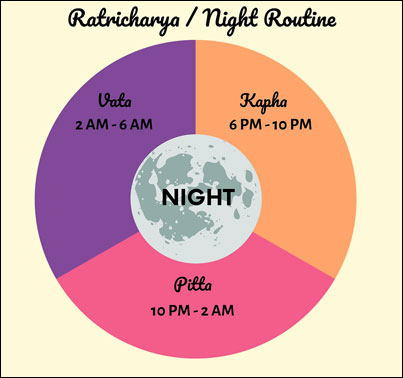
This Kapha dominance means our agni is naturally diminishing, and our body and mind are beginning to slow down, preparing for rest. The activities we choose during this window should align with this natural trend, promoting calmness and gentle digestive closure. Engaging in stimulating or heavy activities during this time goes against the physiological current, leading to imbalances.
1. Inappropriate Activities: The Five Sandhya Varjya Karma
Classical texts are very specific about activities that should be avoided during Sandhya Kala (the evening twilight period), as they violently disrupt the natural transition into night. Performing them is said to lead to specific negative consequences.
To understand these prohibitions, let's consult a research article that compiles and discusses these classical injunctions.
Sandhya Avacharana wsr to evening time
The article 'Sandhya Avacharana wsr to evening time' provides a clear, referenced list of the five activities to be avoided in the evening and explains the rationale behind each.
First, read the list of five contraindicated activities under the 'LITERATURE REVIEW' heading. This gives you the classical injunctions and their direct consequences. Then, read the corresponding explanations for Bhojana, Pathana, Maithuna, and Gati in the 'DISCUSSION' section to understand the detailed doshic and physiological reasoning.
Based on this text and other classical sources, the five key activities to avoid are:
| Sanskrit Term | Activity | Classical Consequence | Physiological Rationale |
|---|---|---|---|
| Aharam | Eating | Vyadhi (Disease) | We covered this last lesson. Eating during this time, especially after a full dinner, constitutes Adhyashana. It overburdens a weak agni, leading to ama formation. |
| Shayana | Sleeping | Daridrya (Poverty) | Sleeping immediately after eating or during twilight drastically increases Kapha dosha and Tamo guna. This leads to heaviness, sluggish metabolism, and mental dullness. "Poverty" here implies a loss of health, vitality, and intellectual clarity. |
| Adhwa Gamana | Traveling / Strenuous walking | Bhaya (Fear/Anxiety) | Intense physical exertion (running, heavy exercise, long travel) aggravates Vata dosha. In the evening, this can lead to anxiety, restlessness, and difficulty settling down for sleep. It depletes energy needed for overnight repair. |
| Pathana | Studying / Intense mental work | Ayu Hani (Decreased lifespan) | Intense intellectual activity is stimulating and Vata-aggravating. It agitates the mind when it should be calming down. Classically, it was associated with straining the eyes in poor light. Today, it relates to blue light exposure from screens disrupting melatonin production, directly impacting sleep quality and long-term health. |
| Maithuna | Sexual Intercourse | Garbha Vikriti (Fetal abnormality) | Sexual activity is an act of exertion (vyayama) that can aggravate doshas. Performing it during the unsteady Sandhya period is considered destabilizing. For conception, it is believed to lead to abnormalities in the fetus. The ideal time is later at night, after digestion is complete and the body is in a more stable state. |
It is essential to distinguish between prohibited activities and their gentle counterparts. For example, Adhwa Gamana (strenuous travel) is forbidden, but a gentle walk, as we will see, is highly recommended.
2. Appropriate Activities: Bhojana Uttara Karma
Now that we know what to avoid, let's focus on the positive actions that constitute a healthy post-dinner regimen. These practices, collectively known as Bhojana Uttara Karma, are designed to aid digestion, promote oral hygiene, and gently transition the mind and body towards sleep.
Healthy Night Regimen As Per Ayurveda - Ratricharya
The article 'Healthy Night Regimen As Per Ayurveda - Ratricharya' details the specific sequence of activities to be performed after dinner.
Please read the section titled 'Bhojana Uttara karma (Post dinner activities)'. Pay close attention to the sequence of actions, from cleansing to the famous 'hundred steps walk' and the final sleeping posture.
Let's break down this ideal post-dinner sequence:
-
Cleansing (Shodhana):
- Pani & Mukha Prakshalana: Thoroughly wash your hands and mouth. This removes food residues and smells that could trigger false hunger or discomfort.
- Danta Shodhana: Cleanse the teeth to remove food particles stuck between them. This is a critical step to prevent oral ama formation and dental caries overnight.
-
Aiding Digestion and Freshening the Mouth:
- Tambula Sevana: Chewing a prepared betel leaf mixture. Classically, this contains ingredients like clove, cardamom, and fennel, which are deepana (carminative) and pachana (digestive), aiding agni and freshening the mouth.
- Dhumapana: As discussed in Module 8, a post-meal prayojika dhumapana can be used to clear excess Kapha from the throat and sinuses, especially if the meal was slightly heavy.
-
Gentle Movement & Relaxation:
- Raja vat Aseeta: Sushruta advises to "sit comfortably like a king" for a short while after eating, allowing the initial feeling of fullness to settle. This means sitting upright, not slouching or lying down.
- Shata-pada Gamana: After sitting for a bit, take a very slow, gentle walk of about 100 steps. This is the famous shatapavali. This minimal movement stimulates peristalsis and helps move food through the stomach without aggravating Vata.
- Calming Activities: This is the time to engage in activities that pacify the mind. Modern interpretations of this principle include listening to soothing music, light and pleasant reading (not intense study), or spending quality time with family.
This short video gives a nice contemporary overview of how to spend this evening Kapha time.
Best Time of Day To Eat, Sleep And Exercise According To Ayurveda | Plan Your Dailly Routine
The Yoga Institute video offers a modern perspective on how to wind down during this Kapha-dominant time, aligning perfectly with the classical goal of calming the mind and body.
Watch the segment from 03:03 to 03:51. Notice how activities like light socializing, listening to music, and gentle massage fit into the post-dinner, pre-sleep window.
- Preparing for Sleep (Samveshana):
- Vama Kukshi Shayana: When it is time to lie down, the initial posture should be on the left side. Lying on the left aids the natural curvature of the stomach and duodenum, facilitating gastric emptying. It also tends to keep the right nostril (Surya Nadi), which is linked to agni and metabolism, more active, thereby supporting the final stages of digestion.
Test your understanding!
A 45-year-old patient with a Pitta-Vata constitution reports that after his 7 PM dinner, he feels restless. To manage this, he goes for a 45-minute brisk walk. Upon returning, he checks his work emails and plans his next day's schedule until 9 PM. Finally, he lies down on his back and watches TV in bed until he falls asleep around 10 PM.
Based on the principles of post-dinner regimen, identify at least two inappropriate activities in his routine and explain their likely effects on his doshas. What two key changes would you recommend?
Show answer
Inappropriate Activities and Doshic Effects:
- Brisk Walking (45 mins): This is a form of Adhwa Gamana (strenuous exertion), not Shata-pada Gamana. For his Vata constitution, this excessive movement in the evening will strongly aggravate Vata dosha, leading to the very restlessness he is trying to manage. It creates anxiety and prevents the mind from settling.
- Checking Emails & Planning (Intense Mental Work): This is a form of Pathana. It is a mentally stimulating activity that further aggravates Vata and also engages Pitta. It keeps his mind sharp and active at a time when it should be winding down, preventing the natural transition to a calm, Tamas-dominant state required for sleep. Watching TV in bed is also similarly stimulating.
Recommendations:
- Replace the 45-minute brisk walk with a 10-15 minute very slow, mindful stroll (Shata-pada Gamana). This will gently aid digestion without aggravating his Vata.
- After the walk, he should disengage from all work-related screens and planning. Instead, he could listen to calming music, have a light, pleasant conversation with family, or read a book that is not intellectually demanding. This will help pacify his agitated Vata and prepare his mind for rest.
Conclusion
The post-dinner period is a delicate transition. By consciously choosing calming, supportive activities and avoiding stimulating ones, we align ourselves with the natural Kapha rhythm of the evening. This not only ensures complete digestion of our final meal but also lays the groundwork for high-quality, restorative sleep.
Key Takeaways:
- The evening (6 PM - 10 PM) is a Kapha-dominant time requiring gentle, calming activities.
- Avoid the five Sandhya Varjya Karma: late-night eating, sleeping at twilight, strenuous exercise, intense mental work, and sexual activity.
- Embrace Bhojana Uttara Karma: practice good oral hygiene, sit upright after eating, take a very gentle walk of about 100 steps (shatapavali), and engage in relaxing activities.
- When going to bed, start by lying on your left side (Vama Kukshi Shayana) to support the final stages of digestion.
Preview of the Next Lesson:
We have now eaten a proper dinner and completed our post-meal regimen. The body and mind are prepared. In our next lesson, we will delve into the culmination of Ratricharya: Nidra (sleep). We will explore its role as a pillar of health and learn the classical principles of sleep hygiene (Nidra Vidhi) to ensure our rest is as healing as possible.