Hello! Welcome back to our module on Abhyanga.
Introduction
In our previous lesson, we explored the fascinating science behind Abhyanga, understanding how an externally applied oil penetrates the skin's layers to nourish all seven dhatus. We established that this is a sophisticated transdermal process, validated by both classical Ayurvedic wisdom and modern physiology.
Building on that foundation, we now address a critical clinical question: with countless oils available, how do we choose the right one? This lesson is dedicated to mastering the art and science of oil selection, directly addressing the learning outcome: Select appropriate tailas (oils) based on prakriti, vikriti, rutu (season), and specific therapeutic goals.
We will deconstruct this process into four key pillars of analysis. By the end of this lesson, you will be able to move beyond generic recommendations and confidently prescribe the most effective oil for a specific individual in a specific context, a skill essential for both clinical practice and personal mastery.
1. The Foundation: Properties of Simple Base Oils
Before diving into complex medicated formulations (Thailams), it's essential to understand the inherent properties (gunas) of the simple base oils most commonly used in Ayurveda. The choice of base oil itself has a profound doshic effect.
Top 5 Ayurvedic Oils That Transform Your Health & Beauty | Maharishi Ayurveda
Let's start by exploring the qualities of the most common unmedicated oils. This video, 'Top 5 Ayurvedic Oils That Transform Your Health & Beauty' from Maharishi Ayurveda, provides a clear, practical overview.
Please watch the segments discussing Coconut oil (05:10 - 10:00), Sesame oil (10:00 - 16:08), and Mustard oil (16:08 - 17:47). Focus on their warming or cooling nature and their suitability for different doshas.
Based on the video and classical principles, we can summarize the key properties:
| Oil | Sanskrit Name | Key Gunas (Qualities) | Virya (Energy) | Primary Dosha Effect |
|---|---|---|---|---|
| Sesame Oil | Tila Taila | Guru (heavy), Snigdha (unctuous), Sukshma (subtle) | Ushna (Warming) | Vata Shamana (pacifies Vata) |
| Coconut Oil | Narikela Taila | Laghu (light), Snigdha (unctuous) | Sheeta (Cooling) | Pitta Shamana (pacifies Pitta) |
| Mustard Oil | Sarshapa Taila | Teekshna (sharp/penetrating), Laghu (light), Ruksha (drying after effect) | Ushna (Warming) | Kapha Shamana (pacifies Kapha), also Vata Shamana, but aggravates Pitta |
This fundamental principle of matching the oil's qualities to counteract the qualities of the aggravated dosha is the bedrock of oil selection. For example, the warming, heavy nature of sesame oil directly opposes the cold, light qualities of Vata.
2. The Four Pillars of Oil Selection
Choosing the right oil is a process of clinical reasoning that balances four key factors: Prakriti, Rutu, Vikriti, and Prayojana (therapeutic goal).
Pillar 1: Prakriti (Constitution)
For a healthy individual (swastha) seeking to maintain balance through daily Abhyanga, the choice of oil is primarily guided by their innate constitution (Prakriti).
- Vata Prakriti: These individuals benefit most from regular, daily Abhyanga with a warming, nourishing oil. Sesame oil is the classic choice.
- Pitta Prakriti: With their tendency towards heat, Pitta types should use a cooling oil. Coconut oil is ideal. In some cases, medicated ghee (ghrita) or oils like Chandanadi Taila can also be used.
- Kapha Prakriti: Kapha individuals, characterized by oiliness and heaviness, require less frequent Abhyanga. When performed, it should be with a warming, stimulating oil like mustard oil or even a small amount of sesame oil, applied vigorously to promote circulation and lightness. Often, a dry powder massage (Udvartana) is more beneficial, a topic we will cover later.
Pillar 2: Rutu (Season)
Ayurveda emphasizes adapting our routine to the seasons (Ritucharya), as each season influences the doshas in the environment and within our bodies.
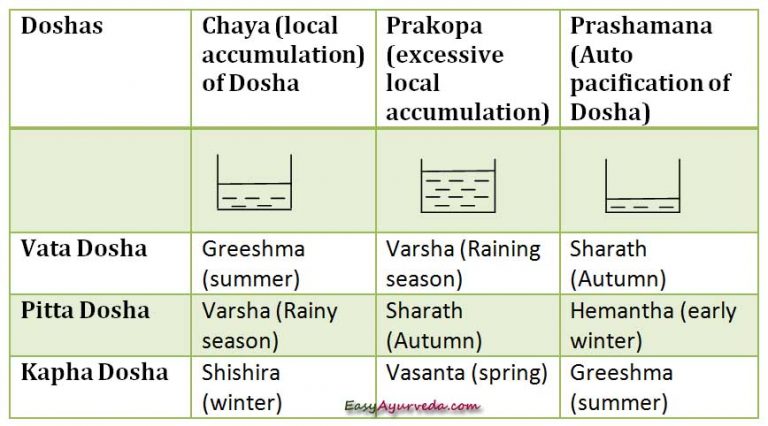
The logic is straightforward:
- Autumn/Winter (Varsha, Hemanta, Shishira): These seasons are dominated by cold, dry, and windy qualities, which aggravate Vata. Therefore, warming and nourishing oils like Sesame oil and complex formulations like Mahanarayana Taila are most appropriate.
- Summer (Greeshma): This is the hot season, which aggravates Pitta. Cooling oils are essential. Coconut oil is the best simple choice. Medicated oils like Ksheerabala Taila (which is cooling due to its milk base) or Pinda Taila are also excellent.
- Spring (Vasanta): This season is cool, damp, and heavy, leading to the aggravation of Kapha. A stimulating massage with a warming oil like Mustard oil or Sahacharadi Tailam can help counteract this heaviness.
Pillar 3: Vikriti (Pathological State)
When a person has a specific disease or doshic imbalance (Vikriti), the oil selection must prioritize pacifying the Vikriti over the Prakriti or Rutu. This is where medicated oils (Siddha Taila) become indispensable.
"Fundamentals of Abhyanga" Talk By- Dr. Rajkala P. Patil
Dr. Rajkala Patil explains this principle clearly in her lecture on Abhyanga. She discusses how the choice of oil shifts from general to specific when a disease is present.
Please watch the segment from 07:11 to 11:45. Pay close attention to her explanation of how oil choice is adapted for body constitution and season in a healthy person, and then how it changes for specific diseases like Amavata, Sandhivata, and skin conditions.
To systematically choose an oil based on Vikriti, we can classify oils by their primary doshic action.
A Comprehensive Review of Commonly used Taila Yogas ...
This research paper, 'A Comprehensive Review of Commonly used Taila Yogas,' provides an excellent classification of oils based on their effect on the doshas. This is a highly practical tool for clinical use.
Please review 'Table no 1: Showing classification based on Doshagnata'. This table categorizes common oils into Vatahara, Vata-Pittahara, and Vata-Kaphahara groups.
Using this classification, you can make a targeted choice:
- For Vata-dominant vikritis (e.g., degenerative arthritis, neuralgia): Use potent Vatahara oils like Mahanarayana Taila or Bala Taila.
- For Vata-Pitta vikritis (e.g., inflammatory arthritis, neuropathic pain with burning): Use Vata-Pittahara oils like Ksheerabala Taila, Pinda Taila, or Dhanwantaram Taila. These pacify Vata without aggravating Pitta.
- For Vata-Kapha vikritis (e.g., arthritis with stiffness and swelling): Use Vata-Kaphahara oils like Sahacharadi Taila or Kottamchukkadi Taila. These oils have properties that reduce both Vata and Kapha.
Pillar 4: Prayojana (Specific Therapeutic Goal)
Even within a doshic imbalance, you can further refine your choice based on the specific action or target area you wish to address.
Comparing Ayurvedic Oils: Which Thailam Is Right for You?
The article 'Comparing Ayurvedic Oils: Which Thailam Is Right for You?' offers an exceptional guide for this level of specificity. It breaks down the choice by primary application, making it very easy to select an oil for a particular therapeutic goal.
First, read the 'Oil Profiles' section to understand the unique indications of Mahanarayana, Dhanwantharam, Ksheerabala, Ashwagandha, and Sahacharadi Thailams. Then, study the 'Decision Matrix: Choosing Your Oil' section, focusing on the 'By Primary Application' part.
Here's a summary of choices based on common therapeutic goals:
- General Joint/Muscle Support (especially for athletes): Mahanarayana Taila is the gold standard due to its complex, broad-spectrum formulation.
- Postnatal & Pediatric Care: Dhanwantharam Taila is classically revered for strengthening the mother's body after delivery and for nourishing infants.
- Nervous System Disorders (nerve pain, neuralgia, facial palsy): Ksheerabala Taila is the primary choice, known for its gentle, nourishing, and neuro-protective effects.
- General Debility, Fatigue, Recovery from Illness: Ashwagandha Thailam is excellent for building strength (Bala) and grounding the nervous system.
- Lower Back Pain, Sciatica, Varicose Veins: Sahacharadi Thailam is specifically indicated for conditions affecting the lower body.
Test your understanding!
A 35-year-old software developer with a Vata-Prakriti complains of neck and shoulder stiffness from long hours at his desk. He also experiences anxiety and difficulty falling asleep. Which of the oils discussed would be a good choice for his daily Abhyanga, and why? (Consider multiple options and justify your reasoning).
Show answer
Several oils could be beneficial, and the best choice depends on the primary goal.
- Option 1: Mahanarayana Taila: Excellent choice. It is a powerful Vatahara oil that directly addresses the muscle stiffness (stambha) in his neck and shoulders. Its warming nature will pacify the Vata prakriti.
- Option 2: Ashwagandha Thailam: Another strong candidate. Ashwagandha is known for its ability to reduce stress and anxiety, and it is also strengthening for the muscles (Mamsa Dhatu). Applying this oil, especially to the head and feet before bed, would directly address his sleep issues and stiffness.
- Option 3: Dhanwantharam Taila: A good general-purpose Vata-pacifying and nourishing oil. While less specific for stiffness than Mahanarayana, it is excellent for overall nervous system support and relieving fatigue.
The clinical decision might be to start with Mahanarayana Taila for a few weeks to primarily address the physical stiffness, and then switch to Ashwagandha Thailam for long-term management of stress and sleep.
3. Clinical Synthesis: A Case Study
Let's integrate these four pillars to work through a clinical scenario.
Case: A 50-year-old female of Pitta prakriti presents in late autumn (Hemanta ritu). She has been diagnosed with Sandhigata Vata (osteoarthritis) in her knees. The symptoms are pain (shoola), stiffness (stambha), and a mild burning sensation (daha) after walking.
Let's analyze using the four pillars:
- Prakriti: Pitta. This is a caution flag against using intensely heating oils.
- Rutu: Hemanta (early winter). This is a Vata season, suggesting a warming oil is generally appropriate.
- Vikriti: Sandhigata Vata (a Vata disorder) with a Pitta component (the burning sensation, daha). This means we need a Vata-Pittahara approach.
- Prayojana: The goals are to relieve pain, reduce stiffness, nourish the joint, and calm the inflammation/burning.
Clinical Reasoning:
- A pure Vatahara oil like Mahanarayana Taila, while great for joints, might be too warming and could aggravate her Pitta prakriti and the burning sensation.
- We need an oil that is effective for Vata but balanced for Pitta. Looking at the Vata-Pittahara category is the correct approach.
- Dhanwantharam Taila is an excellent choice. It is powerfully Vata-pacifying but considered balanced and nourishing, making it suitable for her condition without aggravating Pitta.
- Ksheerabala Taila is another outstanding option. It is renowned for Vata disorders of the nerves and joints, and its milk base gives it a cooling quality (sheeta virya) that will directly pacify the burning sensation (daha) while still nourishing the joint.
Conclusion for Case: Both Dhanwantharam Taila and Ksheerabala Taila are clinically sound choices. Ksheerabala Taila might be slightly preferred due to the explicit complaint of a burning sensation.
Conclusion
You now possess a systematic framework for selecting the most appropriate oil for Abhyanga. This skill elevates the practice from a simple routine to a precise therapeutic intervention.
Key Takeaways:
- Oil selection is a multifactorial decision based on Prakriti, Rutu, Vikriti, and Prayojana.
- For a healthy person, oil selection is guided by Prakriti and Rutu.
- In the presence of disease, the choice must be tailored to the Vikriti and therapeutic goal, which take precedence over Prakriti.
- Simple oils (Sesame, Coconut, Mustard) form the basis of doshic management, while medicated Thailams offer targeted therapeutic action for specific conditions.
In our next lesson, we will explore the comprehensive benefits of Abhyanga in detail, such as its effects on aging, fatigue, and Vata pacification (jara-shrama-vata hara). Your understanding of how to select the correct oil will be crucial as we discuss how these profound benefits are achieved.