Welcome back. In our previous lessons, we designed the architectural blueprints for two distinct experimental approaches: a within-triad factorial design and a between-triad cluster randomized trial. Having established what we want to compare, we now turn to the critical mechanism of how we assign participants to those conditions. The integrity of any experiment hinges on this step.
This lesson directly addresses the learning outcome of constructing appropriate randomization schemes for both within-triad and between-triad experimental designs. We will move beyond the abstract concept of "random assignment" and into the specific, practical methods you would use to implement it. For someone with your background in Design of Experiments, this will involve translating familiar principles like blocking and stratification into the unique context of triadic research.
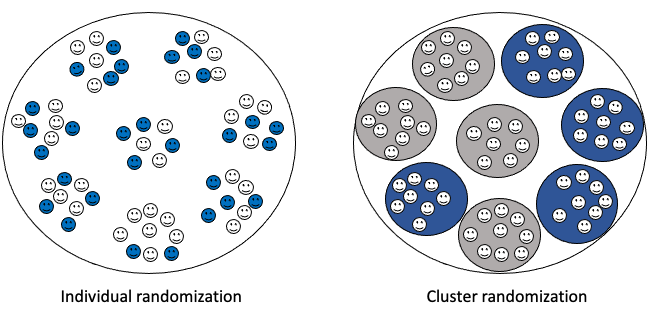
The Two Loci of Randomization
At its core, randomization in your research will happen in one of two places:
- Within the Triad: Assigning the order of conditions to a single triad that experiences all of them.
- Between Triads: Assigning entire triads to different experimental arms.
Let's examine the schemes for each.
Randomization Schemes for Within-Triad Designs
In a within-triad design, every triad acts as its own control, experiencing all levels of your independent variable. For instance, you might test the effect of three different communication protocols on jealousy management: Protocol A (Full Disclosure), Protocol B (Structured Debrief), and Protocol C (Emotional Journaling).
The primary threat to validity here is not baseline differences between groups (since there is only one group), but order effects. The experience of Protocol A might "teach" the triad something that carries over and influences their response to Protocol B. Randomization, in this context, is about randomizing the sequence of treatments to average out these order effects across your sample of triads.
Counterbalancing and Blocked Permutations
The general strategy is called counterbalancing. For a simple two-condition experiment (A vs. B), the implementation is straightforward. You would create two possible sequences, A-then-B and B-then-A. As you recruit your triads, you would randomly assign each triad to one of these two sequences. Across a large enough sample, this ensures that any advantage or disadvantage of going first is evenly distributed between the two conditions.
With three conditions (A, B, C), the complexity increases. There are possible permutations: ABC, ACB, BAC, BCA, CAB, CBA. This is known as full counterbalancing. You would randomly assign your sample of triads among these six sequences.
The Latin Square: An Efficient Alternative
When the number of conditions grows, full counterbalancing becomes impractical. Your expertise in DoE will recognize the utility of a Latin Square design as an efficient method for partial counterbalancing. A Latin Square ensures that each condition appears at each ordinal position (first, second, third, etc.) exactly once.
For our three-protocol example, a Latin Square might look like this for the first three triads recruited:
| Triad | Period 1 | Period 2 | Period 3 |
|---|---|---|---|
| Triad 1 | Protocol A | Protocol B | Protocol C |
| Triad 2 | Protocol B | Protocol C | Protocol A |
| Triad 3 | Protocol C | Protocol A | Protocol B |
This design doesn't cover all possible sequences, but it balances the most obvious source of order bias. You would then randomize subsequent triads to these balanced sequences. This approach ensures that no single protocol is systematically advantaged by being presented early or disadvantaged by being presented late when participants might be fatigued.
Randomization Schemes for Between-Triad Designs
When we shift to a between-triad or Cluster Randomized Trial (CRT) design, the randomization challenge changes. Here, we are assigning each triad to one, and only one, condition. The goal is no longer to manage order effects but to create treatment groups that are as comparable as possible at baseline.

1. Simple Randomization
The most basic method is simple randomization, equivalent to a series of coin flips. For each triad you recruit, you randomly assign it to the Intervention or Control group with a fixed probability (usually 0.5).
- Advantage: Unpredictable and free from selection bias if implemented correctly.
- Disadvantage: In studies with a small number of clusters (triads), this can easily lead to imbalanced group sizes (e.g., 12 triads in one arm, 8 in the other) or, more worrisomely, an imbalance in important prognostic factors purely by chance.
2. Blocked Randomization
To prevent severe numerical imbalances, you can use blocked randomization. You assign triads in blocks, with each block containing a pre-specified number of assignments to each treatment arm.
For example, with two arms and a block size of four, each block will contain two assignments to "Intervention" and two to "Control". The order within the block is randomized. The six possible permutations for a block of four are:
- AABB
- ABAB
- ABBA
- BBAA
- BABA
- BAAB
You would create a list of these randomized blocks (e.g., Block 1: ABBA, Block 2: AABB, ...). As you recruit triads 1-4, you assign them according to Block 1. Triads 5-8 get assigned according to Block 2, and so on. This guarantees that the number of triads in each arm never differs by more than half the block size.
3. Stratified Randomization
Blocked randomization ensures numerical balance, but it doesn't guarantee balance on key triad characteristics. This is the Achilles' heel of between-subjects designs. Stratified randomization is the most robust method for addressing this and should be your default choice for a serious between-triad experiment.
The process is as follows:
- Identify Strata: Identify a small number of powerful prognostic factors that you believe will strongly influence your outcome variables (e.g., jealousy, guilt). For your research, these might include:
- Lifestyle Experience: Novice (< 1 year) vs. Experienced (≥ 1 year)
- Primary Goal: Husband-focused vs. Wife-focused vs. Couple-focused
- Baseline Husband Jealousy: Low vs. High (based on a pre-screening measure)
- Create Separate Randomization Lists: For each combination of these strata (e.g., "Novice, Husband-focused, Low Jealousy"), you create a separate blocked randomization list.
- Assign to Stratum, then Randomize: When a new triad is recruited, you first determine which stratum it belongs to. Then, you assign it to the next available treatment in that stratum's specific randomization list.
This procedure forces a balance of the most important covariates across your intervention and control groups, dramatically increasing the statistical power and credibility of your results. It prevents a "bad luck" scenario where, for instance, most of the highly experienced triads end up in the control group.
A real-world clinical trial protocol offers a clear example of these principles in action.
Protocol for a cluster randomised controlled trial to determine the ...
This protocol for the CHIPPS study details the randomization procedure for a Cluster Randomized Trial where the unit of randomization is a "triad" (comprising a pharmacist, a GP practice, and a care home). The methodological logic is identical to a between-triad experiment.
Please read the section titled Randomisation and blinding. As you read, focus on how the authors justify their choices: Unit of Randomization: Note their rationale for randomizing at the practice level rather than the home level or resident level to minimize contamination. This is the same reason you randomize at the triad level. Stratification & Blocking: They state that Blocked randomisation will be undertaken by geographical area. In their design, "geographical area" is the stratification variable. They are essentially performing blocked randomization within each geographical stratum to ensure a good distribution of the intervention. Blinding: Observe the careful, multi-layered blinding process. While the participants (residents) and practitioners cannot be blinded, the researchers collecting data are blinded until after baseline data is complete. This is a critical step to prevent measurement bias.
The procedure described in this protocol—stratifying by a key factor and using blocked randomization within each stratum—is the gold standard for a between-triad CRT. It represents a practical and robust application of the principles from your Design of Experiments background to the complexities of clustered data.
Conclusion
We have now detailed the operational mechanics of randomization for your primary experimental designs. The specific scheme you choose is not a trivial detail; it is a core structural feature that defends your study against specific threats to validity.
Key Takeaways:
- For within-triad designs, randomization focuses on the sequence of treatments to control for order effects. Key schemes include blocked permutations and more efficient Latin Square designs.
- For between-triad designs (CRTs), randomization focuses on assigning entire triads to arms to create comparable groups.
- Simple randomization is basic but risky in small samples. Blocked randomization ensures numerical balance.
- Stratified randomization is the most powerful approach for between-triad designs. It involves identifying key prognostic variables (strata) and performing blocked randomization within each, ensuring the groups are balanced on the factors that matter most.
- A complete randomization protocol also includes procedures for blinding, which are essential for minimizing measurement and observer bias.
Designing and randomizing an experiment is a crucial part of the process, but it's only half the battle. A perfectly designed study can still fail if it lacks the statistical power to detect a true effect. In our next lesson, we will confront this issue directly by learning how to conduct a power analysis to determine the necessary sample size for your triadic experiments.