Welcome back. In our previous lesson, we established how to conduct a power analysis to ensure your experimental designs are statistically robust enough to detect the actor, partner, and relationship effects central to your research. We determined that for complex triadic models, simulation is the most effective approach, and that increasing the number of triads is the primary lever for boosting statistical power.
Now that we have a statistically sound foundation, we must turn to an equally critical dimension of your research: its ethical integrity. This lesson directly addresses the learning outcome of integrating ethical considerations into your experimental design protocol. For research as personal and sensitive as yours, ethics are not a bureaucratic afterthought but the very bedrock upon which the study's validity and feasibility rest. We will move beyond a simple checklist of rules to a more nuanced, three-part framework that is particularly suited to the complexities of studying intimate, interdependent relationships.
A Visual Framework for Ethical Design
Before we delve into the details, consider the following image. It provides a useful mental model for our discussion.
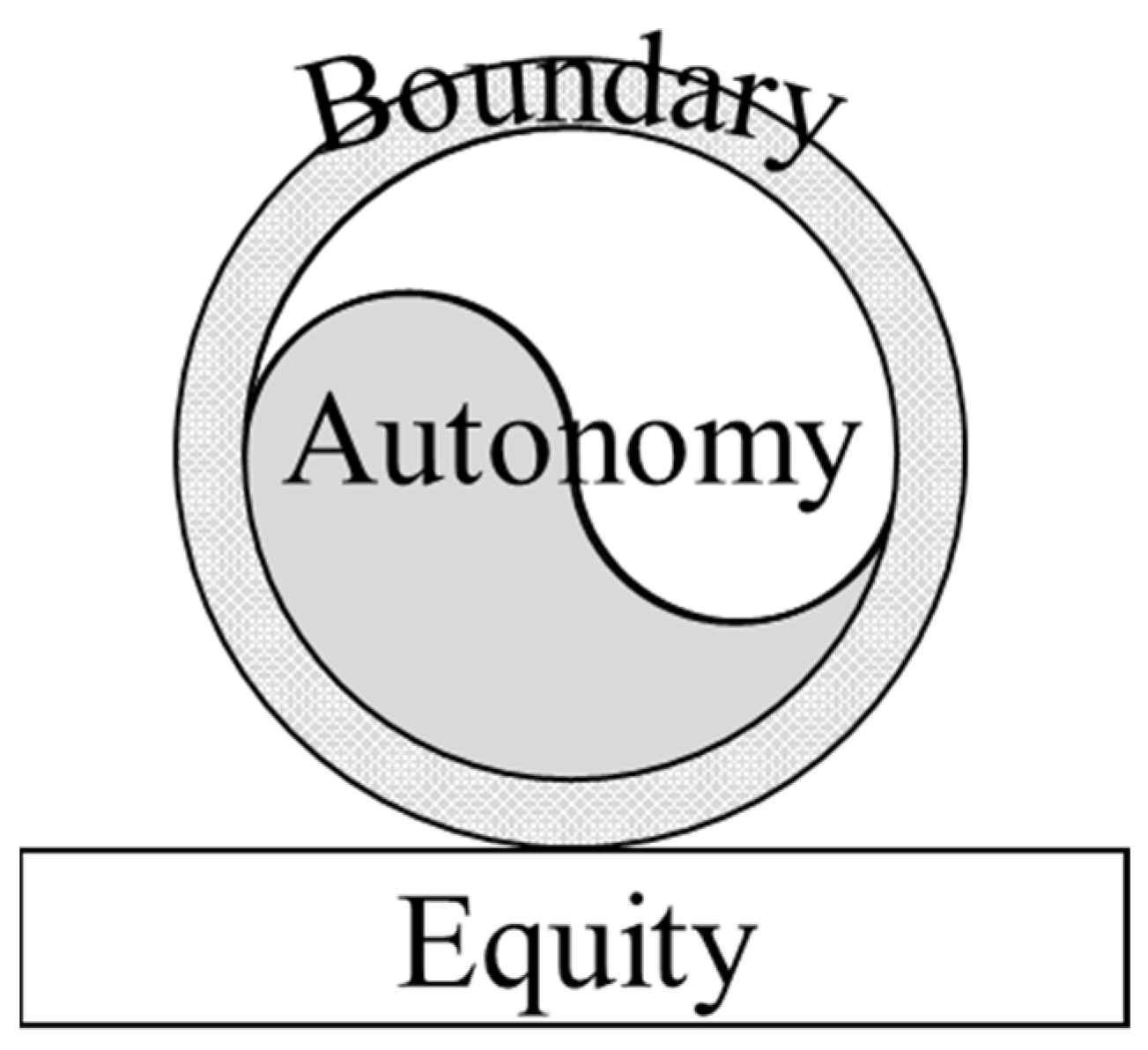
We will build our understanding of ethical protocols around these three concepts: the procedural Boundary, the participant's Autonomy maintained through a relational process, and the foundational principle of Equity or social responsibility.
Part 1: The 'Boundary' — Procedural Ethics
The first layer of any ethical protocol is the set of formal rules designed to protect participants. These are often called procedural ethics and are guided by principles codified by organizations like the American Psychological Association (APA). They form the non-negotiable "boundary" of your experiment.
The following video provides an excellent overview of these core principles.
Ethics in Psychology Research - APA Code of Ethics
This video from Psych Explained, "Ethics in Psychology Research," clearly breaks down the standard APA ethical guidelines that form the basis of all human subjects research.
Please watch the following segments to familiarize yourself with the key components of procedural ethics: Informed Consent: This section covers the necessity of voluntary participation and full disclosure of the study's purpose, logistics, and risks before it begins. Protection from Harm: Watch this part, which discusses the researcher's primary duty to minimize physical and psychological harm, and the concept of the risk-benefit analysis. Freedom from Coercion: This segment defines coercion as forcing someone to participate against their will, often through threats or an abuse of power. Confidentiality & Anonymity: Finally, watch this explanation of how to protect participant privacy by either not collecting identifying information (anonymity) or securing it (confidentiality).
For your specific triadic research, these principles have profound implications:
- Informed Consent: Your consent form cannot be vague. It must explicitly state the potential for emotional distress, such as heightened jealousy or guilt, and the possibility of relationship strain as risks of participation.
- Protection from Harm: The "cost-benefit analysis" is crucial. You must be able to articulate how the potential scientific and societal benefits of understanding these relationship dynamics justify the emotional risks involved. A plan to mitigate harm (e.g., providing resources for counseling) is essential.
- Coercion: In a triadic or dyadic context, the risk of coercion is magnified. How can you be sure the husband, wife, and bull all consent freely, without pressure from one another? Your protocol must address this, perhaps by having separate, private consent conversations with each participant.
- Confidentiality: You will be collecting linked data from three individuals. Your data security plan must be meticulous, outlining how you will de-identify the data (e.g., assigning IDs like T1-H, T1-W, T1-B) and store it securely to prevent any possibility of a breach.
To see how these procedures are implemented in a study on a closely related topic, we can examine the methodology of a master's thesis on consensual non-monogamy.
[PDF] Trust, jealousy and communication in long-term couples practicing ...
This thesis by Christina Wang provides a clear, practical example of an ethical protocol for research on a sensitive relationship topic. It demonstrates how to translate the abstract principles we just discussed into concrete actions.
First, read the Methodology section, paying close attention to the descriptions of how and why anonymous surveys were used. Next, and most importantly, carefully review Appendix B: Informed Consent Materials. This is a complete, real-world example of a consent form. As you read, analyze its structure: How does it explain the purpose of the study? How does it describe the procedures and time commitment? How are the risks and benefits framed? What does it say about confidentiality and the right to withdraw?
This example serves as a strong template for the procedural section of your own ethics protocol.
Part 2: 'Autonomy' and 'Equity' — Relational and Social Ethics
While procedural ethics set the essential boundaries, research on dynamic human relationships requires a more sophisticated approach. Two further concepts, relational ethics and equity principles, address the participant's autonomy within the study and the study's impact on the wider world.
A paper by Pil Hansen provides a powerful framework for this, which she terms the "triad of ethics."
Transdisciplinary solutions to methodological and ethical problems ...
This article argues for a more holistic approach to research ethics, moving beyond standard procedures. It's highly relevant for designing a study that is not only compliant but also genuinely respectful of its participants and their community.
Please read the section titled "The triad of ethics in transdisciplinary and practice-based research: procedural ethics, relational ethics, and equity principles." It begins after the heading. Focus on how the author defines and contrasts these three spheres: Procedural ethics, which we have already covered (the Belmont principles of respect, beneficence, justice). Relational ethics, which frames consent as an ongoing, negotiated process rather than a one-time signature. It emphasizes partnership and responsiveness. Equity principles, which demand awareness of how research might affect the broader group or community being studied.
Let's break down these two advanced concepts in the context of your work.
Relational Ethics and Autonomy
In your experiments, particularly a within-triad design where a couple and a bull engage in different activities over time, a single consent form at the beginning is insufficient. Relational ethics demands a protocol for ongoing consent.
- Before each experimental session or activity, you should have a brief check-in to reaffirm consent.
- Participants must feel empowered to say "no" to a specific activity without having to withdraw from the entire study. This maintains their autonomy.
- Your protocol must clearly state what happens if one member of the triad withdraws consent. Is the data from the entire triad discarded? Is the study paused? This must be decided in advance.
Equity and Socially Sensitive Research
Your research is, by definition, "socially sensitive." The findings have the potential for consequences that extend beyond the individuals in your sample to the broader cuckolding/hotwife community.
The following video discusses the responsibilities of a researcher conducting socially sensitive work.
The Dark Side of Research: Ethical Implications & Socially Sensitive Research | A-level Psychology
This video, "The Dark Side of Research," makes a crucial distinction between ethical issues (for participants) and ethical implications (for society) and provides actionable advice for managing socially sensitive research.
First, watch the introduction to understand the definition of socially sensitive research and how findings can be used for both good and ill. Then, pay close attention to the four recommendations for how psychologists should handle such research. These provide a roadmap for your own work.
The key takeaways for your protocol are:
- Careful Framing: Your research question must not be framed in a way that presumes pathology. The goal is to understand dynamics, not to label a lifestyle as "functional" or "dysfunctional."
- Responsible Interpretation: When you publish, you must be explicit about the limitations of your findings and guard against overgeneralization.
- Anticipate Misuse: Consider how the media or hostile groups might misinterpret your findings. Your written reports should proactively address potential misinterpretations. For example, if you find a correlation between a certain activity and jealousy, you must be careful not to present this as a simplistic causal law, but as a complex effect situated within a specific relational context.
Synthesizing Your Ethical Protocol
You now have a comprehensive, three-part framework to build the ethics section of your experimental protocol. To integrate these considerations, your protocol should have distinct sections addressing each domain:
1. Procedural Protocol (The Boundary):
- Informed Consent: Draft a consent form (using Wang's thesis as a model) that details risks (emotional distress, relationship strain), benefits, procedures, and time commitment. Create a separate version for each role (husband, wife, bull) if their tasks differ.
- Coercion Safeguard: Detail your plan for obtaining consent individually and privately from all three participants to ensure voluntariness.
- Data Security: Specify your plan for anonymization, secure storage, and data handling to guarantee confidentiality.
- Debriefing: Outline the post-experiment debriefing process, including revealing the full research hypotheses and providing resources for participants if they experience distress.
2. Relational Protocol (Participant Autonomy):
- Ongoing Consent: Describe your procedure for reaffirming consent before each experimental session or activity.
- Withdrawal Procedure: Define the process and consequences for partial withdrawal (skipping an activity) and full withdrawal (of one or all members).
3. Social Responsibility Protocol (The Foundation of Equity):
- Statement of Social Implications: Include a paragraph acknowledging the socially sensitive nature of the research.
- Mitigation Strategy: Briefly outline the steps you will take in reporting and dissemination to prevent misinterpretation and harm to the community represented by your participants, drawing on the advice from the "Bear it in MIND" video.
Conclusion
Integrating ethics into your design is not about restriction; it's about building a foundation of trust that makes your ambitious research possible. A robust ethical protocol demonstrates respect for your participants and foresight regarding your research's societal impact.
Key Takeaways:
- Ethical design in sensitive research requires more than procedural compliance; it involves a triad of considerations: procedural, relational, and equity-based.
- Procedural ethics create the essential Boundary through informed consent, protection from harm, and confidentiality.
- Relational ethics preserve participant Autonomy through ongoing consent and participatory respect, which is crucial for longitudinal or multi-session studies.
- Equity principles form the foundation by demanding awareness of the research's potential impact on the broader community (socially sensitive research).
In our next and final lesson of this module, we will address the practical trade-off between the tight control of an experiment and the real-world messiness of the behaviors you want to study. We will evaluate the balance between experimental control and ecological validity, a decision that is itself informed by the ethical considerations we have just discussed.