Hello! Let's continue our journey into the world of Computerized Accounting.
In our last lesson, we established why codification is essential. We learned that assigning codes to accounts creates a logical hierarchy, which is the backbone of any automated accounting system, enabling speed, accuracy, and the automatic generation of financial statements.
Today, we move from the 'why' to the 'how'. We will explore the different methods used to create these codes. Knowing these methods and where to apply them is a core skill and a frequently tested topic in your board exams.
Our learning outcome for this lesson is to: Describe different types of codes used in accounting: sequential, block, and mnemonic codes.
Let's begin with the simplest method.
1. Sequential Codes
A sequential code does exactly what its name suggests: it assigns numbers or letters in a consecutive order. Think of it as simply numbering a list.
To understand its formal definition and see a basic example, let's turn to your NCERT-based textbook.
Chapter 01 Overview of Computerized Accounting System
This section from the 'Chapter 01 Overview of Computerized Accounting System' introduces Sequential Codes, the most straightforward coding method.
Please read the short section titled '1.4.1.1 SEQUENTIAL CODES'. Focus on the definition and the example table provided.
As the reading explains, sequential codes are straightforward to implement.
- Definition: Numbers and/or letters are assigned to items in a simple, consecutive order (e.g., 001, 002, 003... or C001, C002, C003...).
- Best Use Case: They are primarily used for source documents like invoices, cheques, or purchase orders. Why? Because the sequence makes it easy to spot if a document is missing. If you have Invoice #105 and #107, you immediately know that #106 is unaccounted for.
- Key Limitation: The code itself carries no intrinsic meaning. The code
CL002doesn't tell you anything about the customer "XYZ LTD". Also, adding new items in a specific logical order (like alphabetically) is impossible without re-coding everything.
2. Block Codes
Block codes introduce a layer of organization that sequential codes lack. This method reserves a "block" or range of numbers for a specific category of items.
Let's see how your textbook defines this method.
Chapter 01 Overview of Computerized Accounting System
This next section from your textbook explains Block Codes, which group items into categories using ranges of numbers.
Please read the section '1.4.1.2 BLOCK CODES'. Pay attention to how a range of numbers is partitioned into sub-ranges for specific groups.
This method is a significant step up in organizing data.
- Definition: A range of numbers is divided into sub-ranges (blocks), with each block assigned to a specific group of accounts.
- Best Use Case: This method is perfect for structuring the Chart of Accounts. It allows the system to group all related accounts for reporting purposes. For example, all assets can be grouped together, all expenses can be grouped together, and so on.
Let's look at a professional example of block codes used for a General Ledger (GL).
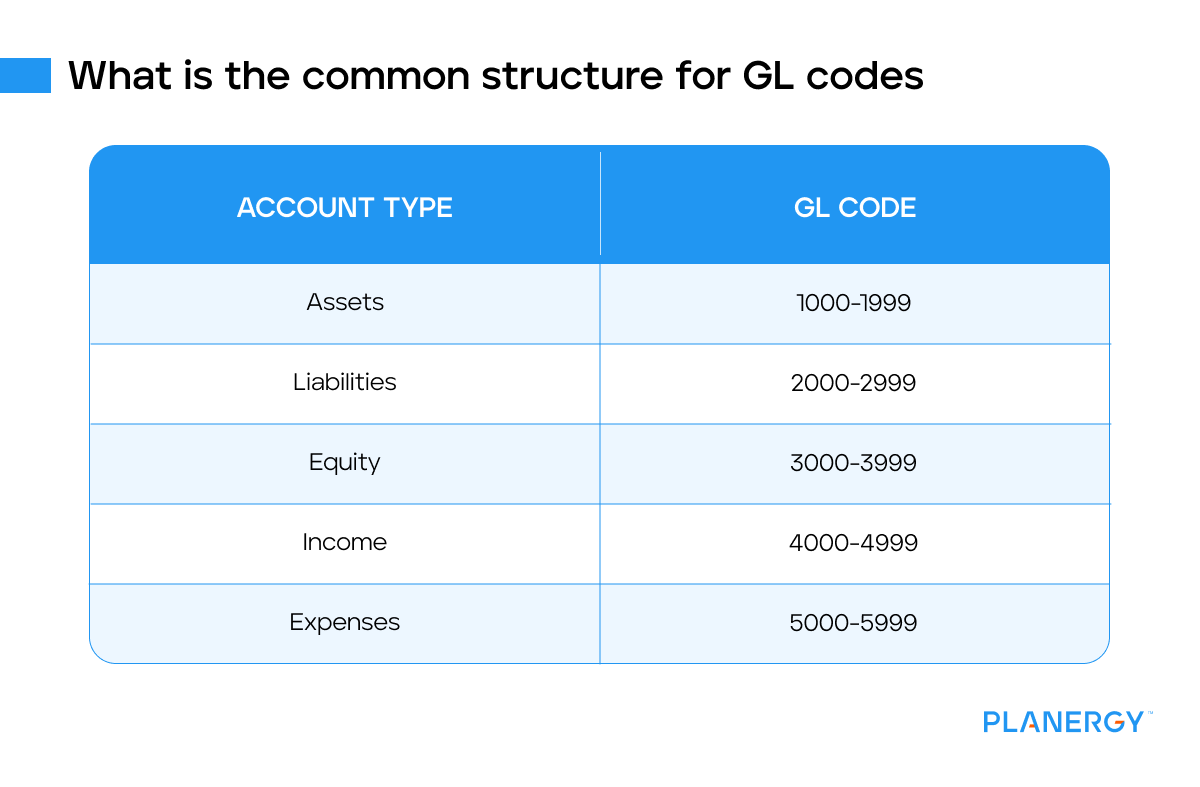
By looking at the code 1100 for "Cash," the system instantly recognizes it as an Asset because it falls within the 1000-1999 block. This hierarchical nature is what allows for the automatic preparation of the Balance Sheet and Profit & Loss Account.
- Key Advantage: It provides a clear, logical structure that facilitates grouping and automatic report generation. It also allows for flexibility, as you can add new accounts within the appropriate block as long as there are unused numbers.
3. Mnemonic Codes
While computers work best with numbers, humans often find words and letters easier to remember. Mnemonic codes are designed with this in mind. The word "mnemonic" itself is a memory aid.
Let's get the formal definition.
Chapter 01 Overview of Computerized Accounting System
The final type of code we'll cover is the Mnemonic Code. This section from your textbook explains how these codes use letters and abbreviations to make them more intuitive for human users.
Please read the section '1.4.1.3 MNEMONIC CODES'. Focus on the examples provided, like 'SJ' for Sales Journal.
Mnemonic codes are all about making things intuitive.
- Definition: A code that uses alphabets or abbreviations as symbols, often derived from the name of the item being coded.
- Best Use Case: They are useful where human recognition is important. Examples include codes for cities (e.g., DEL for Delhi), departments (e.g., ACCT for Accounting, MKTG for Marketing), or fixed assets (e.g., FURN-01 for the first piece of furniture).
- Key Advantage: They are easy for people to learn, remember, and interpret, which can reduce data entry errors.
- Key Limitation: The number of unique, intuitive codes you can create is limited. It can be challenging to devise a unique mnemonic for thousands of inventory items, and they are generally less efficient for computer sorting compared to purely numeric codes.
Comparing the Coding Methods
To help you prepare for your exam, let's summarize the three methods. A common question style is to ask you to explain the different types of codes and where they are best suited.
| Feature | Sequential Code | Block Code | Mnemonic Code |
|---|---|---|---|
| Definition | Items are numbered in consecutive order. | Ranges of numbers are allotted to specific categories. | Uses letters/abbreviations as a memory aid. |
| Example | Invoice No. 101, 102, 103... | 1000-1999 for Assets, 2000-2999 for Liabilities. | FURN for Furniture, BLR for Bangalore. |
| Best For | Source documents (invoices, cheques) to track missing items. | Chart of Accounts to create a logical hierarchy. | Items where human recognition is key (locations, departments). |
| Advantage | Simple; easy to identify missing documents. | Provides structure; facilitates automatic reporting. | Easy for humans to remember and interpret. |
| Disadvantage | Code has no meaning; hard to insert items logically. | Can be rigid if a block fills up. | Limited combinations; can be hard to create unique codes. |
In practice, many accounting systems use a hybrid approach, combining different methods. For instance, an asset code might be FA-FUR-001, which combines a Mnemonic code (FA for Fixed Asset, FUR for Furniture) with a Sequential code (001).
Conclusion
You've now learned the three fundamental coding methods used in computerized accounting. Understanding the unique characteristics and applications of each one is crucial for both setting up an accounting system and for answering exam questions effectively.
Key Takeaways:
- Sequential codes are simple, ordered lists best for tracking documents.
- Block codes are the foundation of the Chart of Accounts, creating a hierarchy by assigning number ranges to categories.
- Mnemonic codes use letters to make codes intuitive and memorable for people.
In our next lesson, we will put this knowledge into practice. You will learn how to apply these concepts to develop an appropriate coding scheme for a given list of accounts, a practical skill that directly mirrors tasks you may face in your exam.