In our first lesson, we mapped out the Japanese writing system, identifying the distinct roles of Hiragana, Katakana, and Kanji. Now that you know what these scripts are, it's time to learn how the language sounds. Proper pronunciation is the bedrock of communication, and in Japanese, this is all about rhythm.
Today's lesson is dedicated to mastering the sound system of Japanese. We will focus on the concept of the mora, the fundamental unit of timing that gives Japanese its characteristic, even-paced rhythm. Understanding and internalizing this concept is essential, as it affects not only your speaking clarity but also your listening comprehension. By the end of this hour, you will be able to recognize and pronounce Japanese words with the correct timing.
The Sounds of Japanese: Vowels and Consonants
Japanese pronunciation is remarkably consistent and, for an English speaker, relatively straightforward. The language is built upon five simple, pure vowels.
- a - as in "father"
- i - as in "machine" or "ski"
- u - as in "flute" or "rude". Note: The lips are not rounded as much as in English.
- e - as in "bet" or "get"
- o - as in "old" or "code"
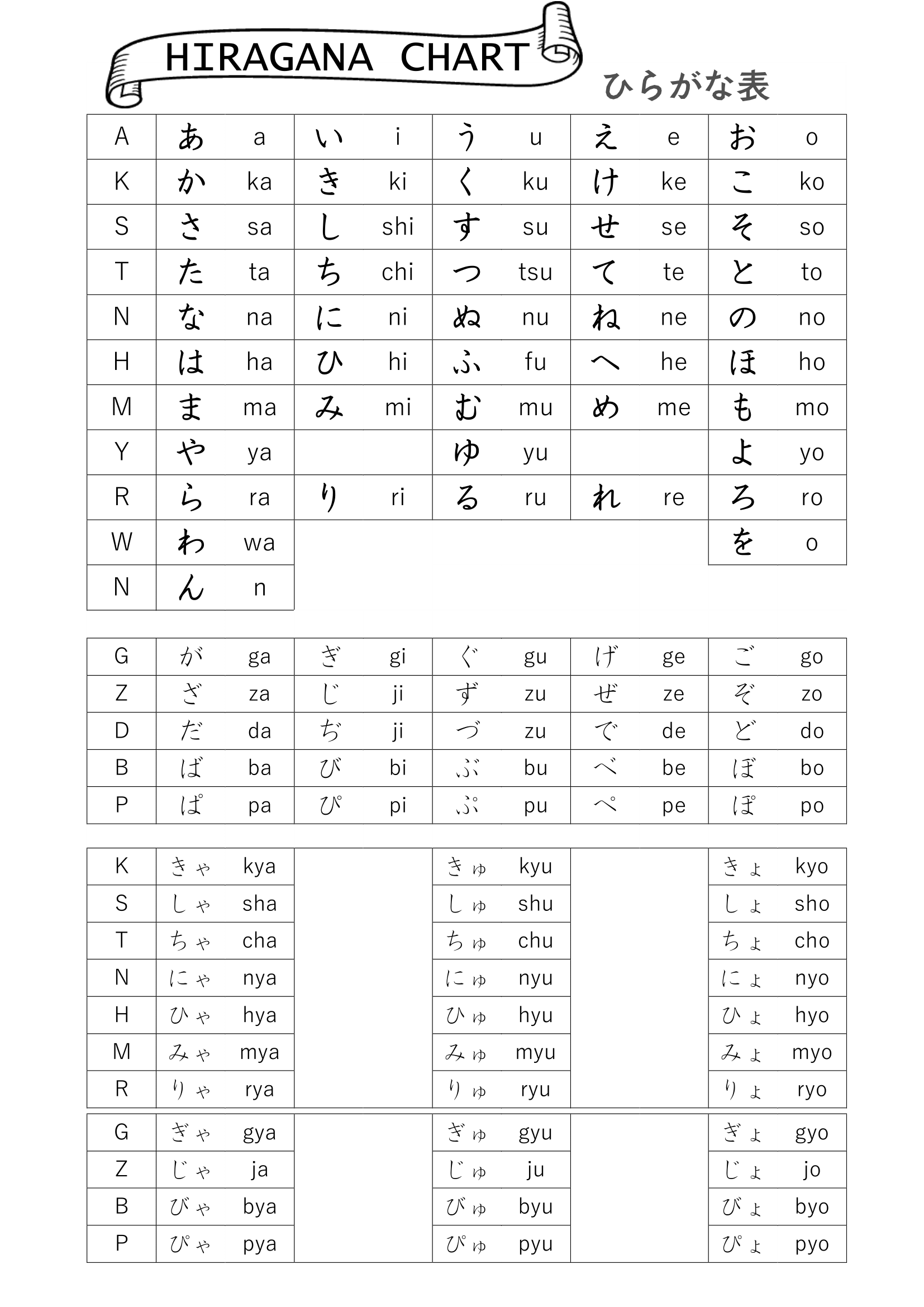
Almost all Japanese sounds are formed by combining a consonant (like k, s, t, n) with one of these five vowels, creating units like ka, ki, ku, ke, ko. There are very few exceptions.
The following resource provides a good overview of these basic sounds. For now, just focus on the vowel sounds.
Japanese/Pronunciation - Wikibooks, open books for an open world
This Wikibooks article gives a concise explanation of the five Japanese vowels.
Read the section under the heading "The syllabary" up to the large table of consonants. Pay attention to the English approximations for each vowel sound. Notice the point that Japanese vowels are always pronounced separately, which is a key difference from English.
The entire set of these basic sounds is represented by the Hiragana script, which you'll begin learning in the next lesson. Think of the chart below as a complete map of the sounds you'll be mastering.
The Heartbeat of Japanese: The Mora (拍, haku)
The single most important concept in Japanese pronunciation is rhythm. While English is a "stress-timed" language, where some syllables are long and stressed while others are short and unstressed, Japanese is "mora-timed."
A mora is a unit of sound that has a specific, equal duration. Think of it like a beat in music. Every mora takes the same amount of time to say. A word with two morae takes exactly twice as long to say as a word with one mora.
The following video provides an excellent introduction to this concept.
The Rhythm of the Japanese Language - Japanese Pronunciation
This video from the Campanas de Japanese channel clearly explains the concept of mora using a beat-based analogy.
Watch the segment from the introduction to mora. The speaker explains how each kana, or character, represents one "beat" or mora. The example with the word nihongo (にほんご) demonstrates this perfectly: に (ni) - 1 beat ほ (ho) - 1 beat ん (n) - 1 beat ご (go) - 1 beat Total: 4 beats.
This concept of mora also explains why Japanese speakers sometimes break down English words in a way that seems unusual. They are converting the English syllable structure into a Japanese mora structure. The next video illustrates this with a great example.
Japanese Pronunciation: Rhythm
This video by Kaname Naito provides a deep dive into the mora and contrasts it effectively with English syllables.
Watch the section that explains the difference between mora and syllables using the word "hamburger." In English, "ham" is one syllable. In Japanese, it becomes ハン (ha-n), which is two morae, giving it a longer, more drawn-out sound.
Special Morae: The Key to Correct Rhythm
While most morae are simple consonant+vowel pairs (like ka, shi, to), there are three special cases you must master to achieve a natural rhythm. Each of these also takes up one full mora (or one beat).
1. Long Vowels
When a vowel sound is held for two morae, it's called a long vowel. In English, this distinction can change emphasis, but in Japanese, it can change the entire meaning of a word. Getting this wrong is one of the most common mistakes for learners.
A classic example is the difference between "uncle" and "grandfather":
- おじさん (o-ji-san) = Uncle (3 morae)
- おじいさん (o-ji-i-san) = Grandfather (4 morae, with a long 'i' sound)
The video from Kaname Naito explains this critical distinction.
Japanese Pronunciation: Rhythm
This part of the video covers the three types of special sounds that are crucial for correct timing.
Watch the explanation of long vowels. Pay close attention to the ojisan/ojiisan example. You need to physically hold the vowel sound for an extra beat.
2. The Syllabic Nasal (ん, n)
The character ん (n) is the only consonant that can exist on its own. It always counts as one full mora. In the word かんたん (ka-n-ta-n, "easy"), the sounds ka, n, ta, and n are each given one beat. Learners often rush this sound, attaching it to the previous mora, but it must be given its own time.
Japanese Pronunciation: Rhythm
Continuing with the same video, let's focus on the syllabic 'n'.
Now watch the part explaining the sound 'n' (ん). Notice how the speaker emphasizes giving 'n' the same length as any other sound in the word kantan.
3. The Double Consonant (Small っ, sokuon)
The small hiragana character っ (not to be confused with the full-sized つ, tsu) is called a sokuon. It has no sound of its own. Instead, it indicates a one-mora pause before the next consonant, effectively doubling that consonant.
Consider the difference between:
- きて (ki-te) = Come (2 morae)
- きって (ki--te*) = Stamp (3 morae, with a pause between ki and te)
The video from Campanas de Japanese demonstrates this well.
The Rhythm of the Japanese Language - Japanese Pronunciation
This video clearly illustrates the function of the small 'tsu'.
Watch the section that explains the small tsu. Listen carefully to the difference in rhythm between kite and kitte. The small っ is a beat of silence.
Let's Practice!
Now it's time to put this knowledge into practice.
Activity 1: Mora Counting Quiz
The best way to internalize this is to practice counting the morae in different words. The following video has a short, interactive quiz. Pause the video after each word is shown and try to count the morae before the answer is revealed.
The Rhythm of the Japanese Language - Japanese Pronunciation
This is a quick-fire quiz to test your mora-counting skills.
Work through the quiz section. Remember: each regular kana is one mora, and long vowels, ん, and small っ also count as one mora each.
Activity 2: Rhythm Clapping
A great physical way to practice is to clap along to the rhythm of words and phrases. This helps build muscle memory for the timing.
The Rhythm of the Japanese Language - Japanese Pronunciation
This final segment of the video gives you a chance to practice the rhythm of common phrases.
Follow along with the rhythm practice at the end of the video. Clap your hands for each mora as the speaker says the phrases. Try repeating the phrases out loud as you clap.
For further practice, you can explore the word lists in the Wikibooks article. Many of them have audio clips, allowing you to listen and repeat, focusing on giving each mora its equal beat.
Key Takeaways
- Japanese pronunciation is mora-timed, meaning its rhythm is based on units of equal duration, like beats in music.
- A mora is the basic unit of sound. Most hiragana characters represent one mora.
- Special morae also take up one full beat:
- Long Vowels: Hold the vowel sound for two beats (e.g., o-o).
- Syllabic Nasal (ん): The 'n' sound is one beat.
- Double Consonant (っ): A one-beat pause before the next consonant sound.
- Mastering this even rhythm is fundamental to being understood and to understanding spoken Japanese.
Looking Ahead
You now have the two most important conceptual pillars for learning Japanese: an understanding of the writing system and an understanding of the sound system. With this foundation, you are ready to start building your skills. In the next lesson, we will finally get our hands dirty and learn to read and write your very first hiragana characters: the five vowels あ, い, う, え, and お.