In our previous lesson, we established the modern view of applied linguistics as a broad, interdisciplinary field that starts with real-world problems and draws on various disciplines to solve them. This lesson will show you exactly what that looks like in practice.
Our goal is to identify some of the key real-world applications of linguistics. As specified in the learning outcome, we'll focus on three major areas: language teaching, translation, and speech therapy. By exploring these examples, you'll see how theoretical linguistic knowledge is put to work to address concrete human needs in education, communication, and healthcare.
Putting Linguistics to Work
The modern, interdisciplinary perspective has opened the door for linguistics to contribute to an incredibly diverse range of fields. Instead of just analyzing language in the abstract, applied linguists tackle practical questions like:
- What is the most effective way to teach a second language?
- How can we ensure a legal document means the same thing in two different languages?
- How can we help a stroke patient recover their ability to speak?
The image below gives a great snapshot of this practical focus, highlighting some of the most prominent domains where applied linguistics is used.
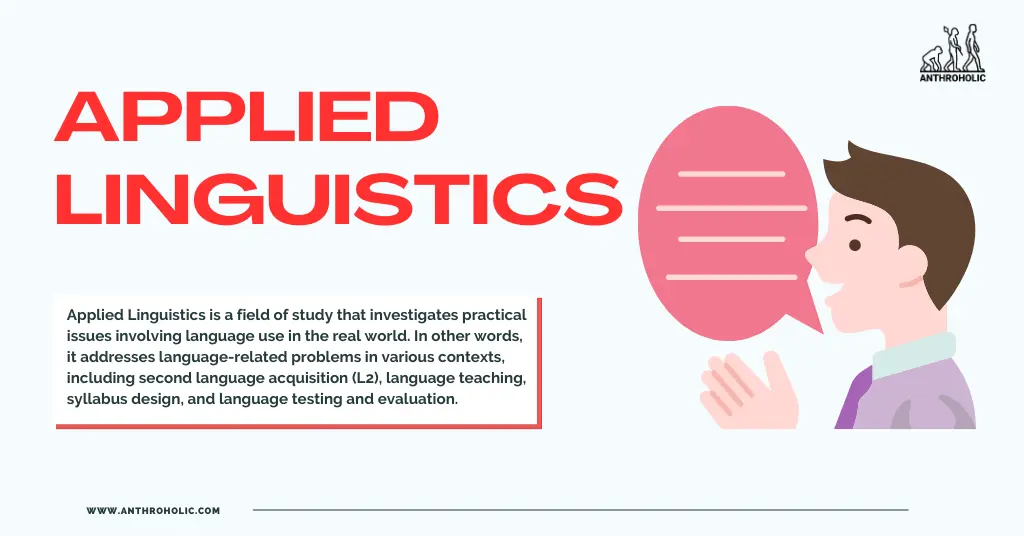
We will now explore three of these applications in more detail.
1. Language Teaching and Second Language Acquisition (SLA)
Perhaps the most established and well-known application of linguistics is in language education. Applied linguistics provides the research foundation for how languages are taught and learned in classrooms around the world. It informs everything from curriculum design and assessment methods to teaching techniques.
A major subfield dedicated to this is Second Language Acquisition (SLA), which studies how people learn languages other than their native tongue.
What Is Applied Linguistics? 9 Examples That Define, Inspire And ...
The article "What Is Applied Linguistics? 9 Examples" provides clear, concise definitions of the key subfields.
First, locate the table under the heading "Examples of Applied Linguistics fields (Applied Linguistics In Action)." In this table, read the definitions for Language Teaching and Second Language Acquisition. Then, scroll down to the section titled "6. Language Teaching: The Art and Science of Instruction" and read that paragraph to understand how linguistic research shapes teaching practices.
As you read, you'll notice that the goal is to make language instruction more effective by grounding it in scientific principles. For example, research in phonetics can help create better pronunciation drills, while insights from syntax can inform how grammar is explained.
The following video clip discusses SLA as a core area of applied linguistics, emphasizing its focus on the processes involved in learning a new language.
An Overview of Applied Linguistics
This clip from "An Overview of Applied Linguistics" by KTHLearningLab explains the role of second language acquisition within the broader field.
Please watch the segment from second language acquisition. Note how it connects the study of learning processes to environmental and other factors.
2. Translation
Translation is another critical application, serving as a bridge between different language communities. It's far more complex than simply swapping words; it involves transferring meaning accurately and in a culturally appropriate way. Applied linguistics provides the tools to analyze the challenges of this process.
What Is Applied Linguistics? 9 Examples That Define, Inspire And ...
We will return to the same article, "What Is Applied Linguistics? 9 Examples," to explore translation.
First, go back to the table under "Examples of Applied Linguistics fields (Applied Linguistics In Action)" and read the definition for Translation. Next, scroll down to section "8. Translation: Bridging Communities" and read the introductory paragraph. Focus on how it describes translation as a process of transferring meaning while preserving subtleties and nuances.
Linguistic knowledge is essential for a translator. For instance:
- Semantics and Pragmatics help a translator understand both the literal and intended meaning of a source text to find the best equivalent.
- Sociolinguistics provides awareness of cultural norms and dialects, which can be crucial for an accurate and appropriate translation.
- Syntax helps navigate differences in sentence structure between languages.
3. Speech Therapy (Speech-Language Pathology)
Moving from education and cross-cultural communication to healthcare, we find another vital application: speech therapy, also known as speech-language pathology. Speech-language pathologists (SLPs) use their knowledge of linguistics to diagnose and treat a wide range of communication disorders.
The video below gives an excellent overview of this field and the role linguistics plays within it.
A Linguistics Guide for Beginners!
The video "A Linguistics Guide for Beginners!" from TheLingOtter channel explains how linguistics is applied in the medical field through speech pathology.
Please watch the segment on Speech Pathology. Pay close attention to the specific examples of what a speech pathologist does, such as helping children with developmental delays or stroke patients who have lost the ability to speak.
As the video highlights, SLPs apply core linguistic knowledge every day. A strong understanding of phonetics and phonology is necessary to help someone with a lisp or stutter, while knowledge of morphology and syntax is crucial for assisting a patient in rebuilding their ability to form words and sentences after a brain injury.
A Wider Lens: Other Applications
The three areas we've covered are just the beginning. The "real-world relevance" of applied linguistics, as noted in the article "What is applied linguistics?" by Achilleas Kostoulas, has expanded into many other domains. Here are just a couple more examples:
-
Computational Linguistics and Language Technology: This is a rapidly growing field where linguists work with computer scientists to help machines understand and produce human language. This work powers everything from the virtual assistants on your phone (like Siri and Alexa) to automated translation services like Google Translate.
-
Language Policy: This involves making decisions about the status and use of languages at an institutional, local, or national level. For example, applied linguists might advise a government on bilingual education policies or help a multinational corporation develop an official language strategy for its employees.
Conclusion
In this lesson, we have surveyed several key real-world applications of linguistics, demonstrating how the field puts theory into practice to solve tangible problems.
Key Takeaways:
- Applied linguistics addresses practical, language-related issues in diverse fields.
- Language Teaching and SLA use linguistic research to improve how languages are taught and learned.
- Translation relies on semantic, pragmatic, and sociocultural linguistic knowledge to bridge communication gaps between languages.
- Speech-Language Pathology applies knowledge of phonetics, syntax, and other areas of linguistics to treat communication disorders.
- Other major applications include language technology and language policy, showcasing the broad reach of the field.
This exploration of language teaching and learning provides a perfect foundation for our final lesson. We will conclude the course by zooming in on the psychology of language acquisition, comparing two major learning theories—behaviorism and cognitivism—and distinguishing between the different ways we learn a language.