Introduction
Welcome back! In our last lesson, we established a foundational concept: in cinema, the bikini is a powerful narrative costume. We analyzed how specific styling choices in films like Glass Onion and Spring Breakers, and especially in the series The White Lotus, are used to build character identity, convey personality, and reveal internal psychology.
Today, we'll expand on that idea by examining how the context of the production itself shapes these choices. Not all on-screen bikinis are created equal because the goals of a summer blockbuster are very different from those of a small independent film or a multi-season streaming series.
Your learning outcome for this lesson is to compare bikini styling in traditional blockbuster films to the trends found in independent cinema and streaming series. We'll explore how the intended audience, budget, and storytelling format of each medium lead to distinct aesthetic approaches for swimwear.
1. The Blockbuster Bikini: Spectacle and Aspiration
Traditional blockbuster films are designed for a mass audience. Their goal is often to create unforgettable, high-impact moments and larger-than-life characters. In this context, bikinis are frequently used to create an aesthetic of spectacle, glamour, and idealized fantasy.
Think of the iconic bikini moments that have defined eras of cinema:
- The Action Heroine: Halle Berry's orange bikini in Die Another Day (2002) was a direct homage to Ursula Andress, but updated for a new millennium. It's practical enough for action but styled to be incredibly striking and memorable.
- The Villainess: Demi Moore's black string bikini in Charlie's Angels: Full Throttle (2003) is used to establish her as a formidable, confident, and dangerous antagonist. The look is pure, unapologetic power.
- The Romantic Ideal: In films like Fool's Gold (2008), Kate Hudson's swimwear contributes to a sun-drenched, adventurous, and romantic fantasy. The bikinis are part of an aspirational "endless summer" aesthetic.
In these films, the bikini is part of a polished and often airbrushed visual language. It's less about reflecting reality and more about creating a powerful, aspirational, or iconic image that will resonate with a broad audience.
2. The Independent Cinema Bikini: Naturalism and Subversion
Independent films often operate with different goals. They tend to be more character-driven, experimental, and willing to present a grittier, more naturalistic vision of the world. Here, the bikini is often stripped of blockbuster glamour and used in ways that feel more authentic or are meant to subvert audience expectations.
A prime example is Harmony Korine's Spring Breakers (2012), which we touched upon in the last lesson. As a film from A24, a studio known for its distinct artistic vision, its aesthetic is deliberately far from the polish of a Bond film.

In independent cinema, a bikini can signify:
- Vulnerability: Worn in a non-glamorous context, it can highlight a character's exposure or fragility.
- Authenticity: A simple, unadorned, or even ill-fitting bikini can make a character feel more real and relatable than a perfectly styled blockbuster counterpart.
- Subversion: By placing a familiar item like a bikini in an unsettling or unusual context, indie filmmakers can challenge our perceptions and create a sense of unease or commentary.
3. The Streaming Series Bikini: Hyper-Curated Character Study
Streaming series, particularly prestige dramas from platforms like HBO, represent a third, hybrid approach. They combine the high production values and budgets of blockbusters with the deep, nuanced character development of independent film. With 8-10 hours to tell a story, costume designers can use swimwear to conduct incredibly detailed character studies.
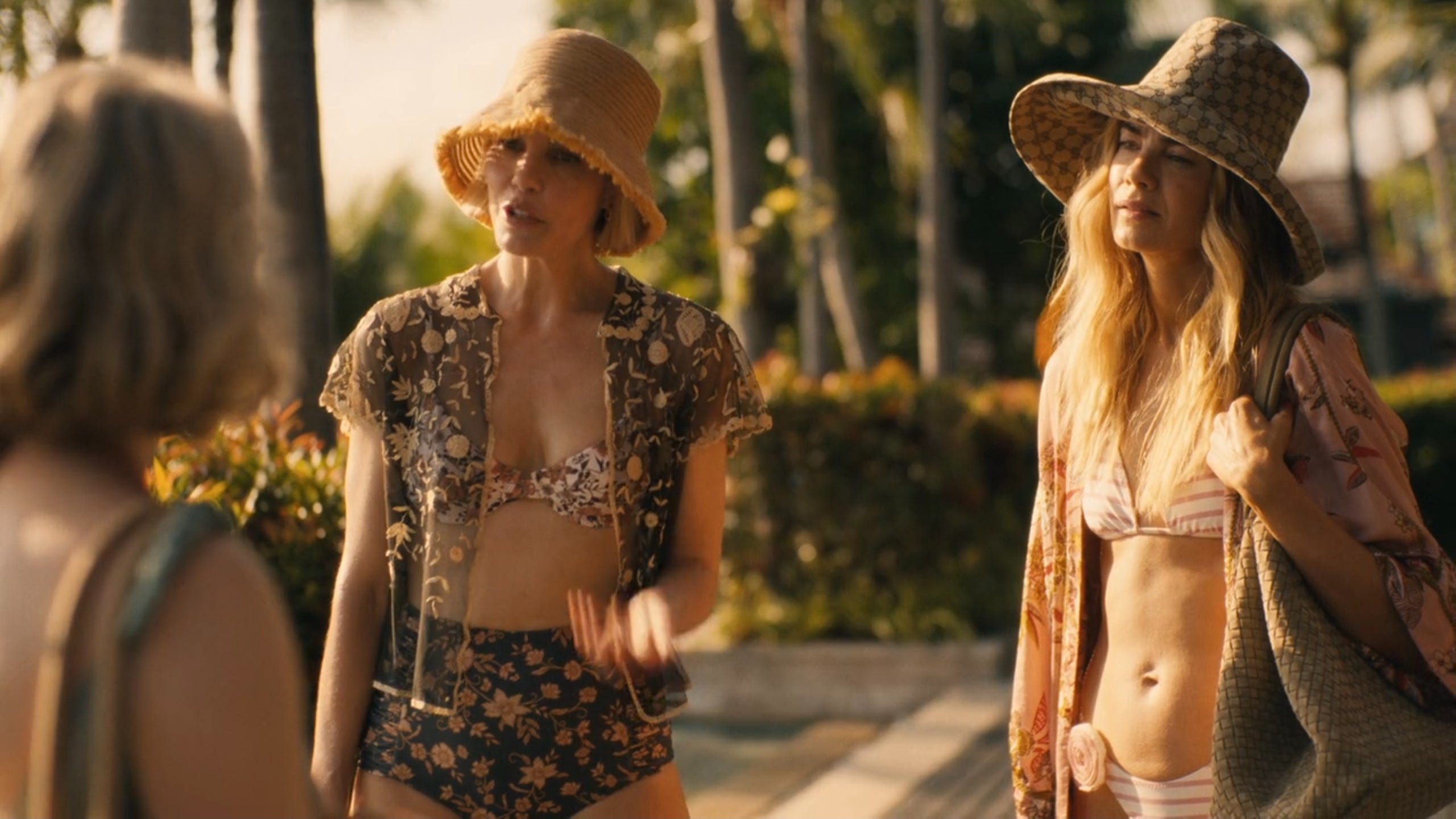
The White Lotus is the quintessential example of this trend. Swimwear is not just an outfit; it's a chapter in a character's story, packed with information about their wealth, social standing, and psychological state.
Let's explore how this "hyper-curated" approach manifests in the show's more recent seasons.
The White Lotus Season 3: Costume Design Analysis
This video from Costume CO analyzes the costumes from a hypothetical Season 3 of 'The White Lotus', but its insights into the costume designer's evolving process are highly relevant. It showcases how the show continually 'ups the ante' on costume storytelling.
Please watch the following sections: Introduction (00:00 - 04:22): Focus on the discussion of the 'maximalist approach,' the collaboration with luxury brands like Valentino and Jacquemus, and the idea of characters changing multiple times a day. Chelsea's Style (07:46 - 11:10): Note how her 'bohemian well-traveled flair' is constructed using specific brands (Tara Matthews, My Beachy Side) and a mix of vintage and designer pieces, including a 'vintage resin bikini.' Kate's Style (15:22 - 16:54): Contrast Chelsea's look with Kate's 'impeccably put together' style, exemplified by her hot pink Valentino swimsuit. This shows how different forms of wealth and personality are communicated through swimwear.
The video highlights a key aspect of streaming-era costume design: the direct collaboration with high-fashion brands to create custom or curated looks. This level of detail goes beyond simply picking a nice swimsuit; it's about embedding a character within a specific, contemporary fashion ecosystem.
The show's costume designer, Alex Bovaird, actively uses social media to inform her work, ensuring the on-screen styles feel authentic to the world of the ultra-wealthy.
White Lotus Costume Designer Alex Bovaird Explains Season Three...
This article from WWD provides more detail on the collaboration with designer Jacquemus for 'The White Lotus.' It reveals the meticulous research and brand strategy involved in modern streaming series.
Please read the two paragraphs starting with 'For Season Three of “White Lotus,” Bovaird not only combed through archives...' and the section immediately following it starting with 'This season Chelsea is the one pairing knits with her bikinis...'. Focus on how the designer uses Instagram research to achieve authenticity and employs layering with knits and textures to 'create looks out of bikinis.'
As Bovaird states, they "love the concept of dressing up for the pool." This philosophy is visible in every frame. The bikini is rarely worn alone; it is the centerpiece of a complete, meticulously styled ensemble.
Comparison Summary
To crystallize these differences, let's organize them into a table.
| Attribute | Blockbuster Films | Independent Films | Streaming Series |
|---|---|---|---|
| Primary Function | Spectacle, idealization, iconic moments | Naturalism, subversion, authenticity | Detailed character study, social commentary |
| Common Styles | Glamorous, action-practical, romantic | Simple, realistic, mismatched, experimental | Designer, trend-aware, highly specific to character |
| Styling Approach | Polished, aspirational, high-impact | Raw, understated, often minimal | Layered, accessory-heavy, "total look" |
| Brand Focus | Often unbranded or designed for film | Generally avoids overt branding | Highly brand-conscious (e.g., Valentino, Jacquemus) |
| Audience Appeal | Broad fantasy, escapism | Niche, art-focused, realism-seeking | Aspirational, fashion-literate, character-invested |
Conclusion
Today we've seen how the medium is the message when it comes to on-screen bikini styling. The demands of a blockbuster, an indie film, and a streaming series create three distinct aesthetic worlds. Blockbusters offer idealized spectacle, indie films provide raw authenticity, and streaming series deliver hyper-detailed, brand-conscious character portraits. Understanding these differences allows for a much richer analysis of costume as a narrative device.
Key Takeaways:
- Blockbusters: Use bikinis to create aspirational, high-impact fantasy and iconic character moments. The look is polished and aimed at a mass audience.
- Independent Cinema: Often uses bikinis to subvert glamour, aiming for naturalism, vulnerability, or a specific artistic statement. The look is often raw and understated.
- Streaming Series: Leverage long-form storytelling and high budgets to create deeply detailed, curated swimwear "looks" that reveal complex character psychology and social status, often with a heavy focus on contemporary luxury brands.
In our next lesson, we will build directly on our discussion of shows like The White Lotus to identify key bikini styling trends prominent in streaming-era content of the 2010s–2020s. We'll move from comparing platforms to cataloging the specific aesthetics that define our current moment in on-screen fashion.