Introduction
Welcome back. In our last lesson, we examined the halter-neck bikini and its fascinating dual identity. We contrasted the glamour-action hybrid of Halle Berry's look in Die Another Day with the purely functional, athletic aesthetic of Angelina Jolie's Lara Croft. This highlighted how a single silhouette can convey different messages based on color, material, and styling.
Today, we will build directly on that foundation. We're moving beyond the halter-neck to explore the broader categories of sport-inspired and athleisure aesthetics. The goal of this lesson is to identify the defining features of sport-inspired and athleisure bikini aesthetics in film and music videos. We will break down the specific cuts, fabrics, and styling choices that signal performance, energy, and an active lifestyle, establishing a visual vocabulary that we will use throughout the rest of this module.
1. Sport-Inspired vs. Athleisure: A Key Distinction
While often used interchangeably, "sport-inspired" and "athleisure" represent two distinct, though related, aesthetic concepts. Your background in research will appreciate the value of establishing clear definitions before we proceed.
- Sport-Inspired: This aesthetic is directly linked to functional athletic wear. The designs are either authentic gear for a particular sport (like surfing or beach volleyball) or they closely mimic it. The primary message is competence and authenticity within a specific activity. Function dictates form.
- Athleisure: This is a broader fashion trend that borrows visual cues from sportswear but is primarily designed for leisure and everyday wear. It blends athletic elements with fashion-forward styling. The primary message is the aesthetic of a sporty, healthy lifestyle, rather than performance in a specific sport. Form is inspired by function, but prioritizes style.
In film and music videos, a sport-inspired bikini tells you a character is an athlete. An athleisure bikini tells you a character embodies the look of an athlete.
2. Defining Features of the Athletic Aesthetic
So, what are the specific visual cues that create these aesthetics? Let's break them down into four key components.
Cuts and Silhouettes
The fit is arguably the most important signifier. Unlike styles designed purely for sunbathing, athletic cuts prioritize security and freedom of movement.
- Tops: Look for styles borrowed from sports bras.
- Racerbacks: Straps meet in the center of the back, offering excellent shoulder mobility.
- Scoop Necks & High Necks: Provide more coverage and compression on the chest.
- Zip-Fronts: Offer a functional, sporty detail that also allows for adjustable coverage.
- Wider Bands: Both under the bust and for the straps, providing more stability than thin strings.
- Bottoms:
- Boy Shorts: Offer maximum coverage and a secure fit, inspired by athletic shorts.
- Fuller-Coverage Briefs: Prioritize staying in place during activity over revealing cuts.
Fabrics and Materials
The material choice often signals intent.
- Neoprene: The thick, rubbery fabric used in wetsuits. Its appearance immediately signals a connection to water sports like surfing, diving, or wakeboarding.
- Compressive & Bonded Fabrics: Thicker, matte-finish materials (often blends of nylon and elastane) that look durable and performance-oriented.
- Mesh Panels: Used for both ventilation and as a stylistic nod to athletic jerseys and gear.
- Ribbed Textures: A key feature of the athleisure trend, providing a tactile and visual link to comfortable workout wear like seamless leggings and tops.
Color and Pattern
Color palettes can instantly code a bikini as sporty.
- Bold Color-Blocking: Using large, solid panels of contrasting colors is a classic sportswear design trope.
- High-Visibility Colors: Neons and bright primary colors (red, yellow, blue) are associated with action, energy, and safety gear.
- Prominent Logos: The presence of authentic surf or athletic brand logos (e.g., Roxy, Billabong, Nike, Adidas) is the most direct way to signify a sport-inspired look.
Styling and Context
As always, how the bikini is styled within the scene is crucial.
- Practical Accessories: Visors, baseball caps, functional watches, and sneakers instead of sandals.
- Sporting Equipment: The presence of a surfboard, volleyball, or other gear is a direct narrative link.
- Minimal Jewelry: Simple, non-obstructive jewelry or none at all.
- Active Context: The character is shown running, swimming, or playing a sport, reinforcing the bikini's function.
3. Case Study: The Authentic Surfer in Blue Crush (2002)
To see these features in action, let's analyze a pivotal film that helped cement the modern sport-inspired bikini aesthetic in cinema: Blue Crush. The film was notable for its commitment to portraying female surfers with authenticity, and its costume design was a critical part of that.
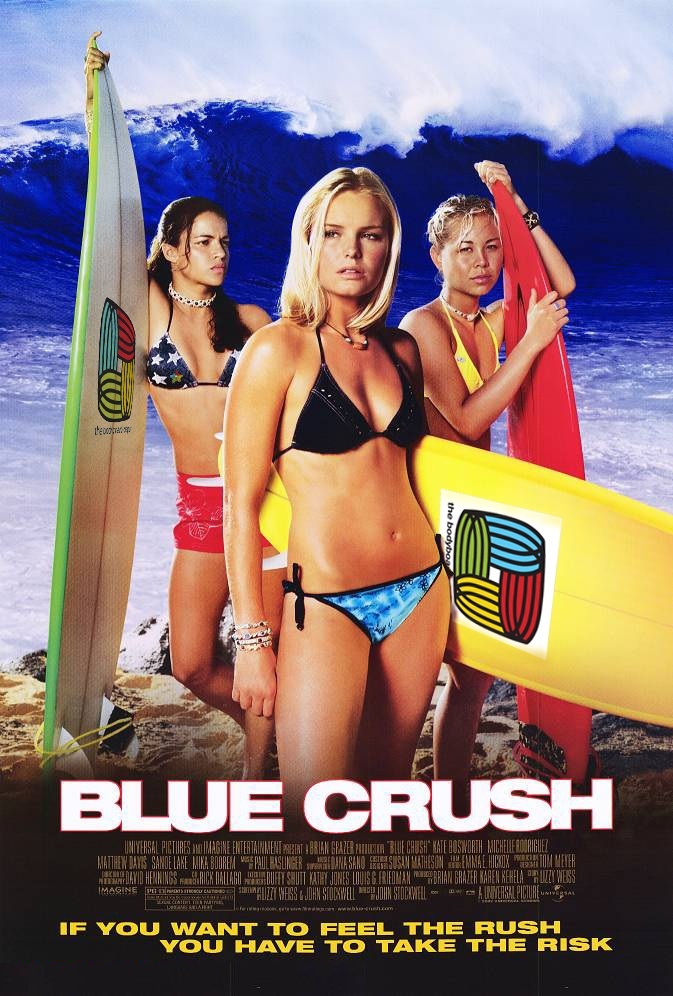
Let's deconstruct the visual information in this poster:
- Michelle Rodriguez (left): Wears a solid-colored halter-neck top. As we discussed in the last lesson, this cut provides excellent support, making it a practical choice for a high-impact sport. It immediately reads as functional.
- Kate Bosworth (center): Her mismatched bikini (printed top, solid bottoms) was a hallmark of genuine surf culture at the time. It suggested a casual, lived-in wardrobe where pieces are mixed and matched, rather than a perfectly curated "outfit." The top is a standard triangle, but its context and pairing make it feel sporty, not decorative.
- Overall Aesthetic: The bikinis are simple and robust. There are no embellishments, delicate strings, or fashion-forward cut-outs. The focus is entirely on practicality.
- Styling: The most powerful element is the context. The surfboards are not props; they are extensions of the characters. Their athletic stances and confident gazes project competence. This is a clear example of the "sport-inspired" category—the bikinis are presented as authentic gear for a specific, demanding activity.
This look stands in contrast to the tactical, "action hero" aesthetic of Lara Croft we saw previously. The Blue Crush bikinis are not for combat; they are for sport. They communicate a connection to nature and a lifestyle subculture, not danger and solitary adventure.
4. The Transition to Athleisure
While Blue Crush represents an authentic sport-specific look, the 2000s and 2010s saw the explosion of the athleisure trend in music videos and celebrity culture.
Here, the visual cues we've identified are often detached from any actual sport. An artist might wear a bikini with a racerback cut and bold color-blocking, but pair it with high heels and heavy jewelry in a highly produced studio setting.
In this context, the athletic features are used to signify:
- Energy and Dynamism: Especially for dance-heavy performances.
- Modernity and Coolness: Associating the artist with health, wellness, and a contemporary lifestyle.
- Empowerment: The look of strength and physical capability, even if it's purely an aesthetic choice.
This evolution from "sport-inspired" to "athleisure" is a key trend of the last two decades and something we will explore in much greater detail in our next lesson.
Conclusion
Today, we have established a clear framework for identifying sport-inspired and athleisure bikini aesthetics on screen. We've moved from the specific silhouette of the halter-neck to a broader understanding of the visual language of "Action & Attitude."
Key Takeaways:
- A distinction exists between sport-inspired aesthetics (authentic, functional, activity-based) and athleisure aesthetics (fashion-focused, borrowing sporty visual cues).
- The defining features of these styles include secure cuts like racerbacks and scoop necks, durable materials like neoprene, visual strategies like color-blocking and logos, and practical styling.
- The film Blue Crush serves as a key case study for the authentic surfer aesthetic, where functional bikinis help define characters as competent athletes.
- The rise of athleisure in media detaches these sporty features from actual activity, using them to project an image of energy, modernity, and empowerment.
In our next lesson, we will apply this framework to a specific genre, analyzing how athletic cuts and bold color-blocking are used in pop music videos to signify energy and empowerment.