Hello! Welcome to the final lesson in our "Staying Vigilant in the Crypto Space" module.
In our last session, we dissected pump and dump schemes, a clear-cut form of market manipulation. You learned to spot the red flags of these scams, such as intense, coordinated hype around obscure coins and promises of unrealistic returns. The key takeaway was simple: the only way to win is not to play.
Today, we'll tackle a more nuanced challenge. Not every risky asset is part of an organized pump and dump. The crypto world is filled with a vast spectrum of projects, from highly innovative and legitimate ventures to purely speculative tokens with little to no underlying value. Your goal for this lesson is to learn how to differentiate between legitimate projects and high-risk speculative tokens. Mastering this skill is the essence of "Doing Your Own Research" (DYOR) and is fundamental to navigating the crypto space safely.
1. The DYOR Framework: How to Research a Crypto Project
Before investing in any project, it's crucial to conduct thorough research. A legitimate project will have clear, verifiable information available, while a high-risk or scam project will often have significant gaps or red flags.
Let's begin with a professional overview of the research process.
How To DYOR: 12 Ways To Research Crypto Like A PRO
This video from CoinGecko, a major crypto data aggregator, provides an excellent introduction to the core pillars of doing your own research (DYOR). It covers what to look for and where to find the information.
Watch the video from 00:28 to 08:36. As you watch, pay close attention to the key areas of investigation: Website & Whitepaper: What problem does the project solve? Does it have utility? The Team: Who is behind the project? Are they credible? Social Channels & Community: Is the community engagement genuine? Market Metrics: Understanding market cap, volume, and liquidity.
As the video highlights, a solid research process involves scrutinizing several key aspects of a project. Think of it as conducting due diligence before making a business investment. Your background in online business gives you a good foundation for this, as you're already familiar with assessing a venture's potential.
2. Spotting the Red Flags: A Practical Guide
While the CoinGecko video showed you what to look for, it's equally important to know what to look out for. Many projects are designed to look appealing on the surface but hide major risks.
🤮 Top 6 Red Flags in Crypto Projects 2022! (How to Identify Bad Investments)
Now, let's look at the flip side. This video provides a tour of common red flags you'll encounter in high-risk or outright scam projects. Seeing these real-world examples will help you quickly identify low-quality projects.
Watch the segments from 00:17 to 17:21. The presenter walks through several red flags with concrete examples of project websites: No Team or Fake Profiles (00:17): Note how projects use cartoons or hide their team entirely. No Clear Vision (04:50): Look for vague mission statements or unsubstantiated claims. Poor Design & Copywriting (06:57): A professional project should have a professional presentation. Fake Community Engagement (10:07): Learn to spot bot activity and low-quality discussions on Twitter and Telegram. Poor Tokenomics (14:20): Understand the risks of inflationary tokens and unfair token distribution.
Here's a breakdown of the key areas to investigate, combining the positive signs of a legitimate project with the red flags of a speculative one.
A. The Team & Vision
- Legitimate Project: Has a public, verifiable team with relevant experience. Team members have LinkedIn profiles and a history of past work. The project's vision, outlined in a detailed whitepaper, solves a specific problem or innovates on existing technology.
- High-Risk Token: The team is anonymous or uses cartoon avatars. The whitepaper is vague, plagiarized, or filled with marketing buzzwords instead of technical substance. The "vision" is often just to become popular or make money for early holders.
B. Tokenomics (The Economics of the Token)
- Legitimate Project: Features transparent and fair token distribution. A significant portion of tokens is allocated to the community or project development, and tokens held by the team are subject to a vesting schedule (meaning they are unlocked gradually over time to prevent early dumping). The total supply is often capped (like Bitcoin's 21 million).
- High-Risk Token: A large percentage of tokens is held by the founders and early "investors" with no vesting schedule. The token may be highly inflationary (no maximum supply), or have suspicious transaction taxes that penalize sellers.
C. Community & Marketing
- Legitimate Project: The community on platforms like Discord or Telegram discusses the technology, use cases, and development progress. Developers and team members are active and answer questions. Marketing focuses on partnerships and technological milestones.
- High-Risk Token: The community focuses almost exclusively on price speculation ("wen moon?"), shilling, and memes. Social media channels have lots of followers but very little genuine engagement, a sign of purchased bots. Marketing relies on hype, fake celebrity endorsements, and creating FOMO (Fear Of Missing Out).

3. Technical Red Flags: Honeypots and Low Liquidity
Some high-risk tokens are not just poor investments; they are outright traps. Scammers can code smart contracts in ways that make it impossible for you to sell.
Fake Crypto Tokens: How to Spot a Scam
Binance's security team provides excellent insights into how fake tokens are created to defraud users. This article explains technical traps and gives tips directly from the platform you aim to use.
Read the sections 'How Fake Tokens Trick Investors and Steal Funds,' 'Real-Life Cases of Fake Crypto Token Scams,' and '5 Tips to Identify a Fake Crypto Token Before You Invest.' Focus on the BOOM token example, which had a 100% sell tax, making it a 'honeypot'—a token you can buy but cannot sell.
Two critical technical risks to understand are:
- Honeypots: As described in the Binance article, these are tokens with a malicious smart contract. The most common type allows you to buy the token but prevents you from selling it, often through a 100% "sell tax" that goes directly to the scammer. The price chart will only ever go up, luring in more victims, until the creator drains all the money.
- Low Liquidity: Liquidity refers to the pool of money available on an exchange that allows you to trade a token. If liquidity is low, it means a few large sell orders can cause the price to crash. It also means you might not be able to sell your tokens at all if there are no buyers. Binance and other platforms will often display a warning for such tokens.
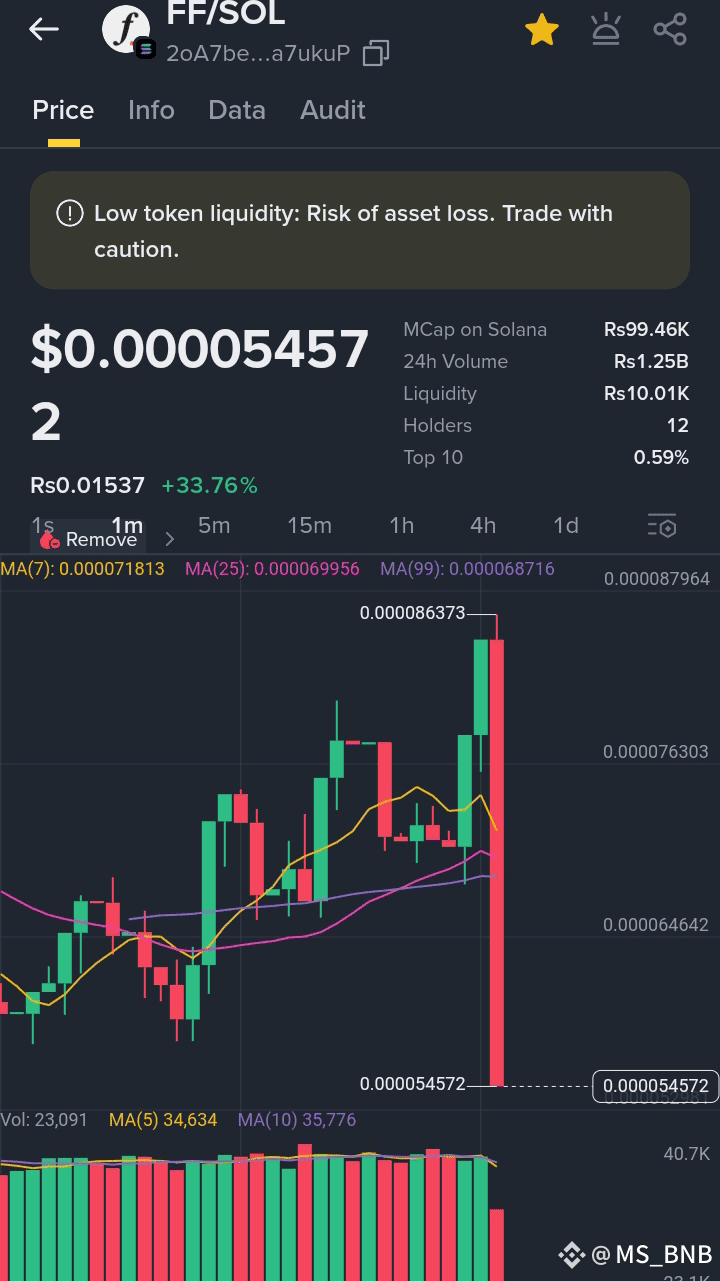
4. Your Practical DYOR Checklist
To make this process actionable, here is a step-by-step checklist you should run through before ever considering investing in a new, unfamiliar token.
How to Identify Crypto Scams: 15 Red Flags to Watch For
For a more technical but comprehensive list of checks, this article provides an excellent verification checklist.
Skim the sections 'Practical checks and a step-by-step verification checklist' and the 'FAQ' at the end. You don't need to understand every technical detail yet, but focus on the core actions: verifying the contract, inspecting liquidity, and researching the team.
Here is a simplified version of that checklist for you to use:
DYOR Checklist:
- The Project's Purpose:
- What problem does this project solve? Is it unique?
- Is the whitepaper detailed and professional, or just marketing fluff?
- The Team:
- Is the team public? Can I find them on LinkedIn?
- Do they have experience in crypto, software development, or business?
- Tokenomics:
- What is the maximum supply of the token?
- How are the tokens distributed? Does the team hold a large, unlocked portion? (Check the project's official website or CoinGecko/CoinMarketCap).
- On-Chain Data (via CoinGecko/CoinMarketCap):
- Verify the Contract Address: Always get the official address from the project's website to avoid buying a fake copy.
- Check Liquidity: Is there enough liquidity to support trading? (e.g., >$100k is a starting point for small projects).
- Check Holder Distribution: Is the token supply concentrated in just a few wallets? (This is a red flag for a rug pull).
- Community & Socials:
- Is the discussion on Twitter/Telegram/Discord about the technology or just about the price?
- Are the developers interacting with the community?
If you find multiple red flags during this process—especially an anonymous team and no clear utility—it's best to stay away.
Conclusion
You now have a robust framework for evaluating crypto projects. The difference between a legitimate project and a high-risk speculative token often comes down to substance versus hype. Legitimate projects are built on technology, verifiable teams, and clear utility. High-risk tokens are built on memes, anonymity, and the promise of quick riches, which they rarely deliver to anyone but their creators.
Key Takeaways:
- DYOR (Do Your Own Research) is a non-negotiable process of evaluating a project's team, vision, technology, tokenomics, and community.
- Legitimate projects are characterized by transparency, utility, and a credible team.
- High-risk tokens are often defined by anonymity, vague promises, poor tokenomics, and hype-driven marketing.
- Be aware of technical traps like "honeypots" (which you can't sell) and the dangers of low liquidity.
- Use the DYOR checklist to systematically assess any new project before investing.
What's Next?
This lesson concludes our module on staying vigilant. You've learned to identify scams, recognize market manipulation, and now, to differentiate between projects with substance and those without.
In our final lesson of the course, we will bring everything together by focusing on your personal operational security. The next lesson is: Establish a personal security checklist for ongoing crypto activities. This will equip you with a set of routine habits to keep your accounts and assets safe as you continue your journey in crypto.