Welcome to the second module of our course, "The Science of Natural Colour." In the previous module, we established the conceptual and environmental "why" behind natural dyeing, framing it within the principles of a circular economy. We saw how this practice represents a shift towards a regenerative, earth-to-earth system. Now, we move from the "why" to the "how," starting with the fundamental science that makes natural dyeing possible.
This lesson tackles the most crucial concept in dyeing: the relationship between the dye and the fiber. Your background in textile design means you're already intimately familiar with the distinct feel and behaviour of materials like wool and cotton. Today, we'll explore the chemistry that underpins those differences, explaining on a molecular level how natural dyes form lasting bonds with protein fibers (like wool) but interact very differently with cellulose fibers (like cotton). Understanding this is the key to predicting outcomes, solving common dyeing problems, and creatively controlling your results—all essential skills for leading an effective workshop.
A Tale of Two Chemistries
At the most basic level, natural textile fibers fall into two main chemical families:
- Protein fibers: Derived from animal sources, such as wool, alpaca, and silk.
- Cellulose fibers: Derived from plant sources, such as cotton, linen, and hemp.
These two families have fundamentally different physical structures, which you can see even under a microscope.
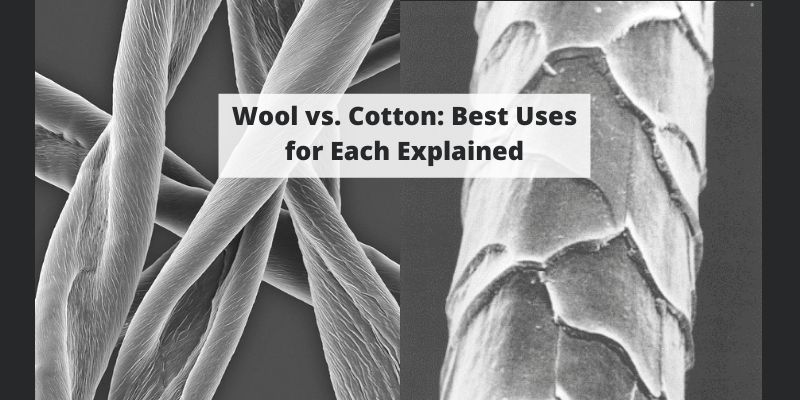
This difference in form is a direct result of their different chemical composition. Let's look at what each type of fiber is made of.
The Structure of Cellulose and Protein Fibers
To understand how these fibers accept dye, we need to look at their building blocks. An excellent, accessible article from Gnomespun Yarn and Fiber Arts, "The Chemistry of Fibers," breaks this down with clear diagrams.
The Chemistry of Fibers – Protein/Plant... Soy, Milk, Chitin, Etc – Gnomespun Yarn and Fiber Arts
This resource provides a simple, visual introduction to the chemical structures of protein and cellulose fibers, highlighting the key functional groups for dyeing.
First, read the section on Protein Fibers. Focus on the description and the accompanying diagram. The key takeaway is that proteins are made of amino acids and feature amine groups, which are crucial for dyeing. Next, read the section on Cellulose Fibers. Again, study the diagram and the explanation. Note that cellulose is made of glucose and is characterized by its numerous hydroxide groups.
As the reading explains, the surfaces of these fibers are not chemically inert. They are populated with specific "functional groups" that act as docking sites for dye molecules.
- Cellulose fibers are polymers of glucose. Their key feature is a profusion of hydroxyl (-OH) groups. These groups are chemically neutral but can form relatively weak connections called hydrogen bonds.
- Protein fibers are polymers of amino acids. Their structure is more complex and contains a variety of functional groups, most importantly amino (-NH2) and carboxyl (-COOH) groups. These groups can easily gain or lose a proton to become positively or negatively charged, making them highly reactive and capable of forming strong ionic bonds.

This fundamental chemical difference is the single most important factor in natural dyeing. It explains why a recipe that produces a vibrant red on wool might yield only a pale beige on cotton.
How Bonds are Formed
A dye is only useful if it can securely attach to the fiber and resist being washed away. The durability of a color depends entirely on the type and strength of the chemical bonds formed between the dye molecule and the fiber.
The SELVANE article, "The Chemistry of Textile Dyeing," offers a more formal explanation of this crucial interaction.
The Chemistry of Textile Dyeing: Natural Fibers & Color – SELVANE
This section directly compares the dyeing behaviour of the two fiber types, linking their chemical structure to the types of bonds they form.
Please read the entire section titled A Tale of Two Chemistries. It synthesizes the information we've just covered and explicitly states why dyes are not interchangeable between fiber types.
To summarize and expand on the reading, there are three main ways a dye molecule can bind to a fiber:
-
Hydrogen Bonds: A relatively weak electrostatic attraction between a hydrogen atom on one molecule and an oxygen or nitrogen atom on another. Think of it like the attraction between small magnets. This is the primary way that simple dyes (without a mordant) attach to the -OH groups on cellulose. Because the bonds are weak, the color is often less intense and more susceptible to fading.
-
Ionic Bonds: A strong attraction between a positively charged site and a negatively charged site. Protein fibers, with their amino (-NH2) and carboxyl (-COOH) groups, are rich in these potential charge sites. Many natural dye molecules are anionic (negatively charged), so they are strongly drawn to the positively charged sites on protein fibers, forming a powerful, lasting bond.
-
Covalent Bonds: The strongest type of chemical bond, where two molecules share electrons to form a new, stable compound. This is less common with natural dyes unless specific processes or mordants are used to facilitate this reaction, essentially locking the dye and fiber together permanently.
A Concrete Example: Indigo on Cotton (Cellulose)
To see these principles in action, let's watch a fantastic explanation of how indigo, one of the world's most famous natural dyes, works on cotton. The video "How Natural Dyes Work" by textile historian Kristine Vike illustrates the process at a molecular level.
How Natural Dyes Work | Ask Textile History
This segment provides a brilliant step-by-step visual explanation of how indigo is chemically altered to become water-soluble and then forms hydrogen bonds with cellulose fibers.
Watch the section explaining the indigo dyeing process, from the indigo example. Pay close attention to how the chemistries of both the dye and the cotton fiber are manipulated to create a colorfast result. The narrator does an excellent job explaining the role of hydrogen bonding and how the alkaline dye vat physically opens up the cotton fiber to trap the dye molecules.
The indigo process is a beautiful example of clever chemistry. Dyers learned to transform insoluble indigo into water-soluble leuco-indigo, which can access the hydrogen bonding sites on cotton. Then, upon exposure to air, it oxidizes back to its insoluble form, physically and chemically trapped within the cellulose structure.
A Second Example: Madder on Wool (Protein)
Now, let's look at a different scenario: dyeing a protein fiber with a dye that requires a "helper" molecule. This will serve as a brief preview for our next lesson on mordants. Madder root gives a beautiful red, but it needs a mordant to form a strong bond.
How Natural Dyes Work | Ask Textile History
This next segment from the same video explains how a mordant—in this case, alum—acts as a chemical bridge between the dye molecule (alizarin from madder) and the fiber.
Please watch the section covering the mordant example. Notice how the aluminum ion from the mordant forms a strong, stable "complex" with both the dye and the fiber. This creates a much stronger bond than hydrogen bonding alone could achieve.
This mordant-dye complex is the key to achieving vibrant, lasting colors on both protein and cellulose fibers for the vast majority of natural dyes. We will explore this process in detail in our next lesson.
Conclusion
In this lesson, we've moved from the macro to the micro, uncovering the chemical reasons behind the distinct dyeing behaviors of different fibers. This scientific foundation is invaluable, transforming you from a follower of recipes into a knowledgeable practitioner who understands why certain steps are taken.
Here are the key takeaways:
- Natural fibers are classified as protein (from animals, like wool) or cellulose (from plants, like cotton).
- Protein fibers are made of amino acids and have charged functional groups (-NH2, -COOH) that can form strong ionic bonds with dye molecules.
- Cellulose fibers are made of glucose and have neutral hydroxyl groups (-OH) that primarily form weaker hydrogen bonds with dyes.
- This chemical difference explains why protein fibers generally accept dyes more readily and form more durable bonds than cellulose fibers do without assistance.
- Processes like the indigo vat or the use of mordants are chemical strategies developed to overcome these challenges and create strong, lasting bonds.
Having established this fundamental difference between fiber types, our next lesson will focus squarely on the critical role of mordants. We'll explore how these "chemical bridges" work, compare the effects of different mordants, and learn why they are the key to unlocking a wide and permanent palette from natural sources.