Introduction
In our last session, we tackled the negative pull-up, a powerful upper-body exercise that directly targets the muscles needed for one of calisthenics' biggest milestones. Today, we pivot from upper-body pulling to foundational lower-body strength. This lesson focuses on the forward lunge, a cornerstone of functional fitness that builds single-leg strength, balance, and stability.
Your goal is to achieve comprehensive fitness, and a strong lower body is just as crucial as a powerful back and chest. The lunge is particularly valuable because it's a unilateral exercise, meaning it works one leg at a time. This mimics real-world movements like walking, running, and climbing stairs, and it exposes and corrects strength imbalances between your left and right sides. By the end of this lesson, you will be able to perform a forward lunge with controlled movement and correct knee alignment, ensuring you get the maximum benefit while minimizing injury risk.
The Anatomy of a Lunge
Before we dive into the movement, let's understand which muscles we're targeting. The lunge is a compound exercise that engages multiple major muscle groups in your lower body.

As you can see, this single movement recruits a significant amount of muscle mass, making it a highly efficient exercise for building strength and promoting metabolic health.
Starting with Stability: The Static Lunge
Like many complex movements, the lunge is best learned by breaking it down. Adding forward motion introduces instability that can compromise form and lead to bad habits or even injury. Therefore, we will begin with a static lunge, also known as a split squat. This exercise contains all the essential mechanics of a lunge but removes the challenge of stepping back and forth, allowing you to focus purely on form.
The video below provides an excellent demonstration of how to learn this movement from a stable, half-kneeling position on the ground.
Are You Lunging WRONG? 3 Tips To FIX Your Lunge
The channel Redefining Strength offers clear, biomechanically sound advice. This video explains why mastering the static version of the lunge first is crucial for developing proper motor control and keeping your weight centered.
Please watch the segment from the static lunge section. Pay close attention to how the instructor sets up from the ground, drives straight up and down, and emphasizes keeping weight centered between both feet. This "regress to progress" approach is key.
The Four Pillars of a Perfect Lunge
With the basic up-and-down motion of the static lunge established, let's refine the technique. Given your engineering background, you'll appreciate that optimal performance and safety come from understanding the underlying mechanics. There are four key variables to control.
1. Trunk Posture: Lean into It
A common misconception is that you should maintain a perfectly upright torso during a lunge. However, research shows this can actually increase stress on the knee. A slight forward lean is biomechanically superior.
Lunge Exercise: 5 Vital Changes To Decrease Knee Pain
This article from a Doctor of Physical Therapy dives into the biomechanics of the lunge, explaining how small adjustments can significantly impact joint stress and muscle activation.
First, read the section on the biomechanics of lunges. This will give you the "why" behind the next instruction. Then, read the section under the subheading Trunk Posture. The cue "chest over your knees" is an excellent way to think about this forward lean.
By leaning your trunk forward slightly, you shift the emphasis toward your hips, increasing activation of the powerful glute muscles and decreasing the shearing force on your knees.
2. Knee Alignment: Stay on Track
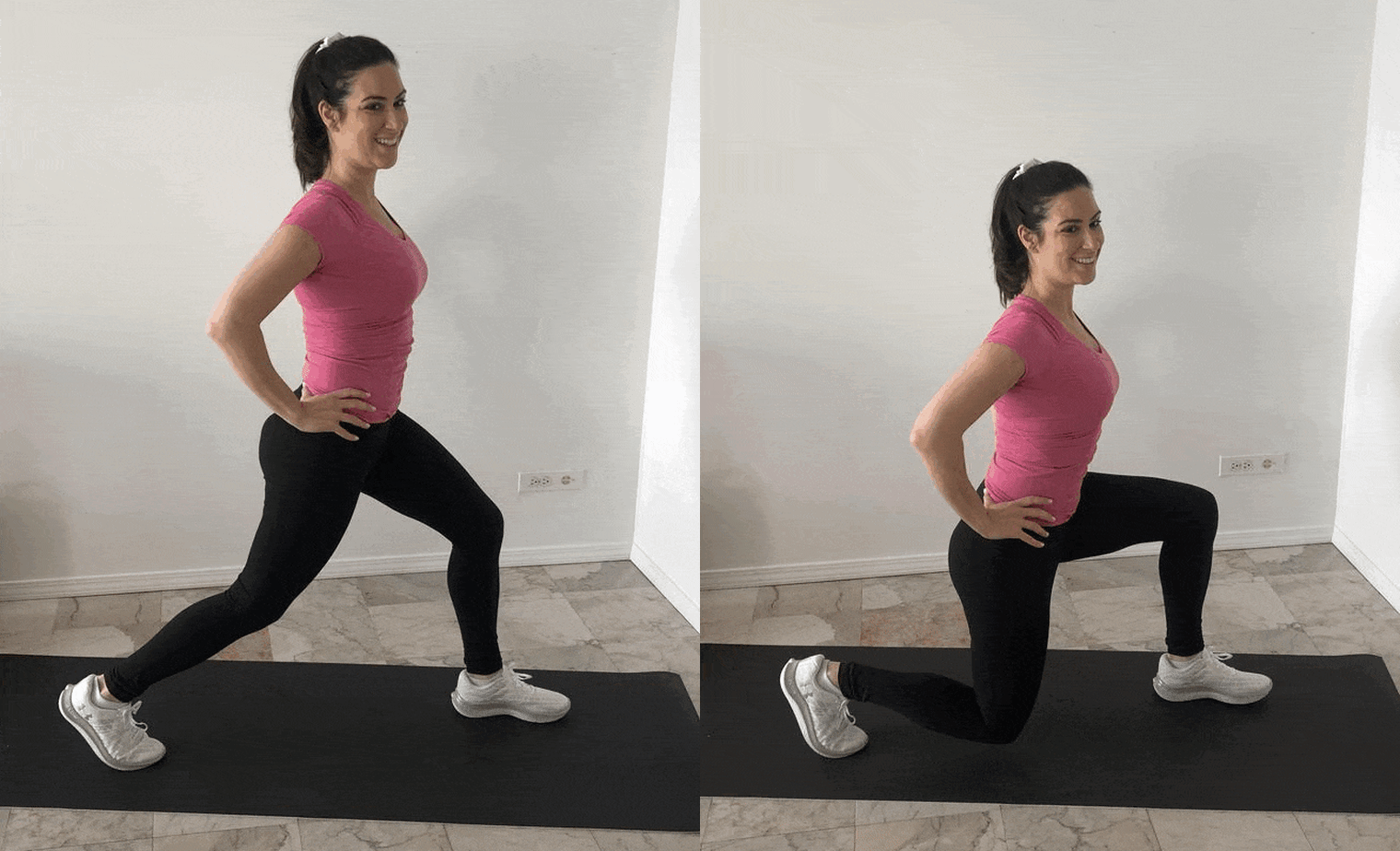
The most common and dangerous fault in a lunge is when the knee of the front leg collapses inward (known as knee valgus). This places harmful stress on the ligaments of the knee.
Your knee should always track in a straight line over your foot. A great mental cue is to imagine a laser pointer on your kneecap; its beam should stay aimed over the second or third toe of your front foot throughout the entire movement.
3. Foot Stability: Your Tripod Foundation
Instability often starts from the ground up. If your foot isn't stable, your entire leg won't be either.
Are You Lunging WRONG? 3 Tips To FIX Your Lunge
Let's return to the Redefining Strength video for a practical cue on foot stability.
Watch the segment explaining the importance of your foot's connection to the ground. The concept of the "tripod foot" (two points in the ball of the foot, one in the heel) is a powerful tool for creating a stable base.
Focus on keeping your entire front foot flat on the floor and actively gripping the ground. Simultaneously, press through the ball of your back foot to engage the muscles in your rear leg and help stabilize your pelvis.
4. Tempo and Breathing: Control is Key
Finally, the speed of the movement matters. Rushing the exercise uses momentum and reduces the work your muscles have to do.
The ONLY Way You Should Be Doing Lunges! (Build GREAT Legs)
This video from Mind Pump TV gives clear instructions on the ideal tempo and breathing pattern for the lunge, which mirrors what you've learned for other exercises like squats.
Watch from the section on breathing and tempo. The advice to use a slow, controlled pace (e.g., two seconds down, one-second pause, two seconds up) is perfect for when you are learning a new movement pattern.
Performing the Full Forward Lunge
Once you feel stable and confident with the static lunge, you are ready to perform the full forward lunge.
- Stand Tall: Begin with your feet together, core braced.
- Step Forward: Take a controlled step forward with one leg. The step should be long enough that when you lower your hips, your front shin can remain roughly vertical. Don't step so far that you feel over-stretched.
- Lower Down: Bend both knees and lower your hips straight down until your back knee nearly touches the floor. Your front thigh should be about parallel to the ground. Ensure your posture reflects the four pillars: forward trunk lean, knee tracking over the foot, stable tripod foot, and a controlled tempo.
- Drive Back: Push off powerfully with your front foot, extending your hip and knee to return to the starting standing position.
- Repeat: Perform all repetitions on one side before switching to the other.
Workout Implementation:
- Start with 3 sets of 8-12 repetitions per leg using only your bodyweight.
- Focus intensely on form. It's better to do 5 perfect reps than 12 sloppy ones.
- Once you can comfortably complete all sets and reps with perfect form, you can progress by adding weight, which we will cover in a future lesson on improvised weight training.
Conclusion
You have now learned the mechanics of the lunge, one of the most effective and functional lower-body exercises. By understanding and applying the core principles of the movement, you've set yourself up for safe and effective training.
Key Takeaways:
- The lunge is a fundamental unilateral exercise that builds balanced lower-body strength and stability.
- Master the form with a static lunge (split squat) before progressing to the forward lunge.
- The four pillars of a perfect lunge are: a slight forward trunk lean to engage the glutes, proper knee alignment over the foot, a stable tripod foot connection, and a slow, controlled tempo.
- Progress by mastering the bodyweight version before considering adding external loads.
In our next lesson, we will continue to build your lower body strength by focusing on the posterior chain. You will learn to perform glute bridges, an essential exercise for activating and strengthening your glutes and hamstrings, which will further improve your power in squats and lunges.