Welcome to your next lesson. In our last session, you learned how to perform the glute bridge to activate and strengthen your posterior chain—the engine of your lower body. Building that engine requires not only consistent training but also high-quality fuel. Just as a chemical reactor needs the right reactants in the correct ratios for an optimal yield, your body needs the right nutrients, particularly protein, to repair and build muscle tissue.
This lesson bridges the gap between your training and your diet. Building on our previous discussion about determining your protein target, today we will focus on the practical application: how to plan simple, high-protein meals that are both effective for your fitness goals and compatible with a student's budget. You will learn flexible, systematic approaches to meal planning and grocery shopping that will help you consistently hit your protein goals without feeling overwhelmed or breaking the bank.
How Much Protein Do You Really Need?
In a previous lesson, we established the importance of protein and how to calculate a target intake. The fitness world is full of heuristics, with the "1 gram of protein per pound of body weight" rule being one of the most common. While not harmful, this target can be excessive, expensive, and unnecessarily restrictive for many people.
As an engineering student, you appreciate efficiency and evidence-based principles. Let's apply that thinking to your protein intake. The following video provides a superb analysis of the scientific literature on protein requirements for muscle growth and explains why a more moderate target is often optimal from both a physiological and a lifestyle perspective.
How to Eat High Protein without Wasting your Money.
This video from Ethan Chlebowski, "How to Eat High Protein without Wasting your Money," breaks down the science behind protein targets and offers a more sustainable approach.
Watch from the beginning of the main content. Pay close attention to the distinction between the minimal recommended intake, the popular 1g/lb rule, and the evidence-based "sweet spot" for optimal muscle growth, which is around 0.73g per pound (or 1.6g per kilogram) of body weight. The video also raises a critical question: how much protein are you eating now? Before making any drastic changes, it's wise to track your typical intake for a few days to establish a baseline.
Building Your High-Protein Toolkit
Now that you have a more refined, evidence-based protein target, the next step is to identify the most efficient ingredients to help you reach it. The key is to find foods that are high in protein relative to their cost and calorie count.
This "Protein Encyclopedia" provides a useful visual comparison of common protein sources from dairy, meat, and plant-based categories.
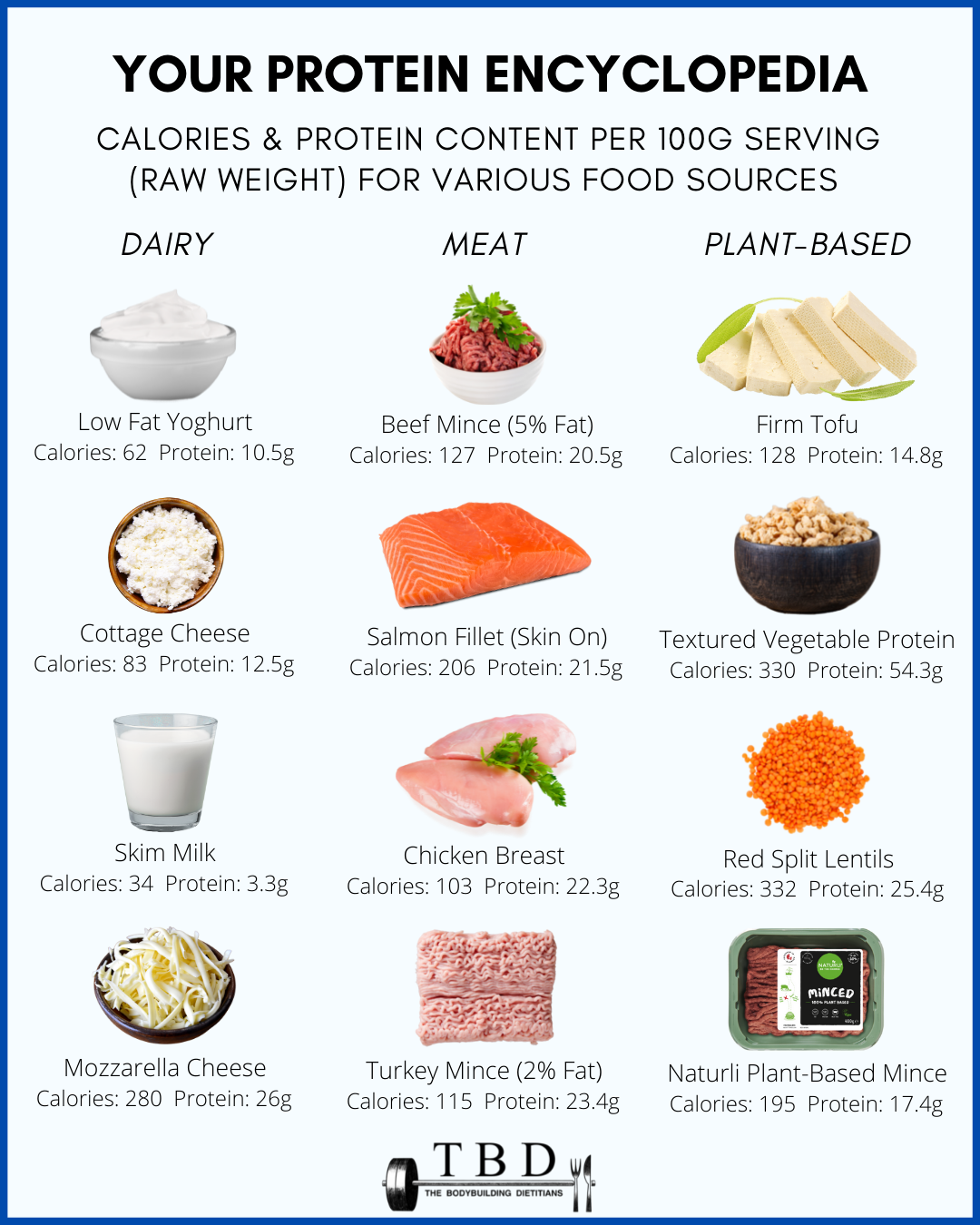
To build a budget-friendly meal plan, you should anchor your grocery list with affordable, versatile staples. The "7-Day Budget-Friendly Meal Plan" article outlines a great set of core ingredients.
7-Day Budget-Friendly Meal Plan - Nourish, Move, Love
This article by Nourish, Move, Love provides a strategic breakdown of how to construct a budget-friendly meal plan. We won't follow the plan rigidly, but the underlying principles are what matter.
Read the section titled Budget Breakdown. Focus on the lists of affordable staples and the strategies mentioned, such as buying versatile ingredients you can use in multiple meals. This approach minimizes waste and cost, much like optimizing a process to use common reagents across multiple reactions.
Three Flexible Strategies for Meal Planning
You've expressed a preference for flexible, non-rigid systems. The following strategies, also from the Ethan Chlebowski video, are designed to integrate high-protein eating into your life without demanding a complete overhaul of your habits or schedule.
-
Strategy 1: Create Slightly Higher-Protein Versions of Your Favorites
Instead of eliminating foods you enjoy, the goal is to modify them. This could mean using a bit more meat in a pasta sauce, adding beans to a rice dish, or choosing a higher-protein yogurt. This incremental approach makes dietary changes more sustainable. -
Strategy 2: Flexible Protein Prep
This is a powerful concept for a busy student. Instead of prepping entire, identical meals for the week, you simply cook a batch of a protein source (e.g., grilled chicken, seasoned ground beef, or baked tofu). You can then use this pre-cooked protein as a building block for various quick meals throughout the week—in a wrap for lunch one day, on a salad the next, or mixed into a rice bowl for dinner.

- Strategy 3: The High-Protein Grocery Loop
This turns grocery shopping from a weekly chore into a self-reinforcing system. You anchor your list with versatile protein staples (Strategy 2), add ingredients for one or two specific recipes you want to try (Strategy 1), and then use the leftovers from this week to inform next week's shopping list. This iterative process means you're never starting from scratch and your pantry becomes increasingly optimized for your goals.
To see these strategies explained in more detail, please return to the video by Ethan Chlebowski.
How to Eat High Protein without Wasting your Money.
Let's revisit the same video to understand these three core strategies.
Please watch the sections explaining Strategy 1 (Slightly Higher Protein Versions), Strategy 2 (Flexible Protein Prep), and Strategy 3 (The High Protein Grocery Loop). Think about how you could apply these flexible, systematic approaches to your own routine.
From Theory to Practice: A Meal Prep Demonstration
Seeing these concepts in action can make them much easier to implement. The following video provides concrete, step-by-step instructions for preparing a breakfast, lunch, and dinner that are all high in protein and budget-friendly.
Simple High Protein Meal Prep on a Budget **Breakfast, Lunch & Dinner under £20**
This video from Joe Delaney, "Simple High Protein Meal Prep on a Budget," is a masterclass in efficient, affordable cooking.
Watch the preparation for three distinct meals: Breakfast: Overnight Oats. This is an incredibly simple and customizable breakfast you can prepare for several days at once. Lunch: Sticky Honey Soy Chicken. This demonstrates the "Flexible Protein Prep" concept. You could use this chicken in rice bowls, wraps, or salads. Dinner: Creamy Meatball Orzo. This is a hearty, satisfying meal that reheats well. Notice how he uses common, affordable ingredients and focuses on creating flavorful meals, proving that budget-friendly eating doesn't have to be boring.
Your Action Plan for the Week
Knowledge is only useful when applied. Your task this week is to put these principles into action with a simple, manageable goal.
- Get Your Baseline: If you haven't already, use a simple app (like MyFitnessPal or Cronometer) to track your food intake for 2-3 days. This isn't for long-term calorie counting, but to give you a data-driven starting point. Find out what your current average protein intake is.
- Plan One or Two Meals: Choose one breakfast and one lunch/dinner idea from the resources in this lesson (e.g., Overnight Oats and the Sticky Honey Soy Chicken).
- Create a Grocery List: Build a grocery list based on the meals you chose. This is your first iteration of the "Grocery Loop."
- Prep: Set aside a small block of time to prepare these meals for the next 2-3 days.
For more inspiration, you can browse the full meal plans in the "7-Day Budget-Friendly Meal Plan" from Nourish, Move, Love, or the "Low-Budget High-Protein Meal Plan" from Berry Street. Think of them not as rigid prescriptions, but as a library of ideas.
Conclusion
In this lesson, you've moved from the theoretical goal of a protein target to a practical system for achieving it. By focusing on a realistic intake, building your meals around affordable staples, and using flexible planning strategies, you can fuel your body effectively without disrupting your life or budget.
Key Takeaways:
- An optimal protein target for muscle growth is around 0.73g per pound of body weight, which is often more sustainable and affordable than the 1g/lb rule.
- Anchor your diet with budget-friendly protein staples like eggs, Greek yogurt, chicken, ground meat, lentils, and beans.
- Use flexible strategies: modify your favorite meals to be higher in protein, prep protein sources to use in various dishes, and use a looping grocery system.
- Start small. The goal is to build a sustainable system, not to implement a perfect, rigid diet overnight.
In our next lesson, we will switch gears back to lifestyle and focus. You'll learn a powerful mental technique called "urge surfing" to manage cravings for digital distractions, helping you stay focused on your studies, training, and other important goals.