Welcome to your next lesson. In our previous session, we established a reactive strategy for managing distractions in the moment: urge surfing. By learning to observe cravings without acting on them, you gained a tool to handle the internal triggers that pull you off task. Today, we shift from a reactive to a proactive approach.
This lesson focuses on environmental design, which involves systematically engineering your physical and digital spaces to make desired behaviors easier and undesired behaviors harder. Instead of relying solely on willpower to resist temptation, you will learn to reduce the frequency and intensity of those temptations in the first place. This concept, also known as "choice architecture," is a powerful principle that aligns with your preference for building robust systems over following rigid rules.
We will explore how digital platforms are intentionally designed to capture your attention and then detail concrete strategies you can use to reclaim control by adding "friction" to distractions and streamlining access to focused work.
Your Environment is a Choice Architect
The core idea of environmental design is that the context in which you make decisions powerfully influences those decisions. The way options are presented shapes your behavior, often without your conscious awareness.
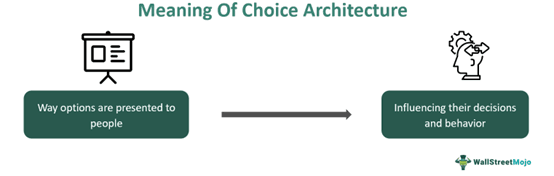
Tech companies are masters of choice architecture. They design digital environments not for your well-being, but to maximize your engagement time, which in turn drives their revenue. The good news is that we can reverse-engineer these principles for our own benefit.
The Extractive Nature of Digital Environments
To understand how to design a better environment, we must first recognize the architecture of the one we currently inhabit. Digital platforms operate on what can be called an "extractive" model, designed to mine your attention.
How Can We Minimize Digital Distractions Effectively? → Question
This article from the Sustainability Directory provides a clear framework for understanding different design philosophies.
Please focus on the comparison table. This table contrasts "Extractive" design (what we typically experience) with "Regenerative" design (what we want to build for ourselves). Pay attention to the differences in notifications, content flow, and user interface.
The video below dives into the specific psychological mechanisms that make these extractive designs so effective. You'll recognize the concept of dopamine, which we discussed in Module 1, but here it's explored in the context of variable rewards—a principle taken directly from the world of gambling.
How Social Media is designed to ADDICT you
This video from Mrwhosetheboss, "How Social Media is designed to ADDICT you," breaks down the tactics used by social media companies.
Watch these two key segments: Variable Intermittent Rewards: This section explains that dopamine is triggered more by the anticipation of a reward than the reward itself. It details how social media, like slot machines, uses unpredictable rewards to create a powerful compulsion to keep checking and scrolling. Eliminating Friction: The video explains how platforms are designed to remove any natural stopping points (e.g., infinite scroll, autoplay), making it effortless to stay engaged and difficult to leave.
As you can see, the default digital environment is actively working against your goals. The solution isn't to fight harder; it's to redesign the environment.
Designing a Regenerative Digital Space: The Strategy of Friction
Our primary strategy will be to reintroduce friction. Friction is any obstacle that makes an action more difficult to perform. By adding friction to distracting behaviors, we disrupt the mindless, automatic loop and create a moment for conscious choice.
Here are four powerful strategies to implement this.
1. Quarantine Your Phone: The Cognitive Vampire Effect
One of the most surprising findings in recent research is that your phone drains your cognitive resources simply by being present, even if it's turned off.
Distraction-Free Work Environment: Setup Guide (2026)
This guide from Super Productivity details the science behind the smartphone's impact on focus.
Read the section The Smartphone Problem. The data here is compelling: having your phone on your desk can reduce working memory by 10-12%, and participants who left their phones in another room scored 26% higher on cognitive tests. This provides a strong rationale for physical separation.
The highest-friction, most effective strategy is the Phone Quarantine Protocol:
- During deep work, keep your phone in a different room. This single action creates a significant physical barrier, forcing you to consciously decide to get up and retrieve it if you want to be distracted.
- Use social media primarily on a less accessible device, like a computer, rather than the phone you carry everywhere. This separates the tool for communication from the source of endless distraction.
2. Architect Your Notifications for Control
Notifications are designed to hijack your brain's threat-detection system, creating a false sense of urgency. Each buzz or red badge triggers a small stress response and pulls you out of a state of flow.
Distraction-Free Work Environment: Setup Guide (2026)
Returning to the same guide, let's look at the section on notifications.
Read the section on notification architecture. This part explains the neuroscience and offers a clear, evidence-based strategy for taking back control.
Here is a simple, effective notification strategy:
- Disable all push notifications by default. Go through your apps and turn off notifications for everything except truly urgent and essential services (e.g., phone calls, messages from key contacts, calendar alerts).
- Use scheduled summaries. On both iPhone and Android, you can batch non-urgent notifications to be delivered once or twice a day at times you choose.
- Pull, don't push. Instead of letting apps push information to you all day, decide when you want to check them. This puts you back in the driver's seat.
3. Make Distractions Less Appealing
The bright, candy-like colors of app icons and interfaces are intentionally designed to be visually stimulating and trigger a dopamine response. You can neutralize this effect with a simple setting.
How to End your Phone Addiction (Social Media Detox Protocol)
In this video, "How to End your Phone Addiction," the creator provides several practical tips for setting up your phone.
Watch the segment from on using grayscale. The visual demonstration of switching to black and white is powerful. It makes the phone instantly less engaging and serves as a constant reminder of your intention to use it as a tool, not a toy.
Enabling grayscale mode is a low-effort, high-impact change. It doesn't prevent you from using any app, but it removes the subconscious, pleasure-seeking pull that drives mindless scrolling.
4. Reintroduce Barriers to Access
Finally, you can create barriers that force a moment of reflection before you engage with a distracting app or website.
- Delete the worst offenders from your phone. For the apps that you find most addictive and offer the least value (e.g., TikTok, Instagram, Reddit), the best strategy is often the simplest: delete them. You can still access them via a web browser on a computer if needed, but removing the one-tap access from your phone is a game-changer.
- Move apps off the home screen. For apps you want to keep, simply moving them from your home screen into a folder on the second or third page of your app drawer adds a small but significant layer of friction. This prevents you from opening them on autopilot.
- Use website blockers on your computer. Self-control is a finite resource. A better strategy is precommitment. Using a website blocker like Freedom or Cold Turkey allows you to block distracting sites during your designated work hours. Research shows this simple precommitment can significantly increase task completion.
The following infographic gives a nice overview of various types of distractions and strategies you can use to combat them, placing digital distractions in a broader context.

Conclusion
In this lesson, you've moved beyond reacting to urges and learned how to proactively shape your environment to support your goals. By understanding the principles of choice architecture, you can now dismantle the "extractive" digital world built by others and construct a "regenerative" one for yourself.
Key Takeaways:
- Choice Architecture: Your environment is constantly shaping your behavior. You can either be a victim of its design or become its architect.
- The Strategy of Friction: The most effective way to reduce unwanted behaviors is to make them more difficult to perform. Add friction to distractions and remove it from focused work.
- Proactive Strategies:
- Quarantine your phone: Physical separation is the most powerful form of friction.
- Control notifications: Turn off pushes and batch summaries to protect your focus.
- Use grayscale mode: Make your phone less visually appealing and stimulating.
- Add access barriers: Delete addictive apps and use blockers to create moments for conscious choice.
You now have a two-pronged approach: urge surfing to manage cravings when they appear, and environmental design to reduce the triggers that cause them.
In our next module, we will be diving into "The Hybrid Athlete." The first lesson will see you graduating from negative push-ups to performing full push-ups with correct form, a significant milestone in your calisthenics journey.