Welcome to the sixth and final lesson of our foundational module. In our previous discussion, we delved into the specific psychology of the Indian high-net-worth client, understanding their motivations for legacy, identity, and security. We concluded that the ultimate role of a luxury designer is to become a trusted advisor who can translate a client's unique personal story into a physical space.
To do this effectively, you need a rich visual and conceptual vocabulary. This lesson is designed to help you build that vocabulary by exploring the major historical design periods that form the bedrock of contemporary luxury interiors. Think of these styles not as rigid historical artifacts, but as a library of ideas, forms, and moods from which you can draw to craft compelling and sophisticated design narratives. We will focus on four particularly influential movements: Baroque, Neoclassical, Art Deco, and Mid-Century Modern.
Why History is Your Greatest Asset
In luxury design, history is not about replication; it is about reference. An understanding of design history provides you with a global language of taste and sophistication. When you can identify a Neoclassical influence in a building's proportions or an Art Deco motif in a piece of furniture, you are engaging with a long-running conversation about beauty, power, and culture. For your future clients, many of whom are well-travelled and culturally aware, this ability to intelligently reference and reinterpret historical styles is a key marker of a designer's expertise. It allows you to create spaces that feel timeless and deeply resonant, rather than merely trendy.
Let's begin our journey through the key styles that continue to shape the world of luxury design.
A Tour of Enduring Styles
To give you a broad overview, we will use a combination of reading and video. The article "Interior design style guide through centuries" provides a clear, chronological walk-through of major Western design movements, while the video "Every Furniture Design Style Explained" offers excellent visual examples of how these styles manifest in key pieces.
Interior design style guide through centuries – DeccoPrint
This guide from DeccoPrint offers a straightforward and accessible introduction to the defining characteristics of each major period.
As you read, focus on creating a mental checklist for each style. For each of the following sections, ask yourself: What are the 3-4 defining keywords for this style? Start with Section 4, Baroque and Rococo. Note the keywords: extravagance, opulence, dramatic curves, and rich ornamentation. Move to Section 5, Neoclassical. Key ideas here are order, symmetry, classical inspiration (Greek/Roman), and a lighter palette. Read Section 7, Art Nouveau and Art Deco. Pay special attention to the characteristics of Art Deco: geometric shapes, luxurious materials, and bold contrasts. Finally, review Section 8, Modernist. The essential concepts are simplicity, clean lines, open spaces, and functionality. Notice how Mid-Century Modern is presented as a key movement within this broader trend.
Now, let's see these styles in motion. The following video brings these descriptions to life, focusing on the furniture that defined each era.
Every Furniture Design Style Explained In 14 Minutes
This video from Sahari is a masterclass in visual identification. It quickly and clearly presents the key forms and materials of each period.
Watch these specific segments. As you watch, compare the furniture you see with the descriptions you just read. Baroque & Rococo: Watch the segments on Baroque and Rococo. Observe the heavy gilding and dramatic curves of Baroque, followed by the lighter, more playful and asymmetrical forms of Rococo. Neoclassical: Now watch the Neoclassical section. Notice the shift to straighter lines, tapered legs, and Greco-Roman motifs like urns and columns. Art Deco: Jump to the Art Deco segment. See the emphasis on streamlined geometry, lavish materials (chrome, lacquer), and sunburst motifs. Mid-Century Modern: Next, watch the section on Mid-Century Modern. Pay attention to the use of new materials like molded plywood, the organic curves, and the overall feeling of lightweight, functional elegance. Contemporary Luxury: Finally, watch the concluding segment on Contemporary Luxury. This is crucial as it shows how these historical influences are translated today through rich materials, custom craftsmanship, and refined finishes.
Deconstructing the Styles: From History to Application
Having completed your tour, let's solidify your understanding by examining how these historical languages are spoken in contemporary luxury interiors.
1. Baroque & Rococo: The Language of Opulence
Baroque was born in the 17th century to communicate the absolute power of the church and monarchy. It is dramatic, emotional, and unapologetically grand. Its successor, Rococo, was a lighter, more secular, and playful version, but no less ornate.
- Key Characteristics: Dramatic scale, heavy ornamentation, gilding (gold leaf), rich materials (marble, velvet), and a sense of movement (swirling curves, twisted columns).
- Contemporary Influence: While a pure Baroque interior is rare today, its spirit lives on in "maximalist" luxury. When a client wants a space that feels utterly glamorous, powerful, and impressive, designers draw from the Baroque palette. This can be seen in the use of heavily veined marble, plush velvets, intricate wall paneling, and statement chandeliers that evoke a sense of grandeur.
2. Neoclassical: The Language of Timeless Elegance
As a reaction to Baroque excess, the Neoclassical style looked back to the perceived purity and order of ancient Greece and Rome. It is a style of intellectual restraint, symmetry, and refined grace.
- Key Characteristics: Symmetry, clean lines, a muted or light color palette, and the use of classical architectural elements like columns, pediments, and decorative motifs like laurel wreaths.
- Contemporary Influence: Neoclassicism is a dominant force in high-end design. It communicates a sense of "old money," established taste, and timelessness. It feels calm, orderly, and sophisticated. The principles of symmetry and refined detailing make it a go-to for creating serene and elegant formal living and dining rooms.
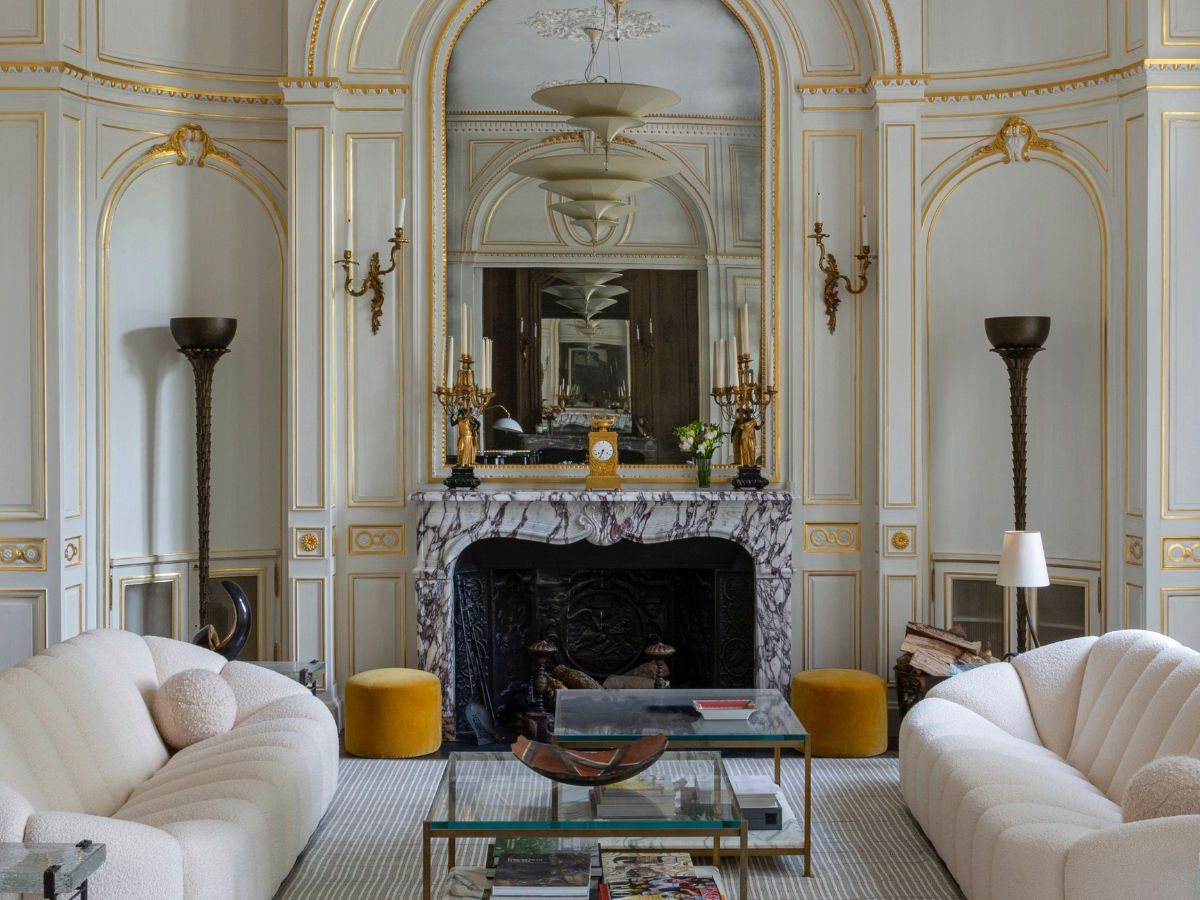
3. Art Deco: The Language of Modern Glamour
Art Deco emerged in the 1920s, a time of great social, artistic, and technological change. It celebrated modernity, luxury, and the machine age with bold geometry and lavish materials.
- Key Characteristics: Strong geometric patterns (zigzags, chevrons, sunbursts), symmetry, high-contrast color schemes (like black and white), and the use of luxurious, reflective materials like polished lacquer, chrome, glass, and exotic woods.
- Contemporary Influence: Art Deco is the definitive style for glamour. Its influence is pervasive in luxury hotels, bars, and residences for clients who desire a dramatic, theatrical, and highly polished aesthetic. In India, Mumbai is particularly famous for its incredible stock of Art Deco architecture, and this style resonates strongly in the city's design culture.

4. Mid-Century Modern: The Language of Understated Cool
Emerging after World War II, Mid-Century Modern design was driven by a new, optimistic spirit. It prioritized function, honesty in materials, and a connection to nature, creating forms that were both simple and sculptural.
- Key Characteristics: "Form follows function," clean lines paired with gentle organic curves, minimal ornamentation, use of both natural (wood, leather) and new (molded plywood, plastic) materials, and large windows to connect indoors and outdoors.
- Contemporary Influence: The style's appeal is immense. It is seen as intelligent, sophisticated, and effortlessly cool. Iconic furniture pieces from this era (like the Eames Lounge Chair) are treated as works of art and are potent status symbols in their own right. This style perfectly suits a client who values design, comfort, and a curated, uncluttered aesthetic—aligning with the "stealth luxury" and "comfort over aesthetics" principles we discussed previously.
Conclusion
Today you have begun to build your historical design library. You can now identify the core DNA of four of the most influential styles in Western design. This is the first step toward developing a discerning eye.
Your key takeaways are:
- Four Core Languages: You can now recognize the opulent drama of Baroque, the ordered elegance of Neoclassical, the geometric glamour of Art Deco, and the functional sophistication of Mid-Century Modern.
- Influence, Not Imitation: In contemporary luxury, these styles are rarely used in their pure form. Instead, they are masterfully blended and reinterpreted to create fresh, personal, and timeless interiors.
- A Foundation for Creativity: This historical knowledge is not a set of restrictive rules. It is a rich vocabulary that will empower you to communicate more effectively and create more meaningful narratives for your clients.
This lesson concludes our first module, "Foundations of Luxury Interior Design." You have defined the profession, understood the project lifecycle, and explored the unique context of the Indian luxury market. You now possess a foundational understanding of the 'what', 'how', 'who', and 'why' of this field.
In our next module, "Core Principles of Design Composition," we will shift our focus from historical styles to the universal building blocks of all design. You will learn about the seven elements (line, form, color, etc.) and the core principles (balance, rhythm, emphasis, etc.) that govern any successful interior composition, regardless of its style.