Welcome to your fifth lesson. In our last session, we drew a clear line between standard, premium, and true luxury design, establishing that luxury is defined by bespoke detailing, a budget viewed as an investment, and a client relationship built on profound trust.
Today, we sharpen our focus directly onto your primary goal: the Indian high-net-worth (HNI) residential market. We will go beyond general principles to explore the specific mindset of these clients. This lesson will unpack their unique characteristics, their deep-seated expectations, and the complex factors that drive their decisions. Understanding this psychology is not just an academic exercise; it is the most critical business intelligence you will need to succeed in the world of Indian luxury design.
The Psychology Behind the Purchase
To effectively design for HNI clients, you must first understand their motivations, which often lie far beneath the surface of aesthetic preferences. A design choice is rarely just about color or form; it's about what that choice says about their identity, their family's future, and their place in the world.
Mahindra Chawla, a principal at a Mumbai-based luxury design firm, provides an exceptional look into the psychological drivers of very high-net-worth Indian clients. His experience reveals that what clients say they want is often just the beginning of a deeper conversation.
The Psychology of Luxury Decision-Making: Understanding VHNI Client Needs
This article by Mahindra Chawla is essential reading for anyone targeting the Indian luxury market. It uses real-world, anonymized case studies from Mumbai (Bandra, Powai, Juhu, etc.) to illustrate the core psychological needs that drive design choices.
Please read the entire article. As you do, focus on identifying these key psychological drivers: Beyond the Surface: Note the example of Mrs. Mehta, where the stated need (showcasing art) masked the true purpose (creating a community hub). The Status-Comfort Paradox: This is a critical concept—the need to project success publicly while ensuring genuine, private comfort. The Legacy Dimension: Understand how the home is often conceived as a multi-generational family anchor. Identity Reinforcement: See how a home becomes a physical manifestation of a client's story, blending past and future. The Control Variable: Recognize that for highly successful people, direct involvement is a way to exert control in a chaotic world. Emotional Security: Grasp the role of the home as a sanctuary from public life, tailored to individual needs for recharging.
As Chawla's insights show, a luxury designer in this context is part psychologist, part strategist. Your value lies in your ability to uncover and address these fundamental needs for legacy, identity, control, and sanctuary.
"Stealth Luxury": What the Wealthiest Truly Choose
Now that we have a framework for the "why," let's explore the "what." What does this psychology translate to in terms of actual design choices? There's often a vast difference between the flashy "billionaire style" portrayed in media and the reality of how ultra-high-net-worth individuals (UHNWIs) live.
The following article, written from the perspective of a custom furniture maker for UHNWIs, provides a rare look inside these private worlds. It highlights a trend you must understand: "stealth luxury," where the true value is intentionally hidden from casual view.
The Billionaire's Secret Interior: What Design Elements the World's Wealthiest Truly Choose - Crosby
This article reveals the design principles that guide the choices of the world's wealthiest, with several direct examples from Indian clients. It dismantles common myths about luxury design.
Read these four key sections to understand the core principles of "invisible" luxury: "The Invisibility Principle": Start with the section titled "The Invisibility Principle." Note the emphasis on privacy, security, and the move away from recognizable brands. The quote from the Mumbai client with generational wealth is particularly telling. "Comfort Over Aesthetics": Continue to the next section, "Comfort Over Aesthetics." This explains the non-negotiable priority given to functionality and personal comfort, even if it means compromising on purely visual drama. "The Personal Narrative": Now read "The Personal Narrative." This is where luxury becomes truly personal. Pay close attention to the example of using wood from an ancestral property in Kerala. "The Curation of Emptiness": Finally, read the section on "The Curation of Emptiness." This discusses how restraint and the celebration of empty space signal ultimate confidence and security.
These principles—invisibility, comfort, narrative, and curated emptiness—are the hallmarks of the highest tier of luxury. The goal is not to create a showroom but a sanctuary that is deeply personal, supremely comfortable, and whose quality is felt rather than seen.
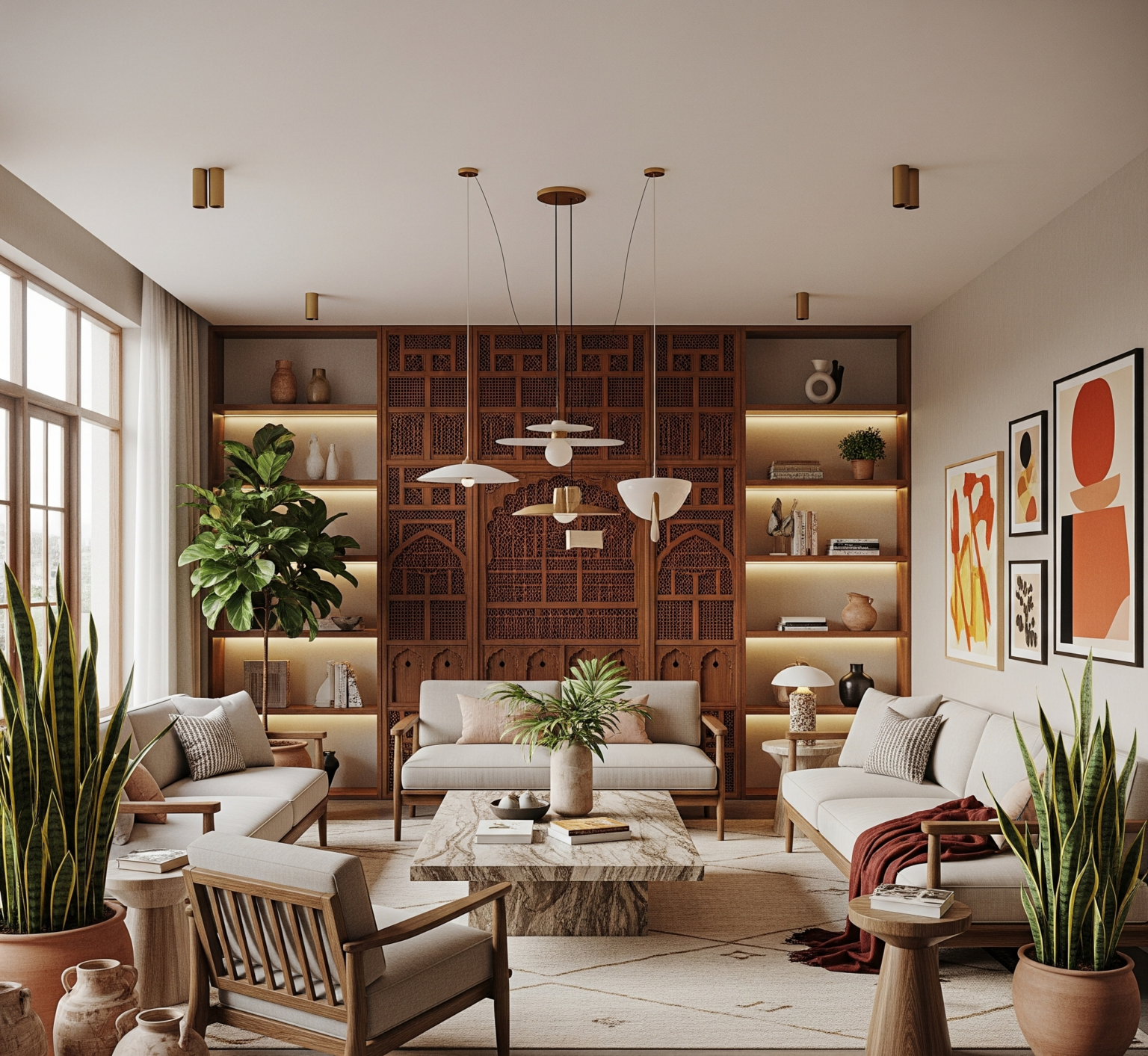
Cultural Context: The Maximalist Instinct
The idea of "stealth luxury" and "emptiness" might seem to conflict with the vibrant, layered, and often opulent aesthetic associated with India. This is not a contradiction, but a nuance. The rejection is of ostentatious branding and meaningless clutter, not of richness itself.
Renowned Indian designer J.J. Valaya argues that a sophisticated form of maximalism is India's natural design language.
Maximalism is India’s natural design instinct
In this short clip from Beautiful Homes, J.J. Valaya discusses the place of maximalism in Indian design.
Watch the following segments to understand this perspective: First, watch his definition of maximalism as warmth and sophistication, and his argument that it reflects the "soul of India." Next, listen to his point about authenticity—the importance of taking India's heritage and making it magical and relevant, rather than just copying Western trends. Finally, absorb his thoughts on how a home should grow with you, collecting memories and objects over time.
Valaya’s maximalism is not about accumulation for its own sake. It is about creating warm, sophisticated spaces filled with personal stories, art, and craft. It aligns perfectly with the "personal narrative" principle, where the objects in a home are saturated with meaning. This sophisticated maximalism—rich in story, texture, and craft—is a powerful force in the Indian luxury market.
Who Makes the Decisions?
Identifying the decision-makers is the final piece of this puzzle. As you've gathered, it's rarely a simple process.
- The Individual: As seen in Chawla's article, a single client (like the investment executive needing control) can be the primary driver. Your role is to understand their personal psychological needs.
- The Couple: Often, you will be working with a couple who may have different, sometimes conflicting, needs for their home (like the Alibaug couple needing both social and solitary spaces). Your task is to find a design solution that provides emotional security for both.
- The Family: When legacy is a key driver, the decision-making extends across generations. A renovation may need to honor the choices of a parent while establishing the identity of the current generation, as with the Juhu bungalow.
- The Trusted Advisor: In this world, the designer is not a celebrity imposing a signature style. As the "Billionaire's Secret Interior" article states, the most successful designers are "invisible facilitators." You are a trusted advisor who translates the client's deeply personal vision into a functional and beautiful reality.
To become this trusted advisor, you must learn to speak their "lingo"—the subtle language of their world. This isn't about using fancy words, but about understanding the unspoken cues of quality, taste, and lifestyle that signal you "get them."
Conclusion
You have now moved beyond a generic definition of luxury to a specific, psychologically-informed understanding of the Indian HNI market. This is the foundation upon which you will build your business strategy.
Here are your key takeaways:
- Psychology is Paramount: Indian HNI clients are driven by powerful needs for legacy, identity reinforcement, control, and emotional security. Your design must address these unspoken requirements.
- Embrace "Stealth Luxury": The most sophisticated clients value privacy and personal meaning over recognizable brands and overt displays of wealth. Focus on bespoke craftsmanship, authentic materials, and supreme comfort.
- Master Sophisticated Maximalism: Understand that the Indian cultural affinity for richness can be expressed through a sophisticated layering of art, craft, and personal narrative, not just minimalist aesthetics.
- Become the Invisible Hand: The decision-making process is complex and deeply personal. Your role is not to be a star designer, but a trusted advisor who listens, interprets, and expertly facilitates the client's vision.
In our last few lessons, we've established the 'what' (the designer's role), the 'how' (the project process), and the 'who' (the luxury client). Now you are ready to start building your own design vocabulary. In the next lesson, we will explore the major historical design periods that continue to influence contemporary luxury interiors, providing you with a library of styles to draw from as you create these unique personal narratives for your future clients.