Hello! Welcome back to our module on humor and wit.
In our last lesson, we demystified humor by mapping out the major styles. You created your own humor profile, identifying the gap between the humor you appreciate and the humor you currently use. This "what" is the foundation for today's lesson, where we'll explore the "why."
Today, we will directly address one of the core challenges you've mentioned: understanding why a witty remark or joke sometimes falls flat. Our learning outcome is to analyze why specific jokes or remarks fail to land by examining timing, context, and delivery. By the end of this lesson, you'll have a diagnostic framework to understand past missteps and, more importantly, to make more intentional and successful choices in future conversations.
1. The Risky Business of Humor: A Core Framework
Before we break down the causes of failure, let's start with a powerful mental model. As someone working in financial markets, you understand that every investment carries a degree of risk. Humor is no different. It's a social investment: a successful joke can significantly increase your perceived status, confidence, and connection, but a failed one can have the opposite effect.
An excellent academic paper from the Journal of Personality and Social Psychology frames this perfectly.
Risky Business: When Humor Increases and Decreases Status
This paper, 'Risky Business: When Humor Increases and Decreases Status', provides the theoretical backbone for our lesson. It introduces a concept that explains why some things are funny and others aren't.
Please read the introduction (from the start to the end of the third paragraph, ending with '...whether the joke teller’s status increases or decreases.') and the section titled 'Humor' (the three paragraphs that follow). Focus on the core idea of the Benign Violation Theory.
The key concept here is the Benign Violation Theory. For something to be funny, it must do two things simultaneously:
- It must be a VIOLATION: It needs to break a norm, defy an expectation, or challenge a social convention in some way.
- It must be BENIGN: It needs to be perceived as harmless, safe, or non-threatening in the current context.
A joke fails when it doesn't hit this sweet spot.
- If it's just a violation, it's offensive or threatening.
- If it's just benign, it's boring and uninteresting.
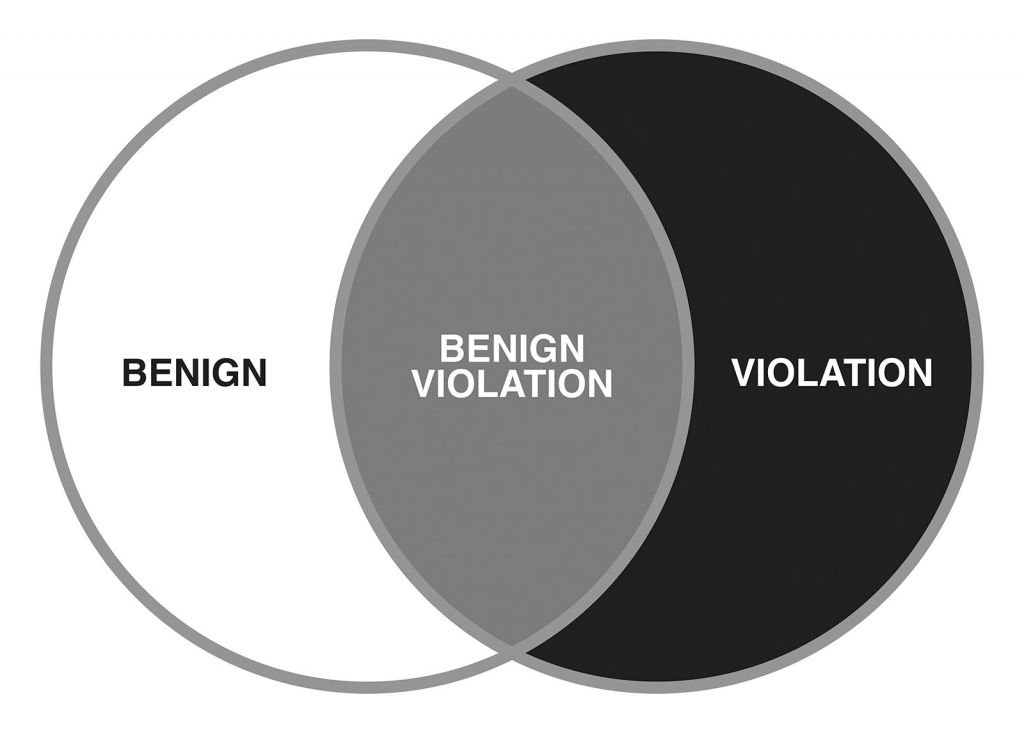
When your humor doesn't land, it's almost always because the "violation" wasn't seen as "benign" by your audience. Let's break down the three factors that determine this: Context, Delivery, and Timing.
2. The Three Pillars of a Failed Joke
Think of these three pillars as the essential checklist for any humor attempt. A failure in even one can cause the entire effort to collapse.

Pillar 1: Context (The Who, Where, and What)
Context is about situational awareness. A joke is never funny in a vacuum; it is only funny relative to the audience, the environment, and the topic at hand.
- The Audience (Who): Do you know them well? What is your relationship? What is their background and what are their sensitivities?
- The Situation (Where): Are you in a formal business meeting or at a casual mixer? The environmental norms dictate what is acceptable.
- The Topic (What): Are you joking about a light, shared experience or a deeply personal and sensitive subject?
The following video and reading highlight common context-related mistakes.
3 Common Jokes That Make People INSTANTLY Like You Less
The video '3 Common Jokes That Make People INSTANTLY Like You Less' from Charisma on Command is a masterclass in analyzing contextual failures.
Watch the entire video. Pay close attention to the three failure types it describes and why they fail: Revealing sensitive information (a topic violation). Making guilt-trip jokes (an intent/relationship violation). Teasing someone of lower status (an audience/status violation).
Master Conversational Humor and Be Funny On Command
The book 'Master Conversational Humor' provides a practical list of common mistakes. The first two points are directly related to context.
Please read the chapter 'Common Mistakes in Jokes and Humor.' Focus on the sections 'Being Generic' and 'Picking the Wrong Audience.'
In summary, a joke fails the context test when:
- It targets a subject the audience finds sensitive or offensive (e.g., politics, religion, deep insecurities).
- It misjudges the relationship, like teasing someone you don't know well or someone of a different social/professional status.
- It's generic and predictable for that audience (e.g., the "if it doesn't scan, it must be free" joke told to a cashier).
Pillar 2: Delivery (The How)
Delivery is about how you say what you say. Your tone of voice, facial expression, body language, and pace are often more important than the words themselves. This is where your internal state (what you find funny) gets translated into an external signal. A mismatch here is a primary reason for thoughts getting "twisted when spoken aloud."
Master Conversational Humor and Be Funny On Command
Let's return to 'Master Conversational Humor' to focus specifically on delivery.
Read the chapter 'The Unbreakable Rules of Comedic Delivery.' Pay special attention to the pitfalls it mentions, such as backtracking, appearing wooden, and laughing before your audience does.
A joke fails the delivery test when:
- You laugh first: This signals insecurity, as if you're trying to cue the audience that they should laugh. Confident delivery lets the joke land on its own.
- Your non-verbals are mismatched: Telling a dry, sarcastic joke while smiling broadly confuses the audience. The power of deadpan humor, for instance, comes from the contrast between the absurd words and a serious face.
- You backtrack or over-explain: "So then he said... wait, actually, before that, I forgot to mention..." This kills the momentum and signals a lack of cognitive clarity. It breaks the flow and the joke fizzles out.
Test your understanding!
You say, "This meeting is going great," after a particularly boring and unproductive hour. For this to land as an ironic joke, what should your delivery be like? What would make it fail?
Show answer
- Successful Delivery: A flat, deadpan tone with a neutral or slightly exasperated expression (like a sigh). The contrast between your positive words and negative delivery creates the ironic humor.
- Failed Delivery: Saying it with a genuine smile and upbeat tone. People will think you're being serious and either agree (if they're oblivious) or find you odd. The joke fails because the delivery doesn't signal the "violation" of the truth.
Pillar 3: Timing (The When)
Timing has two components: the internal rhythm of the joke (the setup and punchline) and its placement within the broader conversation.
Master Conversational Humor and Be Funny On Command
The 'Master Conversational Humor' guide has a sharp insight on this.
Revisit the chapter 'Common Mistakes in Jokes and Humor' and focus on the section titled 'Rushing the Punch line.'
A joke fails the timing test when:
- You rush the punchline: Nerves or excitement can make you speak too quickly, blurring the setup and the punchline together. The listener needs a moment to process the setup and form an expectation for the violation to have an impact. This is where practicing deliberate slowdown techniques from Module 2 is critical.
- It's misplaced in the conversation: A perfectly good joke can fail if it abruptly interrupts a serious discussion or derails someone else's story. It feels jarring and self-serving rather than collaborative.
3. The Real-World Impact: Status and Competence
So, what are the actual consequences of a failed joke? It’s not just an awkward silence. The "Risky Business" paper gives us a clear, evidence-based answer that is highly relevant to your professional goals.
The research found that:
- Attempting humor, even if it fails, signals confidence. Simply being willing to take the social risk makes you appear more confident. This is a net positive.
- Only an appropriate and successful (i.e., it gets a laugh) joke signals both confidence AND competence. This is what raises your status.
- An inappropriate joke signals high confidence but low competence, which ultimately harms your status. This is the danger zone. The audience thinks, "They were confident enough to say that, but not smart enough to realize they shouldn't have."
The most reassuring finding? An appropriate joke that fails (e.g., it's just not that funny) is largely neutral. It doesn't significantly harm your perceived competence or status. This should empower you to take small risks, knowing that the penalty for a simple "dud" is low, as long as it's appropriate.
4. Your Turn: The Humor Post-Mortem
This is your main activity for the lesson. The goal is to apply this diagnostic framework to your own experience. This will build the self-awareness you need to stop making the same mistakes.
Think back to a specific time when you tried to be funny—a joke, a witty comment, a bit of banter—and it didn't land. It might have been met with silence, confusion, or a polite-but-fake smile.
Now, analyze that moment using the following questions. Be honest and clinical in your assessment.
- The Situation: Briefly describe what happened. Who were you with? What was the context? What did you say?
- Context Analysis:
- Audience: Was my joke appropriate for this specific person/group? Did I misjudge our relationship or a status difference?
- Topic: Was the subject matter potentially sensitive or too personal?
- Delivery Analysis:
- How did I say it? What was my tone and facial expression?
- Did I laugh first or appear nervous?
- Did I rush it, backtrack, or over-explain?
- Timing Analysis:
- Did I rush through the setup and punchline?
- Did my comment interrupt the flow of the conversation?
- Benign Violation Diagnosis:
- Where did it go wrong? Was the "violation" too aggressive/offensive for the context? Or was it too "benign"/boring to even register as a joke?
This exercise is not about self-criticism. It's about data collection. By diagnosing the root cause, you can turn a past failure into a future strategy.
Conclusion
Today we've transformed the vague feeling of "my humor doesn't land" into a structured diagnostic process. You now have a powerful framework for understanding exactly why a joke might fail.
Key Takeaways:
- Humor is a Benign Violation: it must be a harmless break from expectations. A joke fails when it's too violating (offensive) or too benign (boring).
- Failure can almost always be traced to one of the three pillars: Context (wrong audience, place, or topic), Delivery (mismatched non-verbals, nervous habits), or Timing (rushed punchline, poor placement).
- The social risk of humor is asymmetrical. An inappropriate joke damages perceived competence and status, but a simple, appropriate joke that just isn't funny is mostly harmless.
Preview of the Next Lesson:
Now that you can diagnose why a joke fails, you're ready to start building a toolkit of responses that are more likely to succeed. In our next lesson, we will build a mental toolkit of responses for common playful scenarios (teasing, absurd escalation). We'll focus on reliable techniques like "agree and amplify" to help you navigate banter with more confidence and skill.