Hello! Welcome to your next lesson in the "Clinical Trial Design and Critical Appraisal" module.
In our last lesson, we developed the essential skill of finding research studies. We learned how to formulate a search question and use powerful databases like PubMed and the AYUSH Research Portal to locate relevant evidence. This was the first step: finding the information.
Today, we take the crucial second step: judging the quality of that information. Not all research is created equal. A poorly designed study can lead to misleading conclusions, while a well-designed one provides a reliable foundation for clinical decisions. Your ability to distinguish between the two is fundamental to your goal of bridging Ayurveda and modern science with scientific rigor.
This lesson addresses the learning outcome: Critically appraise a randomized controlled trial for internal validity (risk of bias) and external validity (applicability).
We will break this down into two core questions you should ask of any study:
- Are the results trustworthy? This is a question of internal validity—assessing the study's design for systematic errors, or bias, that might have skewed the results.
- Are the results relevant to my practice? This is a question of external validity (also called applicability or generalizability)—determining if the study's findings can be applied to the specific patients and context you care about.
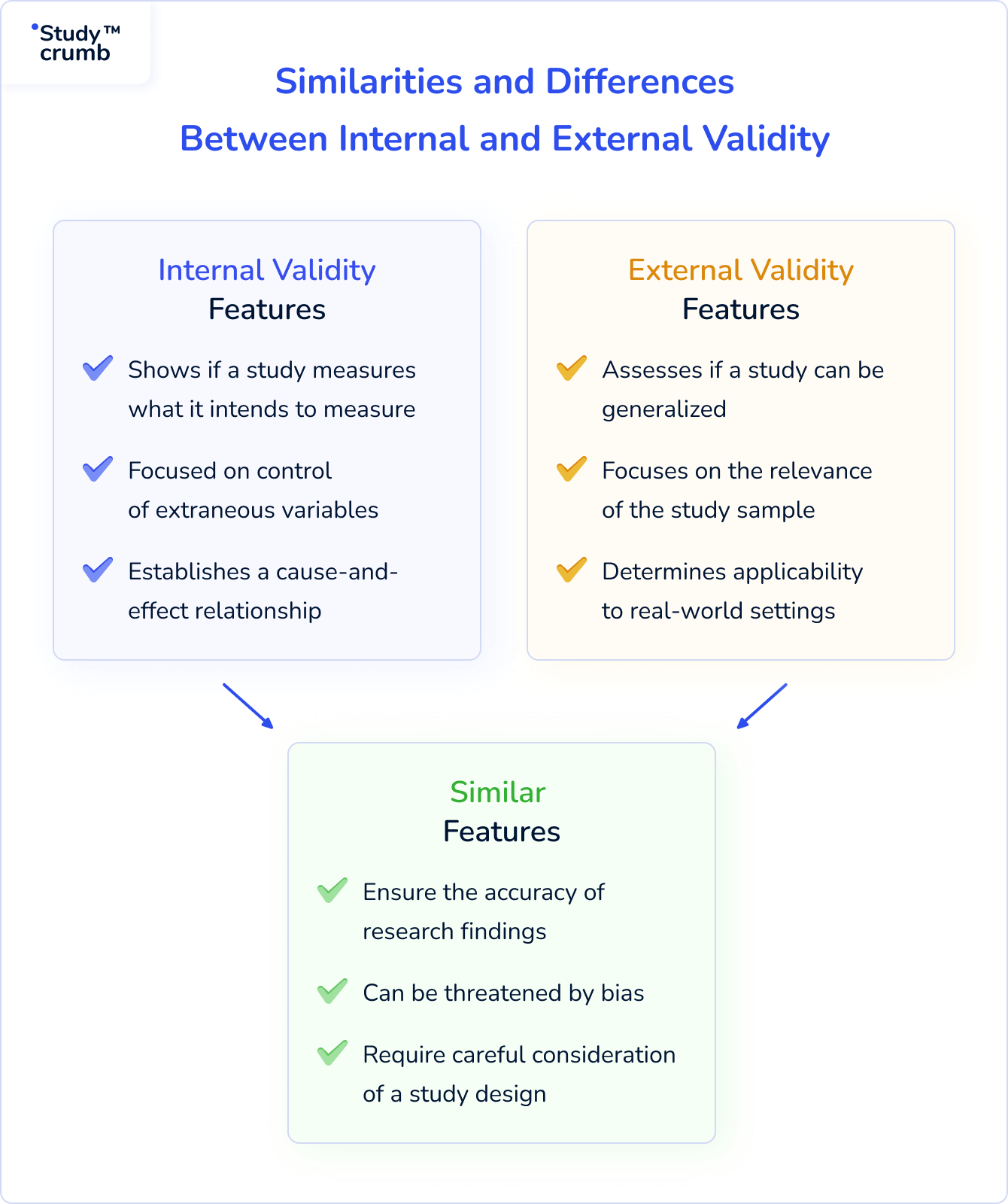
By the end of this lesson, you will have a systematic framework for reading a Randomized Controlled Trial (RCT) and deciding for yourself how much confidence to place in its findings.
1. Internal Validity: Assessing the Risk of Bias
Internal validity refers to how well a study is conducted and whether the results are free from bias. In research, bias is not about a researcher's personal prejudice; it is a systematic error in study design or conduct that leads to an incorrect estimation of the treatment's effect. A study with low internal validity is said to have a high risk of bias, making its conclusions unreliable.
Let's explore the main types of bias you will encounter. The following presentation provides a concise overview of the key questions to ask when assessing an RCT for bias.
Critical appraisal of randomised controlled trials
These slides from the Centre for Evidence-Based Medicine at the University of Oxford provide a rapid checklist for assessing the risk of bias in an RCT. We will use this as a framework for our discussion.
Please review the slides covering the 'Rapid risk of bias checklist' (this starts on page 11 of the PDF). Pay particular attention to the definitions of Selection, Performance, Detection, and Attrition bias.
As you've seen, bias can creep in at different stages of a trial. Let's break down the most common types and how to spot them.
A. Selection Bias: Were the groups comparable from the start?
This occurs when the groups being compared are different from each other at the beginning of the study in a way that could affect the outcome. For example, if the treatment group happened to have younger or healthier patients than the control group, the treatment might look more effective than it really is.
The two main safeguards against selection bias are:
- Randomization: A process of assigning participants to treatment or control groups by chance (like flipping a coin). When done correctly, this ensures that both known and unknown factors (like age, severity of illness, or even genetic predispositions) are, on average, evenly distributed between the groups.
- Allocation Concealment: This crucial step ensures that the person enrolling participants does not know which group the next participant will be assigned to. If a clinician knows the next patient will get the real treatment, they might (subconsciously) enroll a patient they think will benefit most, or describe the study differently, thus biasing the sample. Good studies will describe using a central, independent system (e.g., a telephone service or secure website) to manage allocation.
B. Performance Bias: Were the groups treated equally during the trial?
This happens when there are systematic differences in the care provided to the groups, other than the intervention being studied. The main protection against this is blinding (or "masking").
- Single-blinding: Either the participant or the investigator is unaware of the treatment assignment.
- Double-blinding: Both the participant and the investigator/clinician are unaware of the treatment assignment.
Blinding is vital because if a patient knows they are receiving a new, exciting treatment, they might report feeling better due to psychological expectation (the placebo effect). Similarly, if a clinician knows a patient is on the active drug, they might give them more attention or encouragement.
For many Ayurvedic interventions (like Panchakarma, dietary changes, or yoga), blinding is very difficult or impossible. In such cases, it is even more critical that the outcomes are measured objectively to minimize bias.
C. Detection Bias: Were the outcomes measured in the same way for both groups?
This bias occurs when the knowledge of which group a participant is in influences how the outcomes are measured. The solution is blinding the outcome assessor.
Imagine a trial for an Ayurvedic herb for joint pain. If the person assessing the joint's range of motion knows which patients received the herb, they might subconsciously be more generous in their measurements for that group. This bias is particularly problematic for subjective outcomes (e.g., self-reported pain scores, quality of life questionnaires) and less so for objective or "hard" outcomes (e.g., death, hospital admission, or a lab value).
D. Attrition Bias: Were all participants who entered the trial properly accounted for?
This bias arises from participants being lost to follow-up or dropping out of the study. If the reasons for dropping out are related to the treatment, it can skew the results. For example, if many people in the treatment group drop out due to side effects, but only the results of those who completed the study are analyzed, the treatment will look safer and more effective than it truly is.
To assess for this, you should look for:
- A participant flow diagram that shows how many participants were in each group at every stage.
- The rate of dropout in each group. A high dropout rate (>20%) or a large difference in dropout rates between groups is a major red flag.
- An Intention-to-Treat (ITT) analysis. This is a statistical principle that states: "once randomized, always analyzed." It means that all participants are analyzed in the group they were originally assigned to, regardless of whether they finished the treatment or even received it. This preserves the benefits of randomization and gives a more realistic estimate of the treatment's effect in the real world.

2. A Practical Walkthrough of Critical Appraisal
Understanding these concepts is the first step. Now, let's see how they are applied in practice. The following video uses a standard critical appraisal tool (the CASP checklist) to walk through a real RCT, question by question. This will help you see how to translate the theory into a practical evaluation.
3. Randomised controlled trials
The video '3. Randomised controlled trials' by Cochrane Mental Health is an excellent demonstration of the critical appraisal process. It applies the concepts of internal validity we've just discussed to a published research paper.
Please watch the video from 01:19 to 18:47. As you watch, notice how the presenter systematically checks for the key features we have discussed: The clarity of the PICO question. The quality of randomization and allocation concealment. How dropouts were handled (attrition and ITT analysis). Whether blinding was used (and the implications if it wasn't). The similarity of the groups at baseline. The precision of the results (confidence intervals).
Test your understanding!
You are reading a trial on an Ayurvedic decoction for managing diabetes. The authors state, "Participants were not blinded due to the distinct taste of the decoction. However, the lab technician who measured the primary outcome, HbA1c (a blood marker), was unaware of participant group allocation."
Which type of bias was not controlled for? Which type of bias was controlled for? And why is this an acceptable design, given the circumstances?
Show answer
- Bias not controlled for: Performance bias. Since participants and clinicians knew who was getting the decoction, their behavior and expectations could have influenced the results (e.g., participants in the treatment group might have been more motivated to change their diet).
- Bias controlled for: Detection bias. By blinding the lab technician, the study prevented any subconscious prejudice from influencing the measurement of the objective outcome (HbA1c).
- Why it's acceptable: This is a good example of a pragmatic solution. While blinding participants was not possible, the researchers mitigated the most significant potential for bias by using an objective "hard" outcome (HbA1c) and blinding the person measuring it. This strengthens the confidence in the results despite the lack of full double-blinding.
3. External Validity: Is the Evidence Applicable?
Once you have determined that a study has good internal validity (i.e., you trust its results), the next question is whether you can apply those results to your own situation. This is the assessment of external validity, or generalizability.
A study might be perfectly conducted but its results may not be useful for you if its participants, intervention, or setting are too different from yours. The following paper provides a deep dive into this concept, which is especially important for research in areas like Ayurveda.
How to Assess the External Validity and Model Validity of ...
The paper 'How to Assess the External Validity and Model Validity of...' discusses why generalizability is so important for clinical decision-making. It highlights the challenges of applying findings from highly controlled 'efficacy' trials to 'real-world' effectiveness.
Please read the following sections: '1.2. What Is External Validity?' to understand the concept. '1.3.1. Generalizability: Study Population versus Source Population' to see the difference between the sample in the study and the broader population. '1.3.3. The Selection by Eligibility Criteria' to understand how strict criteria can limit applicability, using the spironolactone example. Finally, skim the 'Discussion' (Section 4), particularly the paragraphs discussing challenges in CAM/IM research. Focus on how external validity connects a study's specific findings to broader clinical practice.
As you've just read, assessing external validity means you need to play the role of a detective and compare the study's PICO elements to your own clinical question:
- Population: Are the study participants similar to the patients you want to treat? Consider their age, gender, severity of disease, comorbidities, and even their Ayurvedic constitution (Prakriti), if that's relevant. A treatment that works in a highly selected, low-risk group might not work (or could even be harmful) in a more complex, real-world population.
- Intervention: Was the intervention in the study realistic and reproducible? For an Ayurvedic herb, was it a standardized extract or a crude powder? What was the dosage? For a procedure like Virechana, was the protocol described in enough detail that it could be replicated? Was it performed by experienced practitioners?
- Comparison: What was the treatment compared to? A placebo? The current standard of care? Nothing? The benefit of an intervention only makes sense in the context of its comparator.
- Outcomes: Were the outcomes measured important to patients? A study might show a statistically significant change in a blood marker (surrogate outcome), but does that translate to a clinically significant improvement in how the patient feels or functions (hard outcome)?
4. Advanced Considerations in Trial Appraisal
Beyond the core validity questions, there are a few other points that can give you a deeper understanding of a trial's strengths and weaknesses.
How to Appraise a Clinical Trial - Part 3
The video 'How to Appraise a Clinical Trial - Part 3' by Strong Medicine covers several of these advanced concepts clearly and concisely.
Please watch these three short segments: Conflicts of Interest (00:24 - 02:09): Why it's important to know who funded the study. Clinical vs. Statistical Significance (11:44 - 13:24): The crucial difference between a result that is mathematically real and one that is meaningful to a patient. Absolute vs. Relative Risk Reduction (13:24 - 15:44): How the same result can be presented in different ways to seem more or less impressive.
Being aware of funding sources, distinguishing clinical from statistical significance, and understanding how risk is reported will add another layer of sophistication to your critical appraisal skills.
Conclusion
You have now learned the foundational skills for critically appraising a Randomized Controlled Trial. This process isn't about finding a "perfect" study—no study is perfect. It is about systematically identifying a study's strengths and weaknesses so you can make an informed judgment about how much to trust its findings and whether they apply to your context. This is a skill that moves you from being a passive consumer of information to an active and critical evaluator of scientific evidence.
Key Takeaways:
- Critical appraisal involves two main steps: assessing internal validity (risk of bias) and external validity (applicability).
- The main sources of bias are Selection, Performance, Detection, and Attrition. Key methods to reduce this bias include Randomization, Allocation Concealment, and Blinding.
- Intention-to-Treat (ITT) analysis is the gold standard for handling dropouts and preserving the benefits of randomization.
- Assessing external validity involves comparing the study's PICO (Population, Intervention, Comparison, Outcome) to your own clinical question to judge its relevance.
- Appraising research on complex systems like Ayurveda brings unique challenges (e.g., blinding, standardization), which are important to consider but do not invalidate the principles of critical appraisal.
Preview of the Next Lesson:
An RCT provides a single piece of evidence. Often, there are multiple RCTs on the same topic, sometimes with conflicting results. How do we make sense of the total body of evidence? The answer lies in Systematic Reviews, which collect and synthesize all relevant RCTs. In our next lesson, you will learn how to critically appraise a systematic review using a standard checklist (e.g., PRISMA).