Hello and welcome to the final lesson of our course, "Bridging Ayurveda and Modern Science."
In our last session, we mastered the art of shared decision-making (SDM), learning how to collaboratively create a healthcare plan that respects both scientific evidence and a patient's personal values. Today, we address the critical step that follows every clinical decision: documenting it. This lesson is the capstone of our journey, bringing together clinical practice, communication, ethics, and professional responsibility.
By the end of this lesson, you will be able to describe the principles of medical-legal documentation in an integrative practice. Proper documentation is not merely administrative work; it is an essential professional skill that ensures patient safety, facilitates clear communication among care providers, and forms the legal record of the care you provide. For an integrative practitioner, it is the tangible evidence of the bridge you build between medical systems.
1. The Foundation: Why We Document
Before diving into the specifics, let's establish why meticulous documentation is so crucial in any healthcare practice, especially one that integrates different traditions. A patient's health record serves multiple, vital purposes.
Strategies for Improving Documentation
This guide, 'Strategies for Improving Documentation' from HIROC, a risk management organization, clearly outlines the fundamental roles of the health record. Understanding these purposes provides the motivation for documenting well.
Please read pages 5 and 6 of the PDF. Focus on the sections 'Documentation’s Impact on Medical-Legal Claims' and 'II. The Purposes of Documentation'. Note how the health record functions as a tool for communication, care planning, quality improvement, and legal evidence.
As the guide highlights, your documentation is the primary narrative of a patient's care. It should be so clear that another practitioner could seamlessly take over care based on your notes. In a legal context, the record is often the most important piece of evidence. If care is questioned, good notes contribute to a successful defense, while poor or missing notes can make it indefensible.
Credible and defensible documentation has five key characteristics. It must be:
- Accurate and Factual: Record what you see, hear, and do, not your assumptions.
- Objective: Avoid judgmental or subjective language.
- Complete: If it wasn't documented, it wasn't done.
- Contemporaneous (Timely): Document as soon as possible after the encounter.
- Clear and Legible: Others must be able to read and understand it.
2. Documenting Informed Consent: The Cornerstone of Ethical Practice
In our previous lesson, we discussed shared decision-making. The legal and ethical embodiment of that conversation is informed consent. Documenting this process is perhaps the single most important aspect of your medical-legal responsibility, especially when incorporating Ayurvedic therapies alongside or in place of conventional treatments.
To understand what constitutes legally meaningful consent, let's watch this video, 'Informed Consent in Medicine' from Bioethics on Demand. It breaks down the essential components.
Watch the segment from 03:20 to 10:16. This section details the four essential conditions for informed consent in a clinical setting. As you watch, think about how you would document that each of these conditions has been met in a conversation about using an herbal remedy for hypertension.
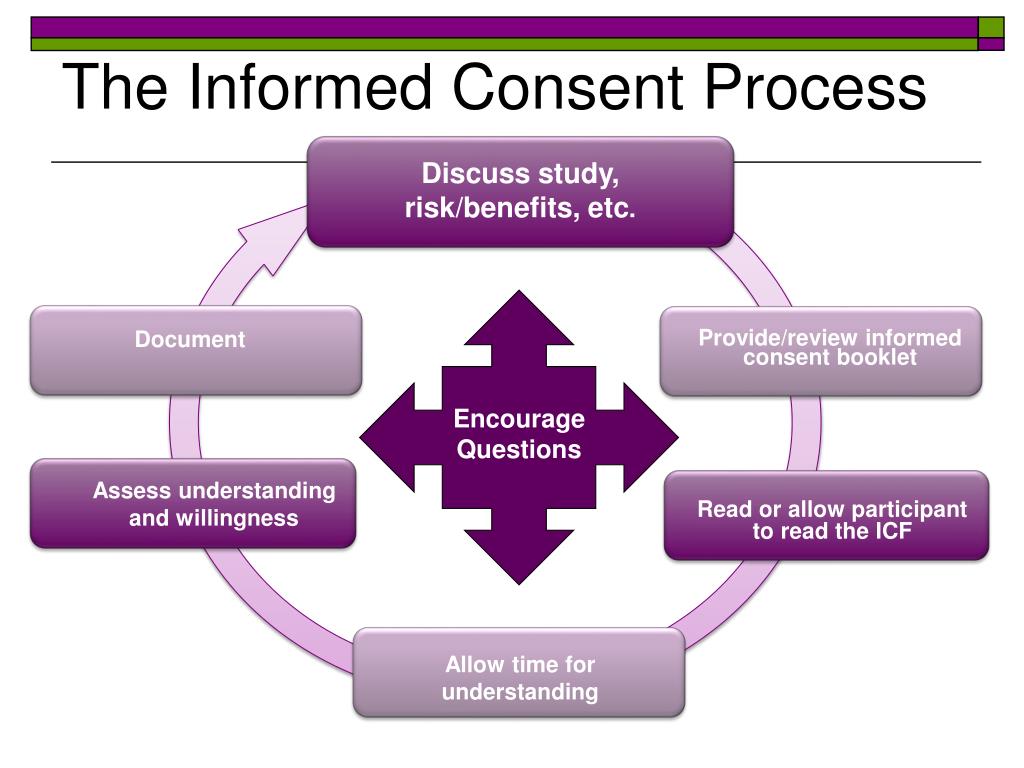
To summarize, for consent to be valid, you must document that you have ensured the following four conditions were met:
- Competence: The patient is capable of understanding and making a decision.
- Disclosure: You have provided relevant information about the patient's condition, the proposed treatment (both Ayurvedic and conventional), its risks, benefits, and what it entails.
- Alternatives: You have discussed other options, including the option of no treatment at all.
- Voluntariness: The patient is making a free choice without coercion or pressure from you or others.
3. Guidelines for an Integrative Practice
General documentation principles apply everywhere, but an integrative practice has unique requirements. You are accountable for documenting the full scope of your care, including both the conventional and the Ayurvedic components.
The following resource provides model guidelines specifically for physicians using complementary and alternative medicine (CAM), which includes Ayurveda.
Model Guidelines for the Use of Complementary and ... - NCBI
These 'Model Guidelines for the Use of Complementary and Alternative Therapies in Medical Practice' are designed to help regulate the safe and responsible use of CAM. They provide an excellent framework for what to include in your documentation.
Please read the subsections titled '1. Evaluation of Patient,' '2. Treatment Plan,' and '4. Documentation of Medical Records' under 'Section III. Guidelines'. These sections give a clear checklist of what state medical boards consider essential documentation for CAM/integrative practice.
Based on these guidelines, your documentation for every patient in an integrative practice should systematically include:
- A comprehensive evaluation: This includes a standard medical history and physical exam, but also your Ayurvedic assessment (Prakriti, Vikriti, Agni, etc.).
- An integrated assessment: Your documentation should list both the modern medical diagnosis and the corresponding Ayurvedic understanding.
- A documented treatment plan: This plan must have clear, evaluable objectives. It should detail both the conventional interventions (e.g., medication) and the Ayurvedic therapies (e.g., panchakarma, specific herbs, dietary plans).
- Evidence of informed consent: As discussed, this must cover the risks, benefits, and alternatives for all proposed therapies.
- Documentation of progress: Your notes should track progress toward the stated objectives, using both biomedical markers (e.g., lab values) and Ayurvedic parameters (e.g., status of doshas, symptom relief).
- Rationale for your decisions: This is especially important and we will discuss it next.
A Practical Tool: The Integrative SOAP Note
A standard and effective way to structure your clinical notes is the SOAP format (Subjective, Objective, Assessment, Plan). This format is highly adaptable for an integrative practice.

Imagine the patient from our last lesson, Mr. Kumar, with new-onset Type 2 Diabetes. Here is how you might structure your SOAP note after agreeing on an integrative plan:
- S (Subjective): Patient reports discomfort with Metformin (gas, bloating). Expresses strong interest in trying an Ayurvedic approach his brother-in-law used. Anxious about long-term use of "chemicals" but understands the risks of uncontrolled diabetes.
- O (Objective): Vitals: BP 130/85, HR 78. Labs: HbA1c 7.8%. Ayurvedic assessment: Kapha-Pitta prakriti with signs of Kapha vitiation and mandagni (sluggish digestion). Tongue has a light white coating.
- A (Assessment):
- Type 2 Diabetes Mellitus (Madhumeha).
- Metformin intolerance.
- Kapha imbalance contributing to metabolic dysregulation.
- P (Plan):
- Pharmacological: Reduce Metformin to 500mg daily with evening meal to improve tolerance.
- Ayurvedic Diet/Lifestyle: Provided patient with a Kapha-pacifying diet sheet. Advised 30 minutes of brisk walking daily.
- Ayurvedic Herbs: Recommended a combination of Turmeric and Amla. Discussed that evidence is less robust than for Metformin but may support metabolic health.
- Monitoring: Patient to self-monitor fasting blood glucose 3x/week. Follow-up appointment in 1 month. Repeat HbA1c in 3 months.
- Informed Consent: Discussed risks/benefits/alternatives of 1) Metformin alone, 2) Ayurveda alone, and 3) the proposed integrated plan. Patient verbalized understanding of the risk of persistent hyperglycemia and agreed to the combined approach.
This integrated note clearly communicates the patient's story, your multifaceted assessment, and the comprehensive, co-created plan.
4. Advanced Documentation: Defending Your Clinical Reasoning
Good documentation isn't just about recording what you did; it's about recording why you did it. This is paramount in an integrative practice where your decisions may diverge from a standard conventional pathway.
ED Documentation Tips to Legally Protect Yourself | The High Risk EM Course
This video, though focused on the high-stakes environment of Emergency Medicine, offers universally applicable and powerful tips on creating legally defensible documentation.
Please watch the following three clips: 00:34 - 03:44: Focus on how to document your medical decision-making, especially when you decide not to do a test. This is crucial for justifying an integrative approach. 11:54 - 16:16: This section on 'Refusals and AMA' is vital for situations where a patient declines a conventional therapy. 23:23 - 26:32: Pay attention to the advice on avoiding judgmental 'dirty words' in the chart.
Let's summarize the key strategies from the video that are directly relevant to you:
- Justify Your Decisions: If a patient with joint pain prefers an Ayurvedic anti-inflammatory herb over a standard NSAID, your note should reflect the shared decision-making process: "Discussed NSAID therapy (e.g., Ibuprofen) and its risks (GI upset, kidney issues). Patient expressed concern about these side effects and a strong preference for a trial of a traditional herbal approach (e.g., Boswellia). We discussed that evidence for Boswellia is emerging but less established than for NSAIDs. Plan is to trial Boswellia for 4 weeks and monitor symptoms. Patient understands they should report if pain worsens."
- Document Informed Refusal: When a patient refuses a recommended conventional treatment, don't just write "Patient refused." Document the conversation: "Patient declines colonoscopy screening despite recommendation. I explained the risks of missing pre-cancerous polyps and the benefits of early detection. Patient verbalized understanding of these risks but still wishes to decline at this time due to personal beliefs. Offered alternatives for monitoring and encouraged them to reconsider in the future."
- Be Objective, Not Judgmental: Avoid words like "non-compliant" or "uncooperative." Instead, describe the behavior factually. Instead of "Patient is non-compliant with diet," write "Patient reports difficulty adhering to the dietary plan due to social events." This is more professional and helpful for future problem-solving.
Test your understanding!
A patient with mild anxiety declines your suggestion of an SSRI (a standard antidepressant) and says they want to use Ashwagandha and meditation instead. Which of the following is the best documentation entry for the "Plan" section of a SOAP note?
A. "Patient refused SSRI. Will use herbs instead."
B. "Patient is non-compliant with standard medical advice for anxiety."
C. "Discussed risks/benefits of SSRIs for anxiety. Patient expressed preference to trial non-pharmacological methods first, citing concern about SSRI side effects. Provided education on meditation and use of Ashwagandha, noting its traditional use for stress. Patient understands SSRIs remain an option if symptoms do not improve. Will follow up in 4 weeks."
Show answer
C is the best answer. It is objective, non-judgmental, and clearly documents the shared decision-making process, the alternatives discussed, the patient's rationale, and the follow-up plan. It demonstrates professional competence and respect for patient autonomy. Entry A is too brief, and Entry B is subjective and unprofessional.
Conclusion: Your Professional Signature
Congratulations on completing this course! We have journeyed from the basic building blocks of modern science to the complexities of designing and communicating integrative care. This final lesson on documentation ties everything together. Your patient records are more than just a legal requirement; they are a reflection of your clinical competence, your respect for your patient, and the thoughtful care you provide.
Key Takeaways:
- Medical-legal documentation is essential for patient safety, continuity of care, and professional accountability.
- The principles of good documentation are that it be accurate, objective, complete, timely, and clear.
- Documenting informed consent is paramount, proving that the patient was a knowledgeable and voluntary partner in the decision-making process.
- In an integrative practice, use a structured format like SOAP notes to record both Ayurvedic and conventional assessments and plans.
- Crucially, document your clinical reasoning, especially when deviating from standard care, to create a legally defensible record of your thoughtful, patient-centered approach.
By applying these principles, you will not only protect yourself professionally but also elevate the quality of your practice. You are now equipped with foundational knowledge and skills to begin building the bridge between the ancient wisdom of Ayurveda and the rigorous methods of modern science. Well done, and best of luck in your future endeavors.