Hello! Welcome to the final lesson in our module on the Fundamentals of Modern Pharmacology.
In our last few lessons, we've explored the "what" and "how" of drug action, defining pharmacodynamics and differentiating between agonists, antagonists, and partial agonists. We've established that drugs work by binding to receptors. But what exactly are these receptors, and how does the simple act of binding lead to a complex cellular response like muscle contraction or pain relief?
Today, we will answer that question. Our learning outcome is to outline the main families of receptors and their corresponding signal transduction pathways. We will explore the four major "superfamilies" of receptors. For each one, we will look at its structure, its location in the cell, and the sequence of events—the "signal transduction pathway"—it uses to convert an external signal into an internal action.
Understanding these pathways is like learning the grammar of cellular communication. It provides the fundamental framework for understanding not just how modern drugs work, but also for hypothesizing how the complex phytochemicals in Ayurvedic medicines might exert their effects on the body.
The Four Superfamilies of Receptors
Most receptors that are targets for drugs fall into one of four main families:
- Ligand-Gated Ion Channels (LGICs)
- G Protein-Coupled Receptors (GPCRs)
- Enzyme-Linked Receptors (e.g., Kinase-Linked)
- Nuclear Receptors (Intracellular)
They differ primarily in their structure, location, and the speed at which they produce a response. We will use a comprehensive video to guide our exploration, examining each family one by one.
Types of Receptors: Ligand-Gated, GPCRs, Kinase-Linked & Nuclear Receptors | Pharmacology
The video 'Types of Receptors' by EKG Science provides an excellent and detailed overview of these four receptor families. We will watch it in sections to break down the information.
First, please watch the introduction from 00:00 to 02:53. This will set the stage by explaining the concept of signal transduction and introducing the four receptor types.
1. Ligand-Gated Ion Channels: The Sprinters
These are the fastest-acting receptors, with responses occurring in milliseconds. They are crucial for rapid signaling, especially in the nervous system.
Types of Receptors: Ligand-Gated, GPCRs, Kinase-Linked & Nuclear Receptors | Pharmacology
Now, let's look at the first family. This segment explains the structure and extremely rapid function of ligand-gated ion channels.
Watch the section from 02:53 to 11:31. Focus on these key points: The structure: a channel that opens when a ligand binds. The mechanism: direct flow of ions across the membrane. The speed: milliseconds. The examples: Nicotinic acetylcholine receptor and GABA receptor.
As the video explains, the key feature of LGICs is that the receptor itself is an ion channel. When a ligand (like a neurotransmitter) binds, the channel immediately opens, allowing specific ions (like Na⁺ or Cl⁻) to rush across the cell membrane. This rapid change in ion concentration alters the cell's electrical potential, leading to either excitation (depolarization) or inhibition (hyperpolarization).
- Structure: A multi-subunit protein that spans the cell membrane, forming a pore.
- Mechanism: Ligand binding directly causes a conformational change that opens the pore.
- Response Time: Milliseconds.
- Example: The GABA-A receptor. When the inhibitory neurotransmitter GABA binds, the channel opens to allow chloride ions (Cl⁻) into the neuron. This makes the neuron less likely to fire an electrical signal, producing a calming effect. Drugs like benzodiazepines (e.g., diazepam) enhance this effect.
2. G Protein-Coupled Receptors (GPCRs): The Master Coordinators
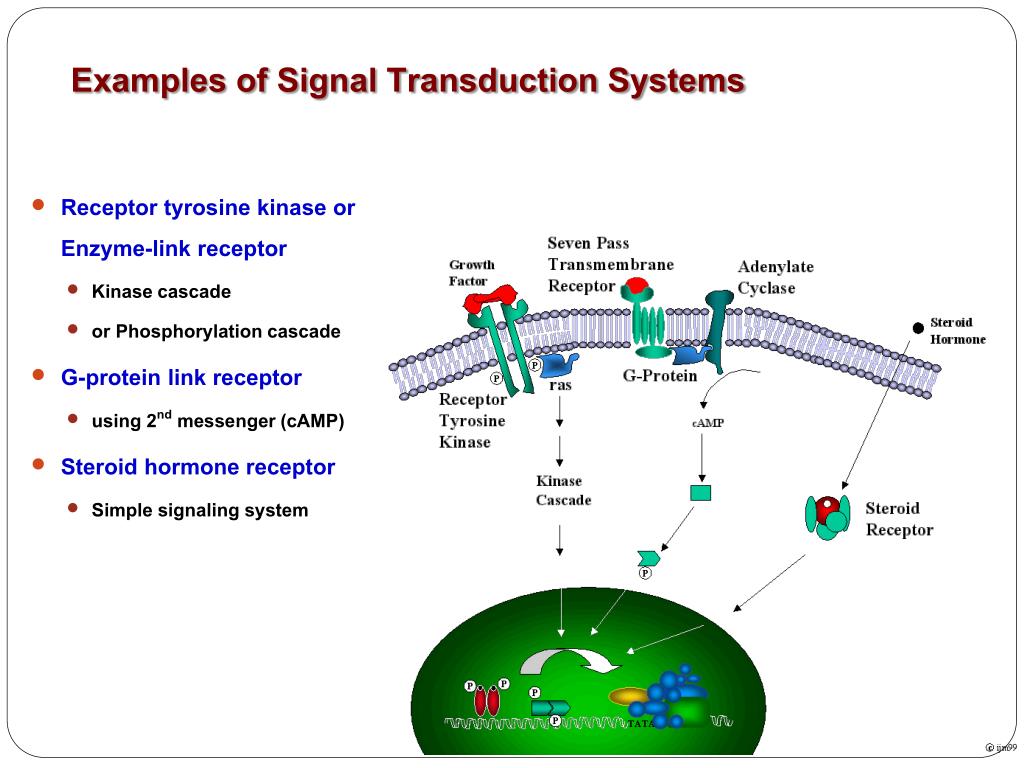
This is the largest and most diverse family of receptors. A huge number of modern drugs, and likely many herbal compounds, target GPCRs. They act through an intermediary "G protein" to initiate a signaling cascade inside the cell.
Types of Receptors: Ligand-Gated, GPCRs, Kinase-Linked & Nuclear Receptors | Pharmacology
Next, we'll explore GPCRs. They are slightly slower than ion channels but incredibly versatile.
Please watch from 11:31 to 20:40. Pay attention to: The characteristic seven-transmembrane structure. The role of the G protein as a 'middleman'. The concept of a 'second messenger' (like cyclic AMP) that amplifies the signal.
The GPCR pathway involves several steps, creating a "cascade" that amplifies the initial signal:
- A ligand binds to the GPCR on the cell surface.
- The receptor changes shape and activates its partner G protein inside the cell.
- The activated G protein then activates or inhibits an effector enzyme (like adenylyl cyclase).
- This enzyme produces a large quantity of an intracellular signaling molecule, the second messenger (like cAMP).
- The second messenger spreads throughout the cell, activating other proteins (like protein kinases) to produce the final cellular response.
- Structure: A single polypeptide chain that snakes across the cell membrane seven times.
- Mechanism: Ligand binding -> G protein activation -> Effector enzyme -> Second messenger production.
- Response Time: Seconds to minutes.
- Example: Beta-adrenergic receptors in the heart. When adrenaline binds, it activates a Gs protein, leading to increased cAMP, which ultimately increases heart rate and contraction force.
A Bridge to Ayurveda: Rasa and Receptors
Your Ayurvedic training gives you a unique perspective here. The concept of taste (Rasa) is fundamental in Dravya Guna (Ayurvedic pharmacology). Modern science has discovered that the receptors for sweet, umami, and bitter tastes are, in fact, GPCRs, while salty and sour tastes are mediated by ion channels.
What's fascinating is that these "taste" receptors are not just in the tongue. They are found all over the body—in the gut, lungs, brain, and even the heart. This discovery of extraoral taste receptors offers a potential scientific basis for the Ayurvedic concept of Vipaka (the post-digestive taste or effect of a substance), suggesting that the chemical compounds in food and herbs may continue to interact with these receptor systems long after they leave the digestive tract.
Extraoral Taste Receptor Discovery: New Light on Ayurvedic Pharmacology
This connection is explored in the paper 'Extraoral Taste Receptor Discovery: New Light on Ayurvedic Pharmacology'. You don't need to read the whole paper, but reviewing the introduction gives a sense of how these modern discoveries are creating new ways to understand ancient concepts.
Please read the 'Introduction' section. Focus on how it connects taste modalities (sweet, bitter, etc.) to specific receptor types (GPCRs, ion channels) and mentions their widespread distribution outside the mouth.
3. Enzyme-Linked Receptors: The Growth Regulators
This family includes receptors that either have intrinsic enzymatic activity or are directly associated with an intracellular enzyme. Their activation typically leads to slower, more long-lasting effects, often involving changes in gene expression and protein synthesis.
Types of Receptors: Ligand-Gated, GPCRs, Kinase-Linked & Nuclear Receptors | Pharmacology
Let's examine the third family, which plays a key role in controlling cell growth, proliferation, and metabolism.
Watch from 20:40 to 28:42. Note the process of dimerization and autophosphorylation as the core activation mechanism.
The most prominent type is the Receptor Tyrosine Kinase (RTK).
- Ligand binding causes two receptor molecules to come together (dimerization).
- This activates their intrinsic kinase domains, causing them to phosphorylate each other on tyrosine residues (autophosphorylation).
- These new phosphate groups act as docking sites for other intracellular signaling proteins, initiating multiple downstream pathways that often culminate in the nucleus, altering which genes are turned on or off.
- Structure: Single-pass transmembrane proteins that often act as dimers.
- Mechanism: Ligand binding -> Dimerization -> Autophosphorylation -> Recruitment of downstream proteins.
- Response Time: Minutes to hours.
- Example: The insulin receptor. When insulin binds, it triggers a phosphorylation cascade that leads to increased glucose uptake and storage in cells.
4. Nuclear Receptors: The Gene Regulators
Unlike the other three families, which are located on the cell membrane, these receptors are found inside the cell, either in the cytoplasm or the nucleus. They function as ligand-activated transcription factors, meaning they directly regulate gene expression.
Types of Receptors: Ligand-Gated, GPCRs, Kinase-Linked & Nuclear Receptors | Pharmacology
Finally, let's look at the receptors that work from inside the cell to produce the slowest but most profound changes.
Watch from 28:42 to 34:49. The key takeaways are: Their intracellular location. The requirement for lipid-soluble ligands (like steroids). Their direct action on DNA to alter gene transcription.
Because their ligands must be able to cross the cell membrane, they are typically small, lipid-soluble molecules like steroid hormones (e.g., cortisol, estrogen) and thyroid hormone.
- The lipid-soluble ligand diffuses across the cell membrane.
- It binds to its receptor in the cytoplasm or nucleus.
- The activated ligand-receptor complex travels to the nucleus (if it wasn't already there).
- It binds directly to specific DNA sequences (called hormone response elements), increasing or decreasing the transcription of target genes.
- This change in transcription leads to the synthesis of new proteins (or a reduction in existing ones), which produces the final cellular effect.
- Structure: Soluble proteins with a ligand-binding domain and a DNA-binding domain.
- Mechanism: Ligand binding -> Translocation to nucleus -> Direct binding to DNA -> Regulation of gene transcription.
- Response Time: Hours to days.
- Example: Glucocorticoid receptors. When a steroid like cortisol (or a drug like prednisone) binds, the complex moves to the nucleus and turns on genes that code for anti-inflammatory proteins.
Summary Comparison
Let's bring it all together. The four receptor families represent four distinct strategies for a cell to respond to a chemical signal.
Types of Receptors: Ligand-Gated, GPCRs, Kinase-Linked & Nuclear Receptors | Pharmacology
This final clip from the EKG Science video provides a concise summary, comparing the four families side-by-side.
Watch the summary from 34:49 to the end. It's a great way to consolidate your understanding.
Here is a summary table for your reference:
| Receptor Class | Location | Coupling Mechanism | Speed of Onset | Example |
|---|---|---|---|---|
| Ligand-Gated Ion Channel | Plasma Membrane | Direct ion channel gating | Milliseconds | Nicotinic ACh receptor, GABA-A receptor |
| G Protein-Coupled Receptor | Plasma Membrane | G protein -> Enzyme -> 2nd Messenger | Seconds to minutes | Adrenergic receptors, Muscarinic receptors |
| Enzyme-Linked Receptor | Plasma Membrane | Dimerization & Autophosphorylation | Minutes to hours | Insulin receptor, Growth factor receptors |
| Nuclear Receptor | Cytosol or Nucleus | Direct DNA binding | Hours to days | Steroid receptors, Thyroid hormone receptor |
Test your understanding!
A new drug is developed that has very rapid effects, starting within seconds of administration, but its effects also wear off quickly. It seems to work by causing a rapid influx of sodium ions into target cells. Which receptor family is this drug most likely targeting?
Show answer
It is most likely targeting a Ligand-Gated Ion Channel (LGIC). The key clues are the extremely rapid onset (milliseconds to seconds) and the direct mechanism of action involving ion flux (sodium ions entering the cell). This is the characteristic signature of an LGIC.
Conclusion
Today, we have mapped the four major pathways through which signals are transmitted into cells. This is a cornerstone of modern pharmacology.
Key Takeaways:
- Cellular communication is mediated by four main receptor superfamilies: Ligand-gated ion channels, G protein-coupled receptors, Enzyme-linked receptors, and Nuclear receptors.
- They differ significantly in their location, structure, mechanism of signal transduction, and the speed of their response.
- LGICs are the fastest, directly opening ion channels (milliseconds).
- GPCRs are versatile and widespread, using G proteins and second messengers (seconds-minutes).
- Enzyme-linked receptors control growth and metabolism through phosphorylation cascades (minutes-hours).
- Nuclear receptors are the slowest, acting inside the cell to directly regulate gene expression (hours-days).
- Understanding these pathways is essential for explaining how drugs produce their effects and provides a scientific language to investigate the mechanisms of herbal medicines.
Preview of the Next Module:
This lesson concludes our module on the fundamentals of modern pharmacology. You now have a solid foundation in pharmacokinetics (ADME) and pharmacodynamics (how drugs work at the receptor level).
In our next lesson, we will begin a new module: Herbal Pharmacology and Interactions. We will apply the principles you've just learned to the unique context of medicinal plants. Our first topic will be to describe the major classes of bioactive phytochemicals—the active compounds like alkaloids and flavonoids—that are responsible for the therapeutic effects of Ayurvedic Dravyas. We will see how these molecules interact with the very receptor systems we discussed today.