Welcome to your second lesson in the Foundations of Arithmetic. In our previous session, we mastered successive percentage changes and you saw how the "Ratio Method" was a powerful tool for those calculations. That was your first glimpse into the utility of ratios. Today, we're going to dive deep into the heart of this concept.
This lesson is dedicated to Ratio and Proportion. You will learn how to apply these fundamental ideas to solve two major types of problems frequently seen in the SSC CGL exam: comparison and distribution. We'll start with the basic definitions, move to essential techniques for combining and manipulating ratios, and then, as you prefer, we'll focus on the shortcuts and exam strategies that turn a good attempt into a great one.
1. The Building Blocks: Ratio and Proportion
At its core, a ratio is simply a way to compare two quantities. A proportion is a statement that two ratios are equal. These simple ideas are the foundation for a vast range of quantitative aptitude questions.
This infographic provides a concise overview of the key concepts.

A crucial rule for proportions is the relationship between the terms. When two ratios are in proportion, say , we can write this as . If you cross-multiply, you get .
The terms and are called the extremes (the outer terms), and and are called the means (the inner terms).
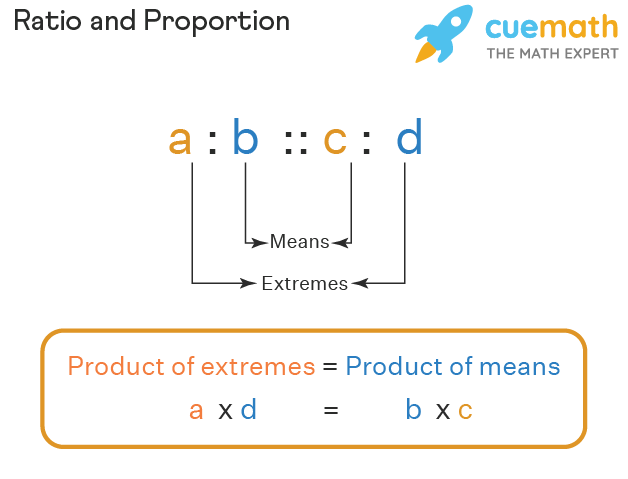
This principle is not just a theoretical rule; it's a practical tool for solving problems where one term is unknown. Let's see how Gagan Pratap Sir applies this to a typical SSC exam question.
MATHS PYQ SERIES || Ratio & Proportion || SSC में पूछे गए Best-25 सवाल🔥Gagan Pratap Sir #ssc #cgl
This short clip from the video "MATHS PYQ SERIES" demonstrates the direct application of the "product of means = product of extremes" rule.
Watch the very first problem from the beginning. Notice how he immediately sets up the equation by multiplying the outer and inner terms. This is your first and most basic technique.
2. Core Techniques for Comparison and Distribution
Many SSC CGL problems don't just give you a single ratio; they give you several related ratios that you must first combine.
Combining Ratios
A very common task is to find a combined ratio like when you are given and . The key is to make the common term (in this case, B) equal in both ratios.
Let's watch Gagan Pratap Sir demonstrate the standard method for this.
MATHS PYQ SERIES || Ratio & Proportion || SSC में पूछे गए Best-25 सवाल🔥Gagan Pratap Sir #ssc #cgl
This segment shows a fast and reliable method to merge two separate ratios into a single, continuous one.
Please watch from this example. He explains both the option-based check and the standard multiplication method to find A:B:C. This is a must-know skill.
Distribution Problems
Distribution problems involve dividing a total amount (money, items, etc.) among individuals according to a specific ratio. The trick is to think of the ratio parts as "shares" or "units".
Example: Divide ₹5625 among A, B, and C such that A receives 1/2 as much as B and C together, and B receives 1/4 as much as A and C together. (This is Question 4 from the Testbook resource).
Here's how to approach this:
-
From the first condition, , which means . The ratio of A's share to the combined share of B and C is . This implies that out of a total of units, A gets 1 unit. So, of the total.
- A's share = .
-
From the second condition, , which means . The ratio of B's share to the combined share of A and C is . This implies that out of a total of units, B gets 1 unit. So, of the total.
- B's share = .
The question might then ask for C's share, or the difference between shares, which you can now easily calculate.
Income, Expenditure, and Savings Problems
This is a classic and very important application of ratios for your exam. The basic relationship is:
You'll typically be given the ratio of incomes for two people (e.g., ) and the ratio of their expenditures (). You cannot simply subtract the expenditure ratio from the income ratio because they are on different scales. You must first link them using a piece of information given in the problem.
This is a critical technique, and Gagan Pratap Sir provides an outstanding explanation.
MATHS PYQ SERIES || Ratio & Proportion || SSC में पूछे गए Best-25 सवाल🔥Gagan Pratap Sir #ssc #cgl
This segment covers the most effective method for solving income/expenditure/savings problems. He explains the logic of connecting two different ratios.
First, watch from this section. Pay close attention to how he first makes the target quantities equal, and then applies the desired ratio. This is a powerful general strategy. Next, watch the following example from this part to see the same logic applied to a problem with three individuals.
3. The SSC CGL Edge: Solving with "Ultracalc"
As you requested, let's focus on the tricks that save precious seconds in the exam. Abhinay Sharma's "Ultracalc" approach is all about using the options and number properties to find the answer without heavy calculation.
The core idea is simple: quantities like money, people, or items must be integers. If a total is divided in a certain ratio, the final numbers must be multiples of the parts of that ratio.
Best use of Ratio in Questions | Ultracalc Best | Best Calculation Trick SSC CGL 2025 Abhinay Sharma
This video by Abhinay Sharma introduces the "Ultracalc" mindset. You'll see how to use divisibility and ratio properties to eliminate options and find the answer quickly.
First, watch the example from this section. Notice how the fact that the final number of people must be a multiple of the final ratio's sum (3+4=7) instantly reveals the answer. Next, see a slightly more advanced application from this part. The total number of students after changes must be a multiple of the new ratio's sum (3+5=8). Finally, watch from this segment. Here, the initial total is unknown, but the change is known. Adding 1 to the total must result in a multiple of 7 (the new ratio sum).
This way of thinking is a game-changer for speed. Always glance at the options and check if a simple ratio multiple can give you the answer before diving into full calculations.
4. Let's Practice: Applying the Concepts
Let's look at some solved problems from a dedicated SSC CGL resource to see these methods in action.
SSC CGL Ratio and Proportion Questions Solved Problems with Detailed Solutions [Free PDF]
This Testbook article contains a variety of problems typical for your exam. We'll analyze a few to consolidate what you've learned.
First, review Question 5, about boys and girls in a class. Find the part where the initial ratio is 2:5 and the final is 4:25. The problem is solved algebraically, but you can also apply the "cross-multiplication method" shown in Gagan Pratap's video at timestamp 57:51. Next, look at Question 6, an income-expenditure problem. The problem shows a "Shortcut Trick" where the difference between the income ratio parts (13-11=2) and the expenditure ratio parts (11-9=2) is the same. When this difference is the same, it directly corresponds to the savings. This is a useful special case. Then, examine Question 7, an alloy distribution problem. Notice how the amount of tin is calculated by taking its share of the total ratio: \frac{3}{2+3} of the total weight. This is a direct application of the distribution principle. Finally, read through Question 12, a profit-sharing problem. Here, the shares are defined relative to each other. The key is to express all shares in terms of a single variable ('a' in the solution) to find their values and then their ratio.
Conclusion
Today, we've built a solid foundation in ratio and proportion, moving from basic definitions to advanced, exam-oriented strategies. You are now equipped with a versatile toolkit to handle comparison and distribution problems effectively.
Key Takeaways:
- Proportion Rule: The product of the means equals the product of the extremes ().
- Combining Ratios: Always equalize the common term before creating a continuous ratio ().
- Distribution: Treat ratio parts as "units" or "shares" to divide a total quantity.
- Income-Expenditure: Link the separate income and expenditure ratios using a given condition. A powerful method is to make the relevant terms equal first, then apply the required ratio.
- Speed Tricks: Always check the options. Look for multiples of the ratio parts or the sum of the ratio. This can often lead you to the answer in seconds.
In our next lesson, we will continue exploring this topic by focusing on direct and inverse proportion. You'll see how these specific relationships are used to solve a wide array of word problems, particularly those involving time and work, and speed, distance, and time.