Hello! Welcome back to our study of the dissolution of a partnership firm.
In our last lesson, you learned how to prepare the fundamental structure of a Realisation Account by transferring assets and liabilities. We covered the basics of recording the sale of assets (crediting Realisation A/c) and the payment of liabilities (debiting Realisation A/c).
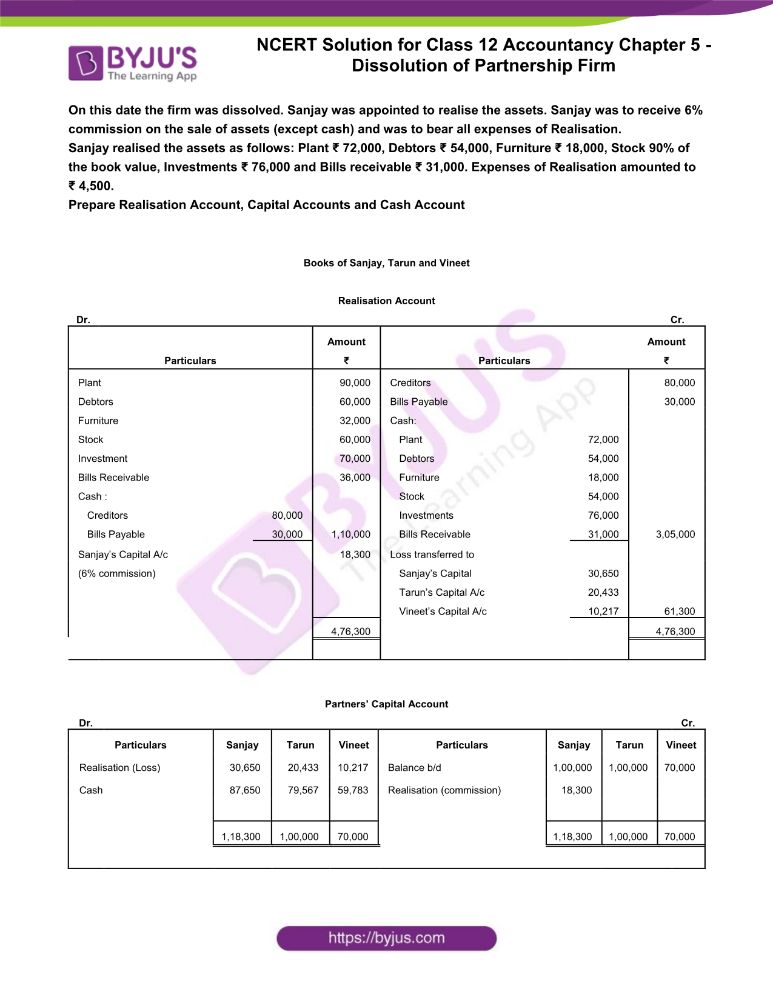
Today, we're going to dive deeper into the debit side of the Realisation Account. Our focus is to master the specific accounting treatments required to account for the discharge of liabilities, including unrecorded liabilities and realization expenses. This is a critical skill, as settling obligations correctly is a core part of closing a firm's books.
Let's begin by focusing on the payment of liabilities.
Part 1: Discharging Firm Liabilities
When a firm dissolves, it must settle all its obligations to outside parties. This includes liabilities shown on the balance sheet (recorded) and any that may be discovered during the dissolution process (unrecorded).
A. Settling Recorded Liabilities
As we briefly touched on in the last lesson, there are two primary ways to settle a liability that is already in the books:
-
Paid by the Firm: The firm pays the liability using its cash or bank balance. The payment is debited to the Realisation Account.
- Journal Entry:
Realisation A/c Dr.
To Cash/Bank A/c
(Being liability paid in cash)
- Journal Entry:
-
Taken over by a Partner: A partner agrees to personally settle a firm's liability. In this case, the firm owes the partner that amount, so we credit the partner's capital account.
- Journal Entry:
Realisation A/c Dr.
To Partner’s Capital A/c
(Being liability taken over by a partner)
- Journal Entry:
CHAPTER 7 DISSOLUTION OF PARTNERSHIP FIRM
This PDF from Aspirations Institute clearly lays out the journal entries for paying liabilities. It's a great reference for the fundamental entries.
Please review section 'D. For Payment of Liabilities'. You'll find the two journal entries we just discussed for liabilities paid in cash and those taken over by a partner.
The Golden Rule for Liabilities:
One of the most important rules in dissolution is this: All outside liabilities must be paid off. If a problem is silent about the settlement of a specific liability (like Creditors or Bills Payable), you must assume it was paid in full at its book value. This is different from assets, which are assumed to have zero value if their realization is not mentioned.
B. Settling Unrecorded Liabilities
Sometimes, a liability that was not previously recorded in the books comes to light during dissolution (e.g., an outstanding bill for repairs, a legal claim that is now payable).
These liabilities must also be paid. The accounting treatment is straightforward: you treat the payment just like you would for a recorded liability paid in cash.
- Journal Entry:
Realisation A/c Dr.
To Cash/Bank A/c
(Being unrecorded liability paid)
Notice there is no initial transfer entry for an unrecorded liability because it wasn't on the Balance Sheet. The first and only time it appears in the books is at the moment of payment.

Test your understanding!
A firm's Balance Sheet shows Creditors of ₹40,000. During dissolution, the following occurs:
- The creditors were paid at a discount of 5%.
- Partner A agreed to settle a loan from his brother amounting to ₹10,000 (which was shown as a liability).
- An outstanding electricity bill of ₹2,000, which was not recorded in the books, was paid.
What are the journal entries for these transactions?
Show answer
-
Payment to Creditors: Amount paid = ₹40,000 - 5% of ₹40,000 = ₹38,000.
Realisation A/c Dr. 38,000
To Bank A/c 38,000 -
Liability taken over by Partner A:
Realisation A/c Dr. 10,000
To A's Capital A/c 10,000 -
Payment of Unrecorded Liability:
Realisation A/c Dr. 2,000
To Bank A/c 2,000
Part 2: Accounting for Realization Expenses
Realization expenses are costs incurred to carry out the dissolution process, such as auctioneer fees, legal charges, or brokerage. Accounting for them can be tricky because it depends on two factors:
- Borne by: Who is ultimately responsible for the expense? The firm or a specific partner?
- Paid by: Who physically pays the money? The firm (from its bank account) or a partner (from their personal funds)?
To master this, let's watch a video that explains these concepts perfectly.
Realisation expenses | ALL CASES WITH EXAMPLES. Tricks to learn Dissolution Part 8 Class 12 Accounts
This video from Sunil Panda is an excellent, detailed guide to Realization Expenses. It clearly explains the 'borne by' and 'paid by' concepts and walks through every possible scenario with examples.
Watch from the beginning to 14:42. Pay very close attention to the chart the instructor creates. It forms the basis for all the journal entries. Focus on understanding the rule: 'Borne by' determines the debit, and 'Paid by' determines the credit.
Summary of Realization Expense Scenarios
Let's summarize the rules from the video in a clear table. This is your go-to guide for any realization expense question. The fundamental rule is:
- If the expense is borne by the firm, debit Realisation A/c.
- If the expense is borne by a partner, debit that Partner's Capital A/c.
- If the expense is paid by the firm, credit Bank/Cash A/c.
- If the expense is paid by a partner, credit that Partner's Capital A/c.
| Scenario | Borne By | Paid By | Journal Entry | Explanation |
|---|---|---|---|---|
| 1. Default Case | Firm | Firm | Realisation A/c Dr. To Bank/Cash A/c |
The firm bears its own expense and pays for it. This is the most common scenario. |
| 2. Firm's Expense, Paid by Partner | Firm | Partner | Realisation A/c Dr. To Partner's Capital A/c |
The expense is the firm's responsibility, but a partner paid on its behalf. The firm must reimburse the partner. |
| 3. Partner's Expense, Paid by Firm | Partner | Firm | Partner's Capital A/c Dr. To Bank/Cash A/c |
The expense was the partner's personal responsibility, but the firm paid for it. The firm will recover this amount from the partner. |
| 4. Partner's Expense, Paid by Partner | Partner | Partner | NO ENTRY | The transaction is entirely outside the firm's books. The partner handled their own expense with their own money. The firm is not involved. |
Special Case: Remuneration to a Partner
Sometimes, a partner is paid a fixed amount (remuneration or commission) to handle the entire dissolution process and bear all the expenses.
- The firm records the remuneration as a realization expense. The journal entry is:
Realisation A/c Dr.
To Partner’s Capital A/c
(Being remuneration for dissolution paid to partner)
In this case, the actual amount of realization expenses incurred by the partner is irrelevant to the firm. Whether the partner spent more or less than the remuneration is their personal gain or loss. If the firm pays these expenses on behalf of the partner, it is treated as per Scenario 3 above.
Test your understanding!
Pass the journal entries for the following scenarios:
- Realization expenses amounted to ₹5,000. (The question is silent on who bore/paid them).
- Realization expenses of ₹8,000 were paid by Partner B, but they were to be borne by the firm.
- Partner C was to bear the realization expenses of ₹3,000. The firm paid the amount on his behalf.
- Partner D agreed to handle the dissolution for a commission of ₹10,000. He was to bear all expenses. The actual expenses were ₹9,000, which he paid from his private funds.
Show answer
-
Silent Case: We assume Borne by Firm, Paid by Firm.
Realisation A/c Dr. 5,000
To Bank A/c 5,000 -
Borne by Firm, Paid by Partner B:
Realisation A/c Dr. 8,000
To B's Capital A/c 8,000 -
Borne by Partner C, Paid by Firm:
C's Capital A/c Dr. 3,000
To Bank A/c 3,000 -
Remuneration Case: The firm is only concerned with paying the commission. The actual expenses are D's private affair.
Realisation A/c Dr. 10,000
To D's Capital A/c 10,000
(No entry is made for the actual expenses of ₹9,000 as they were borne and paid by D).
Conclusion
Congratulations! You have now mastered the intricacies of accounting for liabilities and expenses during dissolution. This is often a challenging area for students, but by following the rules systematically, you can handle any scenario.
Key Takeaways:
- All liabilities to third parties, whether recorded or unrecorded, must be paid and are debited to the Realisation Account.
- Payment can be made by the firm (
To Bank A/c) or a liability can be taken over by a partner (To Partner's Capital A/c). - For realization expenses, always identify who bears the cost (this determines the debit) and who pays the cash (this determines the credit).
- If a partner is paid a remuneration to bear expenses, the firm's only entry is for the remuneration itself.
Preview of the Next Lesson:
In our next lesson, "Calculate and distribute the final profit or loss on realization among all partners," we will bring everything together. We will balance the Realisation Account, determine the final outcome of the dissolution, and see how to close this crucial account by transferring the profit or loss to the partners.