In our last lesson, we focused on how to uncover the meaning of unfamiliar words by acting as a detective and using context clues. This skill helps you understand the direct, literal meaning of what you're reading. Now, we will explore what happens when authors intentionally use words to mean something other than their dictionary definition. This is a crucial next step in your journey as a reader and future writer.
Today's lesson is dedicated to distinguishing between literal and figurative language. Understanding this difference is fundamental to appreciating the artistry in fiction. Writers use figurative language to paint vivid pictures, evoke powerful emotions, and communicate complex ideas in memorable ways. For an aspiring writer, mastering this toolkit is essential for breathing life into your own stories.
We will cover:
- The core difference between literal and figurative language.
- Why writers use figurative language to create richer meaning.
- An introduction to some common types, such as similes, metaphors, personification, and hyperbole.
By the end of this lesson, you will be able to read a sentence and determine whether the author is communicating a direct fact or creating an imaginative comparison.
Literal vs. Figurative: The Basics
All language communicates meaning, but it can do so in two very different ways.
-
Literal language means exactly what it says. The words are used in their most direct, straightforward, and dictionary-defined sense. If you say, "The runner ran fast," you are making a literal statement of fact.
-
Figurative language goes beyond the dictionary definition. It uses comparisons, exaggerations, and other creative techniques to create a special effect or a more vivid image in the reader's mind. If you say, "He ran like the wind," you are using figurative language. You don't literally mean he is the wind; you are making a comparison to emphasize his speed in a more powerful and imaginative way.
To see this distinction in action, let's watch a short video that provides clear examples.
Literal & Figurative Language Difference | Literal meaning vs Figurative meaning | Figurative Tools
This video from English with NS provides a concise explanation of the difference between literal and figurative meaning.
Please watch from the beginning until the end of the examples. Pay attention to the examples like "it is raining cats and dogs" and "my bag weighs a ton." Notice how the literal interpretation is often absurd, which is a good clue that the author intends a figurative meaning.
As the video explains, literal language is essential for things like technical reports or legal documents where clarity and precision are paramount. But fiction, poetry, and even everyday speech thrive on figurative language. It's what makes communication colorful, engaging, and emotionally resonant.
The Art of Figurative Language
Why do writers choose to say "life is a journey" instead of just "life has many stages"? It's because figurative language does more than just state a fact; it engages our senses and imagination. A good metaphor or simile doesn't just tell us something—it makes us feel it.
This next video, a beautifully animated TED-Ed lesson by poet Jane Hirshfield, explores the power of metaphors to connect abstract ideas with our sensory experience of the world.
The art of the metaphor - Jane Hirshfield
Watch this segment from "The art of the metaphor" to understand why this form of language is so powerful.
Watch the section from the beginning, where the speaker explains how metaphors "think with the imagination and the senses." This is a key insight for any writer.
By connecting an abstract idea like love to a physical sensation like a "spark," or a difficult life to a "rocky road," writers make their ideas more concrete, more relatable, and far more memorable for the reader. This is the magic you'll be learning to analyze and, eventually, to create.
Common Types of Figurative Language
There are many different kinds of figurative language, each creating a slightly different effect. Today, we'll introduce four of the most common types. You will encounter these constantly in your reading.
The chart below gives a quick visual overview of several figures of speech, including the ones we'll focus on.
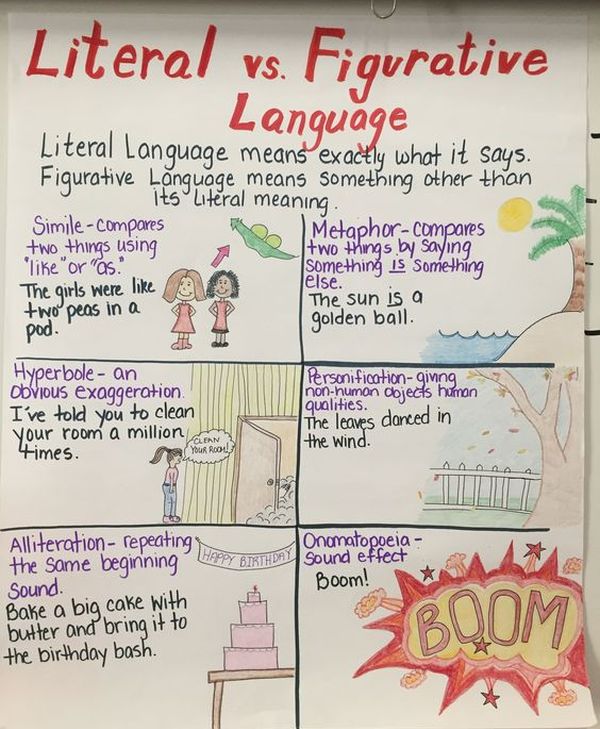
Now let's explore these in a bit more detail. We will use an article from Grammarly that gives clear definitions and examples from literature.
Figurative Language Examples: 6 Common Types and Definitions
This article provides excellent definitions and examples for the most common types of figurative language. We will focus on the first four types listed.
Please read the section titled "6 types of figurative language (with definitions and examples)." Focus on the following four types: Simile: A comparison between two different things using the words like or as. The key is that it admits it's a comparison. Metaphor: A direct comparison that describes one thing as if it is something else, without using like or as. It's more direct and often more powerful than a simile. Personification: Giving human qualities, actions, or emotions to nonhuman objects or abstract ideas. Hyperbole: A deliberate and obvious exaggeration used for emphasis or humor.
Simile vs. Metaphor: A Deeper Look
Similes and metaphors are both comparisons, but they create different effects. The use of "like" or "as" in a simile creates a little distance. Saying "The world is like a stage" asks the reader to consider the comparison.
A metaphor, on the other hand, is more direct and immersive. Shakespeare's famous line is "All the world is a stage." It doesn't propose a comparison; it declares it as a reality within the world of the play, forcing you to see the world in that new light immediately.
To reinforce this distinction, let's return to the TED-Ed video.
The art of the metaphor - Jane Hirshfield
This short clip explains the difference in the effect that similes and metaphors have on a reader.
Please watch the segment from the beginning of the clip. The speaker notes that "similes tend to make you think. Metaphors let you feel things directly." This is a powerful distinction for a writer to understand.
Let's Practice
Now, let's test your ability to distinguish between literal and figurative language. Read each sentence below and decide if its meaning is literal or figurative. If it's figurative, try to identify the type.
- The library is a treasure chest of stories.
- My feet are killing me after that long walk.
- The car is parked in the garage.
- She sings like an angel.
- The old house groaned under the weight of the snow.
Take a moment to consider each one before reading the explanations.
Explanations:
- Figurative (Metaphor): The library isn't literally a treasure chest. This metaphor compares the library to a chest full of valuable things (stories) to emphasize its richness and worth.
- Figurative (Hyperbole): Your feet are not literally being killed. This is an exaggeration to emphasize how much they hurt.
- Literal: This sentence states a simple, verifiable fact. The words mean exactly what they say.
- Figurative (Simile): She is being compared to an angel using the word "like." This simile suggests that her singing voice is beautiful, pure, or heavenly.
- Figurative (Personification): A house cannot literally groan. This personification gives the house a human-like sound to create a vivid image of strain and age.
Key Takeaways
Well done! You've just taken a major step in learning to read not just for plot, but for artistry. Understanding the dance between literal and figurative language allows you to appreciate the craft behind the stories you love.
Here are the main points from today's lesson:
- Literal language is direct and means exactly what it says.
- Figurative language uses imaginative comparisons and exaggerations to create more vivid, emotional, and memorable writing.
- Writers use figurative language to make abstract ideas concrete and to engage the reader's senses and emotions.
- Simile, metaphor, personification, and hyperbole are four common types of figurative language you will encounter everywhere in your reading.
In our next lesson, we will move from analyzing words and sentences to looking at the bigger picture. We'll learn how to summarize the main events of a short fiction passage. Now that you can better understand both the literal and non-literal meaning of words, you are ready to start grasping the core narrative they are used to build.