Welcome back. In our recent lessons, you've started building a powerful toolkit for literary analysis. You've learned to summarize a story's core events using the SWBST framework and to identify an author's attitude by analyzing their tone. These are crucial skills for understanding what an author says and how they say it.
Today, we'll create a dedicated space to practice these skills and develop your literary intellect: the reading journal. This isn't just a log of books you've read; for an aspiring writer, it's a personal laboratory. It's where you'll dissect the work of others, capture your own insights, and cultivate the habits of a critical, engaged reader. This practice will be the foundation upon which you build your own craft.
This lesson will guide you on how to use a reading journal to effectively record new vocabulary, your analytical observations, and your personal impressions of what you read.
From Passive Reader to Active Analyst
Have you ever finished a chapter of a book and immediately forgotten what you just read? It's a common experience in our age of information overload. The key to deeper learning and retention is to shift from being a passive consumer of text to an active, engaged participant. A reading journal is your primary tool for making this shift.
Let's start with a video that explores this very problem and why active engagement is so crucial for learning. The title is a bit provocative, but the message is about transforming your reading process into something more meaningful.
Forget Your Reading Journal, Do This Instead
This video from the channel Rachelle in theory, titled "Forget Your Reading Journal, Do This Instead," makes a compelling case for moving beyond simple logging to active engagement.
Watch the beginning of the video, up to the two-minute mark. The speaker discusses the "illusion of learning" and how passive consumption prevents information from sticking.
As the video argues, simply letting information flow past us isn't enough. We need to interact with it. The article "How To Keep a Reading Journal to Improve Your Writing" calls this the difference between "active reading" and "zombie reading." An active reader is like an editor, asking questions and analyzing how a story is built. A reading journal is the record of that active process.
What Goes into a Reading Journal?
Your journal is personal, so there's no single "correct" way to structure it. It can be a physical notebook or a digital document. However, an effective journal for a writer should go beyond a simple book report form.

However, to truly develop your analytical skills, you'll want to create entries that are more reflective and detailed. A good journal entry captures three key things: new language, analytical observations, and personal impressions.
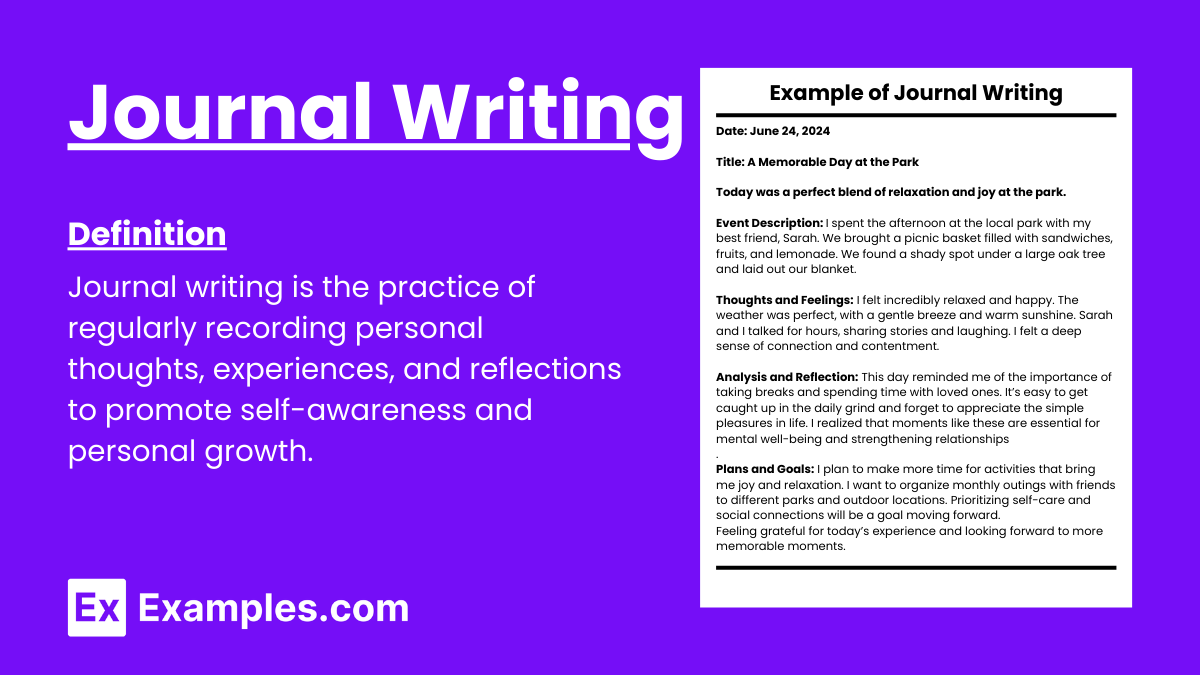
Let's break down the three essential components for your journal.
1. New Vocabulary
As you read, you'll encounter new words. Your journal is the perfect place to collect them, but do so strategically.
[PDF] Reading Logs: Integrating Extensive Reading with Writing Tasks
This section from an academic paper, "Reading Logs: Integrating Extensive Reading with Writing Tasks," provides excellent, practical advice for vocabulary acquisition.
Please read the section titled "Vocabulary strategies for the reading log." Focus on the key suggestions: You don't need to write down every new word. Try to guess the meaning from context first. Collect phrases and word combinations, not just single words.
A great practical tip comes from the video "My Reading Journal" by TheCoffeeMonsterzCO. The creator suggests using a different colored pen for vocabulary words to make them stand out on the page for later review. This simple technique can be very effective.
2. Observations (Your Analysis)
This is where you put your analytical skills to work. Your observations should be objective and based on the text itself. This is where you can practice the skills from our previous lessons. What to include:
- Scene Summaries: Briefly summarize scenes or chapters in a sentence or two, as you learned with the SWBST method. This creates a "story map" you can refer to later.
- Tone Analysis: What is the author's tone in a particular passage? What specific word choices or sentence structures create that tone?
- Questions: Write down questions that arise as you read. "Why did the character make that decision?" or "What is the significance of this object?"
- Character Tracking: Especially in fiction, it can be helpful to jot down brief notes about characters as they are introduced to keep track of who they are and their relationships.
3. Impressions (Your Personal Reaction)
This section is subjective. It's about your thoughts, feelings, and connections to the story.
To get started, you can use the "dump" method described in the article "How To Keep a Reading Journal."
How To Keep a Reading Journal to Improve Your Writing
This article provides a simple but effective technique for capturing your initial thoughts after finishing a reading session.
Read the section titled "Step 1: The Dump." The core idea is to create two simple lists: "What worked for me" and "What didn't." This helps organize your immediate reactions.
Your impressions are also where you can connect the reading to your own goals. You might ask yourself:
- How did the author achieve that suspenseful effect?
- I found this character's dialogue very convincing. How was it written?
- This description of the setting created a powerful mood. What specific details were used?
A Three-Step Method for Deep Reading
Now that you know what to write, let's establish a process for how to write it. This three-step method, adapted from the "Forget Your Reading Journal" video, is a powerful way to engage deeply with any passage that strikes you.
Forget Your Reading Journal, Do This Instead
Let's return to the video from Rachelle in theory. This section is the heart of the lesson, presenting a clear, actionable method for analysis.
Watch the segment from this part of the video. The speaker demonstrates a three-part process. Pay close attention to each step: Copy the exact quote: This forces you to slow down and absorb the author's language and sentence structure. Paraphrase in your own words: This is a crucial test of comprehension. Add your own thoughts: This is where you critique, question, and connect with the text.
This Copy-Paraphrase-Analyze method is an excellent routine to use in your journal. It combines observation (the quote), comprehension (the paraphrase), and impression (your analysis) into one fluid process.
Putting It All Together: A Practical Look
So what does this look like in practice? Let's watch a short clip from a reader who maintains a very functional and personal reading journal.
My Reading Journal 📖 Minimalistic (ish)
This video, "My Reading Journal 📖 Minimalistic (ish)," shows what a lived-in, practical journal can look like.
Watch a few key clips to see how these ideas are applied: The purpose of the journal: Notice how she describes it as a place to "archive things that I want to remember" and how the act of writing helps her retain information. Journaling for fiction: Here she explains her process for noting quotes, thoughts, and, importantly, tracking characters to avoid getting lost. Highlighting vocabulary: This shows the simple but effective tip of using a red pen to make new words stand out.
As you can see, a reading journal is a flexible tool. You can use a physical notebook, a simple text file, or an app like OneNote or Day One. The important thing is to find a system that you will use consistently to actively engage with what you read.
Conclusion
Today you've learned how to turn reading from a passive pastime into an active practice essential for your development as a writer. Your reading journal is more than a record; it's a training ground.
Here are the key takeaways:
- Active vs. Passive: The goal of a reading journal is to foster active, critical reading, which is essential for deep learning and retention.
- Three Core Components: An effective journal entry records new vocabulary, analytical observations (like summaries and tone analysis), and personal impressions (your feelings and connections).
- A Powerful Method: The Copy-Paraphrase-Analyze technique is a structured way to dissect important passages and ensure you understand them on multiple levels.
- Flexibility is Key: Your journal should be a tool that works for you. Whether it's a fancy notebook or a simple digital file, consistency and active engagement are what matter most.
You've now completed the foundational module of this course! You have a set of tools for tackling new texts and a dedicated space to record your findings. In our next lesson, we will begin the second module, "The Building Blocks of Fiction," where you'll learn to identify and analyze the five core elements of any story: plot, character, setting, conflict, and theme. Your new reading journal will be the perfect place to apply these concepts as we begin to deconstruct the art of storytelling.