Hello! In our last lesson, we explored how the core elements of a story—plot, character, setting, conflict, and theme—are all interconnected, like parts of an intricate machine. We saw that a change in one element sends ripples throughout the entire narrative.
At the end of that lesson, I mentioned we would be moving on to plot structure. However, before we analyze the sequence of events in a story, it is vital to first understand the characters who drive those events forward. The heart of nearly every story is a central conflict, and that conflict is usually embodied by two key roles. Today, we will focus on these roles. Your learning outcome is to distinguish between the protagonist and the antagonist in a story. By the end of this lesson, you'll understand their functions and how their opposition creates the energy that powers a narrative.
The Main Players: Protagonist and Antagonist
At the most basic level, every story has a main character and a force that opposes them. These are the protagonist and the antagonist.
Let's look at a simple visual chart that defines these and other character types. Focus on the definitions for Protagonist and Antagonist.
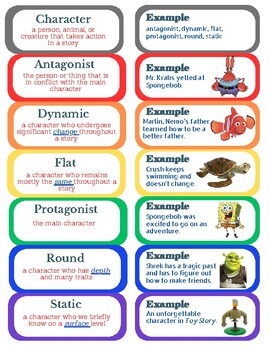
As the chart suggests, the protagonist is the main character, while the antagonist is the person or thing in conflict with them. Now, let's build on these simple definitions to gain a more sophisticated understanding, which is crucial for a writer.
Defining the Protagonist: More Than Just a "Hero"
The protagonist is the central figure of the story. It is their journey we follow, their choices that move the plot, and their perspective through which we often experience the story's world. However, a common mistake is to assume the protagonist must always be the "good guy" or the hero.
The following reading explains this distinction clearly.
Protagonist vs. Antagonist: What’s the Difference?
This article from Scribophile offers clear, foundational definitions that move beyond simple "good vs. bad" labels.
Please read the first section, What is a protagonist?. Pay close attention to the idea that a protagonist can be "morally grey or even unethical."
The key takeaway is that the protagonist is defined by their role as the central character, not by their moral qualities. This opens up a fascinating range of possibilities for storytelling. Writers can create many different kinds of protagonists, not just traditional heroes.
To explore this idea further, the following video breaks down several types of protagonists that you will encounter in fiction.
What is a Protagonist — A Breakdown of Different Types and Functions of the Main Character
This video from StudioBinder, "What is a Protagonist," explores the different functions and archetypes of the main character. It's a great resource for understanding character complexity.
Please watch the segment from 4:28 to 7:41. This clip explains several non-traditional protagonist types you will often see in modern fiction: Anti-heroes: Main characters who lack typical heroic qualities. Tragic heroes: Noble characters who are doomed by a personal fatal flaw. Passive protagonists: Central characters who don't actively drive the plot forward themselves. Then, watch the very short clip on Villain Protagonists from 7:41 to 7:54, where the "bad guy" is the main character.
Understanding these different types of protagonists will greatly expand your analytical skills as a reader and your creative toolkit as a future writer.
Defining the Antagonist: More Than Just a "Villain"
Just as the protagonist isn't always a hero, the antagonist isn't always a classic villain. The antagonist is simply the primary source of opposition or conflict for the protagonist.
Let's return to the Scribophile article to get a clear definition.
Protagonist vs. Antagonist: What’s the Difference?
This reading will help you understand the antagonist's role in creating conflict.
Now, please read the section What is an antagonist?. Notice that the antagonist's goals are in "direct conflict" with the protagonist's, but this doesn't automatically make them evil.
Furthermore, the antagonist doesn't even have to be a person. The opposing force can be something much larger and more abstract.
This short video from Lincoln Learning Solutions, "Protagonist and Antagonist," offers a simple and clear explanation of the two roles.
Watch this brief clip from 0:58 to 1:13, which explains how an antagonist can be a non-human force.
This is a crucial concept. In a story about a sailor lost at sea, the antagonist is the ocean itself. In a story about a character fighting against social injustice, the antagonist might be "society" or an oppressive system.
The Core Distinction: A Conflict of Goals
So, if it's not about good versus evil, what is the fundamental difference between a protagonist and an antagonist? It is a conflict of goals.
The protagonist works towards the story's central goal, and the antagonist works against it. This opposition is what creates the central conflict and drives the plot forward.
This Venn diagram provides an excellent visual summary of their relationship.
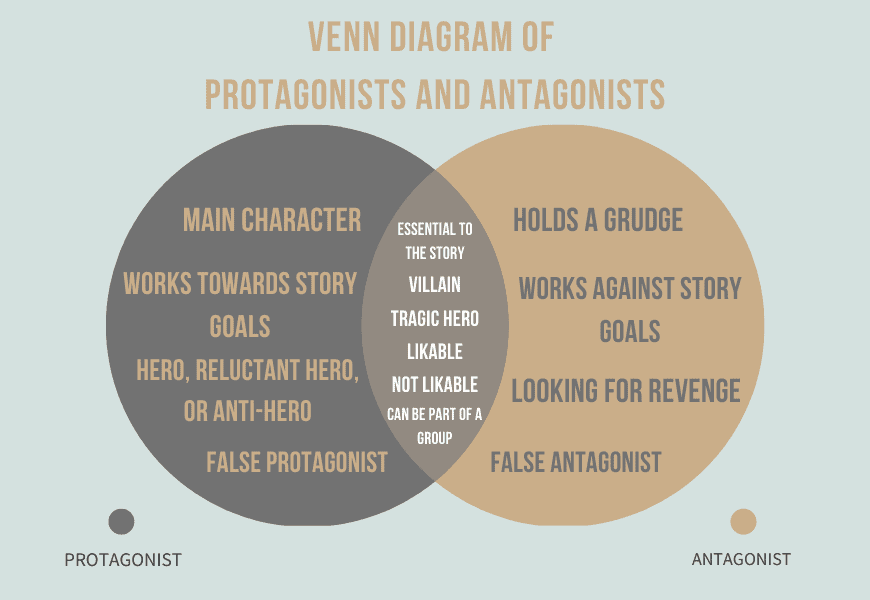
The diagram perfectly illustrates that while the protagonist "works towards story goals" and the antagonist "works against story goals," both are "essential to the story." The overlapping section also shows that either character can be likable or not likable, challenging the simple hero/villain stereotype.
Practice: Identifying Roles in Action
Now let's put this knowledge into practice. The best way to understand these roles is to see them in action and try to identify them yourself. The video we previewed earlier provides clear examples from well-known fairy tales and includes a short practice exercise.
This video provides simple definitions and clear examples to help you practice identifying protagonists and antagonists.
Please watch the video with a focus on these parts: First, watch the initial definitions from the beginning to 0:57 to refresh the main concepts. Then, watch the segment with examples from fairy tales like Cinderella and The Wizard of Oz from 1:22 to 2:30. Finally, listen carefully to the short passage about the spelling bee from 2:34 to 3:53. Before the narrator gives the answer, pause the video and try to decide for yourself: who is the protagonist, and who is the antagonist? Why?
For some more classic examples from literature, the Scribophile article we looked at earlier offers excellent analyses of famous pairs.
Protagonist vs. Antagonist: What’s the Difference?
This final reading provides classic examples that illustrate the complex relationship between protagonist and antagonist.
Please read the section titled Examples of protagonists and antagonists. Notice how the author describes each pair (like Sherlock Holmes and Professor Moriarty) as "inversions" or opposites of each other.
Conclusion
Today we've moved beyond simple definitions to a more nuanced understanding of the two most important roles in a story. You learned that the distinction between protagonist and antagonist is not about good versus evil, but about a fundamental conflict of goals.
Here are the key takeaways:
- The protagonist is the central character whose journey the story follows. They are not always a traditional "hero" and can be complex, flawed, or even villainous.
- The antagonist is the primary force that opposes the protagonist and creates conflict. This force is not always a "villain" and can be a person, a group, an idea, or even a force of nature.
- The essential difference lies in their opposing goals. The tension between what the protagonist wants and what the antagonist wants is what drives the plot.
In our next lesson, we will continue exploring the core elements of fiction by learning to distinguish between a story's theme and its topic. This will help you identify the deeper message or idea that a story communicates through its characters and their conflicts.