Hello! Welcome to the next lesson in your sound design journey.
In our last session, you learned how to mix multiple dialogue tracks to create a clean, consistent, and intelligible foundation for your scenes. With your dialogue now sounding professional, the characters are ready to exist in a believable world. Our job today is to build that world for them using sound.
This lesson addresses the learning outcome: Layer ambient sounds to create believable environments. We'll move beyond dialogue and explore how to build the sonic texture of a location—the subtle (and not-so-subtle) sounds that make a space feel alive and immersive. This is a fundamental skill in both film and video game sound design, turning a flat audio mix into a three-dimensional experience.
1. What is Ambient Sound?
Before we start building, let's define our primary material: ambient sound. You might also hear it called "atmosphere," "atmos," or "backgrounds." It's the collection of sounds that are natural to a location, creating the overall sonic character of the space.
How to Master Ambient Sound in Film: Pro Audio Guide
The article 'How to Master Ambient Sound in Film' provides a clear definition of ambient sound and explains its crucial role in filmmaking.
Please read the first three subsections: 'What is Ambient Sound in Film: Defining the Invisible Layer,' 'Ambient sound definition - beyond background noise,' and 'The difference between ambient sound and sound effects.' Focus on how ambient sound is described as the 'base layer of sound design' and how it differs from a specific sound effect.
As you just read, the key distinction is:
- Ambient Sound: Creates the general atmosphere of a location. It's the wind in the trees, the distant city traffic, the hum of fluorescent lights in an office. It exists whether or not its source is on screen.
- Sound Effects (SFX): Tied to specific, visible on-screen actions. A door slamming, a phone ringing, a character's footsteps.
Think of it like painting. The ambient sound is the base coat of paint you apply to the entire canvas, setting the scene's overall tone and location. The sound effects are the specific details you paint on top.
2. The First Step: Active Listening
Great sound design doesn't start with dragging files into your timeline. It starts with imagination and observation. Before you can build a sonic environment, you must first deconstruct it in your mind.
How To Create Detailed Ambiance Beds In Games & Films
The creator of 'How To Create Detailed Ambiance Beds' demonstrates this beautifully. Although he's working on a scene from the video game The Witcher 3, the thought process is universal for film and video.
Watch the section from 02:24 to 03:18. Pay attention to the series of questions he asks himself while observing the scene. This is the mental checklist you should use when analyzing your own scenes.
When you look at a scene, ask yourself these kinds of questions:
- Where are we? (A forest, a city apartment, a spaceship bridge?)
- What time of day is it? (Dawn, midday, late night?)
- What's the weather like? (Sunny and calm, windy, raining?)
- What signs of life are there? (Birds, insects, distant people, animals?)
- What man-made sounds might exist? (Distant traffic, air conditioning, machinery?)
Test your understanding!
Imagine you need to create the soundscape for a scene set in a small, cozy coffee shop on a rainy Tuesday morning. List at least five different sounds you would expect to hear to make this environment believable.
Show answer
Your list could include many things, but here are some strong examples:
- Broad Ambiance: The gentle, steady sound of rain outside.
- Room Tone: The low hum of the espresso machine and refrigerators.
- Human Element: The quiet murmur of a few other patrons talking.
- Specific Sounds: The clinking of ceramic mugs and plates.
- Action-based Sounds: The hiss of the milk steamer, the sound of the cash register opening and closing.
3. The Layering Strategy: From Broad to Specific
Once you have your list of sounds, you can start building the soundscape layer by layer. A common and effective strategy is to work from the general to the specific.
Layer 1: The Foundation (The "Bed")
Start with the most general, constant sounds of the environment. This is often called the "ambience bed" or "atmosphere track." It's a long audio clip that runs underneath the entire scene, establishing the fundamental character of the space.
How To Create Detailed Ambiance Beds In Games & Films
Let's return to the Aftertouch Audio video. Here, the creator lays down his foundational tracks to establish the world.
Watch from 03:18 to 04:25. Notice how he starts with broad sounds like 'wind,' 'distant insects,' and 'soft birds' to fill out the sonic space before adding any details.
Layer 2: The Details (The "Specifics")
With the foundation in place, you can add secondary elements. These are more distinct, often intermittent sounds that add realism, depth, and life to the scene. These sounds are what make an environment feel truly specific and unique.
How To Create Detailed Ambiance Beds In Games & Films
Now, watch as the same creator adds the specific details on top of his foundation.
Watch from 04:25 to 06:45. See how he adds sounds tied to objects in the scene (the anvil, the trees) and subtle wildlife sounds (a single crow, a grasshopper) to make the world feel rich and alive. Notice his comment about the grasshopper: 'super subtle... you want to know it's there but not really hear it.' This is the art of layering.
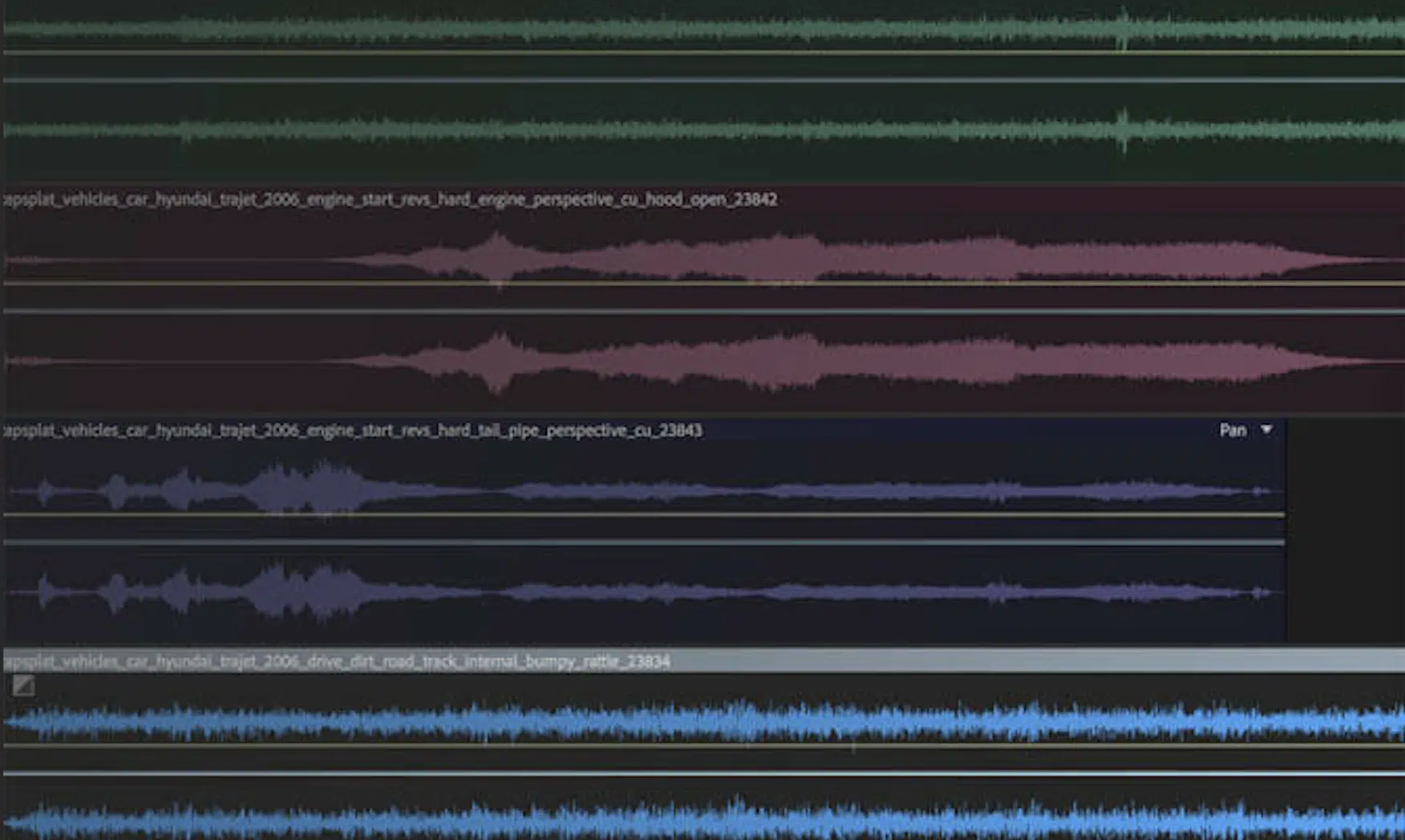
When you place these different audio clips in your editing software, like CapCut or Shotcut, your timeline will start to look like a stack of waveforms, with each track representing a different sonic layer.
4. A Simple Framework: Low, Mid, and High
The idea of "foundation" and "details" is a great start, but here's an even more practical framework you can use when selecting and layering your sounds: think in terms of frequency. A rich, full soundscape has elements across the entire frequency spectrum—low, midrange, and high.
Creating Soundscapes: The Complete Beginner's Guide
The article 'Creating Soundscapes: The Complete Beginner's Guide' offers a fantastic, simple exercise for this.
Read the subsection titled 'Stacking Layers.' It proposes starting with just three elements: one low, one midrange, and one high. Pay close attention to the example given for a natural soundscape of a beach.
Let's apply this framework to the coffee shop example from earlier:
- Low: The deep, constant rumble of the refrigerator and the low-frequency components of the rain.
- Mid: The murmur of conversations, the general clatter of the shop, the main sound of the rain hitting the pavement.
- High: The clinking of spoons on ceramic, the high-pitched hiss of the milk steamer, the high-frequency sizzle of rain on the window.
By consciously choosing sounds that occupy different parts of the frequency spectrum, you can create a full, balanced environment without it sounding muddy or cluttered. You simply adjust the volume of each layer to achieve the right balance.
Conclusion
Today you've learned the theory and practice of building a sonic world from the ground up. You've moved beyond treating audio as a single track and have started thinking like a sound designer, using layers to create immersion and realism.
Key Takeaways:
- Ambient sound is the atmospheric foundation of a scene, distinct from specific, action-based sound effects.
- The design process starts with active listening—analyzing your scene and imagining what it should sound like.
- Effective soundscapes are built in layers, typically starting with a broad "bed" and adding specific details on top.
- A useful framework for layering is to ensure you have elements in the low, mid, and high-frequency ranges to create a full, balanced sonic environment.
Next Lesson Preview:
You now know how to layer sounds to create a believable environment. But where do you actually get these sounds? In our next lesson, we will cover just that. You'll learn how to source and organize sound effects from libraries and field recordings, giving you the raw materials you need to build any sonic world you can imagine.