Hello! In our last lesson, we built a strong theoretical foundation by identifying the characteristics of effective logos and exploring the seven main logo types. You learned that a great logo is simple, memorable, appropriate, and versatile.
Today, we transition from theory to practice. Our goal is to sketch multiple logo concepts based on a fictional brand brief. This is the crucial ideation stage where creativity flows freely, before you even open a design tool like Figma. You'll learn how to interpret a client's needs, brainstorm visual ideas, and get them down on paper quickly and effectively.
Why Sketch First?
Before a single pixel is placed in Figma, most professional logo designs begin with a simple pencil and paper. It might seem tempting to jump straight to the computer, but skipping the sketching phase is a common mistake for beginners.
Sketching is about exploration and quantity. It allows you to generate a wide range of ideas rapidly, without getting bogged down by software tools, alignment, or colors. It’s a low-pressure way to get all your ideas—both good and bad—out of your head and onto paper.
To understand the distinct roles of sketching and digital design, let's turn to a helpful guide.
How to Get Better at Sketching Logo Concepts
The article 'How to Get Better at Sketching Logo Concepts' from DesignGuide clearly explains why sketching is so important and distinguishes it from the digital design process. It also addresses a very common concern.
Please read the first three sections: 'Why is Sketching Essential for Logo Designers?', 'Sketching vs Digitising', and 'Can't draw?'. Focus on the idea that sketching is for exploration, not for creating a perfect drawing.
As the article emphasizes, sketching is not about artistic ability. It's about visual brainstorming. The goal is to capture the essence of an idea with simple shapes and lines. If you can communicate the concept to yourself, the sketch is a success.
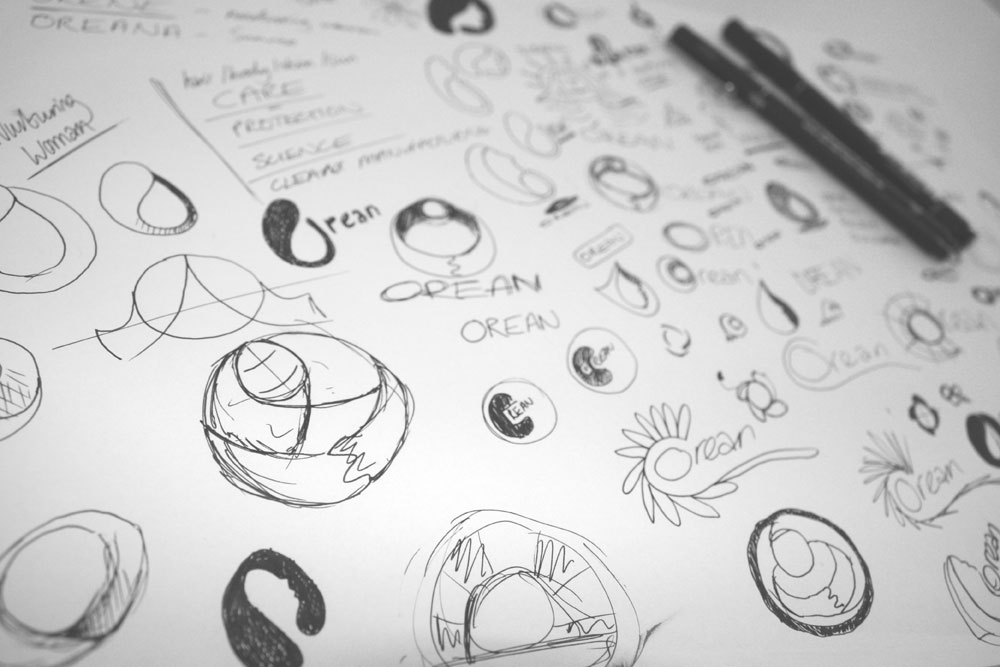
The Sketching Process: From Brief to Concept
A structured process helps turn a client's request into a set of strong visual concepts. We can break this down into three main steps:
- Deconstruct the Brief
- Brainstorm & Mind Map
- Sketch, Sketch, Sketch!
Let's look at each step.
1. Deconstruct the Brand Brief
Every design project starts with a brand brief. This document is your roadmap, outlining the client's business, goals, target audience, and design preferences. A thorough brief is the most critical tool for ensuring your design is appropriate and effective.
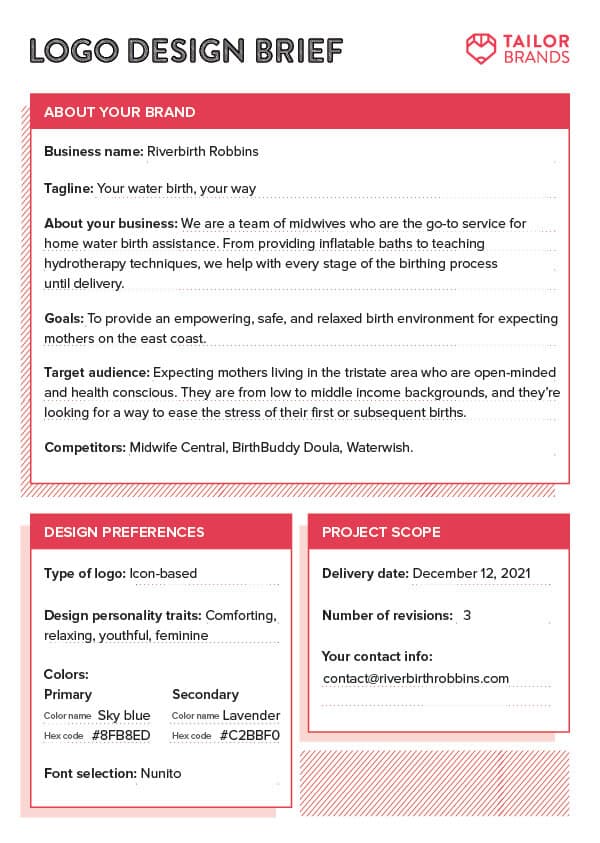
When you receive a brief, your first job is to read it carefully and highlight the most important keywords and concepts. Look for:
- Who they are: What does the company do?
- Who they serve: Who is the target audience?
- Their personality: What adjectives describe the brand (e.g., playful, serious, modern, traditional)?
- The core message: What is the main idea or feeling they want to convey?
2. Brainstorm with Mind Mapping
Once you've absorbed the brief, the next step is to brainstorm connections and visual ideas. Mind mapping is a fantastic technique for this. Start with the company name or a core concept in the center of a page, and branch out with related words, ideas, and symbols.
This process helps you move from literal interpretations to more abstract and creative concepts.
Use This Method for Better Logo Design Ideas 🚀
Let's watch designer Will Paterson use the mind mapping technique for a fictional brand. This is an excellent demonstration of how to generate a rich pool of ideas before you start drawing.
Watch the video from 00:44 to 02:31. Pay attention to how he connects different words and concepts, moving from the brand name ('Greensleeves') to related ideas ('frame', 'square', 'ornate', 'minimal').
This brainstorming step is also highlighted by Figma's own design resources as a foundational part of the logo design process.
How To Design a Logo in 5 Simple Steps
This article from Figma, 'How To Design a Logo in 5 Simple Steps,' reinforces the importance of brainstorming. It's a quick read that aligns with the professional workflow we are learning.
Read 'Step 1: Brainstorm and find inspiration'. Notice how it mentions understanding brand identity and using techniques like mind mapping.
3. Rapid Sketching
Now, with your mind map full of ideas, it's time to translate those words and concepts into visuals. The key here is speed and volume. Don't spend more than a minute or two on any single sketch.
The goal is to explore as many different directions as possible. Combine ideas from your mind map. Try a wordmark. Try an abstract symbol. What if you combine the first letter of the name with a relevant shape? Don't judge the ideas; just get them on paper.
How To Sketch Logo Design Ideas (Professionally) 🚀
Let's see this rapid sketching process in action. In this video, Will Paterson takes a brief and immediately starts generating a variety of rough ideas.
Watch from 01:38 to 04:19. Observe how he starts with a very literal idea ('splat') and quickly iterates, discovering a more abstract 'S' shape in the process. He isn't worried about making the sketches look good; he's focused on exploring the idea.
This next video shows the same process but emphasizes combining different brainstormed ideas into visual forms.
Use This Method for Better Logo Design Ideas 🚀
Continuing with the 'Greensleeves' project, this segment demonstrates how the mind map leads directly to a variety of sketches, from literal frames to more abstract concepts.
Watch from 04:42 to 08:49. Notice the sheer quantity of different ideas he generates in just a few minutes. He explicitly states that the ideas are 'horrible' at this stage, which is perfectly fine. The goal is to find a few that have potential.
Test your understanding!
The DesignGuide article mentioned a practical exercise to help overcome perfectionism. What was it, and what is its main purpose?
Show answer
The exercise is the "20-in-20 Exercise": sketching 20 unique concepts in 20 minutes (one minute per concept). Its purpose is to force you to be messy and quick, training your brain to prioritize getting ideas down over making them perfect. It's all about building the habit of rapid ideation.
Your Turn: A Practical Sketching Exercise
Now it's time for you to apply this process. Here is a fictional brand brief for you to work with. Grab a pen or pencil and a few sheets of paper.
Fictional Brand Brief
- Company Name: Aura Coffee
- Tagline: "Your daily moment of calm."
- Business: A new, quiet coffee shop focused on providing a peaceful and relaxing environment. They use high-quality, ethically sourced beans.
- Target Audience: University students, remote workers, and young professionals (ages 20-35).
- Brand Personality: Calm, minimalist, modern, welcoming, premium but not pretentious.
- Core Message: We provide a space for focus and peace, powered by excellent coffee.
- Logo Preferences: The client is open to ideas but leans towards a combination mark (symbol + text) or an abstract mark. The logo must be simple enough to work well on coffee cups, napkins, and as a small social media profile picture.
Your Task (Approx. 25 minutes):
- Mind Map (5 mins): Start by creating a mind map based on the "Aura Coffee" brief. Write "Aura Coffee" in the center and branch out with keywords. Think about words related to aura (wave, glow, circle, energy), coffee (bean, cup, steam, drop), and calm (zen, peace, quiet, flow, leaf).
- Rapid Sketching (20 mins): Set a timer for 20 minutes. Fill at least one full page with as many different logo concepts as you can.
- Try combining symbols: a coffee bean inside a circle, a steam wave forming an 'A'.
- Try abstract shapes that feel calm and modern.
- Explore different ways to write "Aura Coffee" alongside your symbols.
- Don't erase! If you don't like a sketch, just move on to the next one.
Choosing the Best Concepts
After you've filled a page with sketches, take a short break. Looking at your work with fresh eyes is important. Now, the goal is to select 2-3 of the most promising concepts to potentially develop further.
How do you choose? Refer back to the principles from our last lesson and the brief.
How to Get Better at Sketching Logo Concepts
The DesignGuide article provides an excellent framework for selecting your best ideas. This structured approach helps you make strategic, rather than purely aesthetic, choices.
Read the section 'Choosing Potential Logo Concepts'. Pay close attention to the three guidelines for selection: 'Safe,' 'Clever & safe,' and 'Clever & left-field.'
Review your "Aura Coffee" sketches and circle the three you think are the strongest. Try to pick them using the suggested framework:
- A "safe" option: A solid, appropriate idea that clearly meets the brief.
- A "clever & safe" option: An idea that meets the brief but has a unique twist or clever concept.
- A "clever & left-field" option: Your most creative, out-of-the-box idea that still feels right for the brand.
Conclusion
Excellent work today! You've successfully navigated the first and most creative step in the logo design process. Moving from a written brief to a page full of visual ideas is a fundamental skill for any graphic designer.
Key Takeaways:
- Sketching is a crucial, low-pressure phase for generating a high volume of ideas quickly.
- A professional workflow involves analyzing a brand brief, brainstorming with techniques like mind mapping, and then performing rapid, non-judgmental sketching.
- Artistic drawing ability is not required; the goal of sketching is to communicate concepts.
- After sketching, concepts should be selected strategically based on the brief and design principles, not just personal preference.
In our next lesson, we'll bridge the gap between paper and screen. You will learn how to take one of your chosen sketch concepts and develop it into a vector logo in Figma using the shape and pen tools.