Hello! Welcome to the ninth and final module of your graphic design course: Building Your Professional Portfolio.
Over the past eight modules, you have built an impressive foundation. You've mastered the principles of design, learned your way around Figma, and created a wide range of projects, from logos and brand identities to social media campaigns and print materials. Now, it's time to take all that hard work and shape it into a powerful tool that will help you achieve your goal of finding work as a graphic designer.
This first lesson is arguably the most crucial step in the entire process. Before you design a single page of your portfolio, you must decide what goes into it. Today's learning outcome is to select and curate your best design projects for a portfolio. This isn't just about picking your favorites; it's a strategic process of telling a story about who you are as a designer and the kind of work you want to do.
1. Your Portfolio's Purpose: Quality Over Quantity
Think of your portfolio not as a scrapbook of everything you've ever made, but as your single most important marketing tool. Its job is to convince a potential client or employer to hire you in under a minute. Because attention spans are short, the golden rule is quality over quantity. A portfolio with a few outstanding, well-presented projects is far more effective than one cluttered with dozens of mediocre ones.
To understand the reasoning behind this principle, let's start with a short reading.
The Perfect Number of Projects For Your Design Portfolio ...
This article, 'The Perfect Number of Projects For Your Design Portfolio,' by Jon Sorrentino, provides a clear rationale for why being selective is so important and gives a 'magic number' to aim for.
Please read the introduction and the sections titled 'The Perfect Number of Projects for Your Portfolio Website,' 'Why Too Many Projects Can Hurt You,' and 'Why Less Projects Is More.' Focus on why a limited, curated selection is more powerful.
As the article highlights, a curated selection of 3 to 6 projects is the sweet spot. This allows you to:
- Showcase your best work without diluting its impact.
- Make it easy for viewers to remember your skills.
- Clearly communicate the type of design work you specialize in.
This principle is a consensus among professional designers. Let's hear it from another perspective.
Portfolio Secrets Every Designer Needs to Know!
In this video, 'Portfolio Secrets Every Designer Needs to Know!', designer Abi Connick shares her professional experience on how to select projects.
Watch the section from 01:11 to 02:26. Pay attention to her advice on the number of projects and her two approaches for showcasing variety to avoid appearing 'one-dimensional'.
2. The Curation Framework: How to Choose Your Projects
Now that you know why curation is essential, let's walk through how to do it. This is a strategic process that involves self-reflection and careful decision-making.
Step 1: Define the Work You Want to Attract
Your portfolio should be a magnet for the kind of work you want to do in the future. If you loved creating brand identities but were less enthusiastic about making social media graphics, your portfolio should reflect that. Showing work you don't enjoy can lead to getting hired for more of that same work.
This video offers excellent advice on this crucial first step.
How to design a creative portfolio | resources, personal branding, tips & tricks
The video 'How to design a creative portfolio' by edgykatrina provides a very practical take on aligning your portfolio with your career goals.
Watch the first two minutes of the video (00:08 - 01:55). The key takeaway is her advice: 'make the work that you want' and 'do not display work that you actually have no interest in doing'.
Before moving on, take a moment to reflect:
- Which projects from this course did you enjoy the most? Was it the logo design, the digital poster, the social media carousel, or something else?
- What kind of design tasks felt most creative and fulfilling to you?
Your answers will serve as the primary filter for your project selection.
Step 2: Review and Select Your Top 4-6 Projects
With your ideal work in mind, it's time to review everything you've created. Remember, you're looking for projects that are not only high-quality but also aligned with your goals.
Projects you have completed in this course include:
- A digital poster
- A set of simple icons
- A custom vector illustration
- A complete logo and brand identity concept
- A business card
- Various social media graphics (Instagram, LinkedIn, YouTube)
- A social media carousel
- A digital flyer and a two-sided invitation
- A presentation template
- A tri-fold brochure panel
Your Curation Task:
Go through this list and evaluate each project you completed. For each one, ask yourself:
- Quality: Is this one of my strongest pieces? Does it demonstrate a good understanding of design principles?
- Alignment: Is this the kind of work I want to be hired for?
- Variety: Does this project show a different skill or style compared to my other top choices? (For example, you might choose one project for branding, one for illustration, and one for layout).
- Story: Can I talk about the process behind this project? (We'll cover this in the next lesson, but it's good to keep in mind).
Based on this evaluation, select your top 4 to 6 projects.
Test your understanding!
You have two projects you're proud of: a logo for a fictional tech company and a logo for a fictional coffee shop. You only have room for one more branding project in your portfolio. Which one is the better choice to include?
Show answer
There's no single right answer, as it depends on your goals!
- If you want to specialize in branding for modern, corporate clients, the tech company logo is the better choice.
- If you want to work with small, local businesses in the hospitality sector, the coffee shop logo is more aligned.
- If your goal is simply to show range, you might pick the one whose style is most different from your other portfolio pieces.
The key is that the choice should be intentional and strategic.
Step 3: Embrace Conceptual Work
As a beginner, it's natural that most or all of your projects are "conceptual" (i.e., not for real clients). This is perfectly acceptable and even expected. Recruiters and clients care about your skills and creative thinking, not whether you were paid for the work. These projects demonstrate your passion and your capabilities.
How to Curate a Strong Portfolio (Even When You Don't Have ...
The article 'How to Curate a Strong Portfolio' reinforces this point and gives you permission to be creative with your project selection.
Read the section titled 'Create Hypothetical or Conceptual Projects.' This should give you confidence in using the work you've created in this course.
If you feel there's a gap in your selected projects, don't be afraid to create a new "passion project" specifically for your portfolio that showcases a skill or style you want to be known for.
3. Visualizing the End Goal
Once you've curated your projects, you'll organize them into a professional presentation—your portfolio. This could be a PDF document, a personal website, or a profile on a platform like Behance. We will build this in Figma later in the module. For now, let's look at a visual example of how curated projects come together in a final portfolio layout.
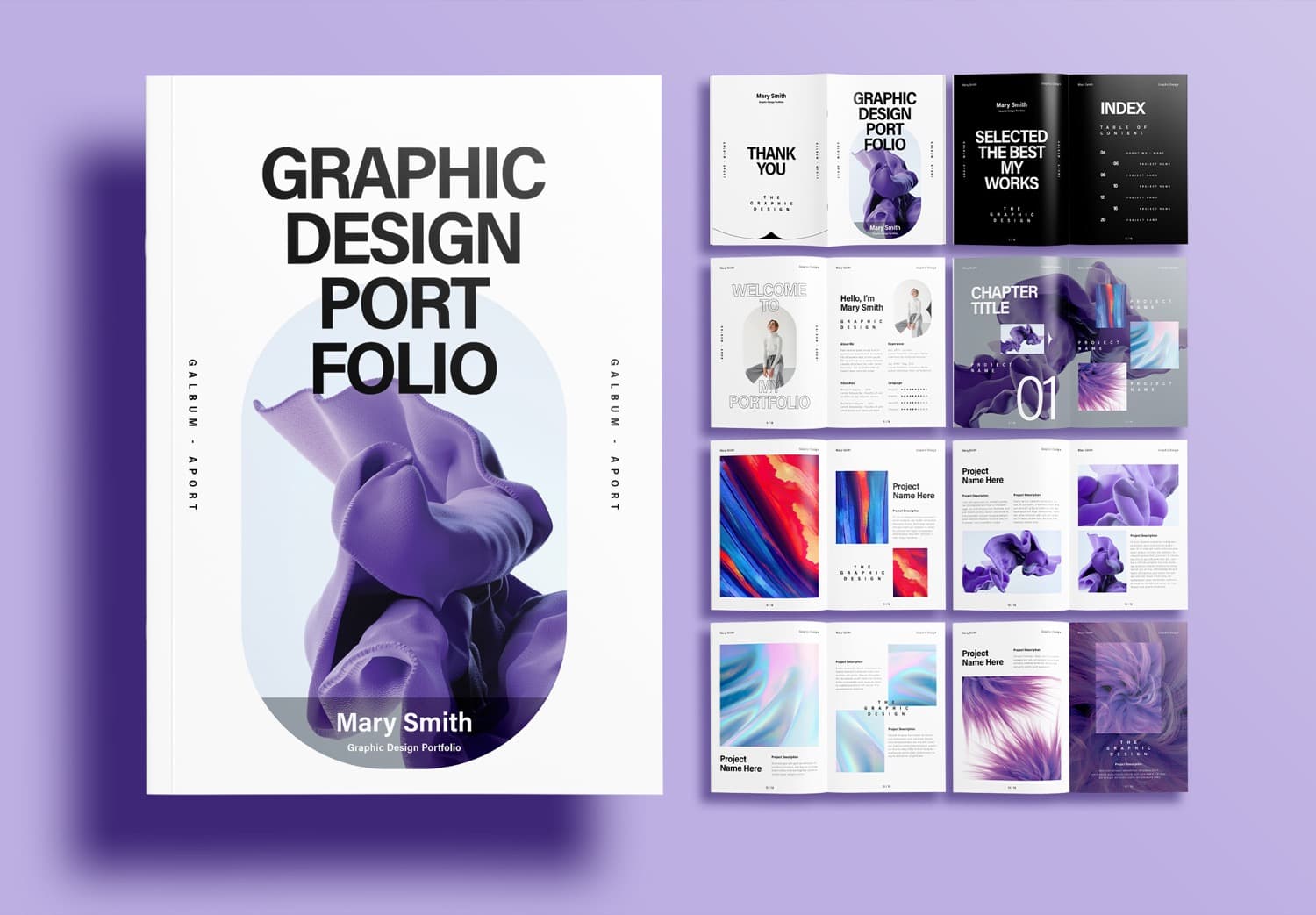
Notice how it's clean, organized, and gives each project space to be the hero. This is what we are working towards.
Conclusion
You've taken the first and most important step in building your professional portfolio. The act of curating your work forces you to think like a professional designer—strategically and with a clear goal in mind.
Key Takeaways:
- Your portfolio is a marketing tool designed to get you the work you want.
- Quality over quantity is the most important rule. Aim for 4-6 of your best projects.
- Your selection should be guided by the type of design work you want to do in the future.
- Showcasing variety in your skills or the industries you've designed for makes you a more versatile candidate.
- Conceptual projects from this course are valuable and should be featured with confidence.
Up Next:
Now that you have selected which projects to include, the next step is to learn how to present them effectively. In our next lesson, we will focus on how to outline the structure of a design case study, using the "Problem, Process, Solution" framework to tell a compelling story for each project.