Welcome to your first lesson in the "Basic Coding" course! It's great to have you on board. As you begin your journey as a computer science student, the first and most important step is to build a solid foundation. This lesson is designed to do just that. We'll start by exploring the fundamental concepts of programming: what it is, what a programming language does, and why we've chosen Python as our starting point. By the end of this lesson, you will have a clear understanding of these core ideas, setting the stage for the practical coding you'll be doing soon.
Let's begin by demystifying what "programming" really means.
What is Programming?
At its heart, programming is the process of giving instructions to a computer. However, computers are not intelligent in the way humans are. They cannot infer meaning or handle ambiguity. They require instructions that are incredibly precise, logical, and broken down into simple, sequential steps.
Imagine trying to explain how to make a sandwich to a robot that has no prior knowledge of what bread, peanut butter, or a knife is. You couldn't just say, "Make a sandwich." You'd have to specify every single action: "Pick up the bag of bread. Untwist the tie. Open the bag. Take out two slices. Place them on the counter..." and so on. This is precisely the mindset required for programming.
To get a better feel for this, watch the first couple of minutes of the following video, which uses this exact analogy.
What Is Programming and How Does It Work?
Watch this segment from the video "What Is Programming and How Does It Work?" from the History of Simple Things channel. It offers a clear, intuitive analogy for what programming entails.
Focus on the explanation from the beginning up to the point where the narrator discusses different languages, about the sandwich analogy.
This idea of breaking down a large task into smaller, manageable steps is a central theme in computer science.

To formalize this a bit, let's turn to a short reading that reinforces these concepts.
A Complete Beginner's Guide to Programming · We Learn Code
This guide from We Learn Code provides a concise introduction to the core ideas of programming.
Please read the first section, "What is programming?". It expands on the idea that programming is about breaking down problems into steps that a computer can execute.
Now that we have a grasp of what programming is, the next logical question is: how do we actually give these instructions to a computer?
What are Programming Languages?
As we've established, computers don't understand human languages like English. At their most fundamental level, they operate on binary code—a system of millions of tiny electronic switches that are either on (1) or off (0). Writing instructions directly in binary would be extraordinarily tedious and complex.
This is where programming languages come in. A programming language acts as an intermediary, a structured form of communication that allows us to write commands in a way that is readable for humans but can be translated into the binary code that a computer's processor can execute.
Think of it like using a translator to communicate with someone who speaks a different language. You speak in a language you know, the translator converts it, and the other person understands. Similarly, we write code in a programming language, and a special program called a compiler or an interpreter translates it into machine code for the computer.
Programming languages can be broadly categorized by their level of abstraction from the hardware.
Introduction to Programming Languages - GeeksforGeeks
This article from GeeksforGeeks provides a good overview of the different types of programming languages.
Please read the section Types of Programming Languages. Pay attention to the distinction between high-level, low-level, and assembly languages.
As you read, you'll see that Python is a high-level language. This means it is more "abstracted" from the computer's hardware. It uses words and syntax that are closer to human language, which makes it easier to learn and work with. Low-level languages, in contrast, provide more direct control over the hardware but are much more difficult to write.
For your journey as a computer science student, you will eventually encounter concepts from all levels, but starting with a high-level language is the most effective way to learn the fundamentals of programming logic without getting bogged down by hardware complexities.
Why Python?
With thousands of programming languages in existence, why have we selected Python for this course? The choice of a first language is significant, and Python is consistently recommended for beginners for several compelling reasons.
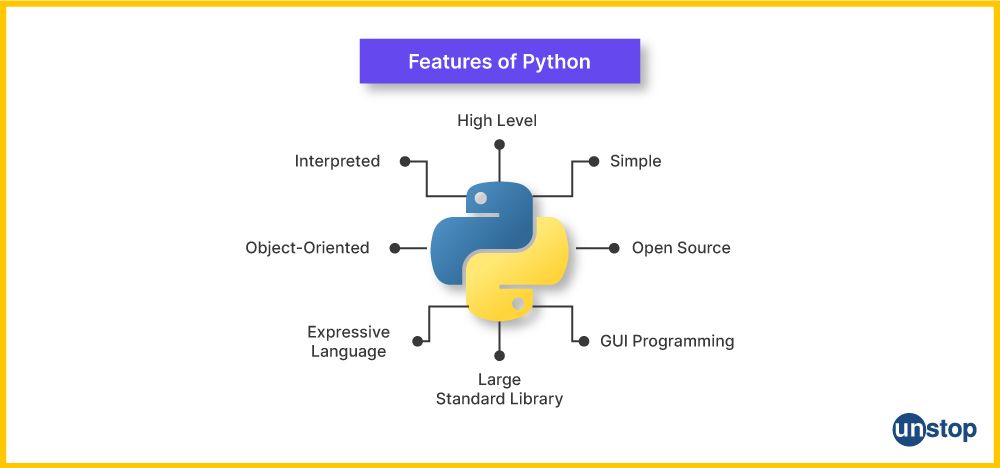
The most important reasons for a beginner are its simplicity and readability. Python's syntax is designed to be clean and uncluttered, often resembling plain English. This allows you to focus on learning programming concepts like loops, variables, and logic, rather than wrestling with complex grammatical rules.
Let's watch a video that summarizes why Python is an excellent choice for someone just starting out.
Why You Should Learn Python in 2023 (as your first programming language)
This video, "Why You Should Learn Python in 2023," clearly outlines the practical benefits of starting with Python.
Please watch two segments: The overview of what Python is and where it's used, from major tech companies to scientific research. The section explaining why you should start with Python, which highlights its easy learning curve and usefulness.
As the video points out, Python's value goes far beyond being just a "beginner's language." It is a powerful, general-purpose language used by professionals in a vast array of fields:
- Web Development: For building the server-side logic of websites (the "back-end").
- Data Science and Machine Learning: It is the dominant language in these fields, thanks to its powerful libraries for data analysis, visualization, and artificial intelligence.
- Automation: For writing scripts to automate repetitive tasks.
- Scientific Computing: Used by organizations like NASA for data processing.
By learning Python, you are not just learning to code; you are acquiring a skill that is highly in demand and applicable across many of the most exciting areas in technology today. This ensures that the foundation you build here will serve you well throughout your computer science degree and into your future career.
Conclusion
In this lesson, we've laid the conceptual groundwork for your programming journey. You've learned that:
- Programming is the act of providing precise, step-by-step instructions to a computer to solve a problem.
- Programming languages are the tools we use to write these instructions in a human-readable format, which are then translated into machine-understandable binary code.
- Python is our chosen language because its simple, clean syntax makes it easy for beginners to learn, yet it is a powerful and versatile tool used by professionals in many cutting-edge fields.
You now have the "why." In our next lesson, we will move on to the "how." We'll get our hands dirty and take the first practical step: installing Python and a code editor on your computer, so you can write and run your very first program.