Introduction
In our last lesson, we explored the foundational power of rhythm, examining how everything from a simple, steady pulse to the complex interplay of polyrhythms can entrain our brainwaves and guide our mental state. You saw how the very mathematics of rhythm translates into the emotional language of harmony, with simple ratios feeling stable and complex ones creating tension.
Today, we begin the great synthesis of this course. We will build upon that rhythmic foundation and draw from all the genres and concepts we've explored—from noise colors to Baroque counterpoint—to construct your first master framework. The objective of this lesson is to synthesize the key musical and sonic characteristics that promote focused attention. This "curator's rulebook for focus" will serve as a practical guide for the final curation project and beyond.
Deconstructing the "Focus Vibe": The Case of Lo-Fi
To begin our synthesis, let's start with a genre that has become almost synonymous with modern study and work sessions: lo-fi hip hop. By breaking down its components, we can identify several core principles that apply broadly across all effective focus music.
Let's watch a couple of short videos that analyze why this genre works so well for concentration.
This video from Answer in Progress, "the science behind lofi music," breaks down the genre's key components and explains the mechanisms behind its effectiveness.
Please watch these two clips: First, watch the section from the structure of lo-fi. Note the three core parts: jazzy instrumentals, "boom bap" drum beats, and intentional environmental noise. Also, pay attention to the typical tempo and frequency range mentioned. Next, watch from how lo-fi helps. This part explains how those components work together to block distractions, act as a gentle stimulant, and create a calming, nostalgic environment.
Does Lofi Music Really Help You Study?
This next video, "Does Lofi Music Really Help You Study?" by Mike and Matty, offers a complementary perspective, emphasizing simplicity and mood.
Watch the segment from the breakdown of lo-fi. Focus on the concepts of: Simplicity and predictability: The goal is to forget the music is even there. "No salient events": The music avoids abrupt changes, catchy melodies, or lyrics that could grab your attention. The "vibe": Note how the hosts discuss the role of nostalgia and muted sounds in creating a positive mood, which in turn aids cognition.
These analyses of lo-fi provide the perfect starting point for our framework. They highlight four recurring themes that we can generalize into core principles for selecting any type of focus music.
The Four Pillars of Focus Music
Let's synthesize what we've learned from lo-fi, and from across our entire course, into a practical framework. Effective focus music generally relies on a balance of these four pillars.
1. The Rhythmic Foundation: A Steady, Unobtrusive Pulse
As we established in the last lesson, rhythm is the engine. For focus, we need an engine that runs smoothly and predictably, providing energy without demanding attention.
- Tempo: The ideal tempo for sustained attention is typically in the range of BPM. This range is energetic enough to prevent drowsiness but slow enough to avoid being agitating. It aligns with the brain's alpha-wave rhythm (8–12 Hz), which supports a state of relaxed alertness. Contrast this with the higher tempos of genres like house or drum & bass, which are designed for physical energy, not mental concentration.
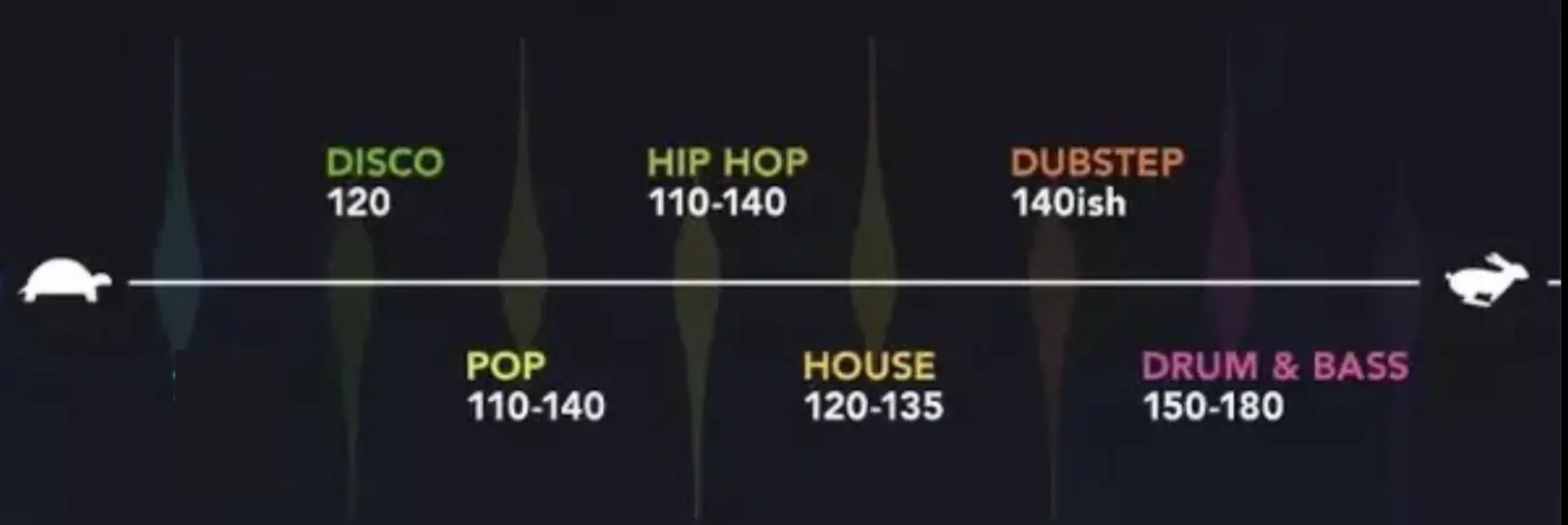
- Predictability and Simplicity: The rhythm must be predictable. This is why lo-fi's simple, looped "boom bap" beats, Baroque music's steady continuo, or the gentle, repetitive patterns in some ambient tracks are so effective. There are "no salient events"—no sudden drum fills or surprising syncopations to pull you out of a flow state. The brain quickly learns the pattern and moves it to the background.
2. The Harmonic & Textural Environment: Low Cognitive Load
If rhythm is the engine, harmony and texture are the road. For focus, we need a smooth, straight road with no distracting billboards.
- Absence of Lyrics: This is the most crucial rule. As you're a social researcher who does a lot of writing, this is paramount. Your brain's language-processing centers cannot easily focus on your own thoughts while simultaneously processing someone else's. Music with lyrics creates cognitive interference.
- Harmonic Repetition: Focus music often uses simple, looping chord progressions (like the classic ii-V-I patterns common in jazz and adopted by lo-fi) or a stable, unchanging harmonic center (like the tanpura drone in a raga). This predictability minimizes the cognitive resources needed to process the music.
- Textural Sparsity: A dense, complex texture with many competing instrumental layers is distracting. Effective focus music tends to be texturally sparse. Think of the clean, interwoven lines of a Bach fugue, the simple "bass-chords-melody" structure of lo-fi, or the vast, open spaces in the music of the guqin.
3. The Sonic Mask: An Immersive, Protective Space
This pillar concerns the music's role in managing your external auditory environment and its own sonic character.
- Masking Distractions: One of the primary functions of focus music is to act as an "aural cocoon" that masks distracting environmental noises. This is the same principle behind using white, pink, or brown noise for concentration, which we explored in our very first module.

- Sonic Imperfections and Ambience: Paradoxically, sounds that might be considered "imperfections" in other contexts—like vinyl crackle, tape hiss, or the sound of rain—are hallmarks of focus genres like lo-fi. These elements act as a "sonic blanket," smoothing over the music's edges and helping it blend into the background. This makes the music feel less like a recording and more like a part of your physical environment, enhancing immersion.
4. The Psychological Trigger: Mood and Motivation
Finally, focus music is not just about blocking out the bad, but also about inviting the good. It should put you in a mental state conducive to productivity.
Music for Focus: Your Secret Weapon for Peak Productivity
This article from FreeThinkingGenius provides an excellent overview of the science and strategy behind using music for focus. It will help us formalize the psychological aspect of our framework.
Please read the following sections: First, read the section on music and flow. This explains the link between music, dopamine, and the effortless productivity of a flow state. Next, read the section titled "The Psychology of Music as a Mental Switch". This introduces the powerful concept of using a playlist as a conditioned trigger for focus. Finally, review the section that begins "Music for Different Types of Professional Work". This provides practical examples of matching music to specific cognitive demands, distinguishing between analytical and creative tasks.
As the article highlights, music can improve your mood and increase motivation through dopamine release. The nostalgic, calming "vibe" of lo-fi is a perfect example. Furthermore, by consistently using a particular playlist for work, you can create a routine association, turning the music into a powerful mental cue that signals to your brain: "it's time to focus."
A Synthesis Across Genres: Your Curator's Cheat Sheet
Now, let's apply these four pillars to the various genres we have studied, creating the "cheat sheet" you wanted for curating focus playlists. This table shows how different genres embody these principles in their own unique ways.
| Characteristic | Lo-Fi / Chillhop | Baroque / Classical | Ambient Electronic | Meditative Traditions (e.g., Raga, Guqin) |
|---|---|---|---|---|
| Tempo (BPM) | Ideal: 70-90 BPM | Steady, moderate (e.g., Andante) | Often pulseless or very slow (< 60 BPM) | Pulseless (Alap) or slow/moderate Tala |
| Rhythm | Simple, repetitive loops (boom-bap) | Regular, predictable pulse; clear contrapuntal lines | Minimal or no explicit rhythm; evolving textures | Drone-based; cyclical Tala in later sections |
| Harmony | Simple, repeating jazz chords (ii-V-I) | Functional, structured, predictable progressions | Drones, static harmony, evolving pads | Modal, based on the Raga's specific scale |
| Texture | Sparse; clear layers + ambient noise | Clear, contrapuntal; less dense than Romantic music | Immersive, enveloping, evolving soundscapes | Drone + solo instrument; extremely sparse |
| Key Feature | "Sonic blanket" of nostalgia & imperfection | Structural clarity and forward propulsion | Immersive, non-intrusive sound world | Deeply meditative, non-distracting stillness |
| Best For... | Creative work, writing, coding (less intrusive) | Analytical work, structured thinking (more driving) | Deep immersion, blocking out external world | Reflective focus, calm concentration |
Conclusion
Today we have synthesized a comprehensive framework for identifying and selecting music for focused attention. By filtering music through these four pillars, you can move beyond genre labels and evaluate any piece on its functional merits.
Key Takeaways:
- Rhythmic Foundation: Look for a steady, predictable pulse in the 60-90 BPM range that provides energy without being distracting.
- Low Cognitive Load: Prioritize instrumental music with simple, repetitive harmonic structures and a sparse, clear texture. No lyrics is the cardinal rule.
- Sonic Mask: The music should mask external distractions and use ambient textures (like rain or vinyl crackle) to blend into the background, creating an immersive space.
- Psychological Trigger: Choose music that fosters a positive, motivated mood. Use specific playlists consistently to create a powerful mental cue for entering a flow state.
This framework is your primary tool for the curation task ahead. Remember that different types of focus benefit from different types of music—the driving structure of Bach may be perfect for data analysis, while the gentle wash of ambient music might be better for creative brainstorming.
In our next lesson, we will adapt this process to build a new framework, this time for a different but related goal: relaxation. We will see how adjusting the parameters of these four pillars can shift the music's effect from energizing the mind to calming it.