In our last lesson, we explored the deep, resonant drone of the didgeridoo and how its low-frequency fundamental and rich overtones can induce profound states of relaxation. We learned that a single instrument could create a complex sound field of a steady drone layered with dynamic, shifting harmonics. Today, we turn from an external instrument to the most intimate one we have: the human voice.
This lesson delves into the world of overtone singing, a remarkable vocal technique where a single person can produce multiple distinct pitches simultaneously. We will focus primarily on the well-known traditions of Tuva and Mongolia to describe the unique sounds of the main styles and explore the qualities that make this music so powerful for meditative and trance-like experiences. By the end, you'll be able to identify these styles and understand their potential for your relaxation and focus playlists.
The Phenomenon of Overtone Singing
At its core, overtone singing is a feat of acoustic manipulation. As you know from your music theory background, any sung or played note (the fundamental) is accompanied by a series of quieter, higher-pitched notes called harmonics or overtones. Overtone singing is the art of selectively amplifying specific harmonics so that they become as audible as the fundamental, creating the illusion of two or more notes being sung at once.
To get a more formal definition, let's turn to a scholarly text on vocal techniques.
An Exploration of Extended Vocal Techniques and Their ...
This doctoral essay by Maria Alejandra Quintanilla provides a concise, academic definition of overtone singing and its cultural roots.
Please read the paragraph beginning "Rooted in ancient cultural traditions". Pay close attention to how voice researcher Wolfgang Saus defines the technique: filtering individual overtones from the voice's sound spectrum so they become audible as distinct tones. Note the mention of its use as a medium for communication with the natural and supernatural worlds, which hints at its trance-inducing potential.
This ability to produce a drone and a separate, high-pitched melody simultaneously with one voice is what makes the technique so captivating. While it exists in various forms globally, the tradition from the Tuva Republic, a region in southern Siberia, is one of the most developed and well-documented.
The Three Main Styles of Tuvan Throat Singing
The Tuvan tradition, often called khöömei (a term that refers both to the practice in general and to one specific style), is typically categorized into three primary forms. Understanding their distinct sounds is key to curating them effectively.
The Smithsonian Institution provides an excellent introduction to this terminology.
An Exploratory Short Course in Tuvan Throat Singing
This guide from Smithsonian Folkways, a fantastic resource for world music, introduces the core terminology of Tuvan throat singing.
First, in the "Objectives" list, note the three styles mentioned: Khoomei, Sigit, and Kargiraa. Then, scroll down to section 4 and read the brief introduction to these terms under the heading "Introduce the terms".
Now, let's listen to these three styles—Khoomei, Sygyt, and Kargyraa—to understand their unique sonic character.
1. Khoomei (хөөмей): The Swirling Mid-range
Khoomei is often considered the "classic" or foundational style. It's characterized by a moderately constricted vocal tone in the mid-to-low range, over which a series of swirling, bell-like overtones can be clearly heard. The feeling is often described as spacious and flowing, like wind moving over the steppes.
Tuvan Throat Singing Basics with Jerry Walsh
In the video "Tuvan Throat Singing Basics," musician Jerry Walsh provides excellent demonstrations and explanations of the core styles. We'll start with Khoomei.
Watch the segment from the demonstration of Khoomei. Listen for the two distinct layers of sound: the steady drone and the higher-pitched harmonic melody that he manipulates with his tongue. Notice his analogy of the mouth acting as a "resonate cavity," similar to the body of a guitar.
2. Sygyt (сыгыт): The Piercing Whistle
Sygyt takes the principles of Khoomei to a higher, more intense level. The fundamental drone is often de-emphasized, and the singer uses their tongue to filter the sound, creating an exceptionally loud, clear, and high-pitched whistle that can sound like a flute. The feeling is sharp, focused, and ethereal.
Tuvan Throat Singing Basics with Jerry Walsh
Now, let's listen to Sygyt, which builds on the Khoomei technique to produce a very different effect.
Watch Walsh's explanation of Sygyt from this next segment. He describes using the tongue to create a seal and a small channel for the air, filtering out almost everything but the high, piercing whistle. The sound is much more focused and intense than Khoomei.
3. Kargyraa (каргыраа): The Deep Growl
Kargyraa is the most dramatic and visceral of the three styles. It produces a very low, rumbling, growl-like tone. Physiologically, it's produced by causing the ventricular folds (or "false vocal cords"), located just above the true vocal cords, to vibrate. This creates a subharmonic, typically an octave below the fundamental pitch being sung by the true vocal cords, resulting in a sound of profound depth and power.
Tuvan Throat Singing Basics with Jerry Walsh
Finally, we'll explore Kargyraa, a style that produces a profoundly deep and resonant sound quite different from the previous two.
Watch the demonstration of Kargyraa from this section. Walsh explains that this sound comes from the ventricular folds vibrating, creating a very low, rumbling bass tone that you can almost feel.
The "Feel" and Trance-Inducing Qualities
Why does this music often feel hypnotic or trance-like? The effect stems from a combination of its acoustic properties and the physiological response it elicits.
- Acoustic Complexity: Like the didgeridoo, the simultaneous presence of a stable drone (the fundamental) and a dynamic melody (the overtones) engages the brain in a unique way. The mind can choose to follow the drone, follow the melody, or simply float in the space between them. This can lead to a state of focused attention similar to meditation.
- Vibrational Sensation: The low frequencies of the Kargyraa style, in particular, produce a strong vibrotactile quality. As we discussed with the didgeridoo, this "felt sound" can have a grounding and tension-releasing effect on the body.
- Connection to Nature: Traditionally, this music is animistic, used to imitate and communicate with the sounds of nature—wind, water, and animals. This creates a soundscape that feels both human and elemental, tapping into a primal sense of connection to the environment.
The physical sensation of producing these sounds also gives us a clue to their power.
Deep Bass Throat Singing Tutorial with Jerry Walsh (from the Overtone Throat Singing Course)
In this second video, Jerry Walsh focuses on the deep bass style and talks about the experience of producing it, which gives us insight into its powerful effect.
Watch this segment from "Deep Bass Throat Singing Tutorial". Listen to his description of the feeling: "the whole thing just shakes off," "it feels really good," "it's very purgative." This highlights the visceral, body-centered nature of the sound, which can be transmitted to the listener.
Listening Examples for Your Curation
The best way to understand this music is to listen to masters of the craft. The Tuvan ensemble Huun-Huur-Tu is arguably the most famous ambassador of this tradition. Their music often features all the vocal styles alongside traditional instruments.

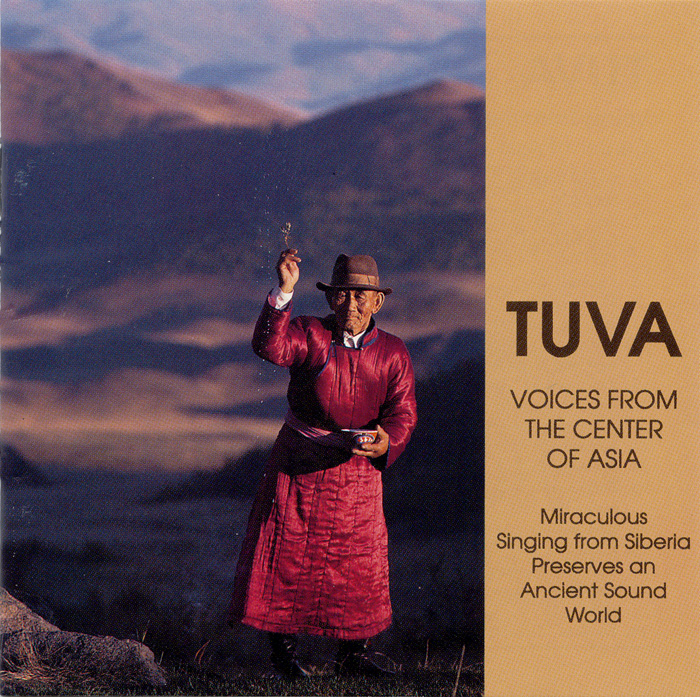
Let's listen to examples of the three main styles from the quintessential album, Tuva: Voices from the Center of Asia.
An Exploratory Short Course in Tuvan Throat Singing
This Smithsonian guide provides direct links to classic recordings of each style, which are ideal for your curation efforts.
Scroll down to section 5, "Practicing Your Own Overtone Singing," and find the heading "Active Listening." Click the links for the following tracks to listen to each style performed by Tuvan masters: Khoomei (track 5) Sigit (track 2) Kargiraa (track 18) As you listen, try to connect the sound of each track to the descriptions and video demonstrations from earlier in the lesson.
For a more contemporary and experimental take, artists like Tanya Tagaq (an Inuk throat singer from Canada who uses a related but distinct tradition) and Sainkho Namtchylak (from Tuva) fuse these ancient techniques with avant-garde and electronic sensibilities. Exploring their work can provide powerful, though sometimes less purely "relaxing," additions to your playlists.
Conclusion
Overtone singing transforms the human voice into a self-contained orchestra, capable of producing a stable, grounding drone and a soaring, ethereal melody simultaneously. This acoustic duality is at the heart of its hypnotic and meditative power.
Key Takeaways:
- The Sound: Overtone singing involves producing a fundamental vocal pitch while amplifying specific harmonics to sound like separate, whistle-like notes.
- The Styles: The Tuvan tradition offers distinct styles with different moods:
- Khoomei: A flowing, mid-range style with a swirling overtone melody. Best for gentle focus or light meditation.
- Sygyt: A high, piercing whistle style. Its intensity can be highly focusing or even trance-inducing for some, but potentially too sharp for deep sleep.
- Kargyraa: A deep, rumbling, subharmonic style. Its visceral, low-frequency vibration is profoundly grounding and excellent for deep relaxation.
- The Trance Quality: The technique's hypnotic effect comes from its acoustic complexity, its physical, vibrational quality, and its deep roots in imitating the sounds of the natural world.
- Curation Tip: For relaxation, Kargyraa and softer Khoomei tracks are excellent choices. For intense focus or a more active meditative journey, Sygyt can be very effective. Ensembles like Huun-Huur-Tu provide a great starting point for finding high-quality recordings.
In our next lesson, we will synthesize what we've learned about panpipes, the didgeridoo, and overtone singing. We will compare their distinct meditative qualities and establish a framework for when to use each of these powerful traditions in your focus, relaxation, and sleep playlists.