Bonjour ! Bienvenue à notre deuxième leçon du module "Integrated Skills & Fluency Practice."
In our last session, you learned how to identify the main topic and key arguments in a professional audio clip. This skill—understanding the "big picture"—is the foundation for effective listening.
Today, we're going to zoom in. We'll build on that foundation to master a more granular but equally critical skill: extracting specific details like decisions, numbers, and action items from a technical discussion. For a software engineer and aspiring project manager, this is where the real work happens. A meeting's success isn't just about the ideas discussed, but about the concrete outcomes that move a project forward.
1. What to Listen For: The Anatomy of a Productive Meeting
In your field, a meeting that ends without clear takeaways is time lost. The goal is to leave knowing exactly what was decided, who is responsible for the next steps, and what the deadlines are. The French professional world operates on this same principle.
A great way to understand what details to listen for is to look at what goes into a formal meeting summary, or un compte rendu de réunion.
Compte rendu de réunion : exemples et modèles
This article from Noota explains the purpose of meeting minutes and outlines their essential components. It provides a perfect mental checklist for what you should be listening for during a discussion.
Please read the sections 'Pourquoi rédiger un compte rendu de réunion ?' and 'Quels éléments inclure dans le compte-rendu d'une réunion ?'. Focus on the key elements listed, as these are the specific details you'll need to extract from any professional conversation.
As you read, you saw that the most important information to capture falls into these categories:
- Les décisions prises (Decisions made): What was the final verdict on a technical choice or a planning issue?
- Les mesures à prendre (Action items): What are the specific tasks that need to be completed?
- La personne responsable / Assigné à (The responsible person / Assigned to): Who owns each task?
- La date limite / L'échéance (The deadline): When must each task be completed?
This structure is your new listening framework. These elements are often discussed in relation to les livrables (deliverables), a term you're very familiar with.
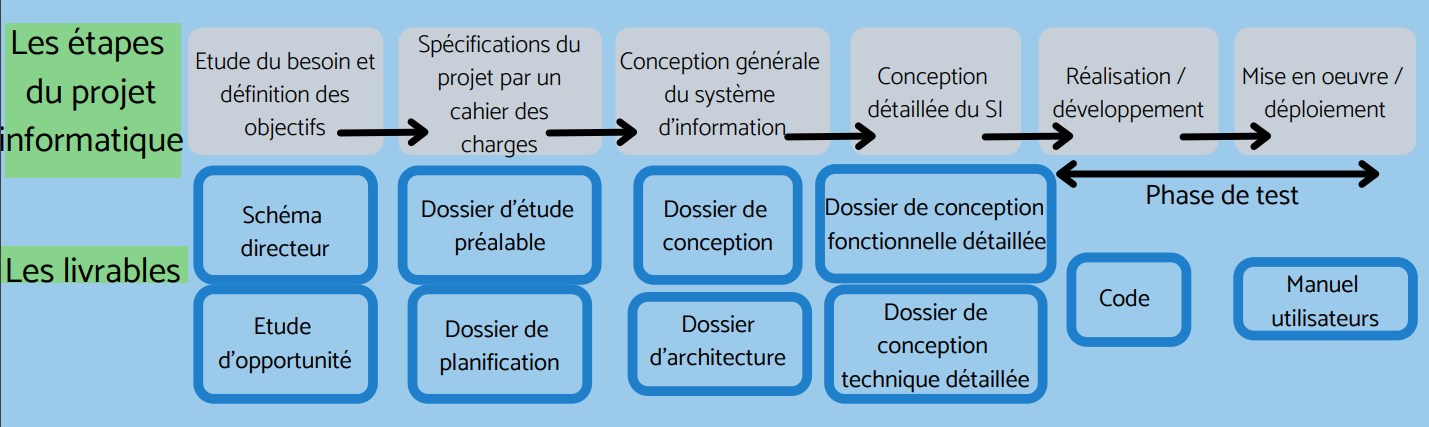
2. How to Listen: Active Listening and Confirmation
Knowing what to listen for is the first half of the battle. The second is how to capture it accurately, especially when people are speaking quickly. The key is to move from passive hearing to active listening.
A powerful technique for active listening is to reformulate or paraphrase what you think you heard. This not only confirms your understanding but also shows your colleagues that you are engaged.
🎙️Podcast – Parler avec fluidité: Comment parler en réunion professionnelle | Expressions + conseils
This podcast from 'Pro en Français' offers excellent advice for participating in meetings. We'll focus on a segment about active listening and asking for clarification.
Please watch the segment from 06:16 to 07:53. Pay close attention to the examples of how to ask for clarification and reformulate information to verify it.
The video gives these excellent examples of reformulation:
Donc si j'ai bien compris, le rapport doit être prêt vendredi.(So if I understood correctly, the report must be ready Friday.)Vous dites qu'on doit contacter le client avant demain. C'est bien ça ?(You're saying we have to contact the client before tomorrow. Is that right?)
In your technical context, this might sound like:
Alors, pour confirmer, la décision c'est de migrer vers la version 3.0 de la librairie, c'est ça ?(So, to confirm, the decision is to migrate to version 3.0 of the library, is that right?)Si je comprends bien, c'est moi qui dois écrire les tests unitaires pour le nouveau module, et la date limite est la fin du sprint ?(If I understand correctly, I'm the one who has to write the unit tests for the new module, and the deadline is the end of the sprint?)
This strategy is your safety net. It allows you to be certain about the specific details without having to understand every single word of the conversation.
3. Practice: From General Details to Technical Specifics
Let's put this into practice.
Exercise 1: General Professional Context
Imagine you receive the following voicemail from a colleague. First, you'll need to extract the key information. The image below shows the kind of questions you should be able to answer.
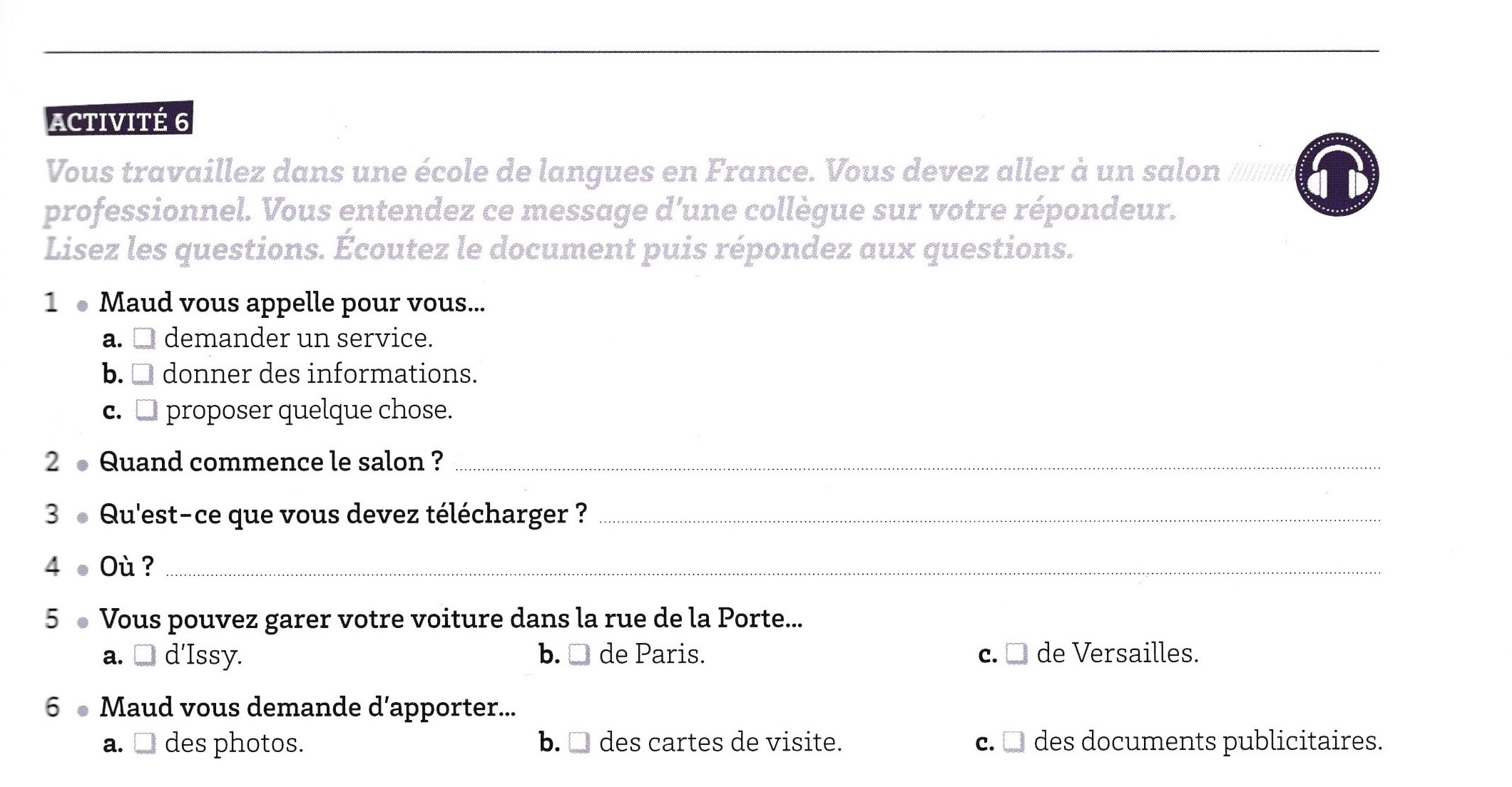
Now, here is the simulated audio message. Read it carefully and try to answer the questions from the image mentally.
(BEEP) "Salut, c'est Léo. Je t'appelle au sujet du salon 'Tech Innov' de demain. J'ai les dernières infos. Alors, ça commence à 9h00 précises, ne sois pas en retard ! C'est au 'Palais des Congrès', sur le quai de la Garonne. Pour le plan d'accès, il faut le télécharger sur le site de l'événement, c'est dans la section 'Infos Pratiques'. Pour se garer, il y a un parking souterrain, le 'Parking République', juste à côté. N'oublie pas d'apporter ta carte d'identité et ton badge d'entreprise. On se retrouve directement là-bas. À demain !"
Check your answers
1. **Purpose of call:** To give final information about the 'Tech Innov' professional fair. 2. **Start time:** 9:00 AM (`9h00 précises`). 3. **What to download:** The access map (`le plan d'accès`) from the event website. 4. **Location:** 'Palais des Congrès', on the 'quai de la Garonne'. 5. **Parking:** The 'République' underground parking lot (`parking souterrain`). 6. **What to bring:** ID card (`carte d'identité`) and company badge (`badge d'entreprise`).Exercise 2: Simulated Technical Meeting
Great. Now for a more realistic scenario. Below is a transcript of a short segment from a daily stand-up meeting. Your task is to listen for the key decisions, numbers, and action items.
The Context: The team is discussing a critical bug (un bug critique) reported by a client.
Chef de projet (Sarah): Bonjour à tous. On commence avec le point le plus urgent : le bug #1138 sur le module de paiement. Des nouvelles, Chloé ?
Développeuse (Chloé): Oui. J'ai identifié la source du problème. C'est un souci de compatibilité avec la nouvelle API de la banque. La correction va me prendre environ deux jours de travail.
Chef de projet (Sarah): Deux jours... D'accord. C'est prioritaire. On doit déployer le correctif (
le patch) au plus tard vendredi. Est-ce que c'est jouable pour toi ?Développeuse (Chloé): Vendredi, c'est un peu juste, mais oui, ça devrait aller si je me concentre uniquement sur ça.
Chef de projet (Sarah): Parfait. La décision est donc de mettre en pause tes autres tâches pour te focaliser sur ce bug. Marc, pendant que Chloé développe le correctif, est-ce que tu peux préparer l'environnement de test et rédiger le plan de test pour valider la correction ?
Ingénieur QA (Marc): Pas de problème. Je m'en occupe. J'aurai le plan de test prêt d'ici demain soir.
Chef de projet (Sarah): Excellent. Donc, pour résumer les actions : Chloé, tu développes le patch pour vendredi. Marc, tu prépares le plan de test pour demain soir. Et moi, je vais informer le client que la correction sera livrée en fin de semaine. Merci à tous.
Your Task:
Based on this discussion, fill out the following information.
- Décision clé :
_______________________________________________________
- Actions à prendre :
- Tâche : Développer le correctif pour le bug #1138.
- Responsable :
___________ - Date limite :
___________
- Responsable :
- Tâche : Préparer l'environnement et le plan de test.
- Responsable :
___________ - Date limite :
___________
- Responsable :
- Tâche : Informer le client de la livraison du correctif.
- Responsable :
___________ - Date limite :
___________(Implicit)
- Responsable :
- Tâche : Développer le correctif pour le bug #1138.
Click here to see the completed action plan
- Décision clé :
- Mettre en pause les autres tâches de Chloé pour qu'elle se concentre sur la résolution du bug.
- Actions à prendre :
- Tâche : Développer le correctif pour le bug #1138.
- Responsable : Chloé
- Date limite : Vendredi
- Tâche : Préparer l'environnement et le plan de test.
- Responsable : Marc
- Date limite : Demain soir
- Tâche : Informer le client de la livraison du correctif.
- Responsable : Sarah
- Date limite : Fin de semaine (implied)
- Tâche : Développer le correctif pour le bug #1138.
Conclusion
Félicitations ! You have just practiced one of the most important skills for succeeding in a French-speaking tech environment. Moving from understanding the general flow to capturing actionable details is a huge leap forward.
Key Takeaways:
- In professional discussions, always listen for decisions, action items, responsible persons, and deadlines.
- Use the vocabulary from meeting templates (
décision,tâche,responsable,date limite) as mental signposts. - When in doubt, reformulate to confirm your understanding (
Donc, si je comprends bien...). This is a sign of a professional, not a beginner. - Structure your notes around the "Action - Who - When" format to ensure clarity.
Preview of the Next Lesson:
Today, you learned to confirm what you think you heard. But what happens when you're completely lost? In our next lesson, we will focus on applying strategies for handling comprehension gaps, such as asking for repetition or clarification. This will give you the confidence to navigate any conversation, no matter how complex.
À très bientôt