Welcome back! In our last lesson, you mastered the art of handling objections, turning a coach's hesitation into a productive conversation. Getting past those initial hurdles is what lands you the crucial next meeting: the discovery call. Now, it's time to learn how to lead that call like a pro.
This lesson focuses on transforming you from an applicant into a consultant. You will learn to develop a question-based script, or framework, designed to diagnose a coach's sales pipeline needs. Your goal is not to "pitch" yourself but to guide the coach to articulate their own problems. By the end of this session, you'll be able to structure a discovery call that uncovers a coach's challenges and positions you as the indispensable solution.
The Mindset: From Applicant to Diagnostician
The most significant shift you need to make is in your mindset. A discovery call is not an interview where you answer questions. It is a consultation where you ask them. You are the expert diagnostician examining the health of their lead generation and sales pipeline. Your job is to uncover pain points they may not even be fully aware of.
As you've experienced in your DM setting work, a lot of inbound interest never converts. Why? That's the question you're here to answer for the coach. Your primary tool is listening, not talking. The industry benchmark suggests an ideal talk-to-listen ratio.
How To Run A Discovery Call - Strategy Session
In his video "How To Run A Discovery Call," sales trainer Patrick Dang explains the fundamental purpose of this meeting.
Watch the introduction from the definition of a discovery call. Note his emphasis that 80% of the time you should be asking questions and letting the prospect talk.
To guide this conversation, you won't use a rigid, robotic script. Instead, you'll use a flexible framework.
Build a Discovery Call Framework Reps Can Follow Easily
This article by Owen Van Syckle clearly distinguishes between a script and a framework, which is a crucial concept for sounding natural and responsive.
Read the section titled "A Framework Is Not a Script." This will help you understand the goal is to have a structured yet flexible guide for your conversation.
The Anatomy of a Winning Discovery Call
A successful discovery call has a clear structure. While every conversation is unique, following a proven process ensures you cover all the critical bases. We'll use a step-by-step process as our guide, focusing on the parts most relevant to you.

A great discovery call will typically have three main phases:
- The Opening: Setting the stage.
- The Diagnosis: Uncovering the pain.
- The Close: Defining the next steps.
Phase 1: Opening the Call
The first five minutes are about establishing control and setting expectations. You'll build brief rapport and then immediately pivot to the agenda. An effective way to do this is with the ACE framework: Appreciate, Confirm time, End goal.
The Ultimate Guide to Discovery Calls - Realm
This guide provides a fantastic, actionable framework for opening a call professionally.
Find the section "2. Opening the call" and read the description of the ACE framework and the example provided.
Here’s how you can adapt it:
"Hi [Coach's Name], thanks for making time today. I know you're busy, so I want to make sure we use these 30 minutes well. My plan is to learn a bit more about your current process for handling DMs and your goals for client acquisition. Then, if it seems like a fit, I can share how I might be able to help. By the end, we should both have a clear idea if it makes sense to explore working together. Does that sound good to you?"
This opener frames you as a professional who respects their time and has a clear plan.
Phase 2: The Diagnosis
This is the heart of the call. Your objective is to get the coach to talk about their problems. To do this, you need a bank of open-ended questions organized to dig progressively deeper. We'll structure this around uncovering five key pieces of information.
Build a Discovery Call Framework Reps Can Follow Easily
This article outlines the five essential things you must learn during any discovery call.
Read the section "The Five Things" and review the associated reference table. This gives you a clear mental checklist for the information you need to gather: Problem, Past Attempts, Decision-makers, Timeline, and Consequences of Inaction.
To gather this information, you'll ask different types of questions. Let's build your question bank.
Question Types & Examples
The Ultimate Guide to Discovery Calls - Realm
This guide has an excellent list of example questions that you can adapt for your conversations with coaches.
Read through the section "Discovery call question examples." As you read, think about how you would rephrase these for a fitness or mindset coach.
Here is a breakdown of how you can apply these question types to your niche:
1. Situational Questions (Understanding the "As-Is")
These are broad questions to get a lay of the land.
- "Could you walk me through your current process when a potential client sends you a DM?"
- "About how many inbound DMs are you getting per week right now?"
- "How are you currently keeping track of these conversations?" (This ties into your Notion skills).
2. Problem & Pain Questions (Finding the Hurt)
This is where you start digging. You're looking for frustration, bottlenecks, and missed opportunities.
- "What's the most time-consuming or frustrating part of that process for you?"
- "You mentioned you're at [X] revenue per month. What do you feel is the main thing holding you back from getting to [Y]?"
- "Of the people who DM you, what percentage would you say actually end up on a sales call?"
Watch this clip from a live sales call. Notice how the salesperson, Johnny, doesn't accept the first answer ("scale up further"). He keeps asking "to what?" and "why?" until he gets to a specific goal ($40k/month) and a specific problem (inconsistency).
Closing a DIFFICULT $8,000 High Ticket Sales Call (LIVE SCRIPT)
This is a masterclass in digging for pain. Pay close attention to how the seller refuses to accept vague answers and continuously probes deeper.
Watch from the beginning of the call to the first few minutes. See how he takes the prospect from a generic goal to identifying inconsistency and a lack of strategy as the root problems.
3. Impact Questions (Quantifying the Pain)
Once a problem is identified, you need to tie it to a business outcome (lost money, wasted time, stress). This creates urgency.
- "You said you're booking about 0-1 calls per week from your content. What does that mean for your ability to hit your revenue goals this quarter?"
- "How much of your own time are you spending in the DMs each day that could be spent creating content or coaching clients?"
- "If we're talking again in 6 months and nothing has changed, what's the financial and personal cost of staying stuck at your current level?"
In this next clip, notice how the salesperson connects the prospect's struggle to his deepest personal motivations—his desire to provide for his future family and overcome his past. This turns a simple business problem into a must-solve life mission.
Closing a DIFFICULT $8,000 High Ticket Sales Call (LIVE SCRIPT)
This is an advanced but incredibly powerful technique. The seller links the business goal ($40k/month) to the prospect's core identity and purpose.
Watch the segment from "What tangibly changes". He asks what achieving the goal feels like and what it means for him personally, which uncovers the true emotional driver.
4. Qualification Questions (Is this a Real Opportunity?)
This is where you use a framework like BANT to confirm the opportunity is legitimate.
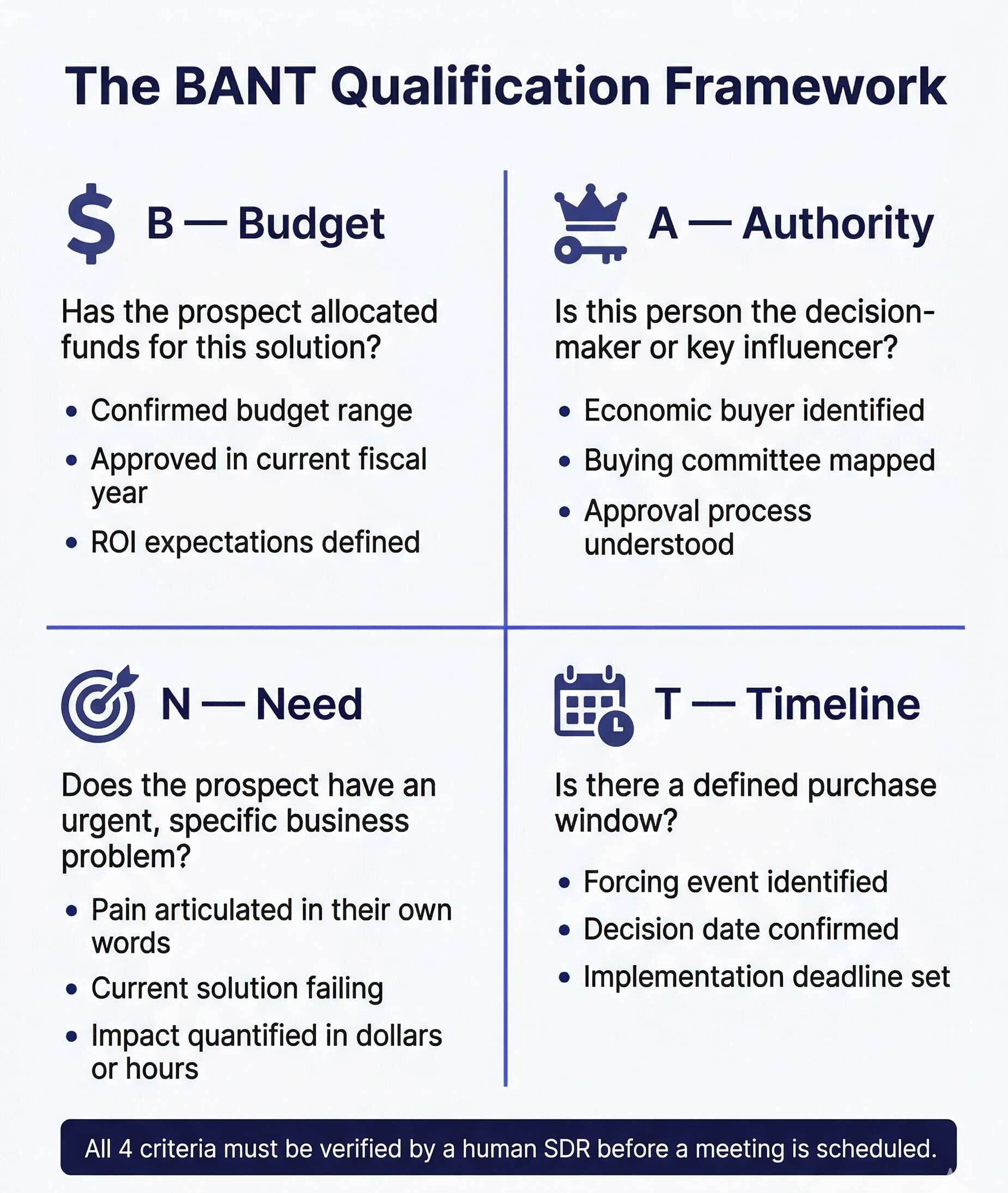
- Need: You've been establishing this all along.
- Timeline: "Ideally, when would you want to have a solution for this in place?"
- Authority: "Are you the one who makes the final decision on bringing on team members?"
- Budget: This can be tricky. A gentle way to approach it is: "Have you ever invested in a role like this before? What are your thoughts on compensation structures like base plus commission?" (We'll cover this in-depth in a future lesson).
Phase 3: Closing the Call
The final five minutes are for solidifying your position and defining the next step. Do not end a call with a vague "I'll send you some information."
-
Summarize the Pain: Replay their problems back to them in their own words. This shows you were listening and makes them feel understood.
"So, to recap, it sounds like you're stuck at 10k a month because you're relying on referrals, and your current DM process is inconsistent and booking almost no calls. This is frustrating because it's taking up your personal time and preventing you from reaching your goal of hitting 40k a month and building a team. Does that capture it correctly?"
-
Propose a Clear Next Step: Your goal is to get another meeting or get permission to send a proposal.
"Based on our conversation, I'm confident I can help you build a system to turn those DMs into consistent, qualified sales calls. The logical next step would be for me to outline exactly how I would do that. How does your calendar look on Thursday for a brief 15-minute follow-up?"
Conclusion
A masterful discovery call is the pivotal moment where you transition from a candidate to a valued partner. It's not about what you say about yourself; it's about the questions you ask that lead the coach to their own conclusions. By diagnosing their problems with precision, you make hiring you the only logical solution.
Key Takeaways:
- Adopt a Consultant's Mindset: You are there to diagnose, not to pitch. Ask questions, listen intently, and guide the conversation.
- Use a Flexible Framework: Don't read from a script. Use the Opening-Diagnosis-Close structure and the "Five Essentials" as your guide.
- Dig for Pain and Impact: Uncover not just the surface-level problem, but its financial and emotional impact on the coach. This creates urgency.
- Summarize and Set a Clear Next Step: Always end the call by confirming you understood their problem and locking in the next interaction.
In our next lesson, we'll build directly on the insights you've gathered. You will learn how to take the coach's stated problems and flawlessly position your DM setting service as the direct, undeniable solution, setting the stage for you to present your compensation proposal.