Welcome back! In our previous lessons, we focused on crafting compelling initial outreach messages and even recording a standout video pitch to grab a coach's attention. You now have the tools to make an excellent first impression. But what happens when your perfectly crafted message is met with silence?
This lesson tackles that very common scenario. Many aspiring DM setters send one great message, get no reply, and give up, assuming the prospect isn't interested. The truth is, busy coaches are flooded with messages and often need more than one touchpoint. Today, you'll learn how to design a professional, multi-touch follow-up sequence that re-engages unresponsive prospects effectively and persistently, without ever being pushy. This skill is often the deciding factor between being forgotten and getting the conversation started.
The Mindset of Professional Persistence
Before we get into scripts and schedules, it's crucial to adopt the right mindset. Following up isn't about nagging or being desperate; it's about being helpful, persistent, and professional. Your prospects—successful fitness and mindset coaches—are busy. They might have seen your message, intended to reply, and simply gotten distracted. A follow-up is a gentle, valuable reminder.
The key is to shift your thinking from "pushy" to "helpful." A pushy follow-up just asks for something, while a helpful one gives something.
The Follow-Up Playbook: How to Nudge Without Being Pushy | Pursue Networking
This article from Pursue Networking perfectly illustrates the difference between an ineffective "nudge" and a value-driven follow-up that gets a response.
Start by reading the introductory story about Rachel and Jason, which highlights the difference in their approaches. Then, continue to the section "Why Most LinkedIn Follow-Ups Fail," which explains the psychology behind why generic "checking in" messages don't work. This will form the foundation for every follow-up message you write.
As the article points out, the goal is to make your follow-ups feel like new, relevant messages that continue the conversation, rather than just reminding them they ignored you.
Designing Your Follow-Up Cadence
A "cadence" is simply a schedule for your follow-up messages. Having a plan prevents you from following up randomly or giving up too soon. While there are many different models, a sequence of 3-4 touches over a couple of weeks is a fantastic starting point.
A single-channel sequence, like only using DMs, can be very effective. Here is an example of a simple but powerful email follow-up timeline.

However, to truly stand out, a multi-channel sequence is even better. This involves using a mix of platforms—like an Instagram DM, a LinkedIn message, and an email—to gently surround the prospect. It shows diligence and increases the chances they'll see your message on their preferred channel.
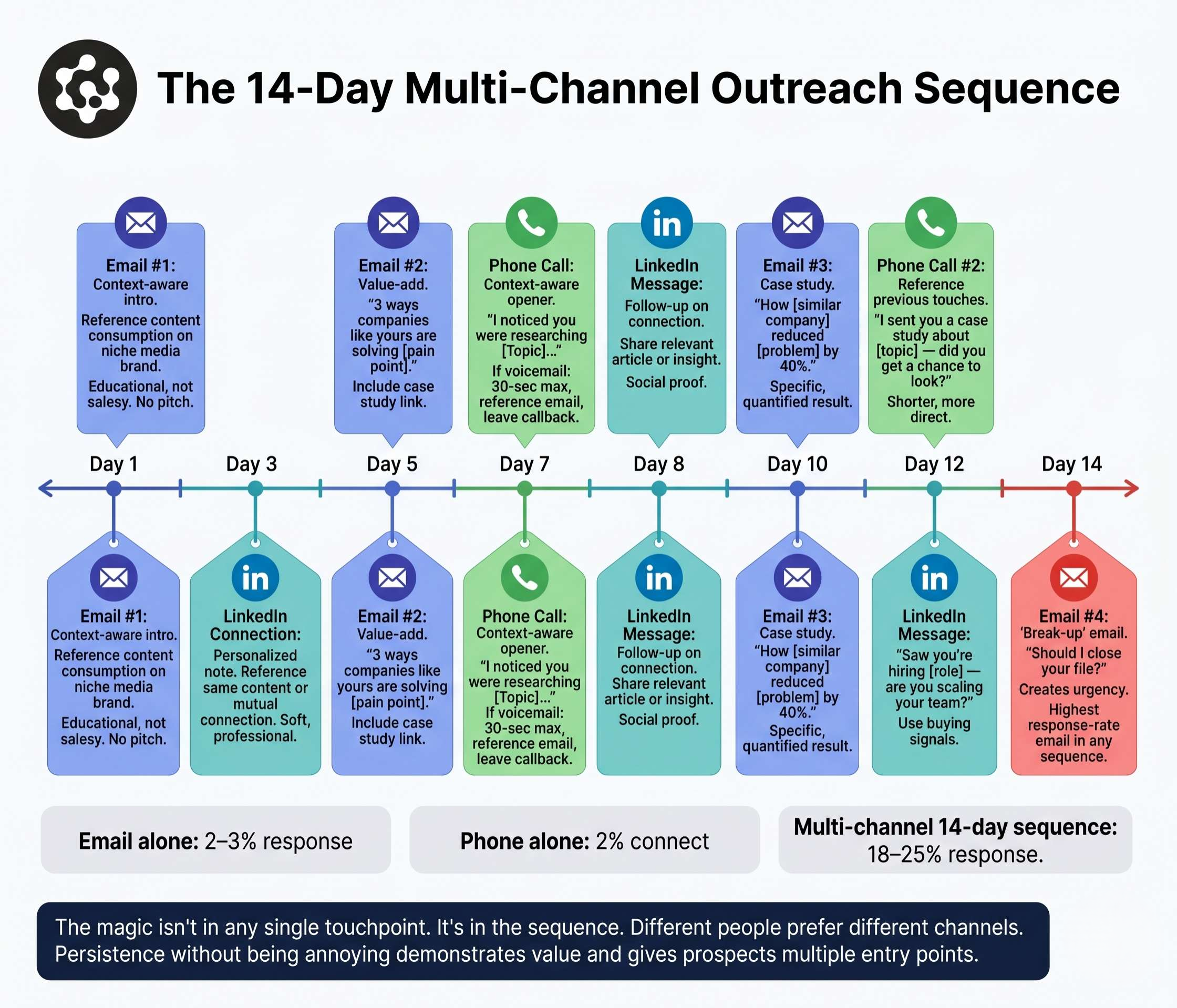
For your purposes, a hybrid approach works best: primarily using DMs, but adding value from other platforms. Let's build a practical cadence based on industry best practices for the coaching niche.
This guide from DM Tracker provides a follow-up cadence specifically designed for the coaching industry, explaining why multiple touchpoints are so crucial.
First, find the section titled "Stage 4: Follow Up." Read the recommended four-touch cadence and the rationale behind it. Note the timing: Day 1, 3, 7, and 30. Next, scroll down to the "Common Coaching Mistakes" section and read the part about why this is a critical error. This reinforces the importance of what you're learning. Finally, look at the FAQ question, "How do I follow up on... conversations that go cold?" This confirms the effectiveness of the proposed cadence.
Your 4-Touch Follow-Up Script Library
Now, let's combine these ideas into a concrete, 4-step sequence you can use. This sequence is designed to be sent after your initial outreach (text or video) gets no response.
Touch #1: The Simple Reminder (Day 3-4)
Wait a few days after your initial message. People are busy, and following up too quickly can seem desperate. Your first follow-up should be simple and direct, assuming they just missed it.
- Script: "Hey [Coach's Name], just wanted to gently bring my previous message back to the top of your inbox. Let me know if you had a chance to look at it."
Touch #2: The Value-Add (Day 7-10)
This is your most important follow-up. Here, you must provide new value. You aren't "checking in"; you are continuing the conversation with a new piece of information. The best way to do this is by referencing something new about them.
The Follow-Up Playbook: How to Nudge Without Being Pushy | Pursue Networking
This section of the playbook offers excellent, ready-to-use scripts for value-add follow-ups.
Read the section titled "6 Follow-Up Scripts." We'll adapt three of these for your outreach to coaches.
Here are those ideas adapted for you:
-
Script 1 (Content Callback): Find a recent post, reel, or story they published.
"Hey [Coach's Name], I loved your reel this morning about overcoming self-doubt. That point about [specific detail] really resonated. It reminded me of my question last week about how you engage with your audience in the DMs to build that trust. Still curious to hear your thoughts when you have a moment!"
-
Script 2 (Trigger Event): Did they announce a new program, a successful client testimonial, or a webinar?
"Hey [Coach's Name], saw the announcement for your new 'Mindset Mastery' group program—congratulations, it looks incredible! That must be keeping you busy. When things settle, I'd still love to chat about how I can help manage the influx of DMs you'll be getting."
-
Script 3 (New Insight/Resource): Find a relevant article or video that they might appreciate.
"Hey [Coach's Name], I came across this article on 'The Future of Online Fitness Coaching' and thought of you. There's a great section on building community through 1-on-1 messaging. It ties directly into the idea I shared last week. Hope you find it useful!"
Touch #3: The "Break-Up" Message (Day 14-20)
If you still haven't heard back, it's time to gracefully close the loop. This shows you respect their time and won't keep bothering them. It's a professional move that often gets a response because it removes all pressure.
- Script (The Honest Closer): "Hey [Coach's Name], I realize you're likely swamped. I'll take that as a sign that now isn't the right time to connect about your DMs. I'll stop cluttering your inbox! I'll keep following your work and wish you all the best with [mention their business/mission]."
Touch #4: The Long-Term Re-Engagement (Day 30+)
This is an optional, long-term touchpoint. If this is a coach you really want to work with, a brief check-in a month later can be surprisingly effective. Their situation may have changed.
- Script: "Hey [Coach's Name], checking in one last time. Are you still working on [their goal, e.g., scaling your fitness program]? If anything has changed and you need support in the DMs, you know where to find me."
A Note on Creativity
While the scripts above are professional and effective, sometimes a little creativity can help you stand out, especially with coaches who have a more informal brand.
Best Cold DM Template To Get Clients in 2025 (This Made Me $5.8M)
In this video, sales expert Charlie Morgan discusses his aggressive follow-up strategy. While his overall approach is very intense, he has a great point about using humor and pattern interrupts.
Watch the segment from where he discusses using memes and GIFs. The key takeaway isn't to be outrageous, but to understand that a well-placed, lighthearted visual can break the monotony of text-only inboxes and show a bit of personality.
Use this tactic wisely. A funny, relevant GIF (like someone waiting by the phone) in your second or third follow-up can sometimes work wonders, but only if it matches the coach's brand and tone.
Conclusion
You are now equipped with a powerful strategy that most of your competition neglects. By following up systematically and with value, you demonstrate professionalism, persistence, and a genuine interest in the coach's success—all qualities of a top-tier DM setter.
Key Takeaways:
- Persistence Pays Off: Most opportunities are found in the follow-up. Don't give up after one or two tries.
- Add Value, Don't Nudge: Always give the prospect a reason to reply. Reference their content, congratulate them on a win, or share a helpful resource.
- Use a Cadence: A structured 4-touch sequence over 30 days is a proven framework for the coaching niche.
- Close the Loop Professionally: A "break-up" message shows you respect the prospect's time and leaves a positive final impression.
In our next module, we'll shift gears. You've sent your outreach and your follow-ups, and you've started a conversation. Now, what do you say when the coach raises a concern or an objection? Our next lesson will prepare you to handle those conversations with confidence.