Introduction
In our last lesson, we ventured into modal logic and immediately encountered a fundamental challenge to the principles of classical logic: referential opacity. We saw that in modal contexts, such as "Necessarily...", you cannot always substitute terms that refer to the same object without changing the sentence's truth value. We diagnosed this ambiguity using the de re / de dicto distinction, noting that while this clarifies the structure of modal claims, the de re reading—attributing a necessary property to an object itself—aroused deep suspicion from the philosopher W.V.O. Quine, who saw it as a commitment to a dubious "essentialism."
This lesson will fully unpack Quine's influential critique. Our goal is to analyse Quine's arguments against the coherence of quantified modal logic (QML), focusing on his critique of essentialism. We will move from the initial puzzle of referential opacity to the heart of Quine's objection: the seemingly nonsensical act of "quantifying into" a modal context. This will reveal a powerful dilemma that Quine believed left QML philosophically indefensible.
1. Quine's Philosophical Starting Point: The Virtue of Extensionality
To understand the force of Quine's attack, we must first appreciate his philosophical commitments. As a logician and philosopher, Quine prized clarity, rigor, and ontological parsimony. He saw these virtues embodied in extensional logic (like the first-order predicate logic you know well), where the reference (extension) of a term is all that matters for determining truth values.
In contrast, intensional contexts—those involving meaning, belief, or modality—were, in his view, a "swamp" of obscurity. He was deeply skeptical of concepts like 'meaning' or 'property' when treated as entities in their own right.
Quine's objections to modal logic 3 - extensionality and intensionality
The following video explains this crucial background. It clarifies the distinction between the 'extension' and 'intension' of a term and demonstrates why Quine found modal logic's intensionality so troubling from the outset.
Please watch from the beginning to 11:01. Focus on: The concepts of extension (what a term refers to) and intension (its meaning). What it means for a logical system to be extensional. The clear demonstration of how modal operators violate extensionality, making modal logic an intensional system. The philosophical reasons for Quine's preference for extensionality (clarity, simplicity).
Quine's preference for extensionality is not just a stylistic choice; it's a principled stance against what he sees as unscientific and metaphysically extravagant notions. His critique of modal logic is a direct consequence of this stance.
2. The Core Problem: "Quantifying In"
Quine's primary argument targets not just modal operators, but their combination with quantification. He distinguishes three "grades of modal involvement":
- As a predicate of sentences: e.g., "'9 > 7' is a necessary truth." Quine found this use relatively unproblematic, as it's a claim about a linguistic object (a sentence).
- As a statement operator: e.g., "Necessarily (9 > 7)" or . This applies the operator to a closed sentence. Quine saw this as tolerable, as it could often be translated back into the first form.
- As an operator on open sentences: e.g., , where the variable can be bound by a quantifier, as in .
This third grade is what leads to quantified modal logic (QML), and it is here that Quine believes we cross a line into incoherence. The problem arises from trying to quantify into a referentially opaque context.
Let's revisit the core issue with a familiar example.
Quine's objections to modal logic 4 - referential opacity
This video recaps the problem of referential opacity and the failure of substitutivity in modal contexts, which is the crux of the issue with quantifying in.
Watch from 01:38 to 09:20. Pay close attention to the definition of substitutivity of identicals and how the classic 'number of planets' example demonstrates its failure within the scope of a necessity operator.
The failure of substitutivity shows that the context Necessarily(... > 7) is sensitive to how an object is named. But the whole point of objectual quantification, as you know from your logic studies, is to make general claims about objects, regardless of their names. The variable 'x' in (∃x)Fx is a placeholder for objects, not for names or descriptions.
This creates a fundamental conflict:
- The modal operator
□creates an opaque context where the name matters. - The quantifier
∃xwants to bind the variablextransparently, referring only to the object.
Quine argues that you cannot have it both ways. To try to quantify into an opaque context is like trying to bind a variable inside a quotation mark. For instance, from the true sentence "'Socrates' contains eight letters," you cannot infer "(∃x)('x' contains eight letters)." The x inside the quotation marks is just a letter, not a variable open to binding. Quine argues that quantifying into a modal context is similarly nonsensical.
Quine on necessity, extensionality, and essentialism
This reading clearly lays out Quine's argument about the illegitimacy of moving from a statement operator to a sentence operator that can be quantified over.
Please read sections 4 and 5, titled 'The validation of ‘Necessarily’' and 'Quantifying in to referentially opaque contexts.' Focus on why Quine believes the move from treating 'Necessarily' as an operator on whole statements to an operator on open sentences is a 'drastic one' that cannot be justified.
3. The Dilemma and the Charge of Essentialism
If quantifying in is to be meaningful at all, the defender of QML must find a way out of this paradox. Quine presents them with a dilemma. Consider the formula . How are we to understand the open sentence ?
-
Option 1: The modal property applies to the name/description. If
□(...)attaches to the linguistic expression filling the gap, then you can't quantify in. The quantifier(∃x)doesn't range over names. This leads to syntactic nonsense. -
Option 2: The modal property applies directly to the object. To make sense of the quantification, the property of being necessarily greater than 7 must be a property of the object itself—the number 9—independent of whether we call it '9', 'the number of planets', or '3 squared'.
Quine argues that to take this second option is to commit oneself to Aristotelian essentialism.
Aristotelian Essentialism: The doctrine that an object, in and of itself, has some of its properties essentially (it could not exist without them) and others accidentally (it could have existed without them).
For Quine, saying that the number 9 is necessarily greater than 7, no matter what you call it, just is to say that being greater than 7 is part of the essence of the number 9, while being the number of planets is merely an accidental feature. This, he claimed, catapults logic back into "the metaphysical jungle of Aristotelian essentialism."
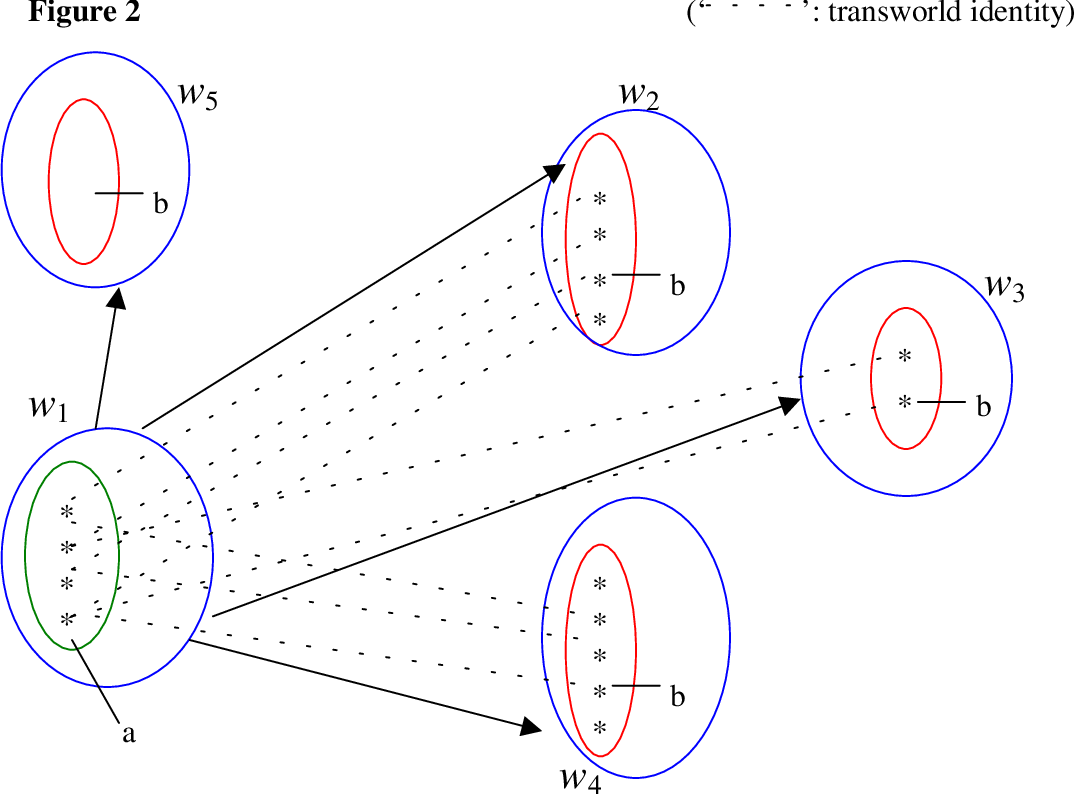
[PDF] Quine and Quantified Modal Logic: Against the Received View
The following paper provides a sophisticated analysis of Quine's argument, showing precisely how the demand for quantification leads to the charge of essentialism.
Please read Section 2, 'Quine and essentialism' (pages 523-527). This is the core of our lesson. Pay close attention to: The tension between the objectual interpretation of quantifiers (which abstracts from names) and the name-sensitivity of modal contexts. How this forces the conclusion that modalities must attach directly to objects. Quine's definition of essentialism as a distinction between essential and accidental traits that is independent of language. The connection between Quine's rejection of essentialism and his scientific naturalism.
For Quine, a committed naturalist, there is no scientific basis for distinguishing which of an object's properties are essential and which are accidental. Are you essentially human but accidentally a student? Essentially a person but accidentally two-legged? He found these questions meaningless outside of a specific descriptive context, and thus rejected any logic that required them to have answers.
4. Getting the Argument Right: Interpretation vs. Proof
It is crucial to understand the precise nature of Quine's objection. Many early respondents misunderstood him. They thought he was claiming that QML allows one to formally prove unwelcome essentialist statements (e.g., that a specific object has a non-trivial essential property). They then showed that standard modal systems don't have such theorems.
But Quine's point was deeper. He was not making a claim about formal proof, but about philosophical interpretation.
His argument is that in order to make any sense at all of the semantics of QML—to have a "true interpretation" of what its sentences mean—you must first presuppose a coherent distinction between essential and accidental properties. The commitment to essentialism is a precondition for the meaningfulness of the entire system.
The reading from the previous step makes this point very clearly, quoting Quine directly from a 1962 debate:
"I’m not talking about theorems, I’m talking about truth, I’m talking about true interpretation. And what I have been arguing is that if one is to quantify into modal contexts... then in order to get a coherent interpretation one has to adopt essentialism..."
This is a much stronger and more subtle philosophical challenge. It's not about what you can prove in the system, but about the metaphysical price of admission to even use the system coherently.
Conclusion
We have now dissected Quine's formidable argument against quantified modal logic. His critique is not a simple technical puzzle but a profound philosophical challenge rooted in his commitment to extensionality and scientific naturalism.
The argument proceeds in steps:
- Modal logic is intensional, and its operators create referentially opaque contexts.
- Standard objectual quantification, however, requires referential transparency to make sense.
- To combine them in QML ("quantifying in"), one must resolve this conflict. The only way is to assume that modal properties attach directly to objects themselves, independent of how they are described.
- This commitment is precisely what Quine identifies as Aristotelian essentialism.
- Since Quine regards essentialism as an incoherent and unscientific metaphysical doctrine, he concludes that QML itself is philosophically bankrupt.
Quine's argument can be seen as a modus tollens:
- If QML is coherent, then essentialism is a coherent doctrine.
- Essentialism is not a coherent doctrine.
- Therefore, QML is not coherent.
This critique was so powerful that it shaped the philosophical landscape for decades. The question became: could modal logic be saved?
Key Takeaways:
- Quine's critique stems from the tension between the intensionality of modal operators and the extensionality of standard quantifiers.
- "Quantifying in" refers to binding a variable within the scope of a modal operator, which Quine argues is incoherent if the modal context is referentially opaque.
- Quine argues that the only way to make sense of QML is to adopt essentialism: the view that objects themselves have essential and accidental properties.
- His rejection of essentialism is based on his scientific naturalism, which finds no empirical basis for such a distinction.
- Quine's argument is about the semantic preconditions for interpreting QML, not about what can be formally proved within it.
Preview of the Next Lesson:
We have laid out Quine's challenge. The defense of modal logic came from a young philosopher named Saul Kripke. While others tried to argue against the first premise of Quine's argument (denying that QML implies essentialism), Kripke took a more radical approach: he attacked the second premise. Kripke argued that essentialism is, in fact, an intuitive and coherent doctrine. In our next lesson, we will explore how Kripke semantics provides a formal framework for modal logic and analyse the metaphysical status of 'possible worlds', setting the stage for his revolutionary defense of modality and essence.