Welcome to the final lesson of your 20-day journey into performance psychology. You have built a comprehensive personal performance system, from understanding motivation to designing your ideal week. Now, it's time to learn how to operate and maintain it.
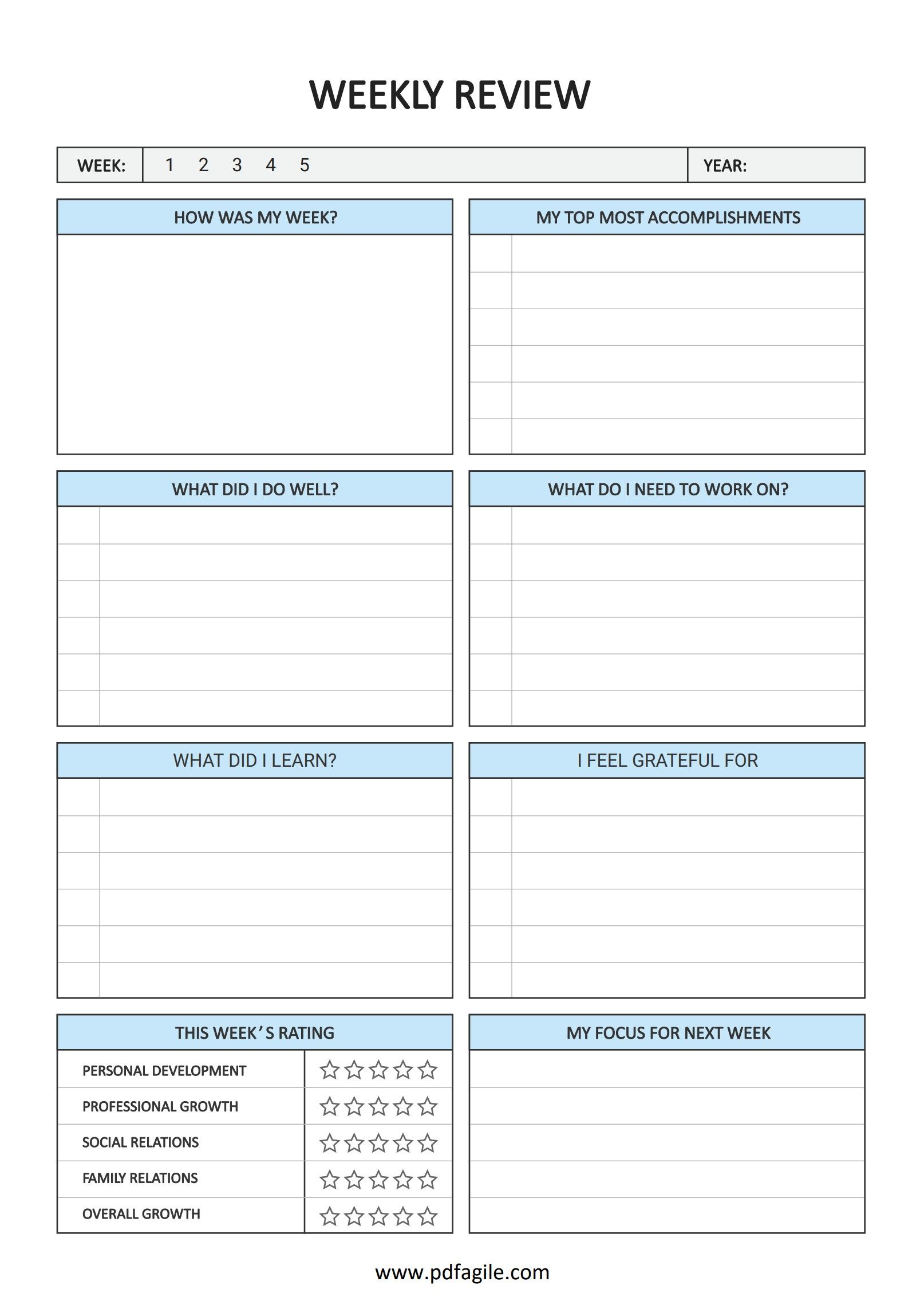
In our last lesson, you created a crucial tool: your personal weekly review template, complete with key performance indicators (KPIs) and reflection questions. This template is the blueprint for your system's control panel.
Today, we will power it on. Our learning outcome is to simulate a weekly review to practice making data-informed adjustments to your performance system. This is the capstone skill of our entire course. It's the process that transforms a static plan into a dynamic, intelligent system that learns, adapts, and compounds your efforts over time, driving the "immense results" you seek.
The Weekly Review in Practice
Before we dive into our simulation, it's helpful to see what a comprehensive review can look like. The "Getting Things Done" (GTD) methodology, developed by David Allen, places the weekly review at the heart of its system.
How to Perform a GTD Weekly Review® (Step-By-Step Guide)
This video from the official GTD channel provides a step-by-step guided weekly review. While our system is more focused on performance metrics than just task management, the video effectively demonstrates the three core stages of any good review: Get Clear (collecting all inputs), Get Current (reviewing your system), and Get Creative (higher-level thinking).
Watch the following three segments to get a feel for the flow of a structured review: Get Clear (13:21 - 14:40): Notice the concept of a 'mind sweep' to capture loose thoughts. Get Current (38:24 - 39:50): See how the presenter reviews 'next actions lists' to ensure they are relevant. This is similar to reviewing our process goals. Get Creative (1:09:32 - 1:12:20): Observe the shift from reviewing what happened to thinking about new ideas and possibilities. This is where strategic adjustments happen. Don't worry about the specific GTD terminology. Focus on the overall structure of moving from clearing your mind to reviewing your commitments, and finally to strategic thinking.
This structured approach ensures nothing falls through the cracks and creates the mental space needed for high-quality reflection. Now, let's apply this thinking to your own performance system.
Setting the Stage: A Simulated Week
For this simulation, imagine the following scenario. Your primary long-term goal, as established in a previous lesson, is "To build foundational knowledge in machine learning by completing a 3-month intensive online course."
You've just finished Week 4 of this course. You used your weekly schedule to create a plan, and you've been tracking your progress using the KPIs you defined in our last lesson.
Here is your plan versus the actual results for the week:
| Metric Category | KPI (Key Performance Indicator) | Planned for Week 4 | Actual Results for Week 4 |
|---|---|---|---|
| Outcome | Modules Completed in ML Course | 2 modules | 1.5 modules |
| Process | # of 90-min Deep Work Sessions | 5 sessions | 4 sessions |
| Process | # of Deliberate Practice Problems Solved | 10 problems | 6 problems |
| Well-being | # of nights with >7.5 hours of sleep | 6 nights | 4 nights |
| Well-being | # of 30-min workouts | 3 workouts | 3 workouts |
| Well-being | Weekly Energy Level (avg. 1-10) | 8/10 | 6/10 |
Qualitative Notes for the Week:
- Monday: Felt great, highly focused. The first deep work session was very productive.
- Tuesday: Workout was good. Felt a bit distracted during the evening study session.
- Wednesday: Stayed up late working on a tricky coding problem, felt "in the zone" but only got 5 hours of sleep. Felt wired and proud of the late-night effort.
- Thursday: Woke up feeling groggy and unfocused. Skipped the planned morning deep work session to "catch up on emails and admin". Felt irritable most of the day.
- Friday: Managed to get a deep work session in, but it was a struggle. Felt behind on the ML course.
- Weekend: Completed workouts and felt better physically, but had a nagging sense of anxiety about not meeting the weekly goal.
Now, let's run this scenario through the weekly review template you designed.
The Simulation: Running Your Weekly Review
Grab the weekly review template you created in the last lesson. We'll use its Reflect, Check-in, Plan structure to analyze the data and make adjustments.
Phase 1: Reflect (The Qualitative View)
Start by looking at the qualitative notes. Answer the reflection questions from your template as if you were the person in this scenario. For example:
- What was the biggest win this week? Probably the late-night coding session on Wednesday. I felt really engaged and solved a tough problem.
- What was the biggest challenge? Feeling so groggy and unproductive on Thursday. It threw off my whole day.
- What activity gave me the most energy? The workouts.
- What drained the most energy? The lack of sleep on Wednesday night and the subsequent feeling of being behind schedule.
This initial reflection provides crucial context. The feeling of "winning" on Wednesday night is directly linked to the "challenge" on Thursday. This is a pattern we need to investigate.
Phase 2: Check-in & Analyze (The Data-Informed View)
Now, let's look at the hard data and connect it to your reflection. The goal here is not just to see the numbers, but to understand the story they tell.
The Data-Driven Weekly Review: How to Use Data and Self-Reflection for Iterative Improvements
This is the core of a data-driven review. You're moving beyond subjective feelings to find objective patterns. The following article provides a detailed technical guide on setting this up, but the key insight is in how data helps overcome cognitive biases.
Read the sections titled 'What is a “Data-Driven” Weekly Review?', 'CALCULATE and COMPARE your weekly data using Google Sheets', and 'REFLECT and WRITE Your Data-Driven Weekly Review'. Focus on these key ideas: Data removes mental bias (like recency bias, where you might over-focus on the frustrating Friday). The process of comparing numbers (e.g., this week vs. last week, or planned vs. actual) is what generates insights. Data serves the ultimate goal of high-quality reflection and writing.
With that in mind, analyze the data table. Ask yourself:
-
What does the data show?
- The outcome goal (2 modules) was missed.
- The process goals that drive this outcome (deep work, practice problems) were also missed.
- The well-being inputs (sleep, energy) were significantly below target.
- The only target met was workouts.
-
What is the relationship between the data points?
- There is a clear chain of events: The decision to sacrifice sleep on Wednesday (Planned: >7.5hrs, Actual: 5hrs) led to a drop in energy and focus on Thursday.
- This directly caused the missed deep work session on Thursday morning.
- The missed deep work session is the primary reason for the shortfalls in "Modules Completed" and "Practice Problems Solved."
This is the process of data-informed analysis. You've traced a negative outcome back to a specific decision and its cascading effects.
For a powerful example of this analysis in action, let's look at a case study.
A Tracking System for Titans - Leverage Data-Driven Personal ...
The article 'A Tracking System for Titans' includes an excellent, concise case study that demonstrates exactly the kind of analysis you just performed.
Read only the section titled 'Tracking in Action'. Notice how the author identifies a drop in well-being, traces it back to a late bedtime, and then identifies the root cause (watching entertaining content), which then leads to a specific, actionable intervention (using blocking software).
Phase 3: Adjust & Plan (The Forward-Looking Action)
Your analysis reveals a key insight: Sacrificing sleep for a short-term feeling of productivity is a losing trade. The cost to the next day's performance is greater than the benefit of the late-night work.
Now, you must turn this insight into concrete adjustments for Week 5. This is where you modify your system.
Based on your analysis, what specific adjustments would you make for next week? Think about changes to your schedule, your environment, or your rules.
Here are some examples of strong, data-informed adjustments:
- Weak Adjustment: "I'll try to sleep more." (Too vague).
- Strong Adjustment: "I will implement a 'Hard Stop' rule: all work on the ML course must end by 10:00 PM, no exceptions. I will set a recurring alarm for this." (Specific, actionable rule).
- Weak Adjustment: "I'll try harder to focus on Thursday." (Not addressing the root cause).
- Strong Adjustment: "If I have a night of poor sleep (< 6.5 hours), I will change the following morning's 90-minute deep work block to a 45-minute block of less demanding work (e.g., reviewing notes) and take a 20-minute nap. This prevents a total loss of the day." (An if-then plan that adapts to reality).
- Strong Adjustment: "My weekly plan was too fragile. It didn't account for a single point of failure. I will schedule one 'spillover' deep work block on the weekend that I can use if a weekday session is missed." (Modifying the system to be more resilient).
Finally, you would populate your plan for Week 5, incorporating these new rules and adjustments into your time-blocked schedule.
Conclusion
Congratulations on completing the final lesson and the full 20-day course. You have not just learned about performance psychology; you have built and operated a system for applying it to your own life.
Key Takeaways from Today's Lesson:
- A weekly review is a three-stage process: Reflect on your qualitative experience, Check-in with your quantitative data, and Plan your adjustments.
- The goal of analysis is to uncover the story behind the data—the chain of cause and effect between your actions, your well-being, and your outcomes.
- Data-informed adjustments are specific, actionable changes to your system (rules, schedule, environment), not just vague intentions to "try harder."
- Your performance system is not a static object but a dynamic process of continuous improvement, fueled by the feedback loop of your weekly review.
This course is now complete, but your journey is just beginning. The weekly review is the single most important habit for ensuring long-term, sustainable high performance. Make it a non-negotiable appointment with yourself. By consistently applying the principles you've learned, you will have the tools not only to pursue your goals but to build a life of intention, focus, and immense results. Good luck.