Hello! Welcome to the third lesson in our final module on designing your personal performance system.
In the last two lessons, we laid the critical groundwork. First, you selected your primary long-term goal—your "north star." Then, you translated that grand vision into an actionable plan by structuring it into a hierarchy of outcome, performance, and process goals.
You now have a list of specific, repeatable actions—your process goals—that will drive your progress. But knowing what to do is only half the battle. The ultimate key to high performance is making the execution of those actions as consistent and effortless as possible. That's where today's lesson comes in.
Our learning outcome is to design keystone habits to support your process goals, specifying their cues, routines, and rewards. We will explore the science behind habits that create a positive domino effect in your life and build a practical template to engineer them for success.
1. The Power of Keystone Habits
Not all habits are created equal. Some are "keystone habits"—small, foundational routines that, once established, trigger a chain reaction of other positive behaviors. They are the 20% of habits that can lead to 80% of the positive changes in your life.
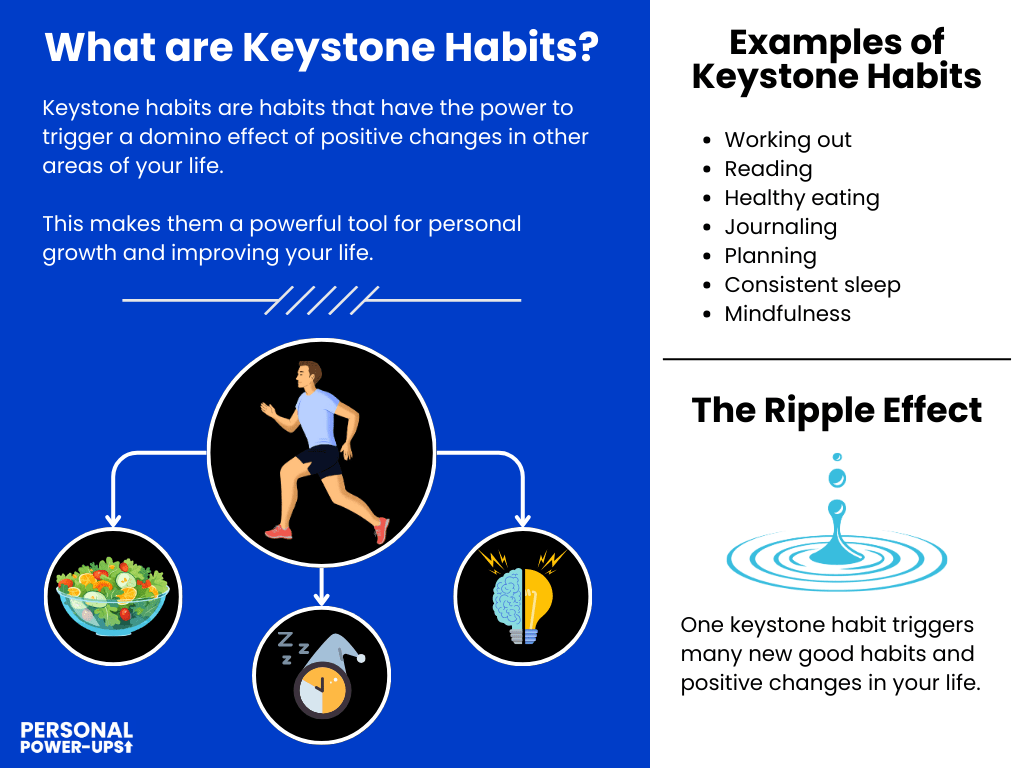
Charles Duhigg, the author of The Power of Habit, popularized this concept. He found that people who started exercising, a classic keystone habit, didn't just get fitter. They started eating better, being more productive at work, and feeling less stressed, often without consciously trying to improve in those areas.
To understand the "why" behind this powerful effect, let's hear directly from Duhigg.
The 7‑Day Habit Reset: Start Today - Mel Robbins
In this excerpt from an interview on 'The 7‑Day Habit Reset,' Charles Duhigg explains why a keystone habit like exercise is so powerful. He focuses on how it changes your self-concept.
Please read the portion of the transcript from the question 'Why is exercise a keystone habit?' (around 08:08) to '...the life that you want.' (around 14:30). Pay close attention to how Duhigg explains that performing the habit changes how your brain perceives who you are, making other positive behaviors feel more aligned with your new identity.
The key insight here is that keystone habits work by shifting your identity. When you consistently perform a habit like exercise, a part of your brain starts to see you as "the kind of person who has discipline." This new self-concept makes it easier to make other disciplined choices throughout your day.
2. The Anatomy of a Habit: The Habit Loop
To design a keystone habit, we first need to understand its fundamental structure. All habits, good or bad, operate on a simple neurological feedback system known as the "Habit Loop."
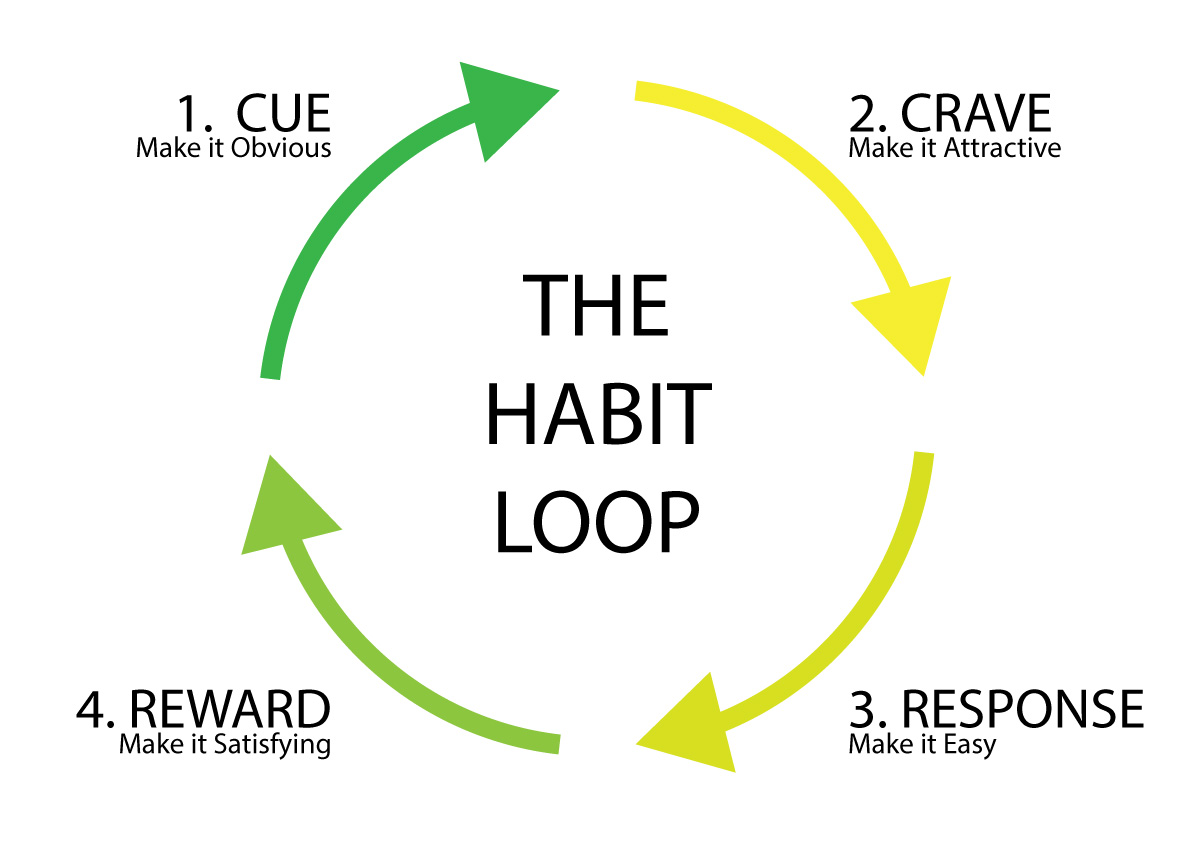
For our purposes, we'll focus on the three core components originally described by Charles Duhigg, which are present in every habit you have:
- The Cue: The trigger that tells your brain to go into automatic mode and which habit to use.
- The Routine: The physical, mental, or emotional behavior that follows the cue. This is the habit itself.
- The Reward: The positive outcome that tells your brain, "This loop is worth remembering for the future."
To see how these parts work together, let's watch a short clip from a TEDx talk by Duhigg.
The Power of Habit: Charles Duhigg at TEDxTeachersCollege
In this clip from 'The Power of Habit', Charles Duhigg introduces the habit loop and gives a powerful example of how understanding it can help create a new habit.
Watch from 03:59 to 05:41. Notice how the three parts—cue, routine, and reward—are essential. The experiment he describes, using chocolate as a reward for exercise, is a perfect illustration of how a simple, immediate reward can 'bootstrap' a new, difficult habit.
Understanding this C-R-R framework is the key to both breaking bad habits and, more importantly for us, intentionally designing good ones.
3. How to Engineer a Keystone Habit
Now, we move from the "why" to the "how." We're going to use the C-R-R framework to systematically design a habit that sticks. The following video provides an excellent, step-by-step guide for engineering each part of the loop.
Keystone Habits- Fearlessminds - Mental Health
The video 'Keystone Habits' from Fearless Minds breaks down exactly how to design an effective cue, routine, and reward. It offers practical, evidence-based strategies that go beyond the basic theory.
Please watch from 00:30 to 11:42. As you watch, take notes on the key principles for each part of the loop: Cue (00:30 - 02:35): What makes a cue effective? (e.g., unavoidable, daily, immediate) Routine (02:35 - 09:04): What is the 'low-high bar' concept and why is it crucial for consistency? Reward (09:04 - 11:42): What are the two requirements for a good reward? (e.g., immediate, pleasurable)
Let's synthesize the key strategies from that video and other resources into a clear action plan.
Designing the Cue: Make it Obvious
The video emphasizes that a good cue must be reliable and unmissable. The easiest way to create such a cue is to piggyback on a habit you already have. This technique is called habit stacking.
The formula is simple: After [CURRENT HABIT], I will [NEW HABIT].
This links your new desired behavior to a routine that is already firmly established in your brain.
- Example: After I pour my morning coffee (current habit), I will meditate for one minute (new habit).
- Example: After I take off my work shoes (current habit), I will change into my gym clothes (new habit).
Designing the Routine: Make it Easy
As the video explains, the biggest mistake people make is setting the bar for their routine too high. When your willpower is low, an ambitious routine feels impossible, and you'll skip it, breaking the chain of consistency.
The solution is the "low-high bar" system:
- The Low Bar: This is the absolute minimum version of your habit. It should be so easy you can't say no. Think "ridiculously small." The goal of the low bar isn't to get results, but to show up and keep the habit alive. This is your version of the "two-minute rule."
- Example: For a meditation habit, the low bar might be "sit and take one deep breath."
- Example: For a workout habit, the low bar might be "put on your running shoes and step outside."
- The High Bar: This is your ideal target for the day—the routine that will actually produce results.
- Example: "Meditate for 20 minutes."
- Example: "Run for 30 minutes."
On any given day, you are allowed to do anything between your low and high bar. This ensures you never break the chain, which is the most important factor for making a habit automatic.
Designing the Reward: Make it Satisfying
Your brain only remembers habits that end with a feeling of pleasure. The reward must be immediate and genuinely enjoyable. The feeling of "I'll be healthier in three months" is not an effective reward because it's too delayed.
As the video suggests, "primitive rewards" (like food, play, or socializing) work exceptionally well. The reward doesn't have to be big; it just has to be immediate and create a small spike of pleasure.
- Example: After I finish my workout, I will enjoy a delicious smoothie.
- Example: After I finish my 10 minutes of journaling, I will watch one episode of my favorite show.
4. Your Task: Design Your Keystone Habits
Now it's time to put this all together. Take out the list of process goals you created in the last lesson.
-
Select 1-2 of your most important process goals. Choose the ones that you believe would have the biggest ripple effect if you performed them consistently. These will be the foundation for your keystone habits.
-
For each selected process goal, use the template below to design a keystone habit. Open a notebook or a document and be as specific as possible.
My Keystone Habit Design
1. Process Goal it Supports:
(Write down the process goal from your goal hierarchy, e.g., "Write for 30 minutes every morning to complete my book draft.")
2. The Keystone Habit:
(Name the habit, e.g., "Daily Writing Habit.")
3. The Cue (Habit Stack):
- After I _______________ [Current, established habit], I will _______________ [The very first action of your new routine].
- Example: After I pour my first cup of coffee, I will open my writing document.
4. The Routine (Low/High Bar):
- Low Bar (So easy I can't say no): _______________
- Example: Write one sentence.
- High Bar (My ideal target): _______________
- Example: Write for 30 minutes without distraction.
5. The Reward (Immediate & Pleasurable):
- Immediately after completing my routine, I will _______________.
- Example: Immediately after completing my routine, I will spend 5 minutes listening to my favorite music playlist before starting the rest of my day.
Take the next 15-20 minutes to carefully design one or two keystone habits. This is the most practical step you can take to turn your goals into reality.
Conclusion
In this lesson, you've learned how to bridge the gap between intention and action. By reverse-engineering the habit loop, you can build powerful keystone habits that automate your most important process goals.
Key Takeaways:
- Keystone Habits: Focus on building small, foundational habits that create a positive ripple effect across your life.
- The Habit Loop: Every habit consists of a Cue, a Routine, and a Reward. To build a habit, you must design all three parts.
- Make it Obvious (Cue): Use habit stacking to link your new habit to an existing one.
- Make it Easy (Routine): Use the "low-high bar" system to prioritize consistency over intensity.
- Make it Satisfying (Reward): End every routine with an immediate, genuinely pleasurable reward to solidify the loop.
Preview of the Next Lesson:
You now have a clear goal hierarchy and a plan to build the habits that will drive your progress. But what happens when things go wrong? You might get sick, face an unexpected project, or simply feel unmotivated. In our next lesson, you will learn how to create an obstacle plan for your goal using mental contrasting and pre-commitment strategies to ensure you stay on track even when faced with adversity.